Panangai Paniyaaram

My aunt sent us some ‘panangai paniyaaram’ that she had made, after a visit to her home in Jaffna. So, I asked her to share the recipe for this Jaffna delicacy. I have also shared an introduction to the different ways the palmyrah is used in the north, at my mother’s request, and I hope I have covered the key aspects in my previous post.

Panangai Paniyaaram

Time taken: 45 mins – 1 hour

Makes 20 – 25 paniyaaram

Panangai Paniyaaram

Ingredients:

  • Very ripe Palm fruit (Panangai) – 1
  • Coconut milk – ¼ to ½ cup
  • Sugar – ¼ cup
  • Steamed wheat flour – 1 ½ cups
  • Oil, as required for deep frying

Method:

  1. Remove the skin of the palm fruit. If it is difficult, it can be held over a fire for a few minutes before the black outer skin is peeled off with a knife. This leaves the fibrous orange fruit and the three seeds.
  2. The fruit can be divided into three portions along with each of the three seeds. Mix each portion of the fruit and seed with a little water, in a basin, to make it pulpy.
  3. Strain the pulpy juice using a clean cloth and extract 1 cup of palm fruit juice.
  4. Boil the extracted palm juice, together with the coconut milk and sugar. Cook for 10 mins and then remove from heat.
  5. After the boiled mixture has cooled enough that you can put your finger in it without getting burnt or scalded, stir in the wheat flour slowly till the batter reaches a consistency that you can pick by hand. Not all the wheat flour needs to be used but just enough to reach this consistency. If the batter is still watery, add a little more steamed wheat flour.
  6. Heat some oil in a pan on low heat.
  7. Drop small balls of batter in batches of 5 to 6 and deep fry till they are orange/ golden throughout. Remove before they brown.
  8. Enjoy this Jaffna delicacy with some hot Sri Lankan plain tea and a piece of palm jaggery.

Recipe source: Vijayalakshmi Yogeswaran.

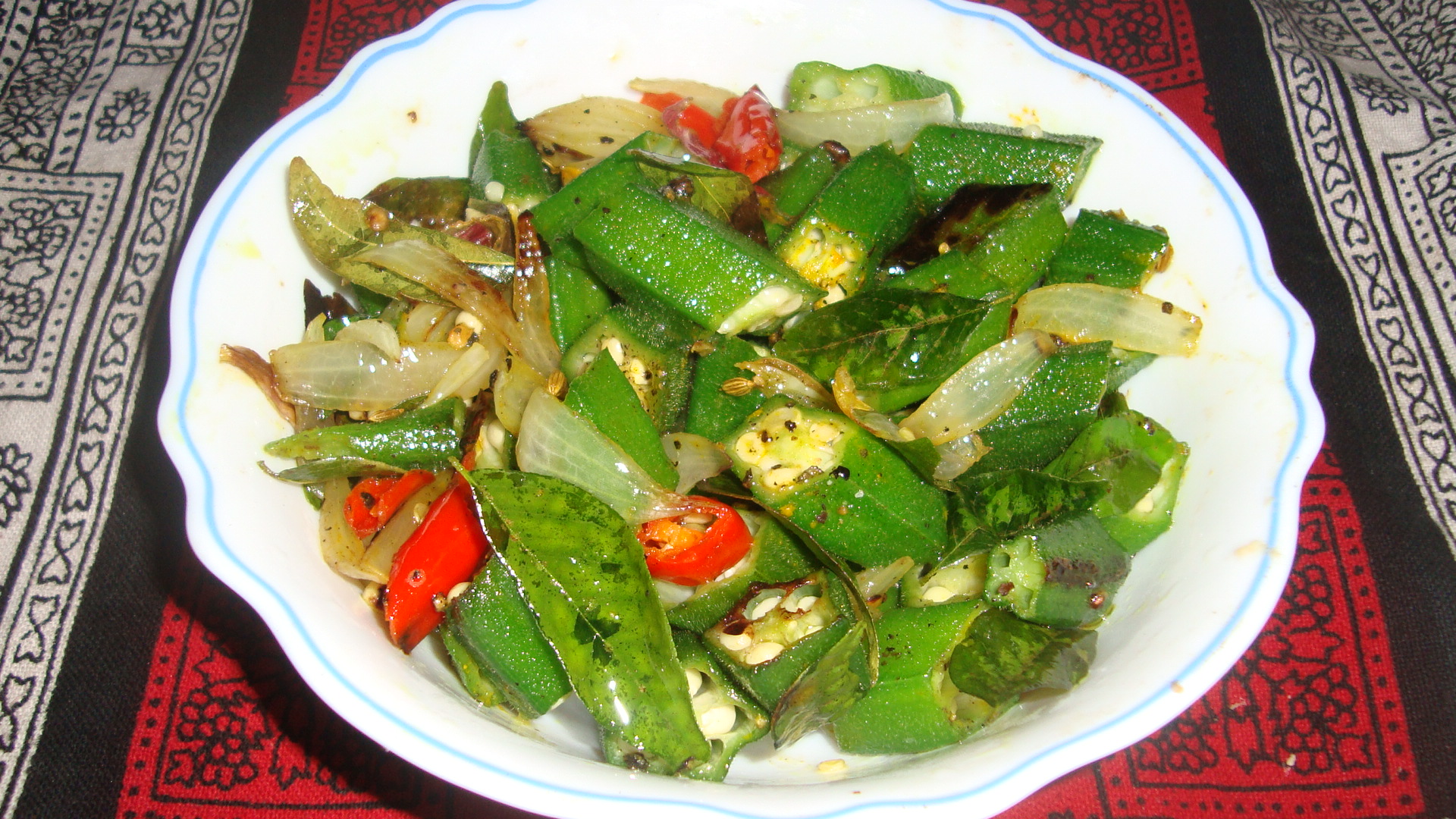
Okra stir-fry

This is one of my mother’s favourite recipes as she really likes okra.

Okra stir-fry

Time taken: 10 – 15 mins

Serves 4

Okra

Ingredients:

  • Okra – 200g, whole
  • Onion – 1, small and chopped
  • Red chilli – 1, chopped
  • Curry leaves – 1 sprig
  • Fennel seeds – ½ tsp
  • Turmeric powder – ¼ tsp
  • Pepper powder – ¼ tsp
  • Salt – ¼ tsp
  • Oil

Method:

  1. Boil some water. When the water comes to a boil, drop the okra prior to chopping, in the boiling water and take them out after a minute and immerse them in a bowl of ice-cold water. This reduces the sliminess of the okra and retains the colour.
  2. Chop the blanched okra into ½ or 1 inch pieces.
  3. Marinate the okra pieces by adding some turmeric, salt and pepper. Mix and keep aside.
  4. Heat 1 tbsp of oil in a pan. Fry the chopped onion, red chilli, curry leaves with the fennel seeds for a few minutes.
  5. Add the marinated pieces of okra and combine well. Cover the pan and allow the okra to cook for about 5 mins.
  6. Remove from heat and serve with rice.

Source: Raji Thillainathan.

Idiyappam with Sodhi

Idiyappam/ Idiyappa/ Stringhoppers with Kilanghu sodhi/ Ala hodhi is a food that is part of all the different cuisines of Sri Lanka. Everyone around the country either regularly or occasionally makes or buys stringhoppers. It is generally consumed for dinner or breakfast. While my mother has reduced making it as it is easier to buy them, she occasionally makes it when anyone at home is sick. It is considered lighter on the stomach and easily digestible.

Stringhoppers with Sodhi

Idiyappam/ Idiyappa/ Stringhoppers

Cooking time: 20 mins

Makes 10 – 12 stringhoppers

Stringhoppers

Ingredients:

  • Roasted rice flour – ½ cup
  • Steamed wheat flour – ½ cup
  • Salt, to taste
  • Water, as required

Method:

  1. Boil around 1½ cups of water and then cool it slightly for a couple of minutes so that it is still hot but not boiling hot.
  2. Mix the roasted rice flour, steamed wheat flour and some salt and add the hot water slowly, continuing to stir. The water needs to be carefully added so that there is not too much or too little but just enough to make it all come together as a dough and not stick to fingers when tested.
  3. Fill the stringhopper mould/ ural with some of the dough mix and squeeze out the string hoppers onto the stringhopper trays. There are stringhopper machines now that simplify this process.
  4. Place 5 or 6 trays, at a time, in the steamer and cook the stringhoppers for 5 mins.
  5. Serve stringhoppers with sodhi and any other curry.

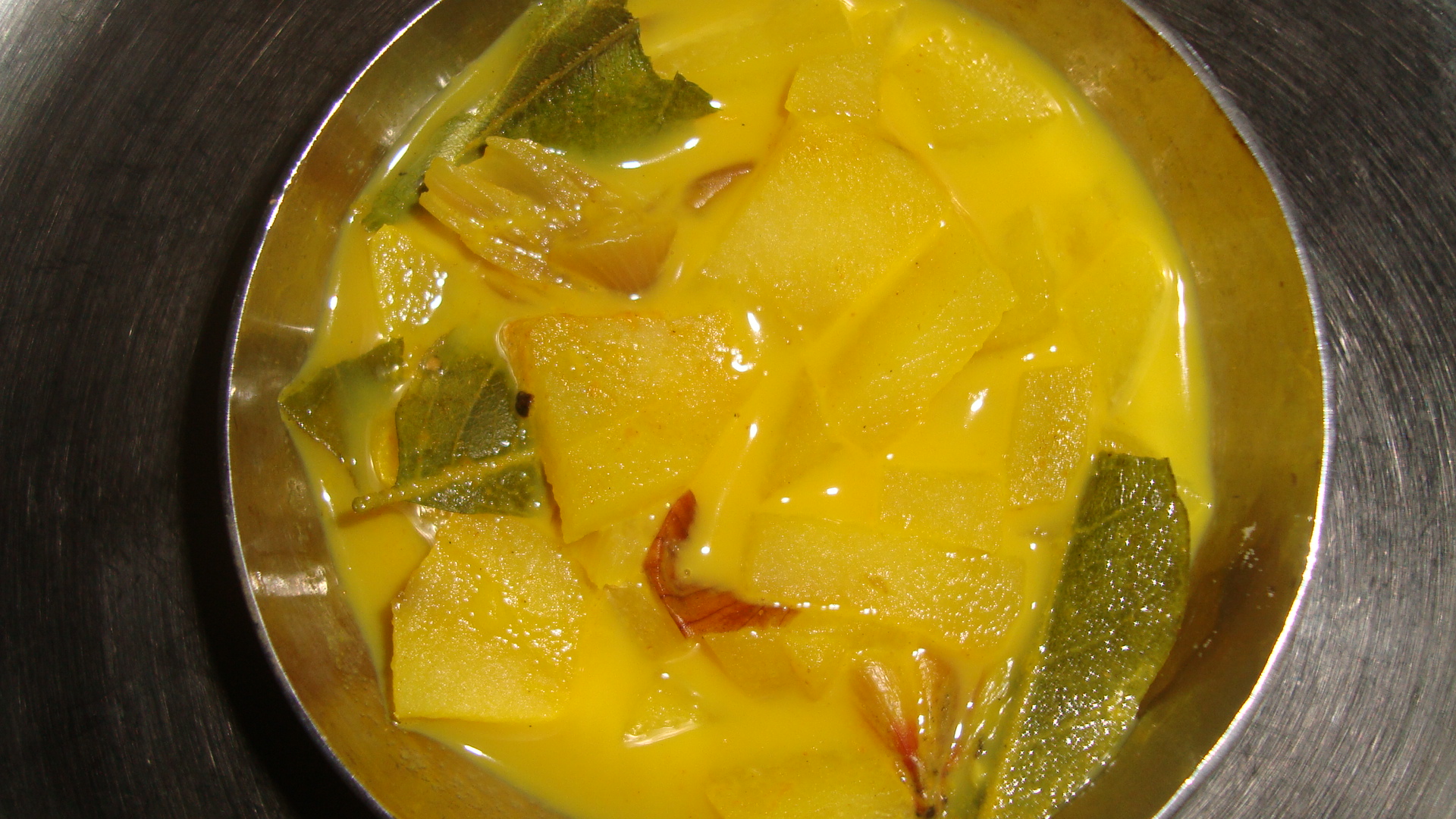
Kilanghu Sodhi/ Ala Hodhi

Cooking time: 15 mins

Serves 3

Sodhi/ Hodhi

Ingredients:

  • Potato – 1
  • Chilli – 1
  • Onion – ¼
  • Curry leaves – 1 sprig
  • Coconut milk – 1 cup
  • Turmeric powder – ½ tsp
  • Pepper – ½ tsp
  • Salt, to taste

Method:

  1. Chop up the potato, chilli, onion and curry leaves and cook them in a pan with some water.
  2. Once the potato is cooked, add the coconut milk, turmeric, pepper and some salt, to taste.
  3. Bring the ‘sodhi’ to boil two or three times before removing from heat.
  4. Serve with the stringhoppers.

Recipe source: Raji Thillainathan.

Pongal

My mother often recounts a story from her childhood years, particularly ones that include her grandmother. One story she is fond of narrating is about how her grandmother used to undertake her own farming and not use machines or chemicals. My great-grandmother, who was the last farmer in our family lost her husband at a young age and raised her three children on her own. She had some paddy land and a small vegetable farm, which she managed to buy with her own earning. While she did hire farm labourers when needed, she did a lot of work on her field herself. Also, she raised cows and goats and undertook organic farming. Compost was made on her farm and used in her field. She had her land ploughed with a hand-plough and planted the paddy seeds. When the seeds started growing, just like any other small time farmer, she undertook the weeding together with the help of some hired hands.

The harvesting season was a special process and the cut grain stalks would be loaded onto bullock carts and brought home for the grains to be separated from the husks. By the time they were brought home, it would be night. As there was no electricity in their home at that time, three or four petromax lamps were lighted. My mother remembers that she was very much excited during those days and didn’t want to go to sleep but stay up and watch. It seemed like a carnival at her grandmother’s home, with the place lighted up and movement of people throughout the night.

A pole was planted in the middle of the yard and large woven mats placed around the pole. The cut stalks were spread on the mat. The buffaloes were tied to the pole and two or three hired help would walk the buffaloes around the pole. This was the old process to separate the grains from the husks. My mother remembers watching the men walk the buffaloes calling out, “poli.” The stalks were then picked up and thrashed onto the mat and the grains would separate out and fall. These were then packed up in sacks.
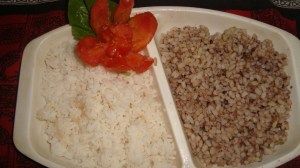
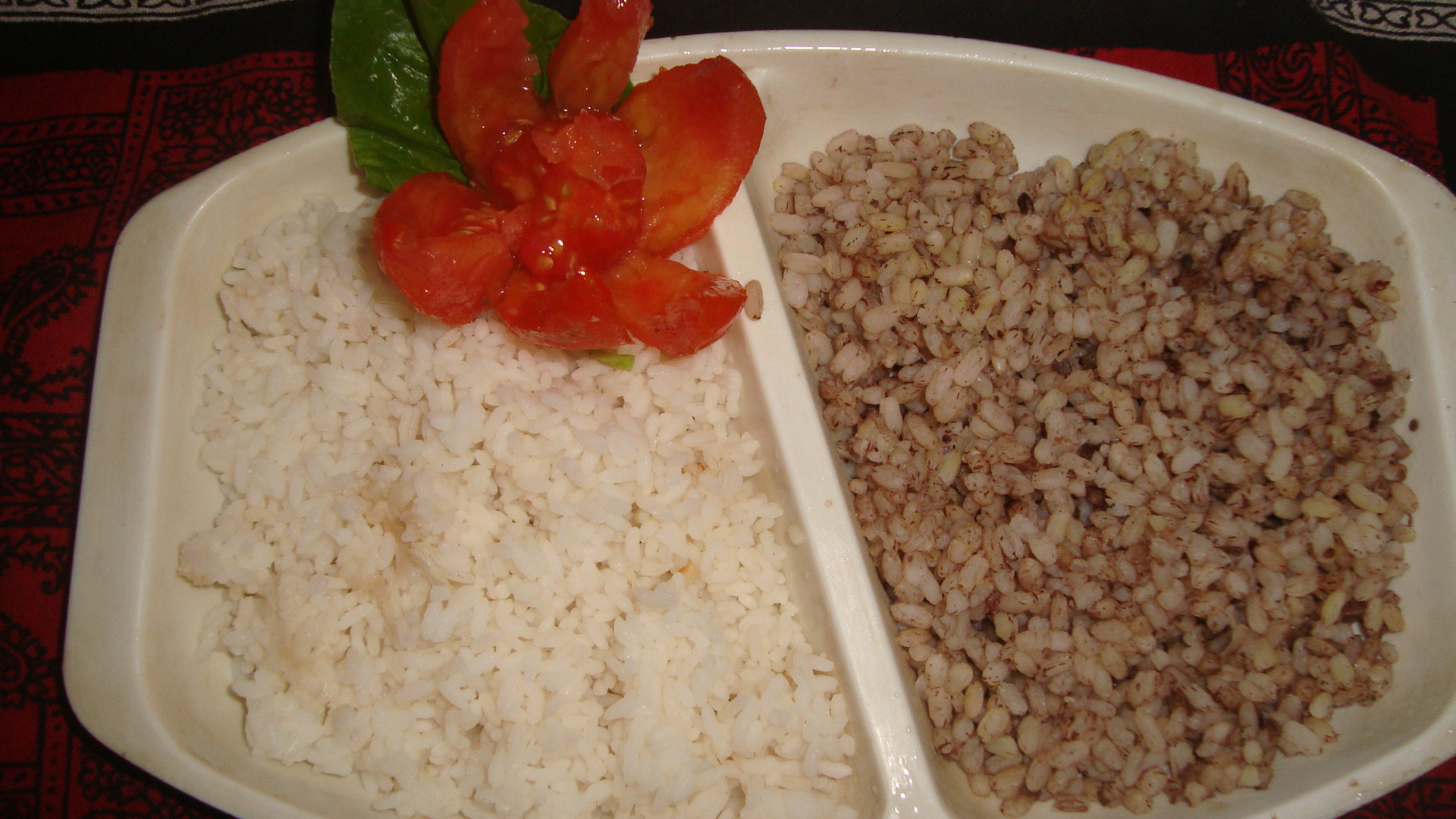
Local rice varieties

The first handfuls of grain were beaten in a stone or wood “ural” to separate the raw rice from the grain. This was made into the first pongal of the harvest. Everyone who helped would be invited for a meal and given bags of grains.

Family members who had died were also remembered on that day and a large variety of food was made. My mother mentions that a special offering was made that day, as part of the remembrance ritual, called the “puthir.” Her grandmother used to take some of the pongal made from the first rice from the harvest and spread it out on a large tray. Then, all types of available fruits were cut up and layered on top of the pongal. Honey was poured over the fruits. A sampling of all the vegetable curries that were made were also layered on top of the pongal-fruit-honey mix. Finally, ghee was poured over the tray of food and everything was mixed together. After the prayers were made, a little “puthir” was handed as “prasadham” (blessed offering) to everyone present.

Today, I will share the recipe of pongal that is made with the first harvest of the season by farmers and by non-farmers on festival days such as the Pongal festival in January, New Year in April and other celebrations.

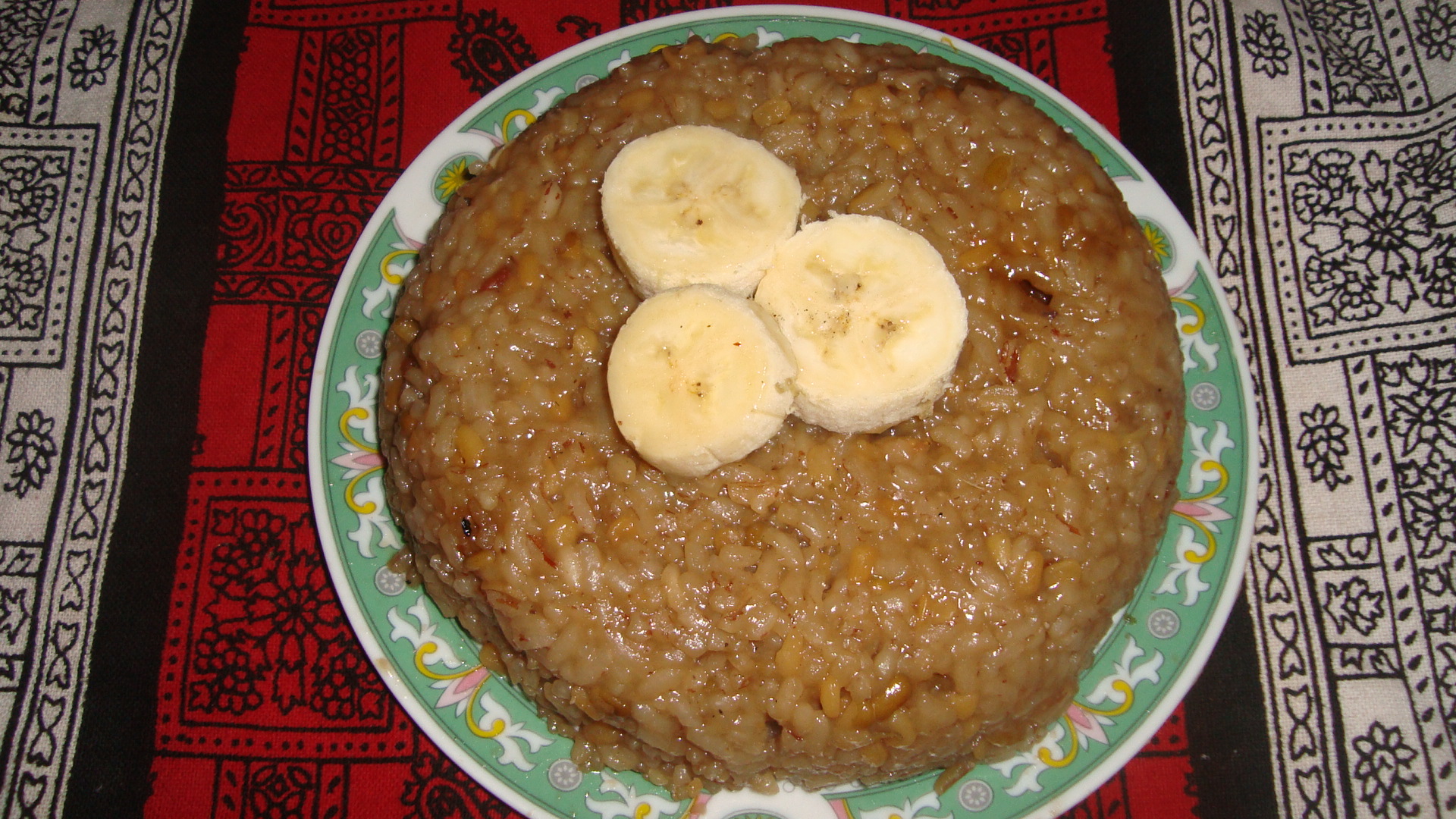
Pongal

Cooking time: 30 to 40 mins

Serves 4 or 5
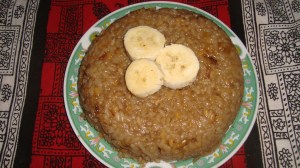
Pongal

Ingredients:

  • Rice – 1 cup
  • Roasted split gram (without skin) – ¼ cup
  • Jaggery – 1 cup (grated)
  • Coconut – ½
  • Cardamom – 4 or 5, crushed
  • Cashew nuts – few, chopped
  • Raisins – 1 tbsp
  • Water

Method:

  1. Wash the rice and gram and cook them in a pot with 2 ½ cups of water. Cook for around 15 to 20 mins, till the water dries up.
  2. Grind and extract coconut milk by blending the freshly scraped half of a coconut with 1 cup of water.
  3. Once the rice and gram is cooked, add the grated jaggery and mix.
  4. Then, add the coconut milk and crushed cardamoms. Bring to a boil on high heat and cook for a few more minutes before reducing the heat.
  5. Add the chopped cashew nuts. Cook until the pongal mixture starts coming together and starts to thicken.
  6. Just before removing from heat, add the raisins and mix.
  7. Remove from heat and cover.
  8. Serve pongal with bananas.

Recipe source: Raji Thillainathan.

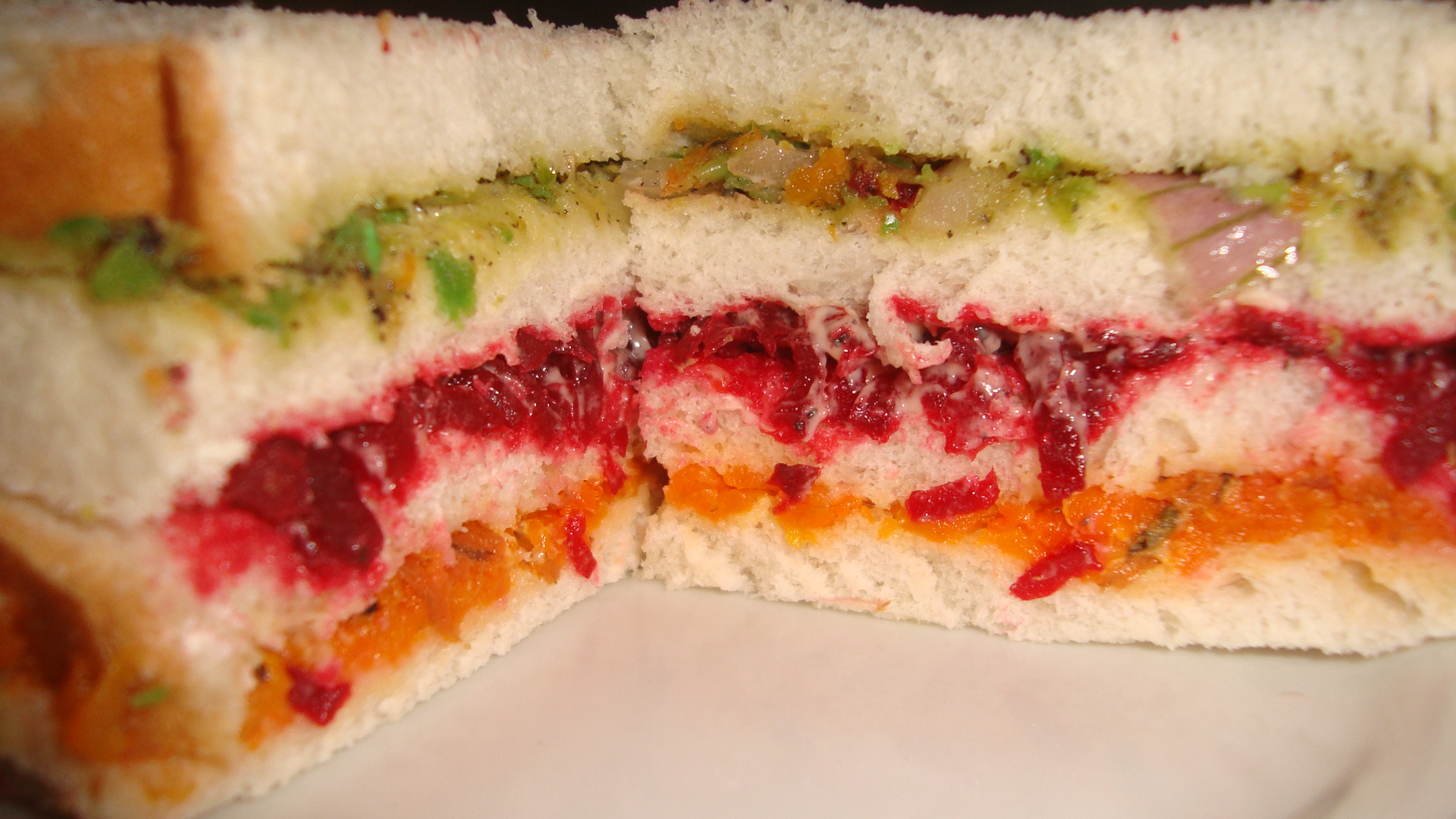
Triple layer veggie sandwich

Sandwiches are another globally popular and much consumed food. Everyone is sure to have their own recipe for what they like in their sandwich.

The second recipe I wish to share today is a sandwich that is commonly served at kids birthday parties, tea parties and even cocktail events in Sri Lanka. While there might be slightly different ways on how this party snack is made in the country, I am sharing here the way my mother makes them.

Triple layer veggie sandwich

Cooking time: 15 – 20 mins

Makes 2 or 4 sandwiches

Triple layer sandwich

Ingredients:

  • Sandwich bread – 4 pieces
  • Carrot – ¼
  • Beetroot – ¼
  • Mint or green peas  – 2 tsp (mint is the more popular choice, though green peas is used in the photo here)
  • Green chilli – ½, finely chopped
  • Onion – ½, finely chopped
  • Low fat sunflower oil margarine – 1 ½ tsp (my mother uses flora margarine)
  • Salt and pepper, to taste

Method:

  1. Boil or steam carrot and beetroot slices.
  2. Grate separately and add 1 tsp finely chopped onion, ½ tsp margarine and salt and pepper to taste to the two vegetables. Keep aside.
  3. Crush or coarsely grind the boiled green peas or mint with the green chilli and 1 tsp finely chopped onion. Add ½ tsp margarine with salt and pepper to taste and mix well.
  4. Make the sandwich by layering each slice of sandwich bread with one of the vegetables mixtures, starting with the carrot mixture on the first layer, the beetroot mixture on the second and the mint or green peas mixture on the third.
  5. Cut off the edges and cut the sandwich into two or four triple layer, colourful sandwiches.
  6. Serve with hot Sri Lankan tea or fresh fruit juice.

Recipe source: Raji Thillainathan.

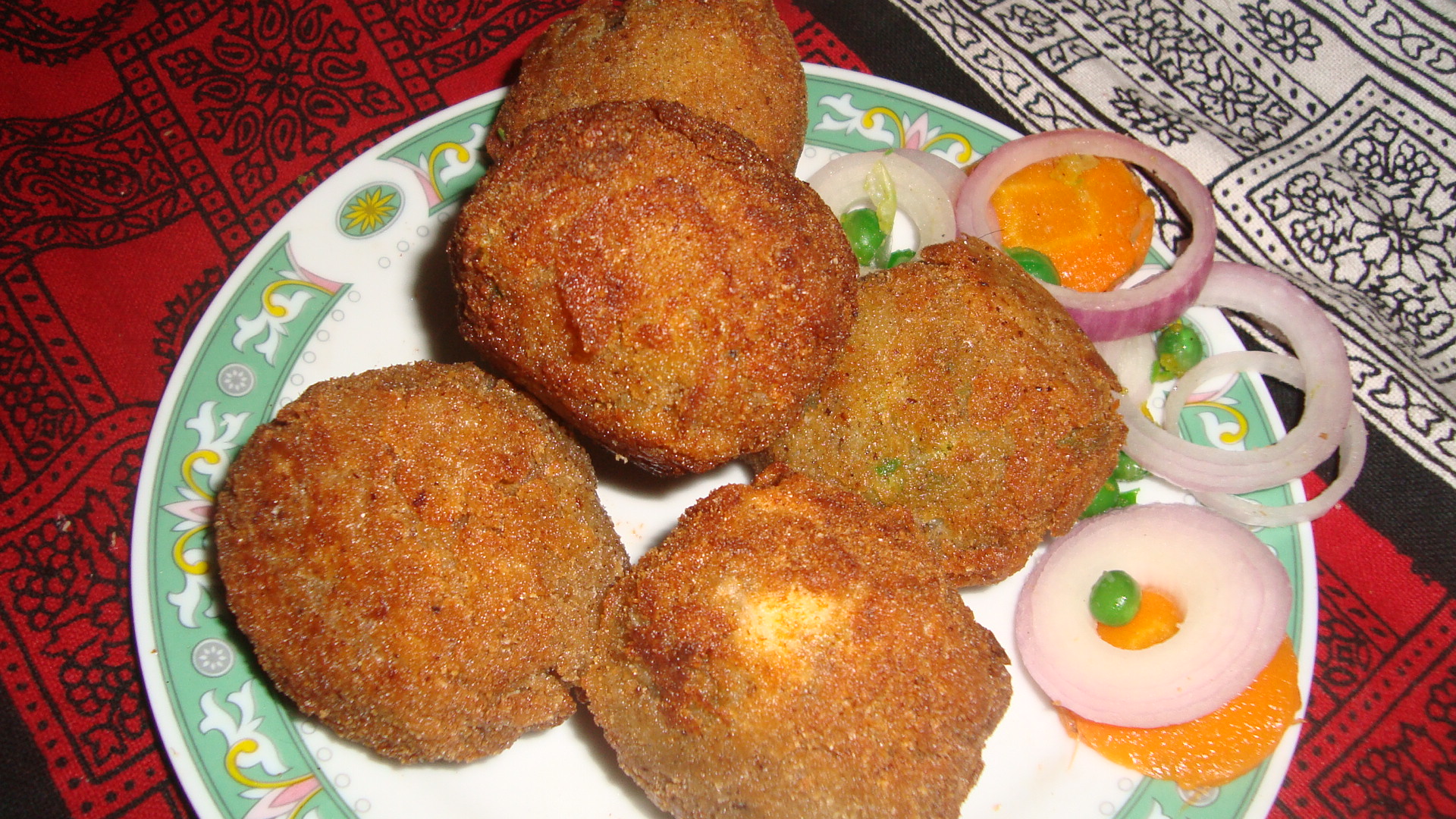
Stuffed Veggie Cutlet

The recipe I would like to share today is my mother’s stuffed vegetable cutlet recipe.

Stuffed Veggie Cutlet

Cooking time: 45 mins

Makes 5 – 6

Stuffed Veggie Cutlet

Ingredients:

  • Potatoes – 2, medium-sized
  • Carrot – 1, small
  • Green peas – 3 tbsp
  • Green chilli – 1
  • Onion – ½, medium-sized
  • Pepper  – 1 tsp
  • Fennel seeds – 1 tsp
  • Ginger – tiny piece
  • Garlic – 1 clove
  • Salt, to taste
  • Low fat oil – 1 tsp (for sauté) + for deep-frying (can be reused)
  • Wheat flour – ½ cup
  • Bread crumbs – 7 or 8 tsp

Method:

  1. Dry grind the pepper and fennel together and keep aside.
  2. Boil the potatoes and carrots separately.
  3. Peel the skin of the potatoes and mash them, adding some salt and the ground pepper and fennel mix. When they have been sufficiently mashed and mixed with the spices, make balls of mashed potato and keep aside.
  4. Mash the carrots separately and keep aside.
  5. Boil the green peas lightly, if not pre-cooked, and coarsely grind them a little so that they are half mashed.
  6. Heat a little oil in a pan. Add the chopped ginger, garlic and onion and sauté lightly.
  7. When the aroma begins to waft about, add the mashed carrot and coarsely ground green peas. Add salt and pepper and cook for a few minutes till they come together. Remove from heat.
  8. Make a batter by mixing the wheat flour with salt and adding water little by little, till reaches a pancake batter consistency.
  9. Take a potato ball and flatten it on your palm. Scoop up 1 – 1 ½ tsp of the carrot and peas mixture. Make the cutlets by covering the mixture with the edges of the potato patty like a dumpling.
  10. Dip the cutlets in the batter and roll it in the bread crumbs. Keep aside.
  11. Heat the oil for deep-frying. The oil should be enough to cover the potato balls.
  12. When the oil is ready, drop the batter coated stuffed potato balls in the pan and fry till they are browned on all sides.
  13. Serve the stuffed vegetable cutlets with tea.

Recipe source: Raji Thillainathan.

Banana fritters

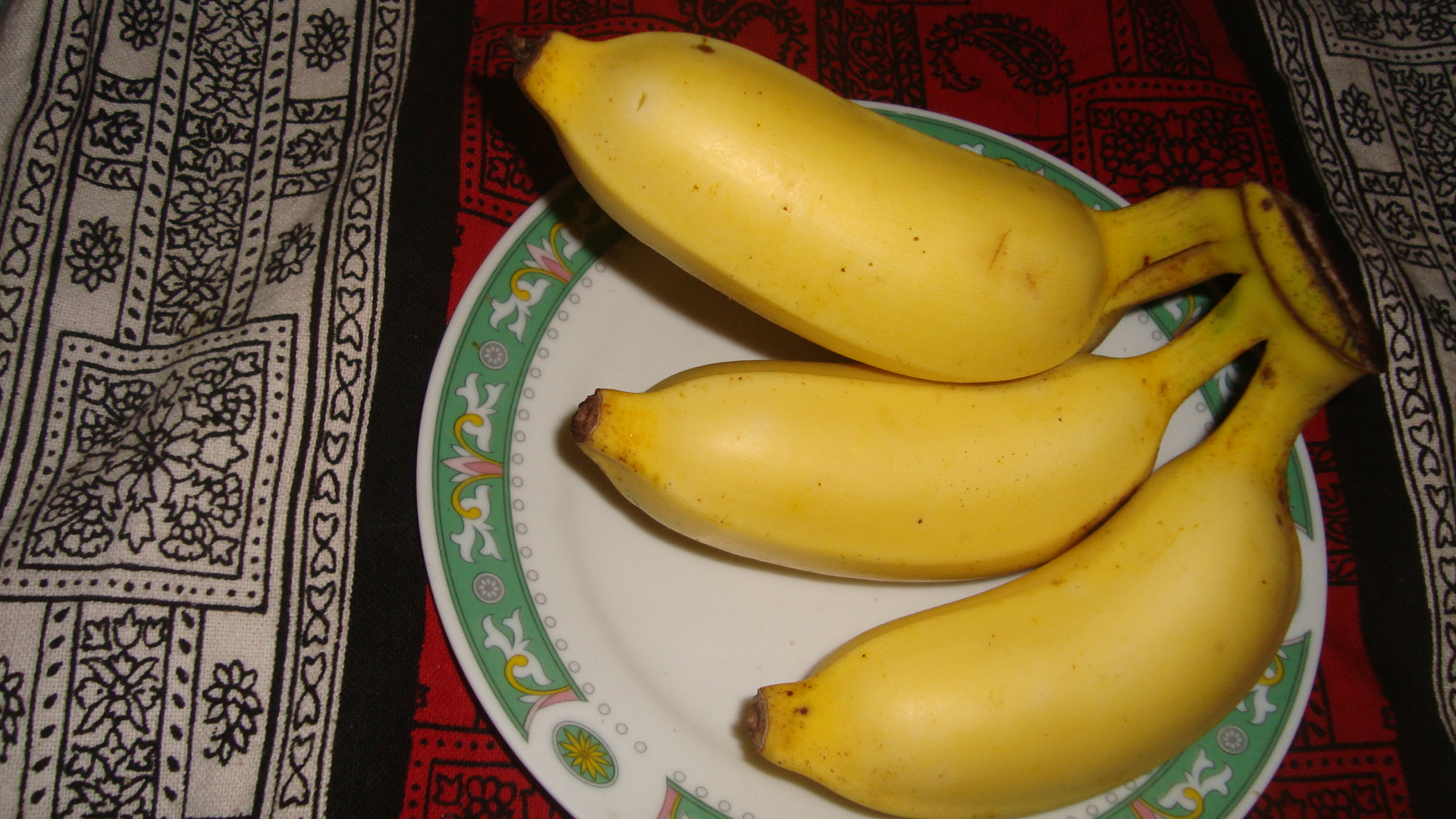
There are several varieties of bananas in Sri Lanka. One of the most common and popular banana are the small ones known as Kathali/ Ambul. This is the variety that is best for the two banana recipes that I will share today.

Kathali bananas

I think almost everyone, around the world, has their own recipe for banana fritters as it is a fruit that is easily made into a delectable dish.

Today’s recipes for banana fritters come from my great-grandmother and mother. While my great-grandmother’s banana fritter recipe is the traditional way that they are made in the north, my mother’s banana fritter recipe has been influenced by our time in Jakarta when we were kids. We were all very fond of ‘pisang goreng’ so my mother’s banana fritters are her version of a mix of the two styles.

(a) Vaalapala Paniyaaram (Banana fritters in my family, four generations ago)

Cooking time: 30 mins

Makes about 25

Banana fritters

Ingredients

  • Ripe bananas – 4
  • All purpose flour – 1 ½ cups
  • Baking powder – 1 ½ tsp (my great-grandmother’s original recipe uses a pinch of baking soda but my mother prefers using baking powder instead of soda)
  • Brown sugar – ½ cup, or less
  • Salt, to taste
  • Low fat oil, for deep-frying (can be reused)

Method

  1. Mash the bananas.
  2. In a bowl, mix the flour with sugar, salt and baking powder.
  3. Add the dry ingredients mix to the mashed bananas slowly to form a thick fruity batter.
  4. Heat the oil in a pan.
  5. Form small balls (or oblong shapes) out of the batter and drop them in batches into the heated oil.
  6. Turn the banana balls so that they are browned on all sides.
  7. Remove from pan and put them on a grease absorbing paper to get rid of excess oil.
  8. Serve hot with tea.

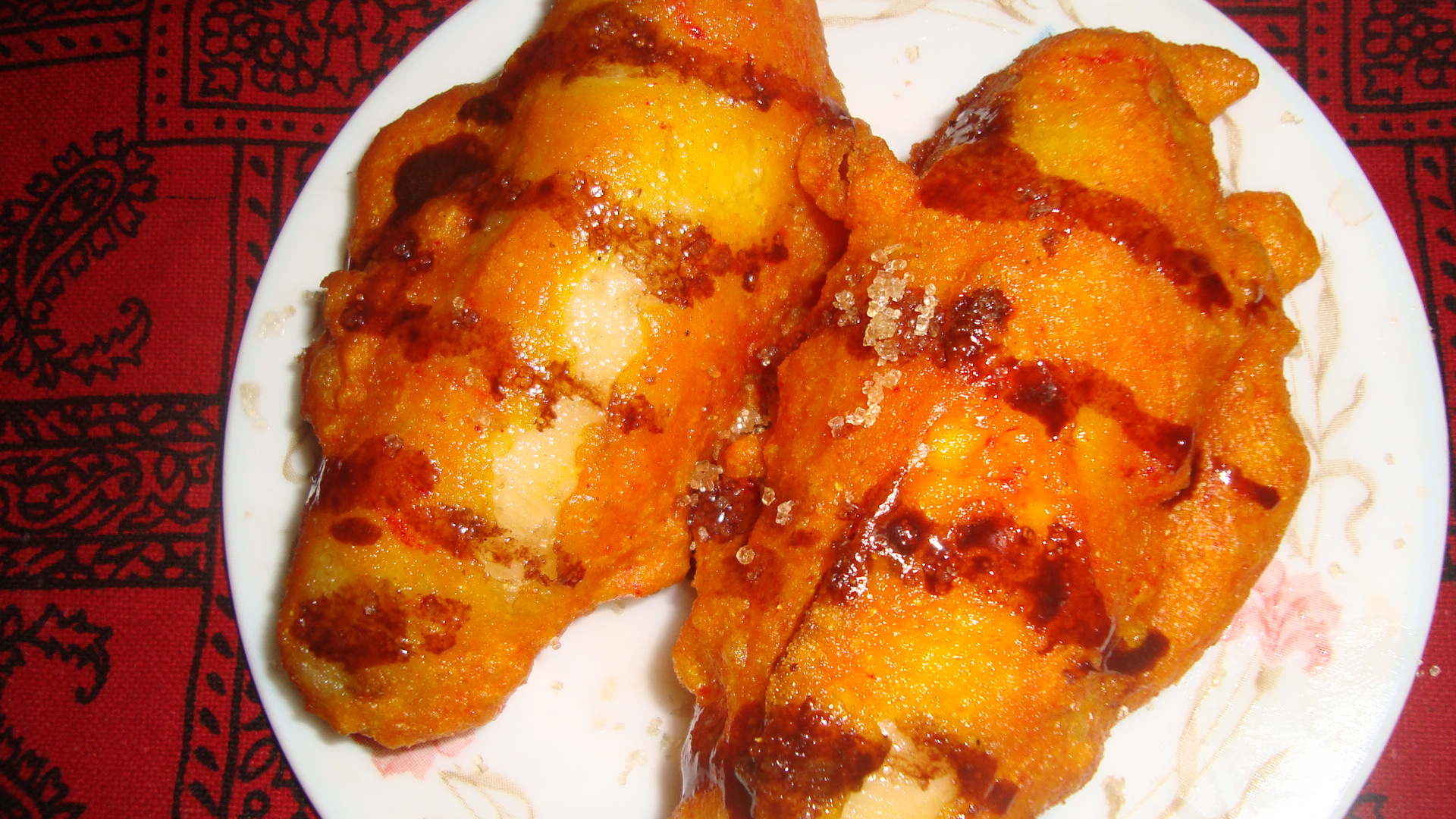
 (b) Fried bananas (my mother’s recipe)

Cooking time: 20 mins

Makes 4

Fried bananas

Ingredients:

  • Ripe bananas – 4
  • All purpose flour – ½ cup
  • Chickpeas flour – 2 tbsp
  • Vanilla extract – few drops
  • Yellow food colouring – few drops (optional)
  • Salt, to taste
  • Low fat oil, for deep-frying (can be reused)
  • Melted cooking chocolate or chocolate sauce – 4 tsp
  • Brown sugar, a little to sprinkle

Method:

  1. Mix both flours and salt in a bowl.
  2. Add water little by little, making a batter of consistency like that of pancake batter.
  3. Add the vanilla extract and optional food colouring and mix well.
  4. Remove the banana skins and dip the fruits into the batter, coating it well.
  5. Deep fry the bananas coated in the batter one by one. Let them cool on a plate on a grease absorbing paper.
  6. Drizzle the melted chocolate over the fried bananas and sprinkle with a little brown sugar.
  7. Serve with tea.

Recipe source: Raji Thillainathan.

Payaru Soosiam

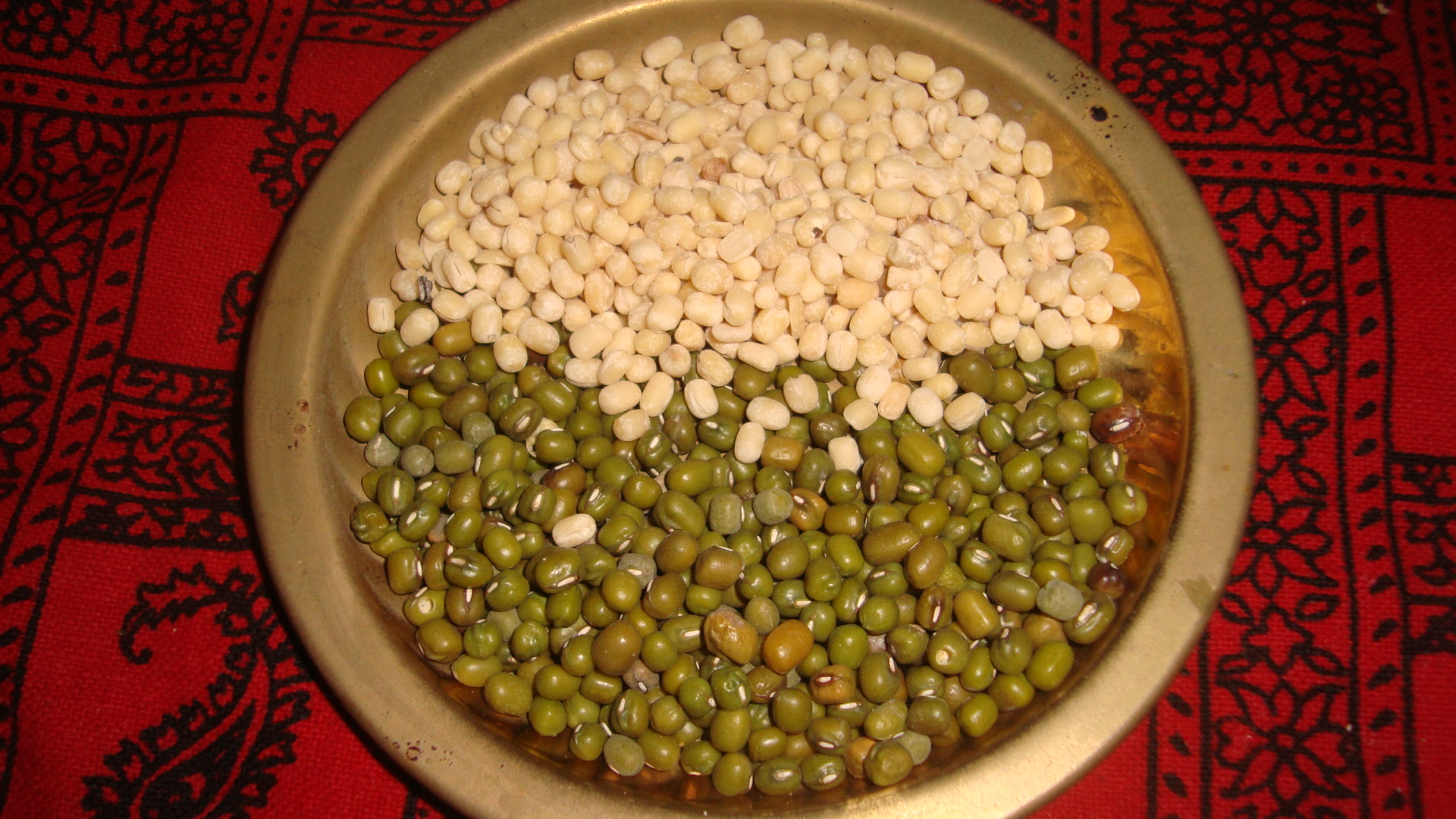
Green gram (Payaru/ Moongkatta) is used a lot in Sri Lanka as a nutritious food. It is generally cultivated in between paddy cultivation seasons.

Green gram and Black gram, with skin peeled off

Green gram and Black gram, with skin peeled off

At home, my mother used to occasionally make us the ‘kadalaiparuppu soosiam’ (chickpea soosiam) more than ‘payaru soosiam’. During my undergraduate years at Peradeniya, I became fond of something that was called ‘moongkatta bole’ which was quite similar to ‘payaru soosiam’. It was one of the few things that I liked from what the university canteens offered. During my visits home, I mentioned this to my mother and since then, my mother makes ‘payaru soosiam’ more often than she does the chickpea soosiam.

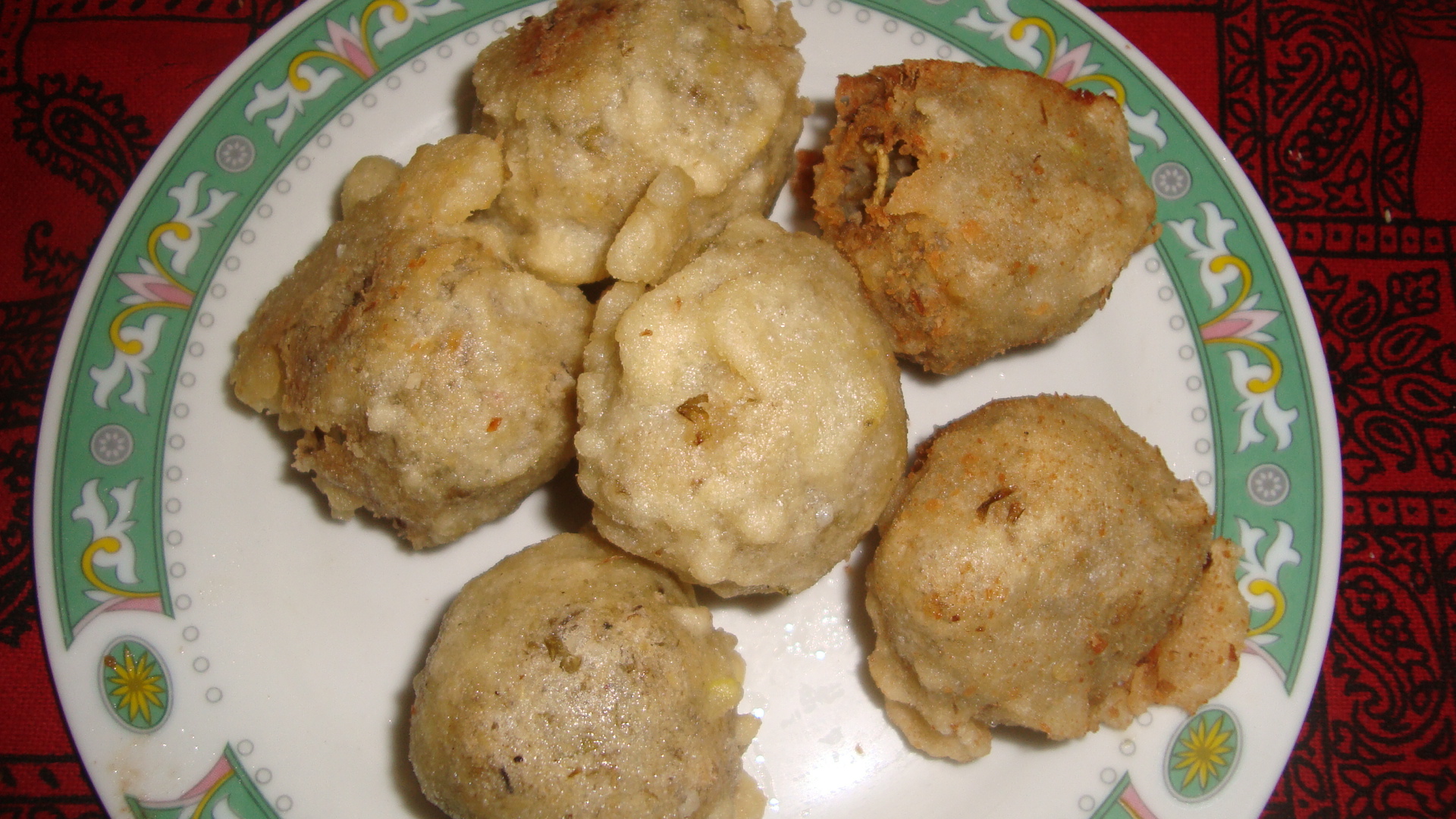
So today, besides the ulunthu vadai recipe, I will also share my mother’s recipe for payaru soosiam/ moongkatta bole.

Payaru soosiam/ Moongkatta bole

Cooking time: 30 mins + 4 hours (soaking time)

Makes 10 soosiam

Payaru soosiam

Ingredients

  • Green gram – 1 cup
  • Freshly scraped coconut – ½ cup
  • Sugar – ¼ cup
  • Cardamom – 4 or 5
  • Wheat flour – ½ cup
  • Salt, to taste
  • Vanilla – few drops
  • Yellow food colouring – few drops (optional)
  • Water, as required
  • Low fat oil, for deep frying

Method

  1. Soak the green gram for about 3 – 4 hours.
  2. Cook the green gram with water for about 10 to 15 mins, until the gram is cooked. Drain off the water.
  3. Mix the boiled gram with scraped coconut, sugar and cardamom and grind.
  4. Make 10 balls out of the ground mixture and keep aside.
  5. Mix the wheat flour with salt.
  6. Add water little by little till a pancake batter consistency is reached.
  7. Add the vanilla extract and optional food colouring to the batter and mix well.
  8. Dip each ball in the batter, coat it thorougly and deep fry.
  9. Serve immediately with a hot cup of tea.

Recipe source: Raji Thillainathan.

Vadai and Pachai Sambal

Black gram, or urad dhal, plays an important role in the cuisine of the north. It is one of the gram varieties cultivated in the seasons in between paddy cultivation and is a major source of nutrition.

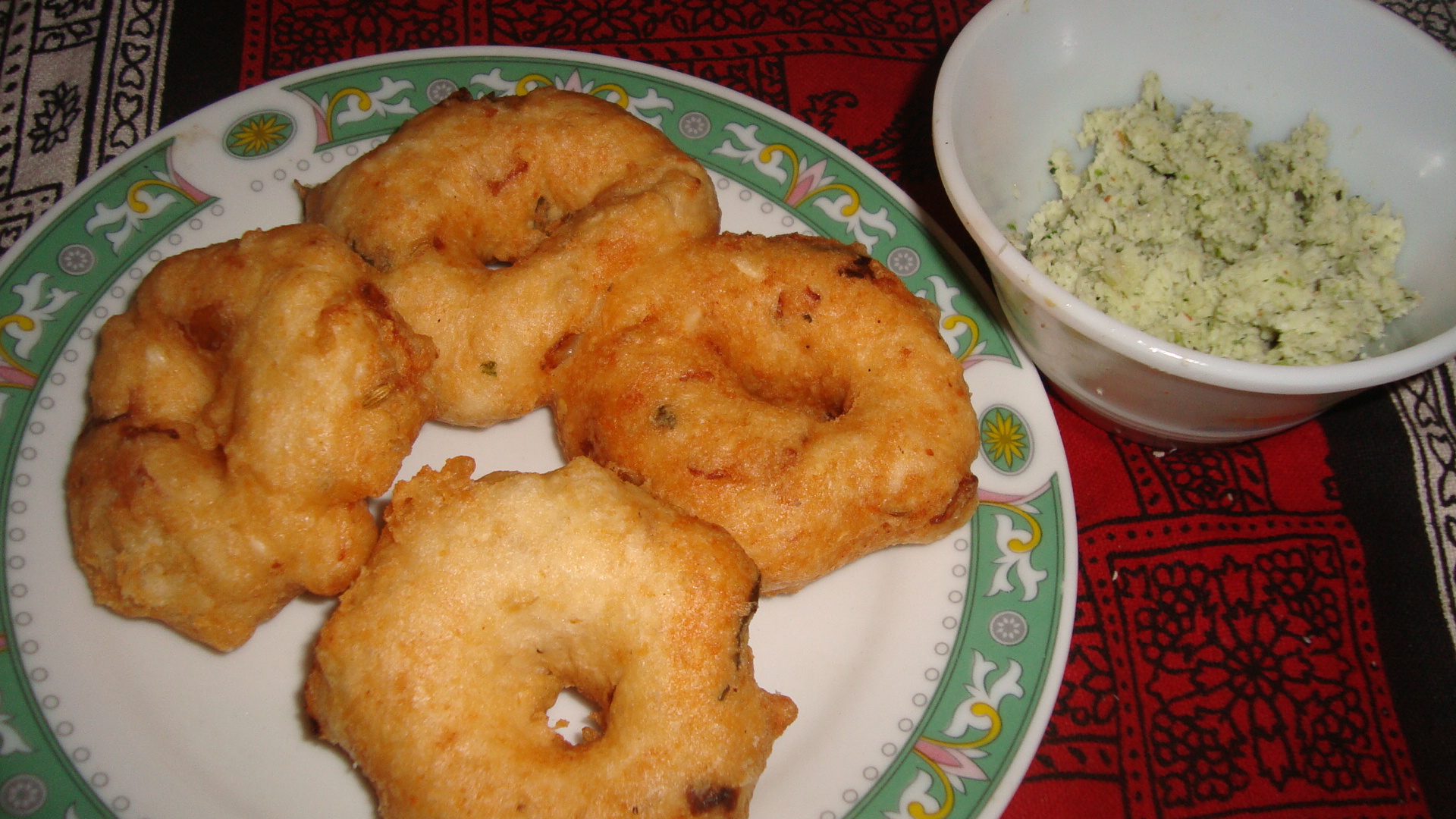
Today, I will share my mother’s recipe for her famous vadais as well as a green gram snack in my next post. Vadai can be breakfast food or a tea-time snack or can be served with lunch or dinner. It is the most common snack under the Tamil cuisine of the country and is quite popular around the country.

Vadai with Sambal

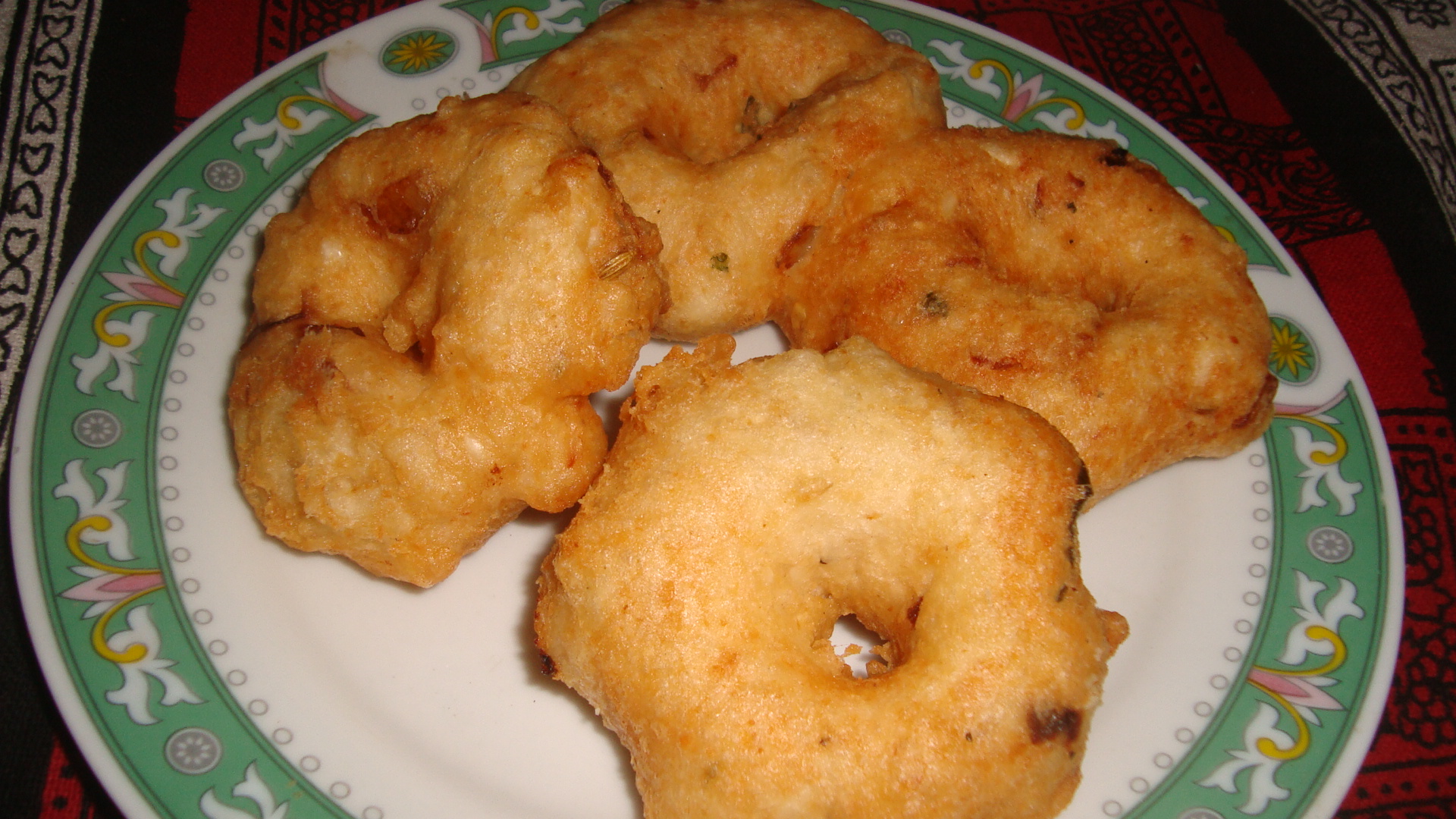
(a) Vadai

Cooking time: 20 – 30 mins + 4 hrs (fermenting time)

Makes 10 vadai

Vadai

Ingredients

  • Urad dal/ black gram – 1 cup, skin removed
  • Green chillies – 2, chopped
  • Onion – 1, medium sized and chopped
  • Curry leaves – 2 sprigs
  • Coriander leaves – 1 tbsp, chopped
  • Baking powder – 1 tsp (optional)
  • Low fat oil (sunflower or canola) – ½ litre (for deep frying) + 1 tsp (for sauté)
  • Salt, to taste

Method:

  1. Soak the black gram, without the skin, for 3 – 4 hours.
  2. Grind with a little water to thick batter.
  3. Heat 1 tsp oil in a pan and lightly sauté the chopped onion, chillies and curry leaves.
  4. Transfer the contents of the pan and the coriander leaves to the batter mix and add salt to taste. If you prefer, you can also add 1 tsp baking powder.
  5. Mix well and keep aside for 5 mins.
  6.  Heat ½ l oil in the pan.
  7. Take a piece of banana leaf or something equivalent, dab some water on the surface and put a spoonful of batter onto the leaf. Shape it into a round or elliptical shape with a hole in the middle, like a mini doughnut.
  8. Transfer to the oil pan, 3 to 4 at a time, and fry until golden brown on both sides.
  9. Serve with pachai sambal.

 (b) Pachai sambal

Preparation time: 5 – 10 mins

Serves 4

Pachai Sambal

Ingredients:

  • Freshly scraped coconut – ½ cup
  • Green chillies – 2, chopped
  • Onion – ¼, chopped
  • Ginger – ½ “ (optional)
  • Curry leaves – 1 sprig, chopped
  • Salt, to taste

Method:

  1. Mix and grind all ingredients and add salt, to taste.

Recipe source: Raji Thillainathan.

Kiribath with Lunu Miris

In lieu of a basic intro, I will quote a line from Indika’s email:

“you don’t eat kiribath with pol sambol it should be lunu miris.”

So, Indika’s second recipe for the day is the traditional combination of kiribath with lunu miris.

(a) Kiribath

Cooking time: 30 mins

Serves 2

 Ingredients:

  • 1 cup rice
  • Coconut milk
  • pinch of salt

Method: 

  1. Soak 1 cup rice in water for few minutes.
  2. Boil the rice with coconut milk till rice is very soft (When adding coconut milk  mix pinch of salt to the coconut milk and add it to the rice).
  3. When the rice is boiling mix with a wooden spoon.

 (b) Lunu miris

 Ingredients: 

  • 10 small onions cut into pieces
  • 02 tablespoons crushed red chillies
  • Pinch of table salt
  • Few drops lemon juice

 Method:

  1. Add first three ingredients together and mix it in a grinder for 01 minute.
  2. Take the mixture out and add the lemon juice.
  3. Serve with Kiribath.

Recipe Source: Indika K.