Pongal

My mother often recounts a story from her childhood years, particularly ones that include her grandmother. One story she is fond of narrating is about how her grandmother used to undertake her own farming and not use machines or chemicals. My great-grandmother, who was the last farmer in our family lost her husband at a young age and raised her three children on her own. She had some paddy land and a small vegetable farm, which she managed to buy with her own earning. While she did hire farm labourers when needed, she did a lot of work on her field herself. Also, she raised cows and goats and undertook organic farming. Compost was made on her farm and used in her field. She had her land ploughed with a hand-plough and planted the paddy seeds. When the seeds started growing, just like any other small time farmer, she undertook the weeding together with the help of some hired hands.

The harvesting season was a special process and the cut grain stalks would be loaded onto bullock carts and brought home for the grains to be separated from the husks. By the time they were brought home, it would be night. As there was no electricity in their home at that time, three or four petromax lamps were lighted. My mother remembers that she was very much excited during those days and didn’t want to go to sleep but stay up and watch. It seemed like a carnival at her grandmother’s home, with the place lighted up and movement of people throughout the night.

A pole was planted in the middle of the yard and large woven mats placed around the pole. The cut stalks were spread on the mat. The buffaloes were tied to the pole and two or three hired help would walk the buffaloes around the pole. This was the old process to separate the grains from the husks. My mother remembers watching the men walk the buffaloes calling out, “poli.” The stalks were then picked up and thrashed onto the mat and the grains would separate out and fall. These were then packed up in sacks.
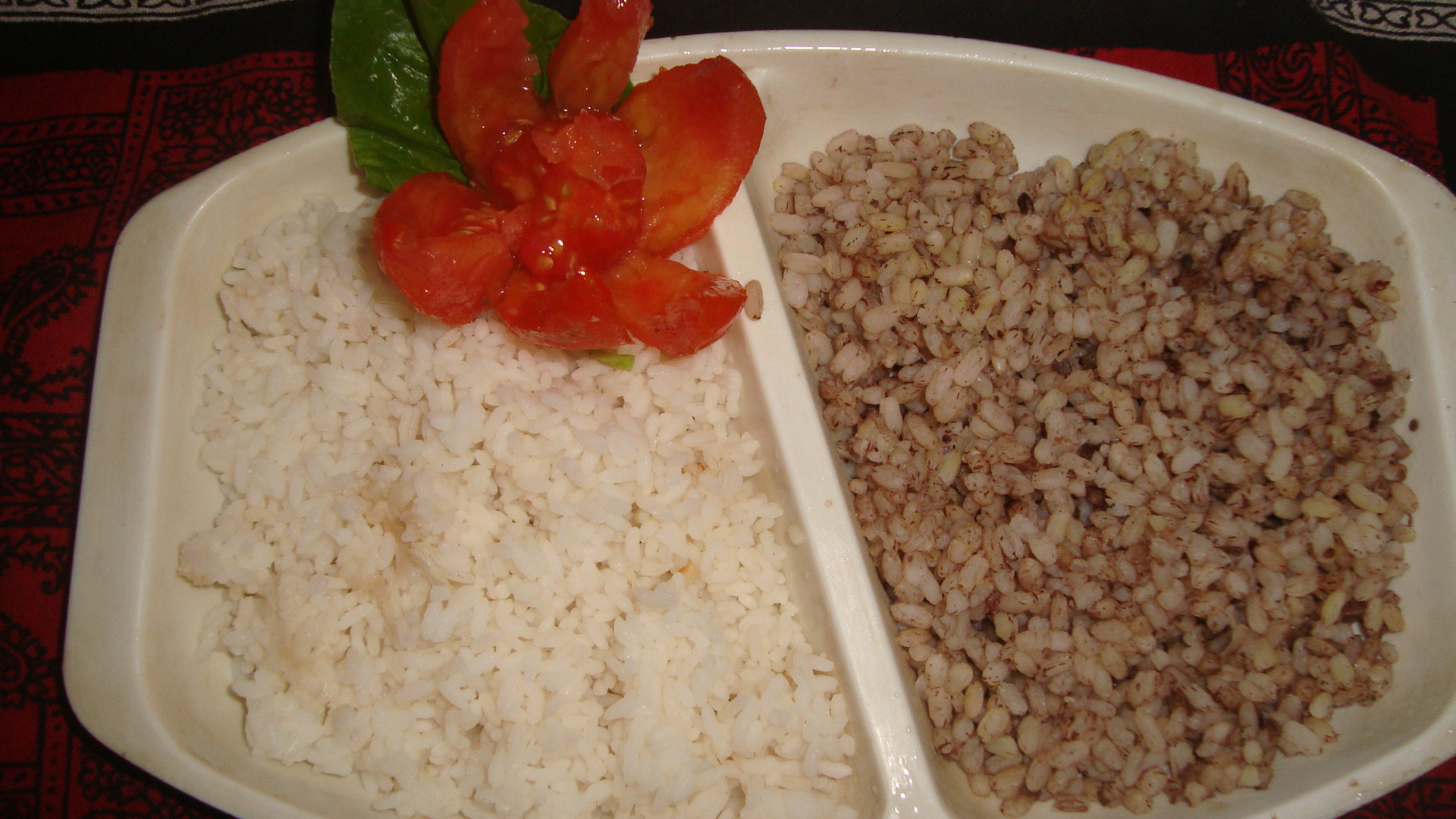
Local rice varieties

The first handfuls of grain were beaten in a stone or wood “ural” to separate the raw rice from the grain. This was made into the first pongal of the harvest. Everyone who helped would be invited for a meal and given bags of grains.

Family members who had died were also remembered on that day and a large variety of food was made. My mother mentions that a special offering was made that day, as part of the remembrance ritual, called the “puthir.” Her grandmother used to take some of the pongal made from the first rice from the harvest and spread it out on a large tray. Then, all types of available fruits were cut up and layered on top of the pongal. Honey was poured over the fruits. A sampling of all the vegetable curries that were made were also layered on top of the pongal-fruit-honey mix. Finally, ghee was poured over the tray of food and everything was mixed together. After the prayers were made, a little “puthir” was handed as “prasadham” (blessed offering) to everyone present.

Today, I will share the recipe of pongal that is made with the first harvest of the season by farmers and by non-farmers on festival days such as the Pongal festival in January, New Year in April and other celebrations.

Pongal

Cooking time: 30 to 40 mins

Serves 4 or 5
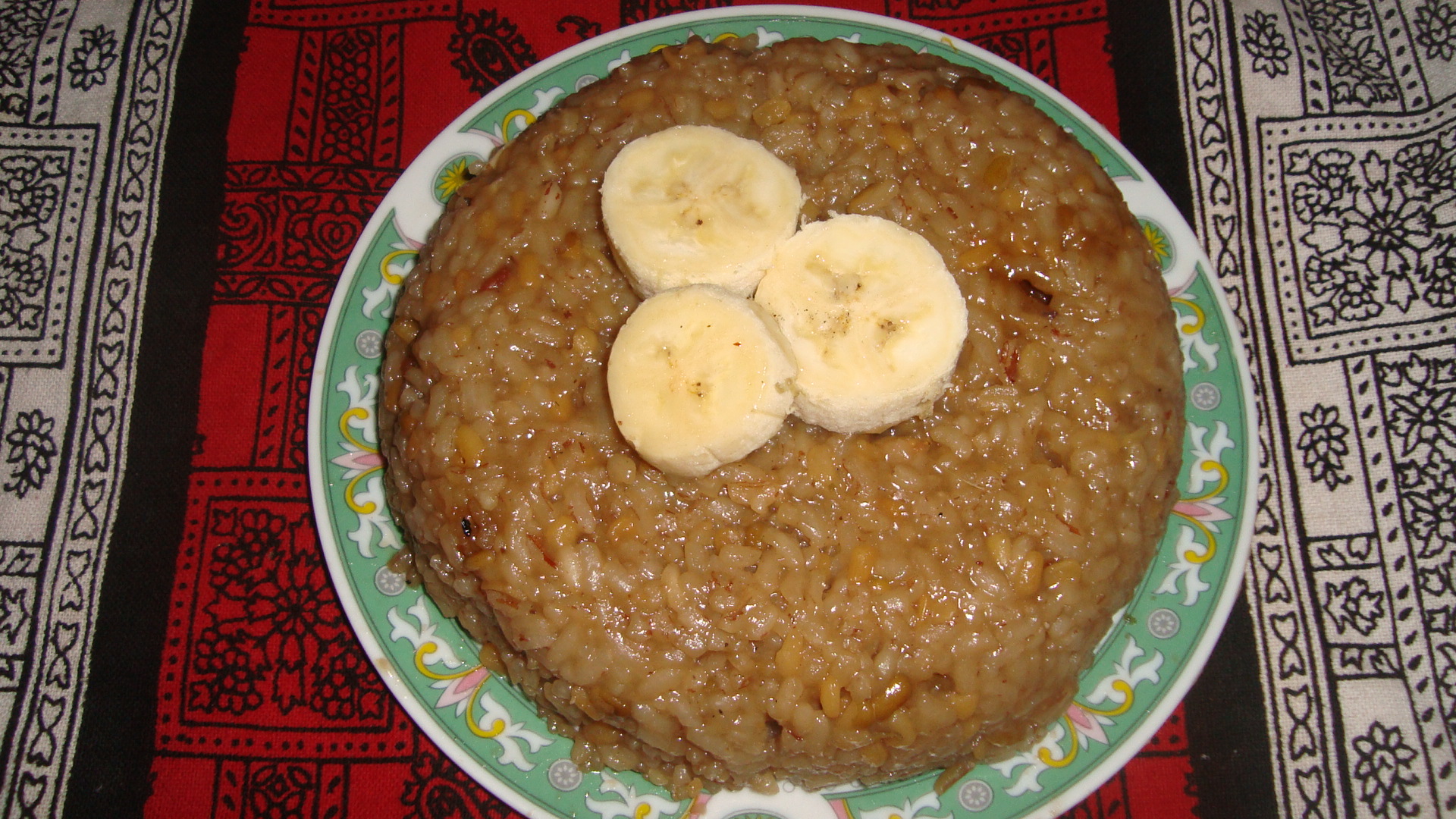
Pongal

Ingredients:

  • Rice – 1 cup
  • Roasted split gram (without skin) – ¼ cup
  • Jaggery – 1 cup (grated)
  • Coconut – ½
  • Cardamom – 4 or 5, crushed
  • Cashew nuts – few, chopped
  • Raisins – 1 tbsp
  • Water

Method:

  1. Wash the rice and gram and cook them in a pot with 2 ½ cups of water. Cook for around 15 to 20 mins, till the water dries up.
  2. Grind and extract coconut milk by blending the freshly scraped half of a coconut with 1 cup of water.
  3. Once the rice and gram is cooked, add the grated jaggery and mix.
  4. Then, add the coconut milk and crushed cardamoms. Bring to a boil on high heat and cook for a few more minutes before reducing the heat.
  5. Add the chopped cashew nuts. Cook until the pongal mixture starts coming together and starts to thicken.
  6. Just before removing from heat, add the raisins and mix.
  7. Remove from heat and cover.
  8. Serve pongal with bananas.

Recipe source: Raji Thillainathan.

Kiribath with Lunu Miris

In lieu of a basic intro, I will quote a line from Indika’s email:

“you don’t eat kiribath with pol sambol it should be lunu miris.”

So, Indika’s second recipe for the day is the traditional combination of kiribath with lunu miris.

(a) Kiribath

Cooking time: 30 mins

Serves 2

 Ingredients:

  • 1 cup rice
  • Coconut milk
  • pinch of salt

Method: 

  1. Soak 1 cup rice in water for few minutes.
  2. Boil the rice with coconut milk till rice is very soft (When adding coconut milk  mix pinch of salt to the coconut milk and add it to the rice).
  3. When the rice is boiling mix with a wooden spoon.

 (b) Lunu miris

 Ingredients: 

  • 10 small onions cut into pieces
  • 02 tablespoons crushed red chillies
  • Pinch of table salt
  • Few drops lemon juice

 Method:

  1. Add first three ingredients together and mix it in a grinder for 01 minute.
  2. Take the mixture out and add the lemon juice.
  3. Serve with Kiribath.

Recipe Source: Indika K.

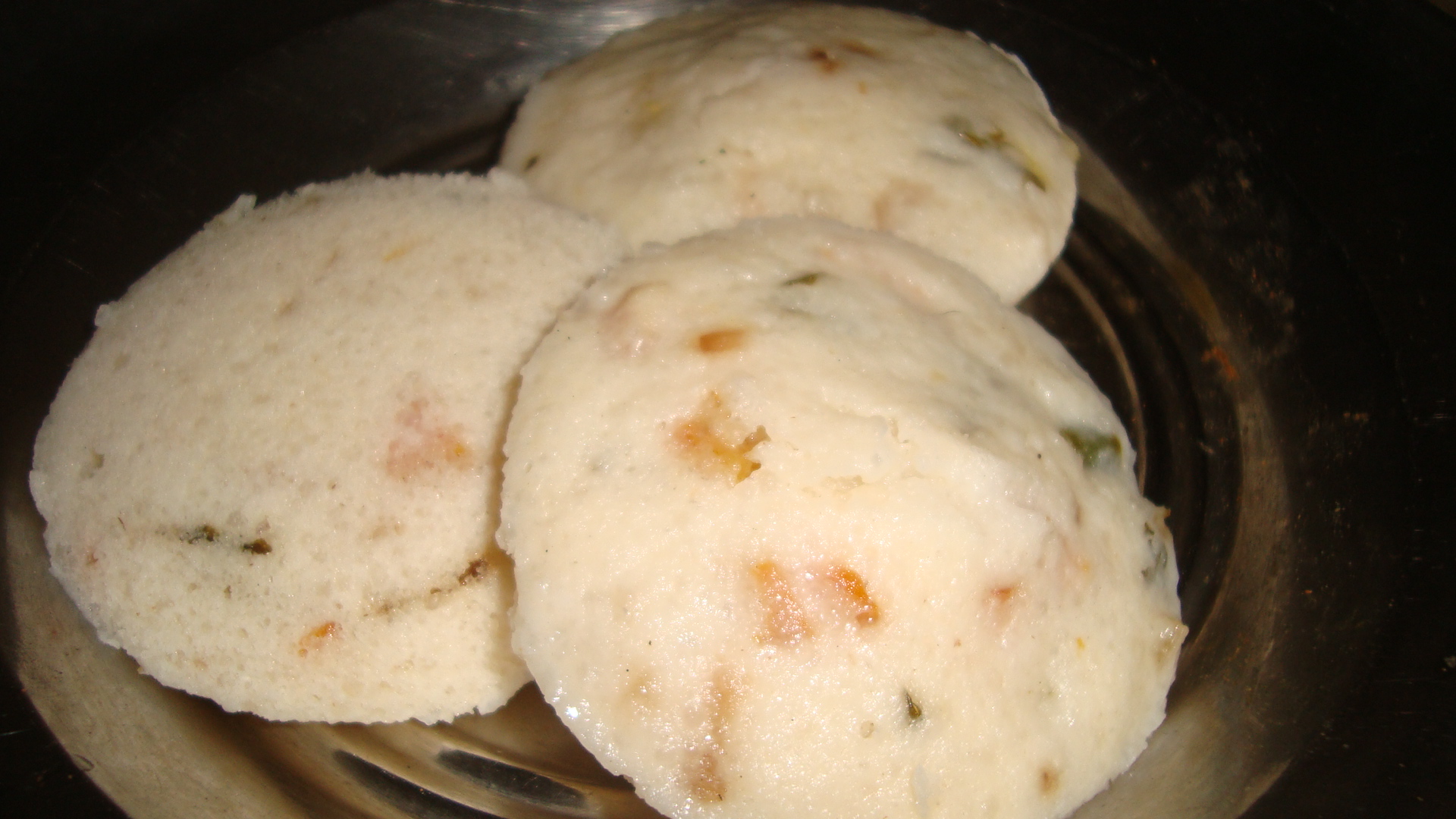
Mixed Veggie Idli with Sambal

My mother’s idlis and vadais are famous amongst family and friends. So, the two are regularly made at home. Unfortunately, I have never been fond of either and used to often eat instant noodles whenever they were being made at home. On the rare occasions that I did eat them, it had to be only that made by my mother. However, I became a fan the first time I tasted my mother’s experimental mixed veggie idli with sambal. I still don’t eat idlis or vadais outside of my home but I am no longer fussy when idli is on the dinner menu at home.

So, today, I am sharing my mother’s recipe for the mixed veggie idli and sambal.

Mixed veggie idli with sambal

Mixed Veggie Idli

Cooking time: 10 – 15 mins + Soaking and fermenting time: around 12 – 24 hours

Makes 16 idlis

Mixed veggie idli

Ingredients:

  • Urad dal (Black gram) – ½ cup
  • Basmathi or samba rice – ½ cup
  • White raw rice – ¼ cup
  • Carrot – ¼ cup, grated
  • Leeks – ¼ cup, grated
  • Onion – ¼ cup, grated
  • Green chillies – 2, finely chopped
  • Fennel seeds – ½ tsp
  • Curry leaves, finely chopped
  • Coriander leaves, finely chopped
  • Baking powder – 1 tsp (optional)
  • Salt, to taste
  • Oil

Method:

  1. Soak the urad dal, samba or basmathi and white raw rice separately for a minimum of 6 hours.  Overnight soaking is better.
  2. Grind the dal and rice together with a little water to a thick batter consistency, much thicker than pancake batter.
  3. Cover and keep for 6 hours.
  4. After six hours, heat a little oil in a pan and lightly sauté the fennel seeds, chopped onions, curry leaves for a few seconds before adding the carrots, leeks and chillies and fry lightly. Remove from heat and cool.
  5. Stir in the sautéed vegetable mixture and the chopped coriander leaves into the batter mix. Add salt, to taste, baking powder (optional) and a little water so that the batter is easy to pick with a scooping spoon.
  6. Pour the batter onto the idli molds on an idli steamer and steam for about 10 mins.
  7. This batter mix makes 16 idlis.
  8. Serve hot with sambal.

Note: For those who do not have an idli steamer and wish to simply try out this recipe once, the alternative would be to pour the batter into a small bowl placed in a larger bowl with water and steamed, similar to a steamed pudding. The steamed idli can then be overturned onto a plate or tray and then cut into pieces. This would mean though that you would not get the standard or usual shape of idlis and would need to repeat the process a couple of times till the batter mix runs out. Then again, if you do end up liking what you eat, you would probably want to invest in a regular idli cooker with a four or five tiered idli stand for the next time around.

Sambal

Preparation time: 5 mins

Serves 4

Ingredients:

  • Scraped fresh coconut – 1 cup
  • Dried red chillies – 5, chopped
  • Onion – 1, medium sized, chopped
  • Curry leaves – 2 sprigs
  • Oil

Method:

  1. Heat a little oil in a pan and roast separately the chopped red chillies, then the curry leaves, chopped onion and finally the scraped coconut and remove from heat.
  2. Mix all and dry grind them to make the sambal.
  3. Serve with the mixed veggie idli.

Recipe source: Raji Thillainathan.
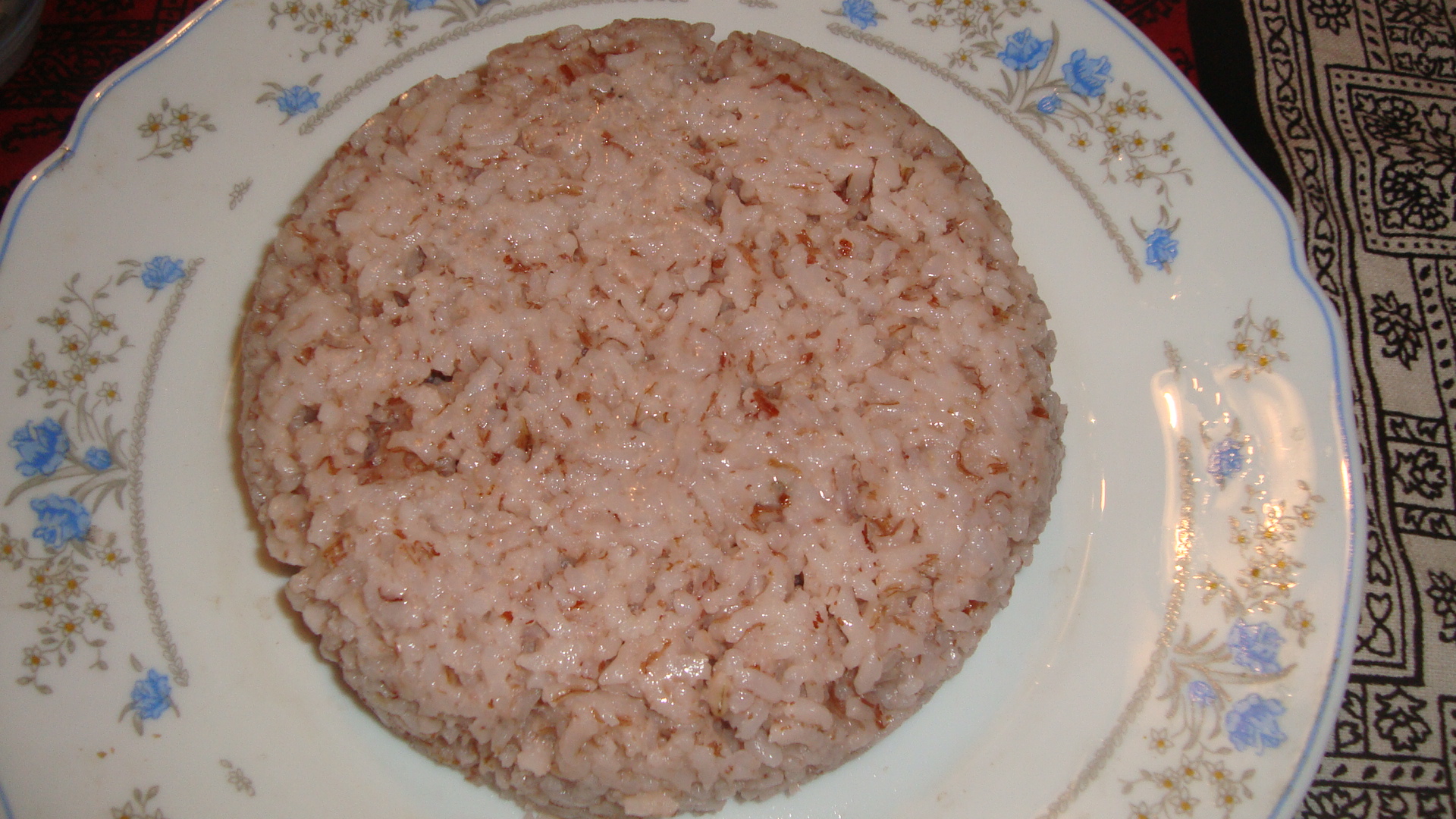
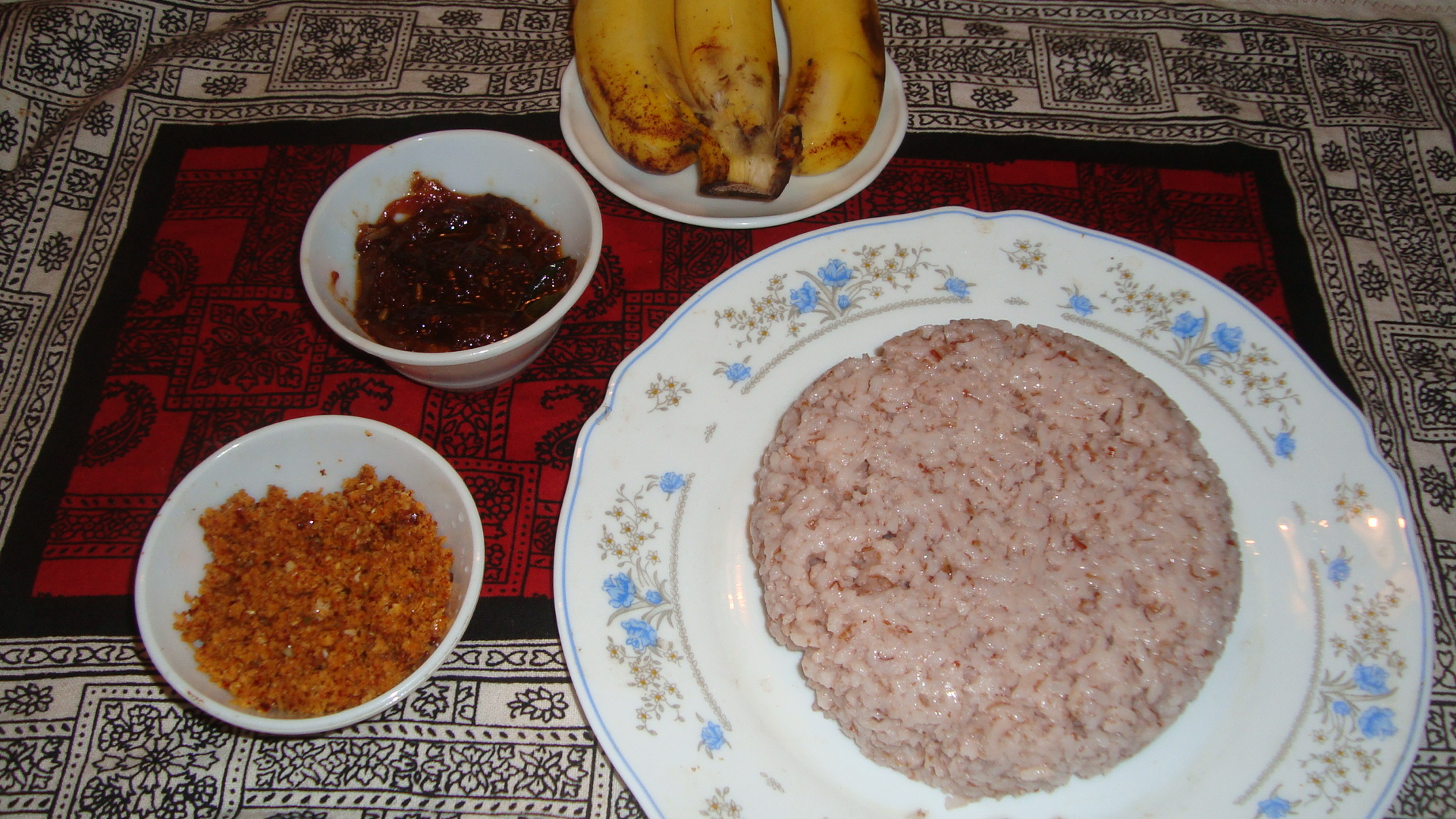
Kiribath with pol sambol and seeni sambol

This is my mother’s version of the traditional South Sri Lankan breakfast. It is very much part of the Sinhalese cuisine and a must during New Year celebrations and birthday breakfasts. I like kiribath, more so than the milk rice equivalent in Tamil cuisine called pongal. Therefore, my mother makes kiribath occasionally at home for breakfast. While I will be posting other kiribath recipes when sent in by friends, I am posting today my mother’s recipe for this coconut milk rice dish and accompaniments.

South Sri Lankan breakfast

The recipes below serve 3 – 4 persons.

(a) Kiribath

Cooking time: 20 to 25 mins

Kiribath

Ingredients:

  • Rice – 1 cup
  • Coconut powder – 3 tbsp
  • Salt, 1 tsp or to taste
  • Water

Method:

  1. Place the rice in a rice cooker and add water to about 2 inches above the surface of the rice. Add the coconut powder and mix. For those who prefer using fresh coconut milk, they can add the coconut milk of medium consistency instead of adding water and coconut powder.
  2. Add salt to the rice and milk mixture and boil the rice.
  3. Once the coconut milk rice has been cooked, it can be put in bowls. Before serving, upturn the molded rice onto a plate or tray.
  4. Serve with pol sambol, seeni sambol and bananas.

(b) Seeni Sambol

Cooking time: 15 mins

Seeni Sambol

Ingredients:

  • 1 onion, large
  • Fennel seeds – ½ tsp
  • Curry leaves – 1 sprig
  • Cinnamon – 1” stick
  • Tamarind extract – ½ cup extracted from 1 small ball of tamarind
  • Crushed chillies – 1 tsp
  • Sugar – 1 tsp
  • Low fat oil (canola or sunflower) – 1 tbsp

Method:

  1. Chop up the onion in thin, long slices.
  2. Heat 1 tbsp oil in a pan and sauté the fennel seeds, curry leaves and pieces of the cinnamon stick. Add the onions and sauté on low heat, for about 5 – 7 mins, till the onions lightly brown.
  3. Add the tamarind extract of medium consistency and crushed chillies to the pan and cook till the onion sauce thickens.
  4. Add 1 tsp of sugar, mix well and cook for about 2 mins more before removing from heat.
  5. Serve with kiribath.

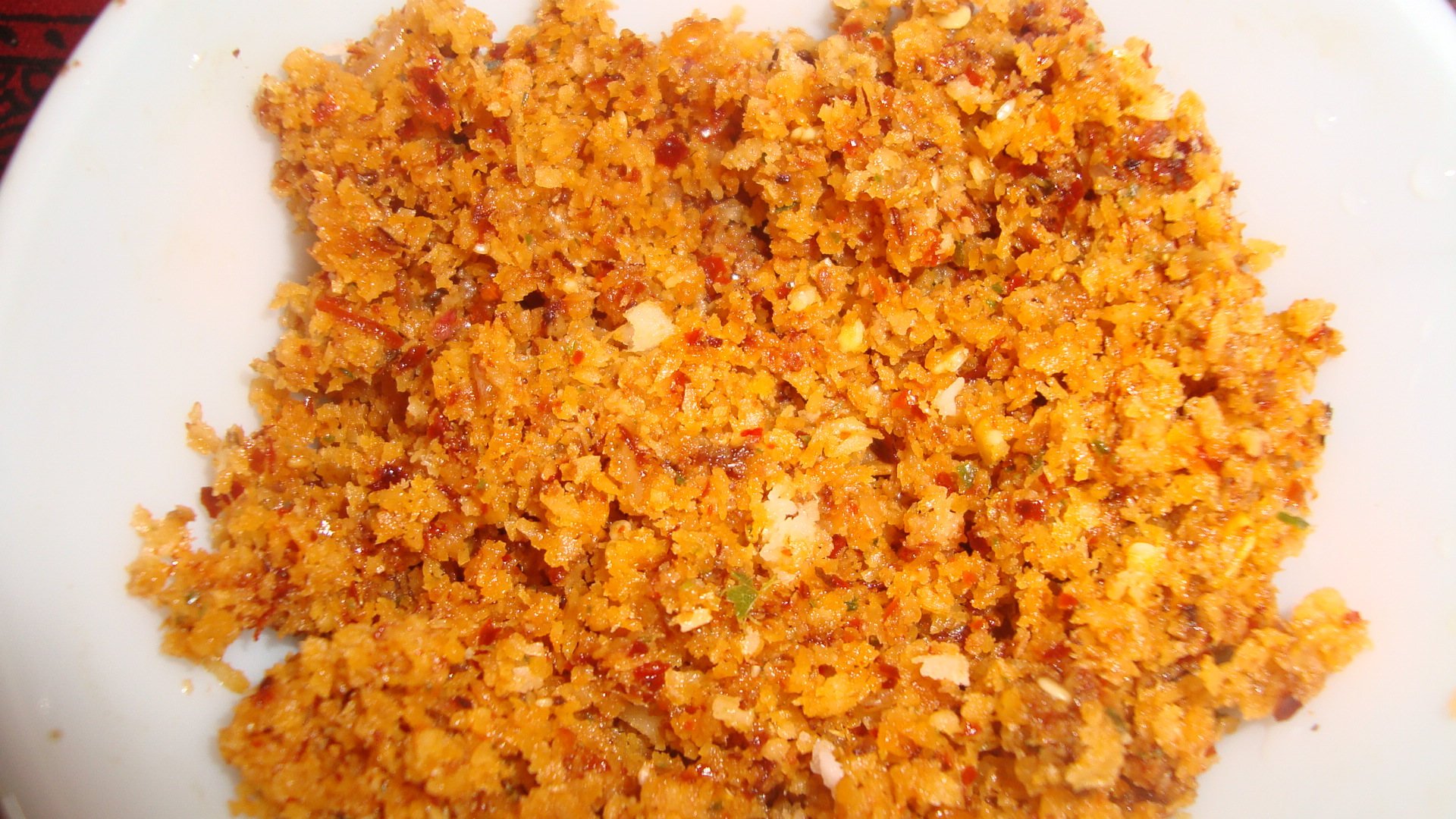
(c) Pol Sambol

Cooking time: 5 to 10 mins

Pol Sambol

Ingredients:

  • Scraped coconut – ½ cup
  • Dried red chillies – 3
  • Onion – 1 small
  • Curry leaves – 1 sprig
  • Low fat oil (canola or sunflower) – 1 tsp

Method:

  1. Chop up the chillies, onion and curry leaves and lightly sauté in a little oil.
  2. Remove the chillies, onion and curry leaves from the oil and mix with the scraped coconut.
  3. Add salt to taste and grind the mixture to a sambol texture.
  4. Serve with kiribath.

Recipe source: Raji Thillainathan.
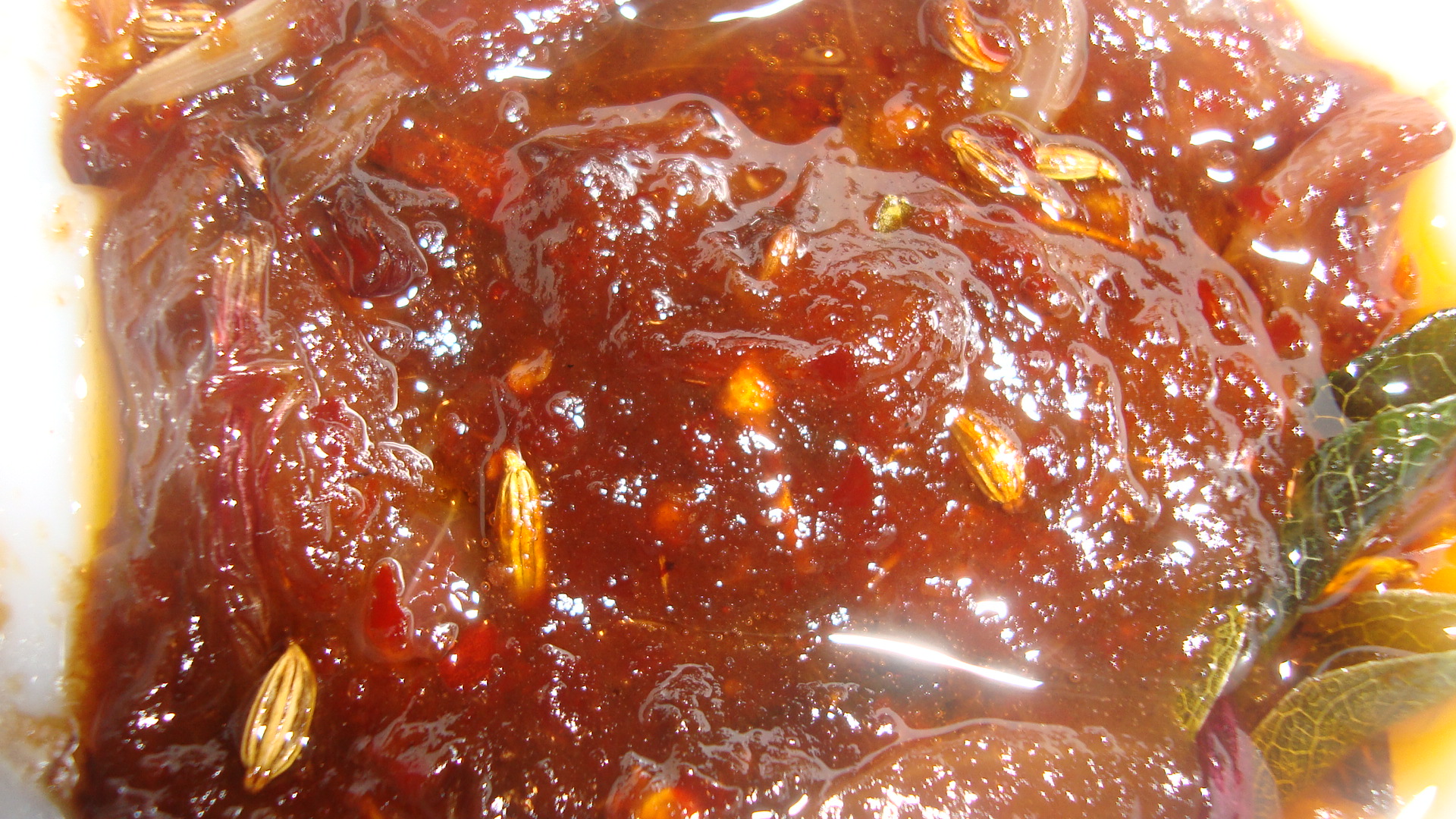
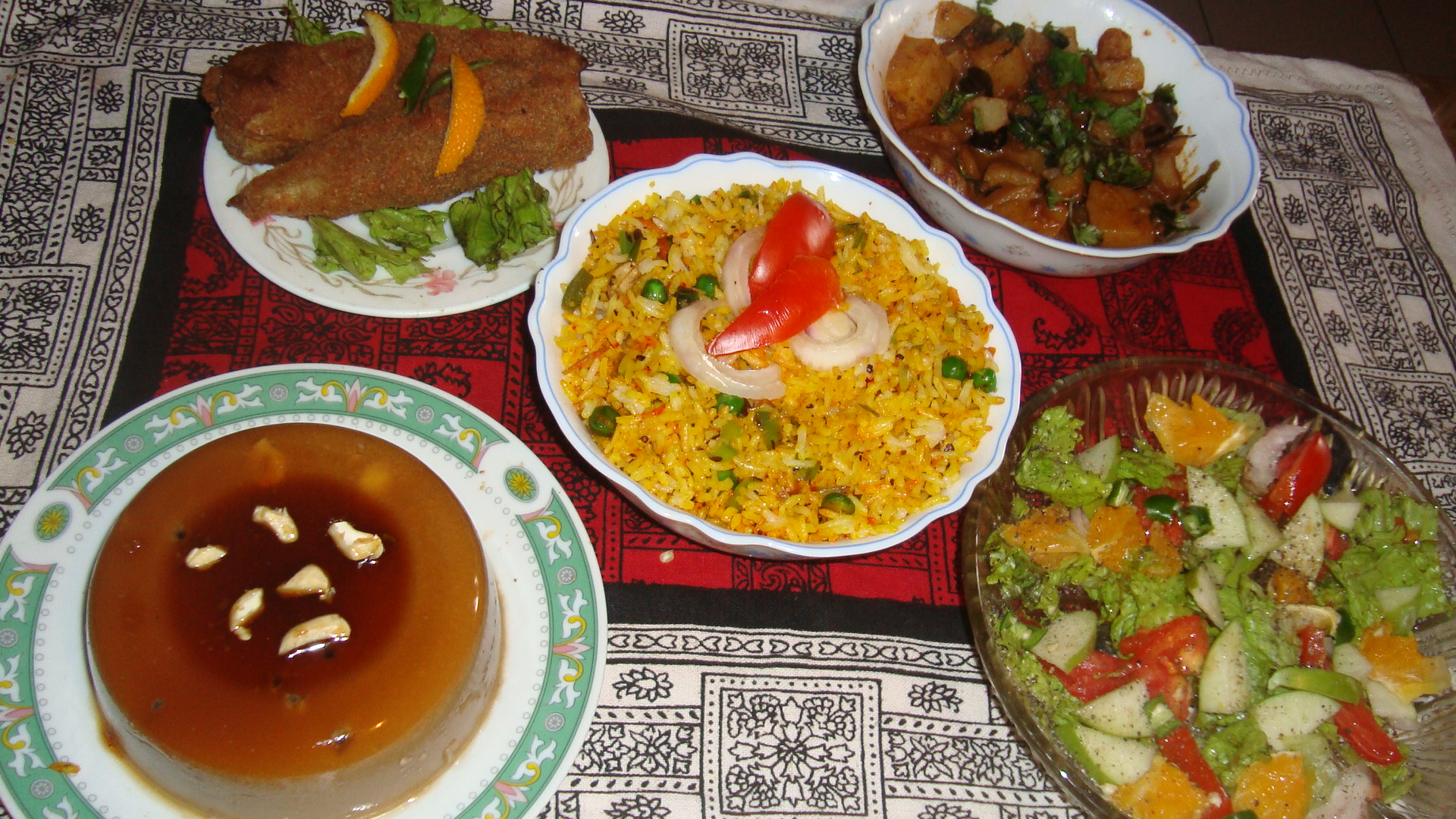
Fried rice

To celebrate Eid al-Fitr, my mother prepared a special lunch today: fried rice with potato curry, stuffed chilli fry, salad and wattalapam jelly pudding. So today, I will share my mother’s recipes for all five dishes, which comes under experimental and fusion cooking, in a series of posts.

Eid lunch special

(a) Fried rice

Cooking time: 30 mins

Serves 4

Fried rice

Ingredients:

  • Basmathi rice – 2 cups
  • Carrot – ¼ cup, chopped
  • Green peas – ¼ cup
  • Leeks – ¼ cup, chopped
  • Onion – ¼ cup, chopped
  • Mixed 3C spice powder – Clove, cinnamon, cardamom powder – 2 tsp
  • Kesari powder – ½ tsp (Can use biryani powder or saffron or turmeric powder)
  • Low fat margarine – 50g or 3 tbsp
  • Cinnamon – 1 ~ 2’’ stick
  • Rampe leaf/ pandan
  • Salt, to taste

Method:

  1. Put the rice in a rice cooker and add water to about an inch above the rice surface. Add a cinnamon stick, rampe leaf and a little salt and cook the rice.
  2. Sprinkle a little salt on the chopped veggies and keep aside.
  3. Heat the margarine in a pan on low heat.
  4. Add the mixed 3C spice powder and sauté for 2 seconds before adding the chopped vegetables.
  5. When the veggies become tender, add the kesari powder.
  6. Add the cooked rice and mix well.
  7. Serve hot.

Recipe Source: Raji Thillainathan.