Sambhar Rice

The rice dish for today is Sambhar Rice.
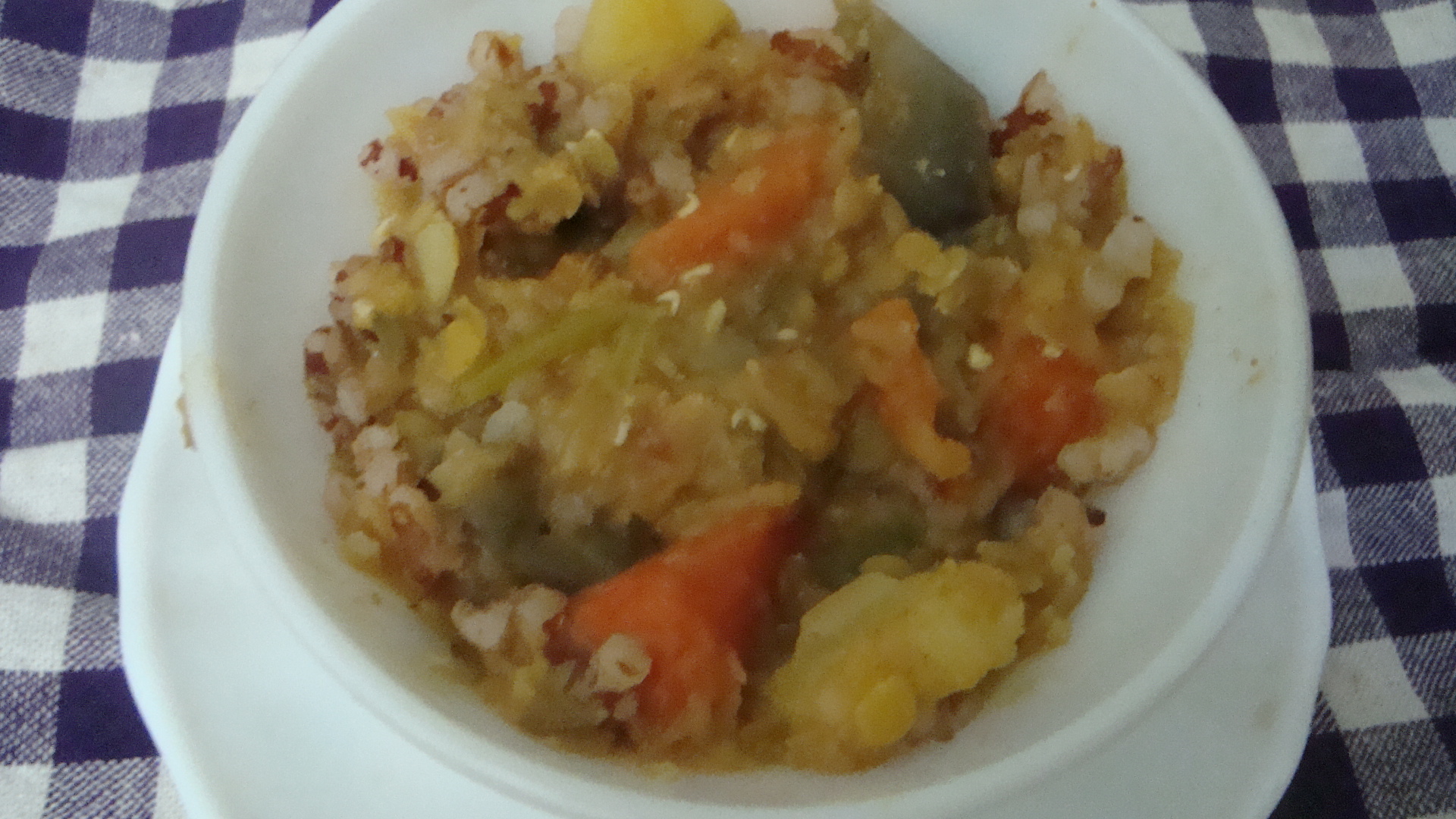
Sambhar RiceAs sambhar refers to a mixed vegetable stew like dish, I thought of mimicking the dish in my featured music groups today.

Starting with Thriloka, a fusion band formed in 2005 blending traditional Sri Lankan folk music and progressive rock.

The second clip features Paranoid Earthling, whose music is a blend of experimental and psychedelic rock. The song shared here was first performed by them on the international peace day in 2008.

The last clip features Chitral Somapala and Civilization One, a power metal band, which is not a Sri Lankan band but I decided to feature them by extending the definition to include the Sri Lankan who launched the band.

Enjoy the Sri Lankan rock music scene as you try out the recipe!

Sambhar Rice

Time taken: 45 mins

Serves 4
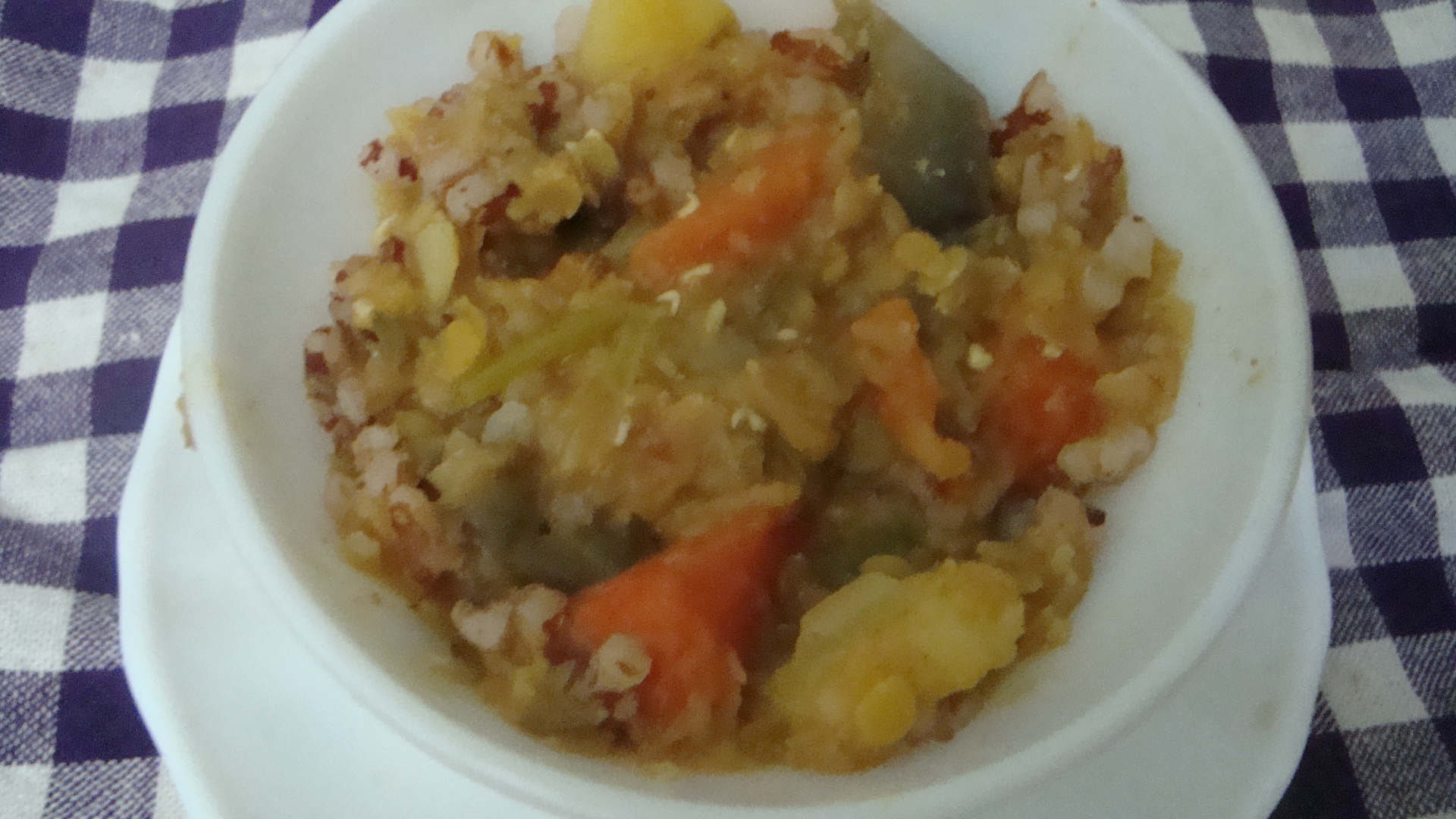
Sambhar rice2

Ingredients:

  • Par-boiled red rice – 1 cup
  • Carrots – ½ cup, chopped
  • Beans – ½ cup, chopped
  • Brinjal – ½ cup, chopped
  • Mysore dhal – ¼ cup
  • Onion – ½, chopped
  • Chilli – 1, chopped
  • Curry leaves – 1 sprig
  • Tamarind juice – ½ cup
  • Curry powder – 1 tsp
  • Pepper – ½ tsp
  • Garlic cloves – 4 or 5, crushed
  • Salt, to taste

Method:

  1. Boil the rice and keep aside.
  2. Separately, cook the vegetables (carrots, beans and brinjal) and dhal together with the chopped onion, chilli and curry leaves in a cup of water.
  3. When the water dries up, add the tamarind juice add the curry powder, pepper powder, crushed garlic cloves and salt to the vegetables.
  4. Once the sambhar starts to thicken, add the rice, mix well and let it simmer for 5 to 10 mins.
  5. Serve the sambhar rice with pappadum.

Recipe source: Raji Thillainathan.
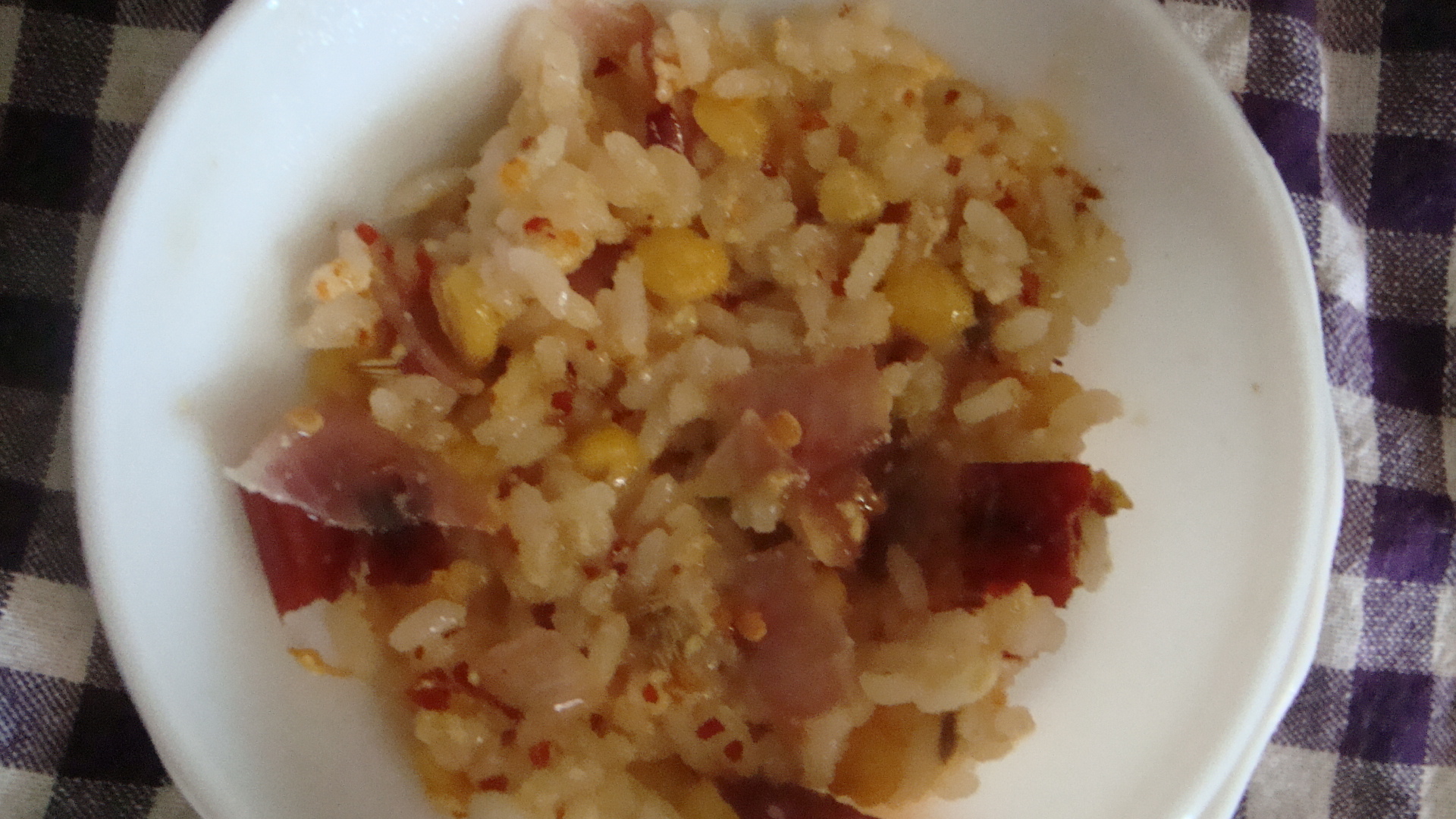
Spicy Curd Rice

The rice dish for today is a tasty spicy, curd rice.

Spicy curd riceWhile not a fan of hip hop, I felt like featuring three musicians who are primarily considered hip hop artists though several of their songs cross over to other genres.

The first is Iraj Weeraratne. His songs like  J town story, Gemak Deela caught my ears and eye over the years. In more recent years, he seems to be more engaged in composing or singing in Indian movies and multi-country collaborative song productions. The song that I am sharing here is from his debut album a decade ago – ‘J town Story’ with Krishan featuring Yawuwanan and Infaas.

The second featured musician is Ranidu Lankage. A R&B and hip hop musician and an economics graduate of Yale university, his first solo album released a decade ago was a huge success. Here, I am sharing the song that made him famous – Ahankara Nagare (the remix version with Iraj). While I haven’t listened to many other songs of his, I did like a recent song that he dedicated to all mothers – Amma mathakai nam.

The third featured musician of the day is Ashanthi de Alwis. She has released four music albums and featured in several songs of Bathiya and Santhush (I shared a recent production of the popular music duo in last week’s post). The song of Ashanthi’s shared here is an upbeat, catchy song ‘Papare’ featuring Krishan.

Spicy Curd Rice

Time taken: 30 persons

Serves 3

Curd RiceIngredients:

  • Rice – 1 cup
  • Curd – ½ cup
  • Crushed chillies – 1 tsp (optional)
  • Chickpeas – 1 tbsp, fried
  • Dried red chillies – 2, chopped (adjust according to taste)
  • Onion – ½ , chopped
  • Fenugreek – 1 tsp
  • Curry leaves – 2 sprigs
  • Sesame/ Gingelly oil – 1 tbsp

Method:

  1. Lightly fry the chopped onion, fenugreek seeds, curry leaves and chopped dried chillies in a tablespoon of sesame oil.
  2. Add the crushed chillies and fried chickpeas to the pan.
  3. Next, add the yoghurt and mix well before adding the boiled rice.
  4. Stir well before removing from heat and serve immediately.

Recipe source: Raji Thillainathan.

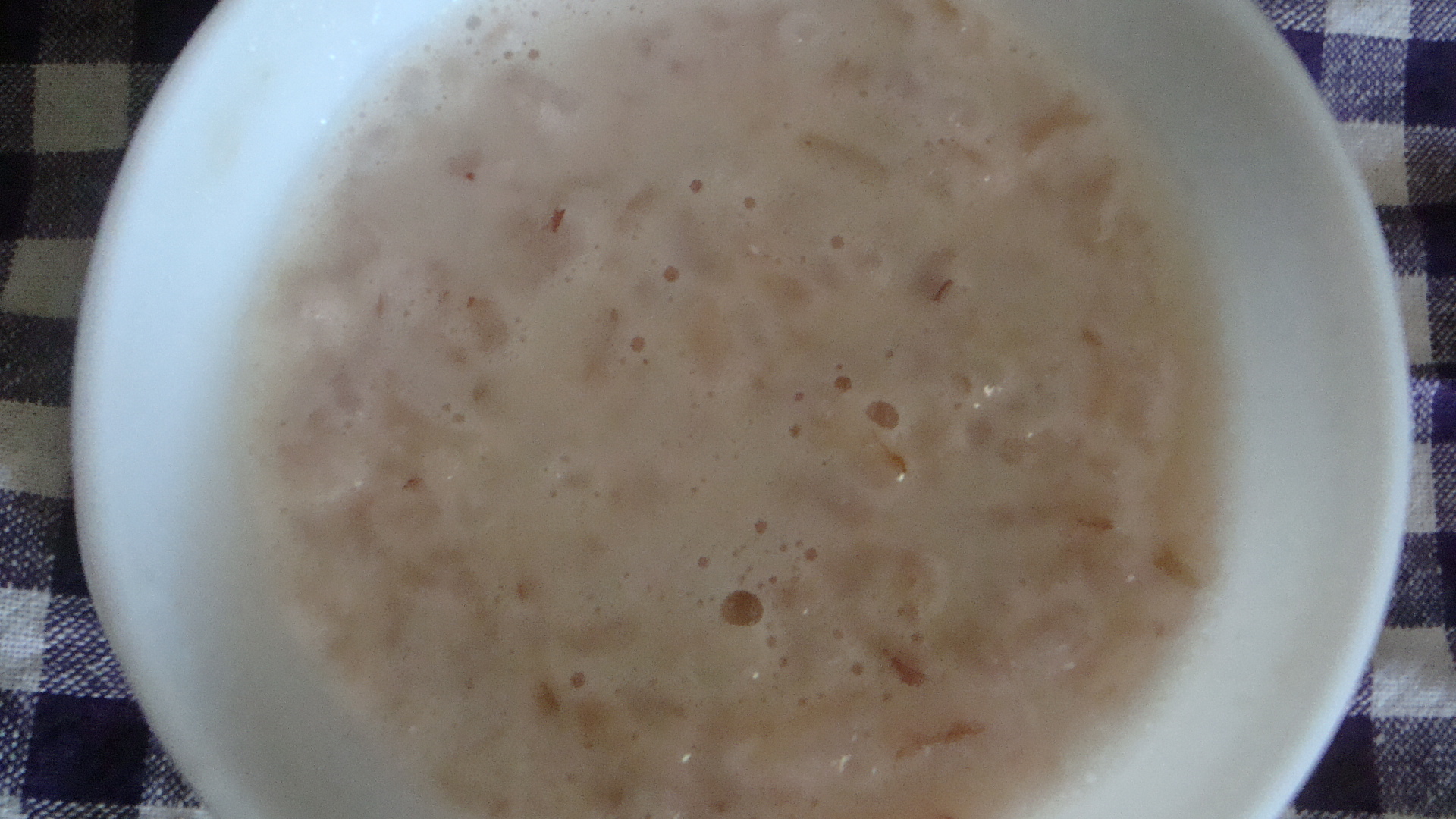
Kanji

Today’s dish is Kanji or rice porridge, a favourite of my father.

Kanji

The featured musician today is Pradeep Ratnayake. Given that one of my favourite musicians is Ravi Shankar, it follows that I also appreciate the music of the two best contemporary sitar players in Sri Lanka – Pradeep Ratnayake and Sarangan Sriranganathan (whom I featured in yesterday’s post). Pradeep Ratnayake’s sitar training started at the age of five and he eventually chose a degree in sitar at Santiniketan over a degree in mathematics. Among other concert performances, he initiated his Pradeepanjalee concerts in 1997 which has become an annual concert performed usually at a different location around the world.

The first piece of Pradeep Ratnayake shared here is an original composition titled ‘Kuweni Concerto for sitar, cello and orchestra: Movement 1.’

The second piece is Wine-coloured moon (Melbourne version) with Joe Chindamo (piano), Alston Joachim (bass) and Daniel Farrugio (drums).

Enjoy the instrumental music clips while trying out the rice porridge (Kanji).

Kanji

Time taken: 20 mins

Serves 2

Kanji2Ingredients:

  • Red raw rice – 2 tbsp
  • Milk (Coconut or non-fat)  – 1 cup
  • Water – 1 cup
  • Salt, to taste
  • Pepper – ¼ tsp (optional)
  • Garlic – 2 or 3 cloves, chopped (optional)
  • Sugar – 1 tsp (optional)

Method

  1. Cook 2 tbsp of red raw rice in 1 cup of water for about 10 – 15 mins.
  2. Once the water dries up, add the milk to the cooked rice along with a pinch of salt. The optional ingredients such as pepper and garlic can be added now, if required. Cook for about 5 mins.
  3. Transfer to the serving bowls. Add a dash of sugar, if you like. Serve warm.

Recipe source: Raji Thillainathan.
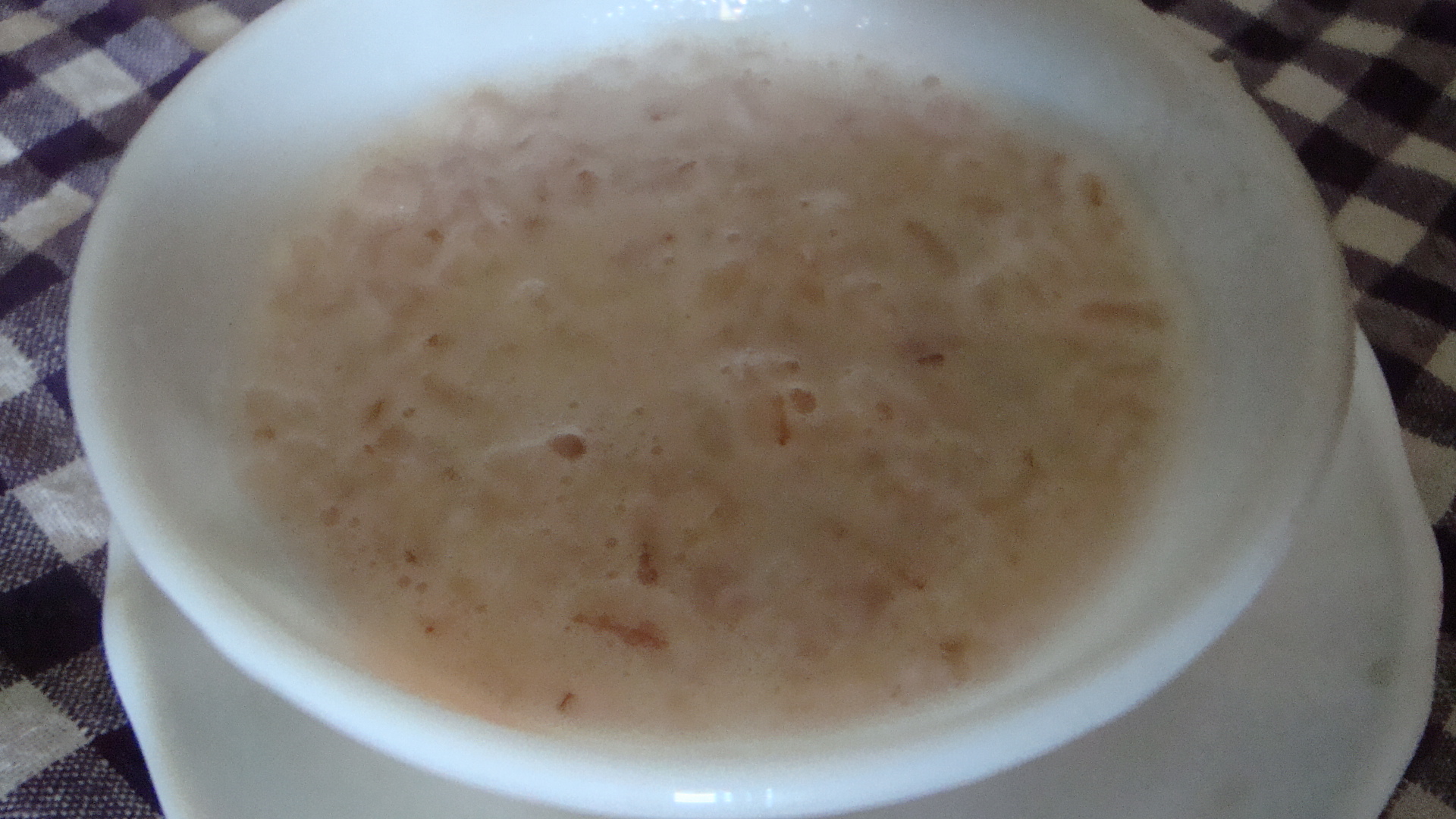
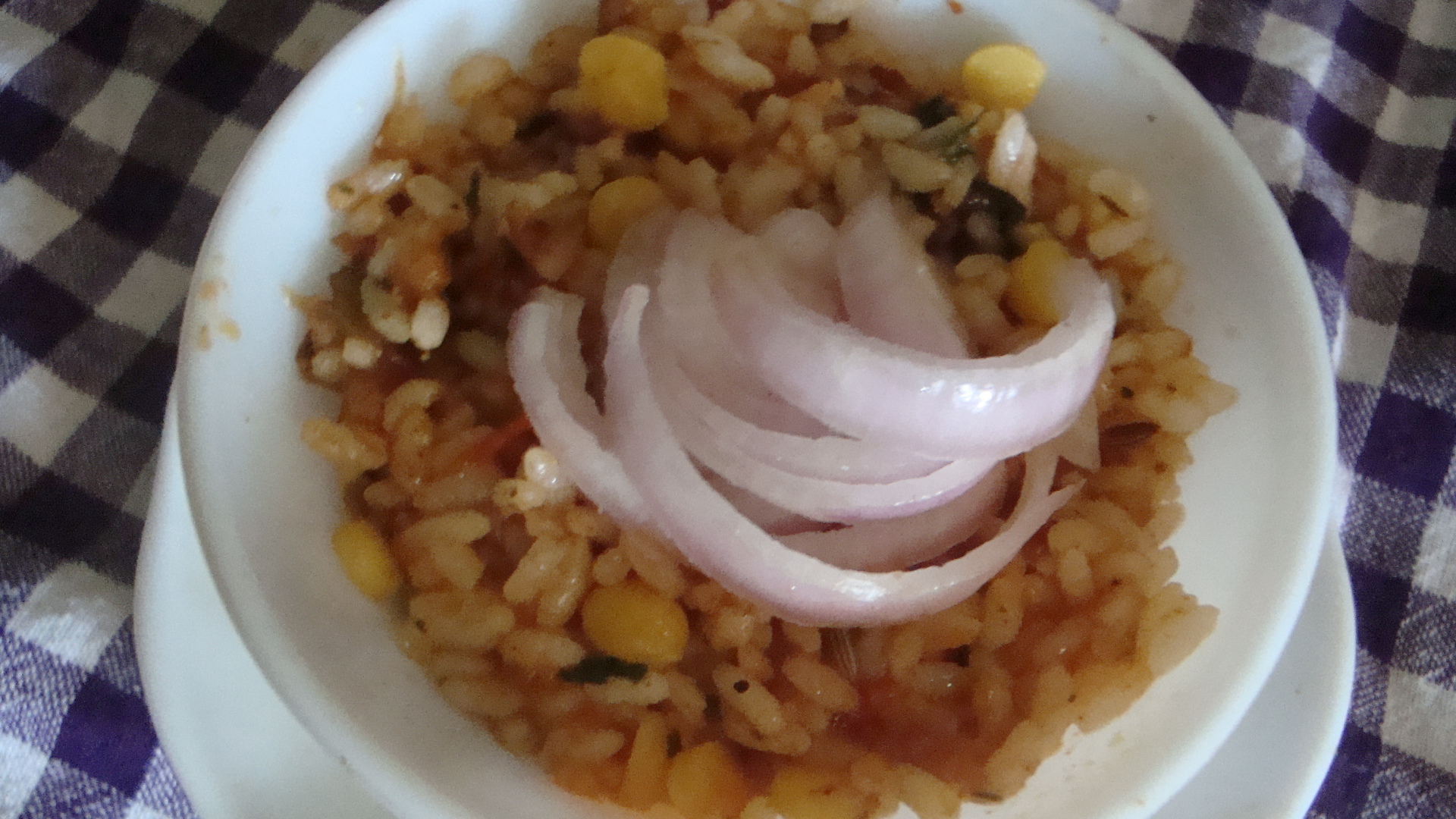
Tomato Rice

My mother wanted to have a rice series so I will be sharing some of her rice recipes starting today with tomato rice.

Tomato riceWith each of the rice dish recipe, I will also be sharing a song or two by an interesting, contemporary Sri Lankan musician whose music I have enjoyed. Today’s featured musician is Sarangan Sriranganathan. Coming from a musical family, he has been on the Sri Lankan music scene for at least fifteen years.  For today, I chose two video clips that I was able to find online. The first is an original composition by Sarangan – அவள் ஒரு மெல்லிய பூங்காற்று (literal translation: She is a light, fragrant breeze) featuring famous Indian musician Hariharan.

I like that he is well able to shift between classical and popular music and I particularly like the classical music concerts. So, my second video clip is Sarangan’s performance in Sydney of one of his mother‘s original compositions ‘Bhava Raaga Thaala – Thillana.’

Enjoy the delicious tomato rice as you listen to the music clips! 🙂

Tomato Rice

Time taken: 30 mins

Serves 3

tomato rice 2Ingredients:

  • Rice – 1 cup, boiled
  • Tomatoes – 2
  • Onion – ½ , large
  • Curry leaves – 1 sprig
  • Fenugreek – 1 tsp
  • Chilli powder – ½ tsp
  • Chickpea – 2 tbsp, fried
  • Oil – 1 tbsp

Method:

  1. Heat the oil and lightly fry the onion, curry leaves and fenugreek.
  2. Add chopped tomatoes and chilli powder and continue frying for a few minutes before removing from heat.
  3. Blend the cooled tomato mixture into a puree.
  4. Re-heat the puree in the pan adding some water, if required.
  5. Add the boiled rice and the fried chickpea to the pan and mix well.
  6. Serve with sliced onion or onion salad.

Recipe source: Raji Thillainathan.
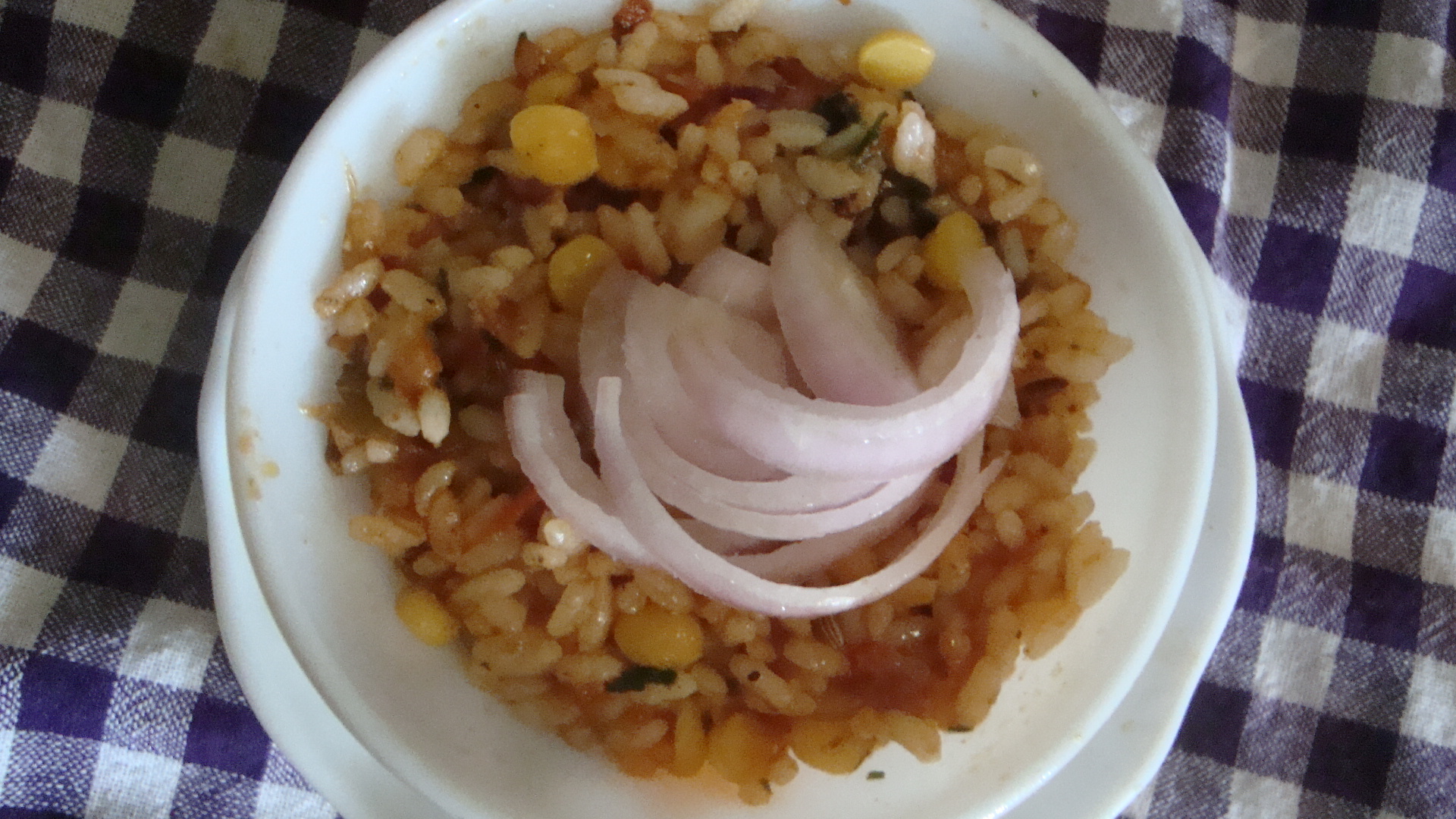
Mung Kavum

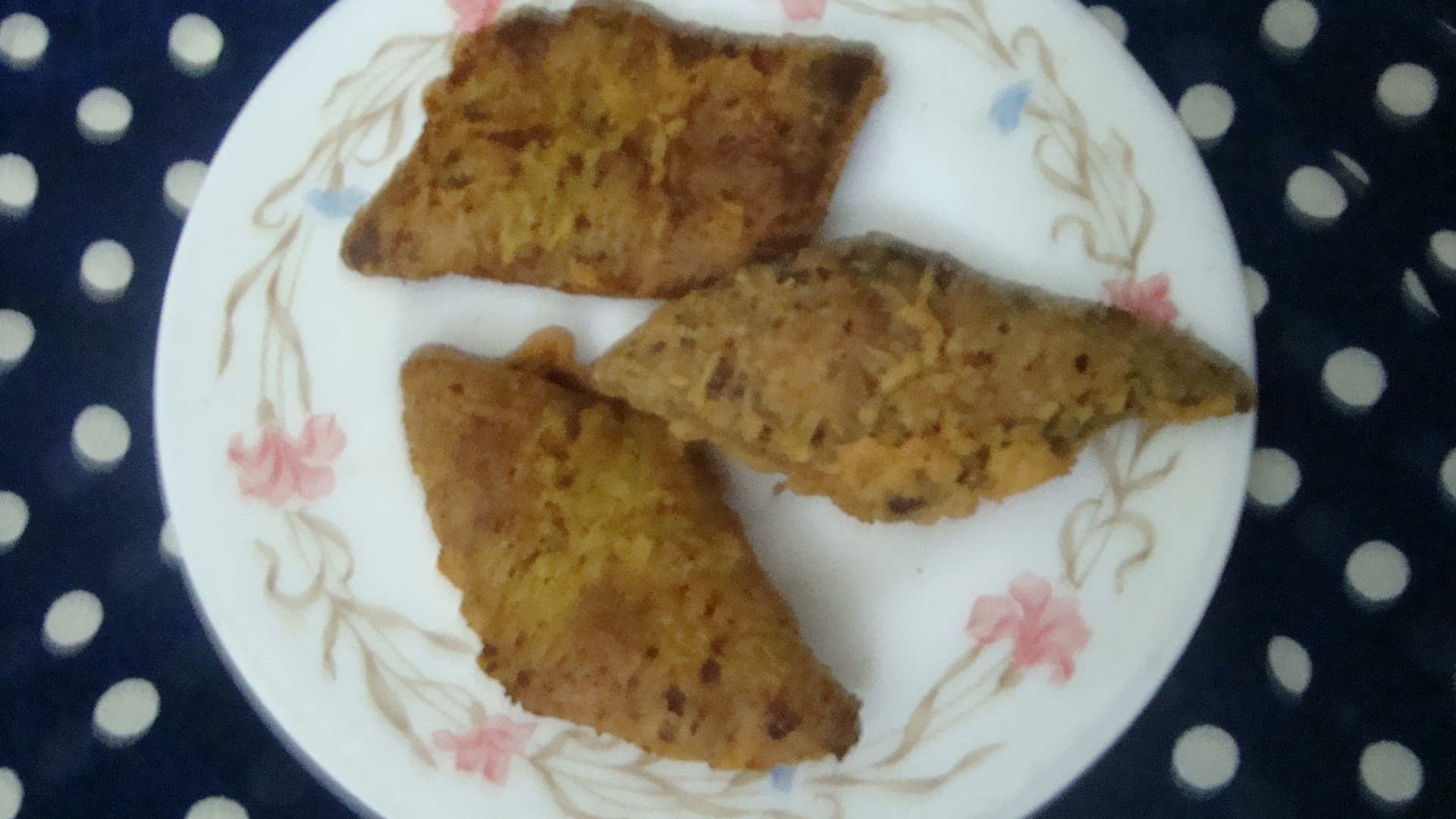
Mung Kavum is another New Year delicacy. I find it similar to payatham paniyaram, a north Sri Lankan festival snack that is usually prepared at my home. The difference is that in the north, it is made a little more spicy by the addition of cumin and pepper.

Mung KavumAs I am writing this, I am listening to a new song of Bathiya & Santhush, a popular Sri Lankan band. Sharing it with you as well.


Mung Kavum

Time taken: 1 hour

Makes 25 – 30

Mung KavumIngredients:

  • Rice flour – 500g + 250g
  • Green gram flour – 1 Kg
  • Pol pani/ Coconut treacle – 3 cups (~700ml)
  • Margarine – 3 tsp
  • Cardamom powder – 1 or 2 tsp
  • Turmeric powder – ½ tsp
  • Salt, to taste
  • Oil, for deep-frying

Method:

  1. Warm up the pol pani. Remove from heat.
  2. Add 500g rice flour, green gram flour, cardamom powder and margarine to the warmed up pol pani.
  3. Mix together to form a dough and roll it out. Cut into diamond shapes and keep aside.
  4. Prepare the batter by gradually adding water to 250g rice flour mixed with ½ tsp of turmeric powder and a pinch of salt.
  5. Heat the oil in a pan.
  6. Dip the diamond shapes in the batter to coat it on all sides and then deep-fry.

Recipe source: Lalitha Senadheera.

Kokis

Today’s New Year traditional dish recipe is that of Kokis. It is a type of fried cookie which I used to think was typically Sri Lankan. However, during my Indian culinary journey last year, I came across Ruchik Randhap’s Mangalorean cuisine site and there was a recipe for Kokis (referred to in Mangalore as Kokkisan or Rose cookies). One of my friends from Sweden, Malin, then informed me that kokis reminded her very much of the Scandinavian traditional cookies called Rosettes. I guess the cookie found its way to India and Sri Lanka during the Dutch era here.

The only difference in Sri Lanka is that unlike in the rest of the countries where it is a very traditional Christmas cookie, in Sri Lanka it is part of the Sri Lankan New Year food (celebrated primarily by the Buddhists and Hindus in the country) and not part of the Christmas cuisine.

Kokis

Time taken: 1 ½ hours

Makes 35 to 40

KokisIngredients:

  • Rice flour – 500g
  • Turmeric – ½ tsp
  • Coconut milk – 1 cup
  • Water – ½ cup
  • Egg – 1 (optional)
  • Salt, to taste
  • Oil, for deep-frying

Method:

  1. Mix all the ingredients together to make the batter.
  2. Heat the oil in a pan over medium heat.
  3. Prepare the kokis mould by placing it in the oil until it is heated.
  4. Plunge the mould into the batter until it is coated and then place it in the oil pan.
  5. Using a skewer or pointed end of a spoon or fork, gently slide the kokis off the mould as soon as it starts to puff up and is easy to slide it off without crumbling it.
  6. Fry the kokis until golden brown and remove from pan.
  7. Repeat the process by heating the mould in the oil for a few seconds before plunging it in the batter. This allows the kokis batter to first coat the mould and then to slide off without sticking to the mould.
  8. Store in an air-tight container.

Recipe source: Lalitha Senadheera.

Pongal

Happy Thai Pongal! இனிய தைப்பொங்கல் நல்வாழ்த்துகள்!

Tomorrow is Pongal for Tamils around the world. Pongal is a celebration that occurs annually on the first day of the month of ‘Thai’ (Tamil month equivalent to January) and is a harvest festival, traditionally meant to honour the sun. It is also the name of the key rice dish that is made to celebrate most Tamil festivals, but particularly its namesake festival.

I shared a simple recipe of the home-cooking version of Pongal in this post last August. Today, I also wanted to share some of the photos from one of our Pongal celebrations with the families in our apartment building a couple of years back as it is more of a community festival where people get together in the temple or courtyard, or as in this case – the car parking area. I was going to post this tomorrow on the festival day but as one of my friends has sent me a recipe of one of the snacks she makes for Pongal, I decided to post her recipe tomorrow. So, here’s the photo-story of Pongal making.

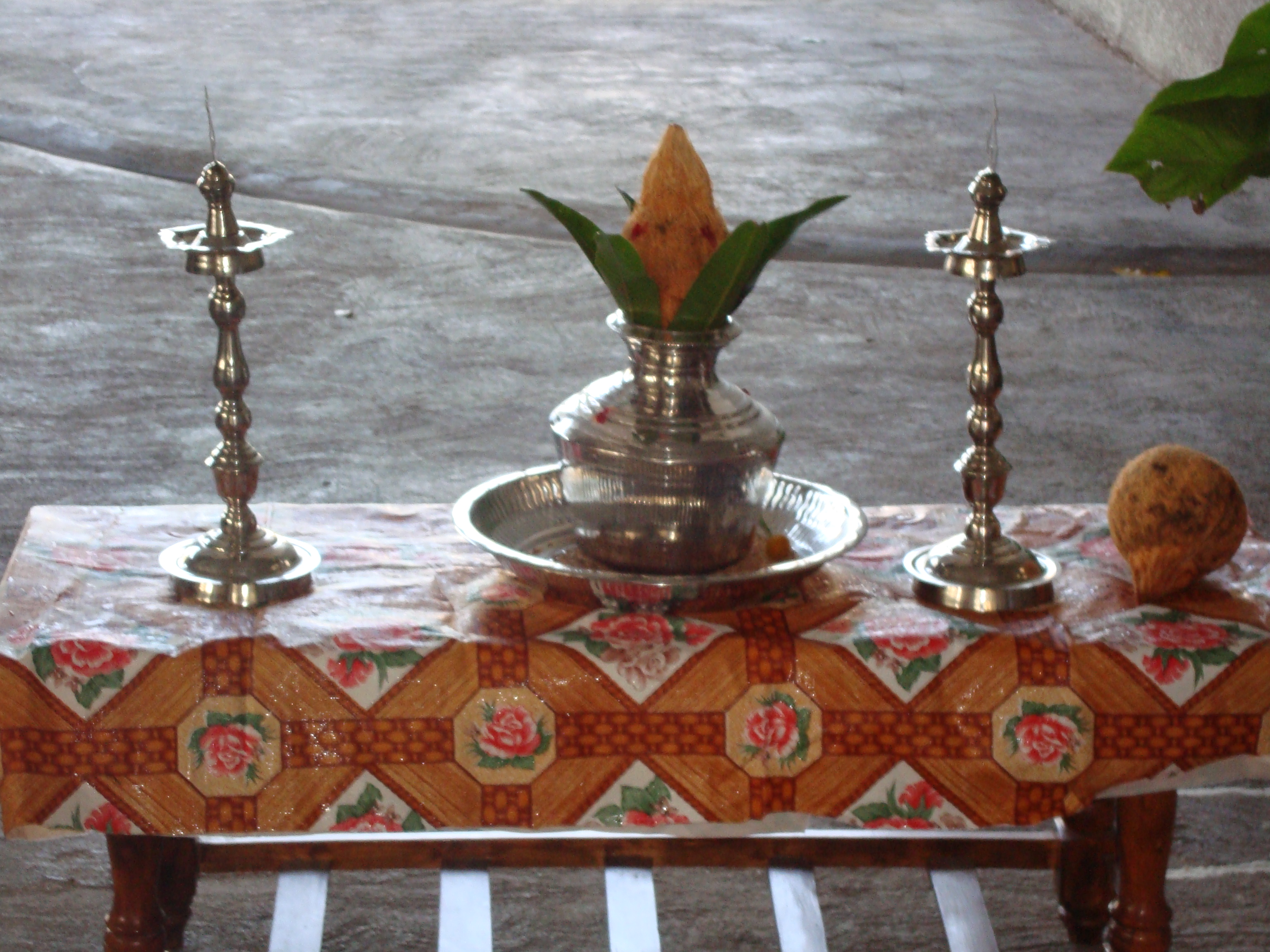
The kolam (designs made of rice flour paste) is first drawn. Within its boundaries, the traditional Tamil welcome is set up facing north, with the kuthuvillaku/lamps and the coconut with mango leaves placed in the kudam/pot

The kolam (designs made of rice flour paste) is first drawn. Within its boundaries, the traditional Tamil welcome is set up facing north, with the kuthuvillaku/lamps and the coconut with mango leaves placed in the kudam/pot

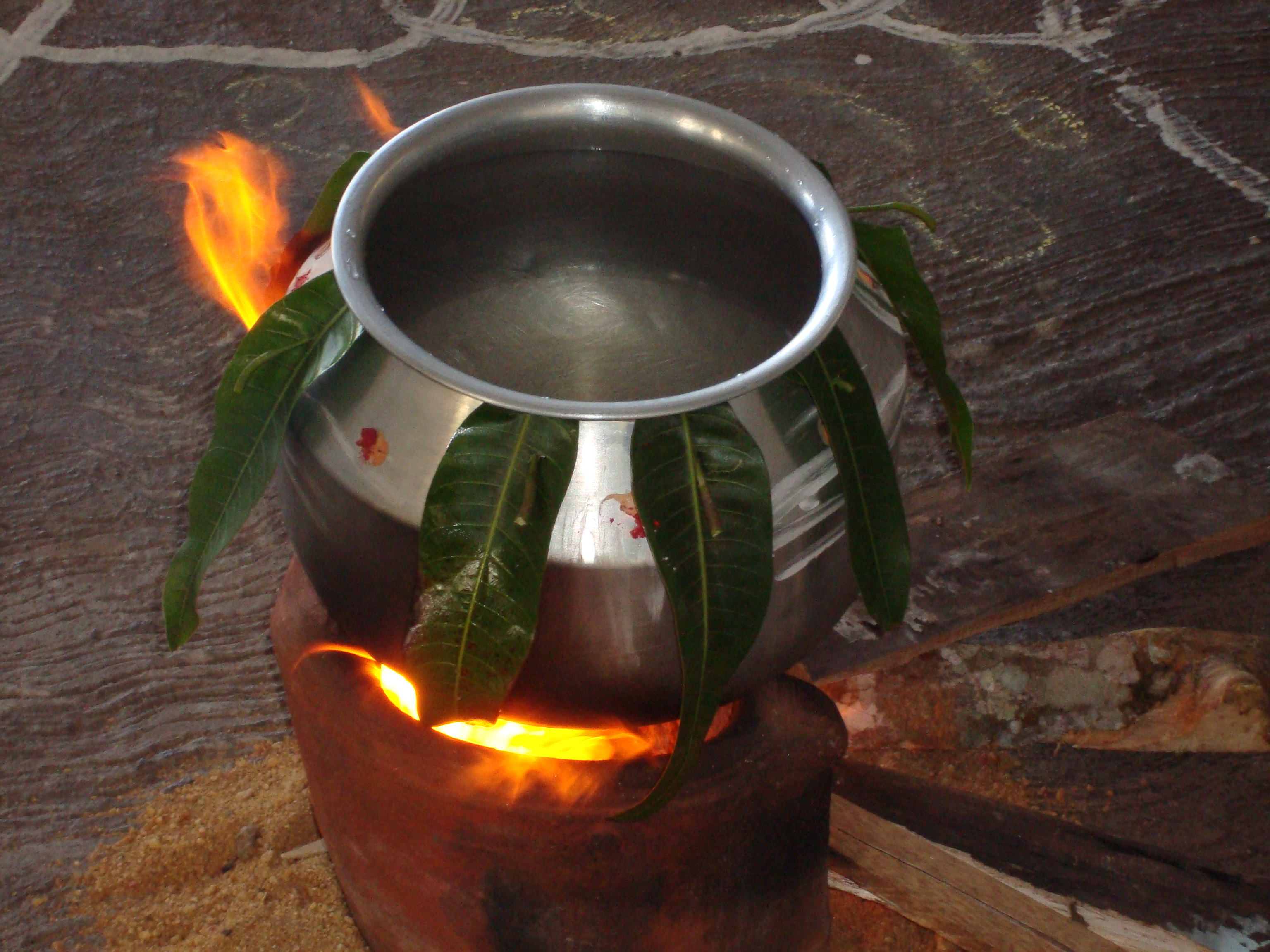
Water for Pongal

Setting up the Pongal pot facing the rising sun in the east

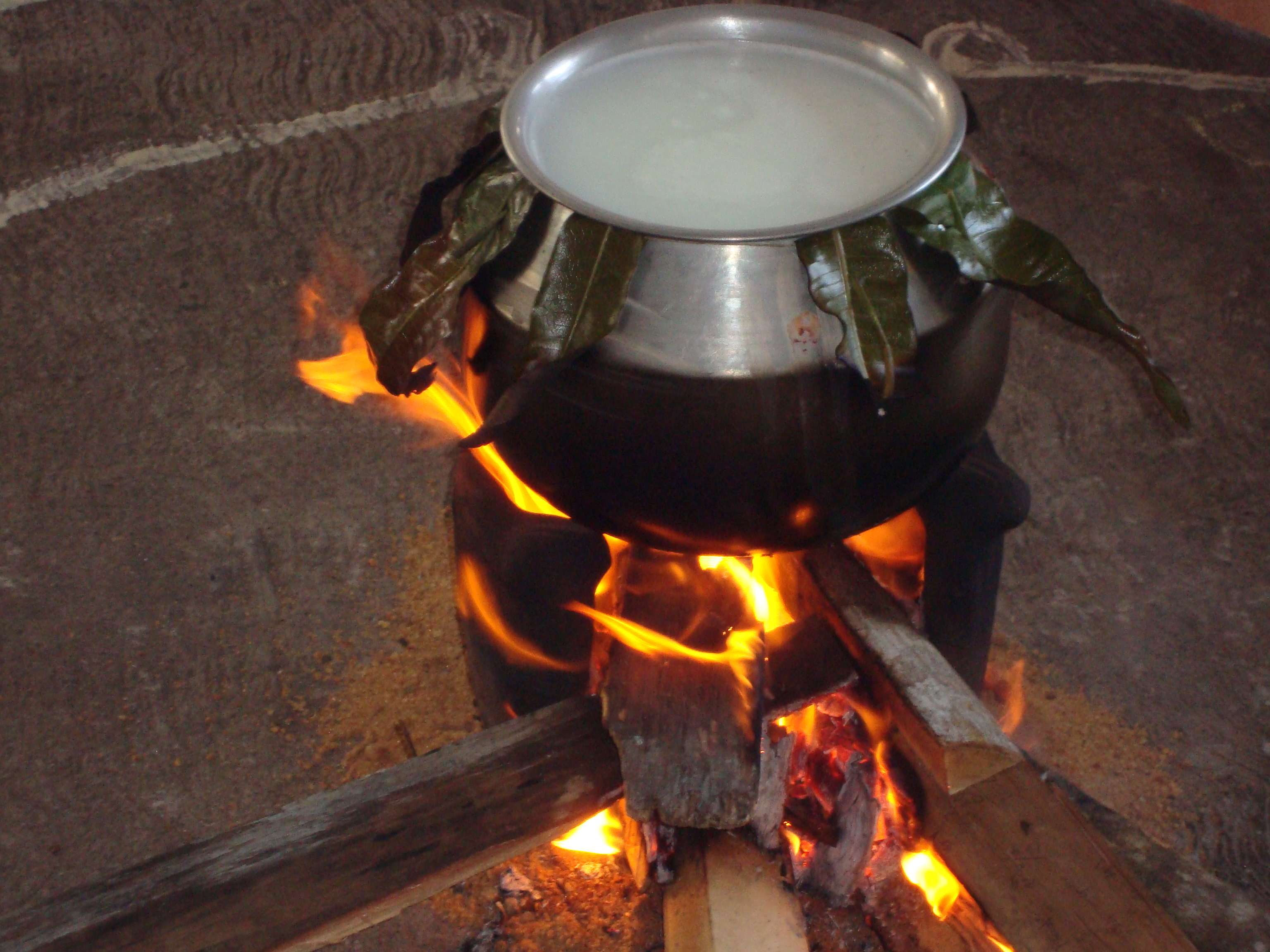
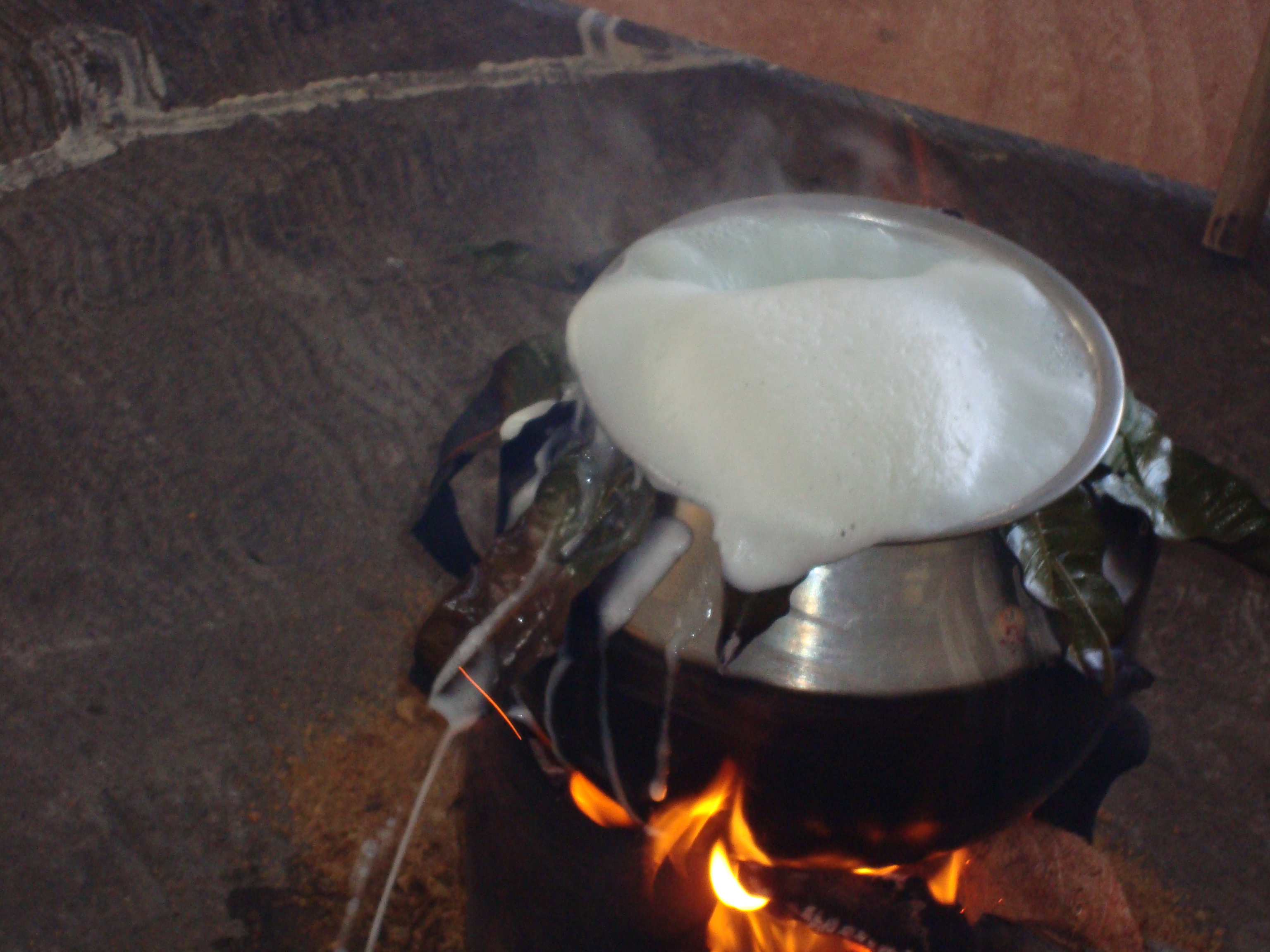
Milk boiling for pongal

Milk (usually dairy milk but at home, my mother uses coconut milk) is added to the water in the pot

DSC02067

Everyone waits for the milk to boil over – this symbolically means prosperity for all for the coming year (‘Ponguthal’ means boiling over and is the word that festival name and dish derived its name from)

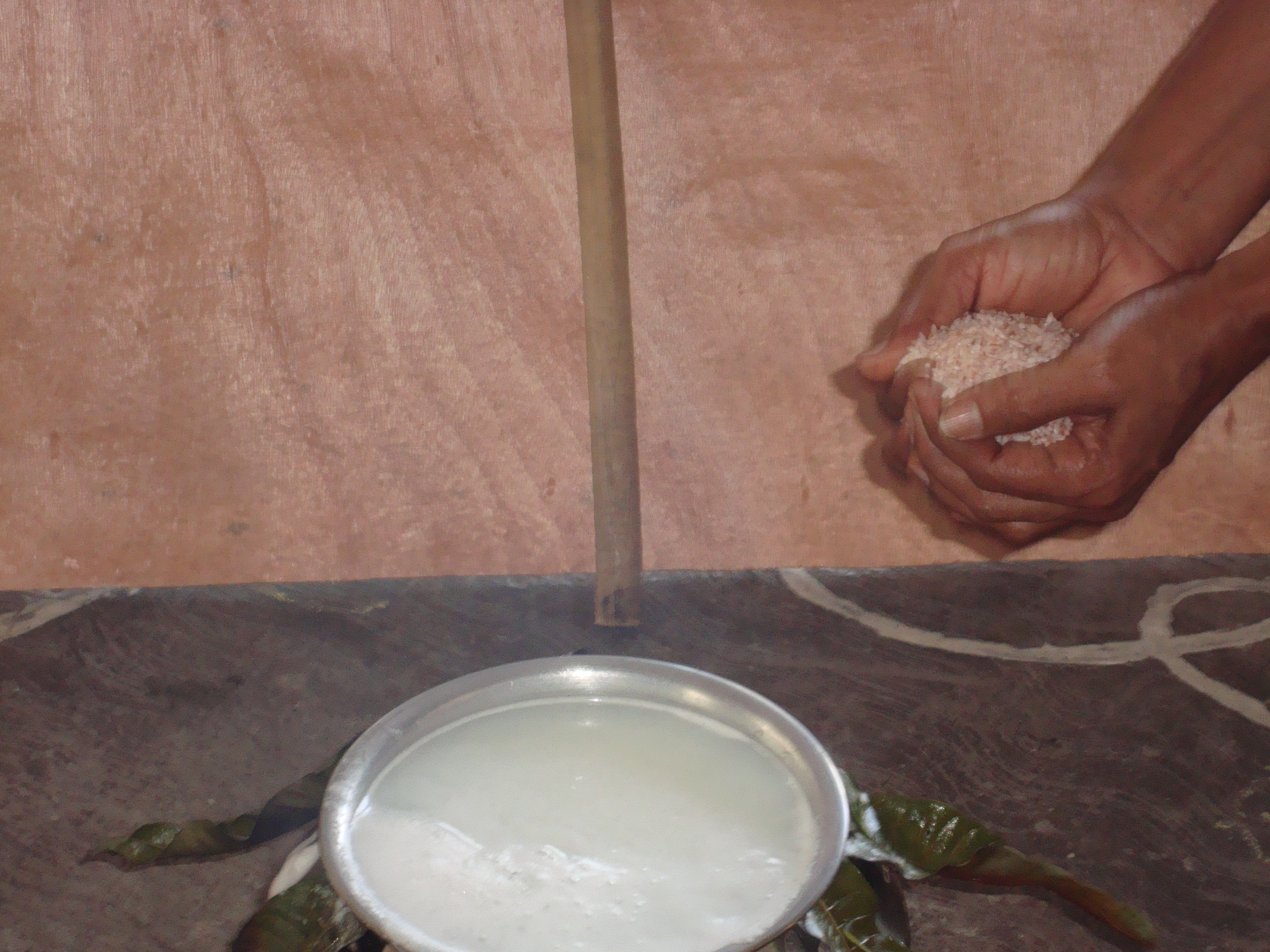
Adding rice to the pot

The rice is then added to the pot – a handful at a time by some of the elders, women and men, present.

Pongal

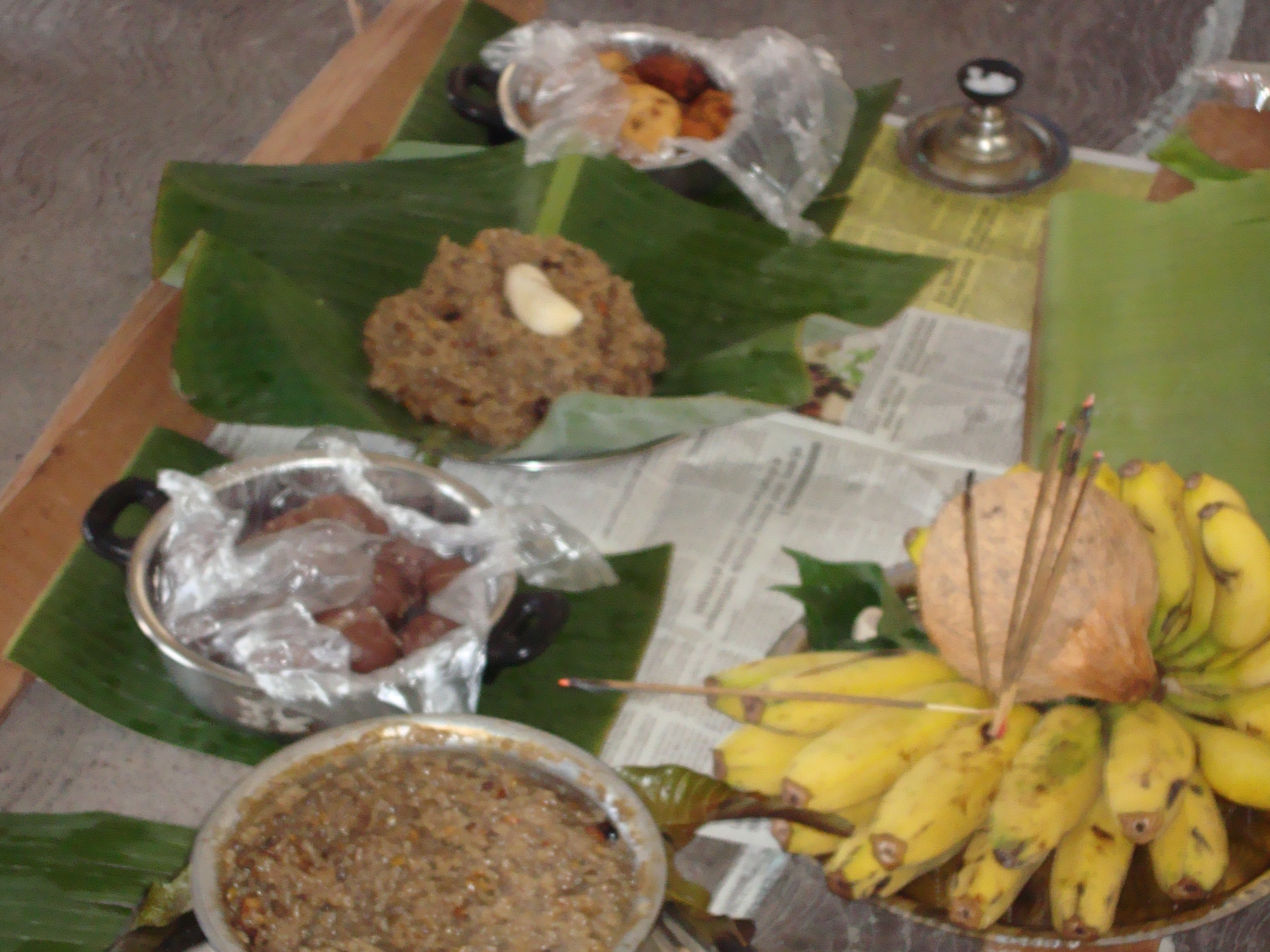
After the rice is cooked, jaggery, nuts, raisins are added to the pot and stirred well. Finally, the pongal is ready to be blessed and served.

While Thai Pongal is an important Tamil festival for Tamils living around the world, it is celebrated differently in different countries. In Sri Lanka, Pongal is mostly celebrated as described above whereas in India, it is a three-day festival with a day dedicated for cows. A harvest day festival around this day is also celebrated across India and Nepal but called different names (Makara Sankranti, Lohri, Uttarayana, Magh Bihu etc.) in different regions and has different rituals.

Wish you a Happy Pongal!

Steamed rice cakes

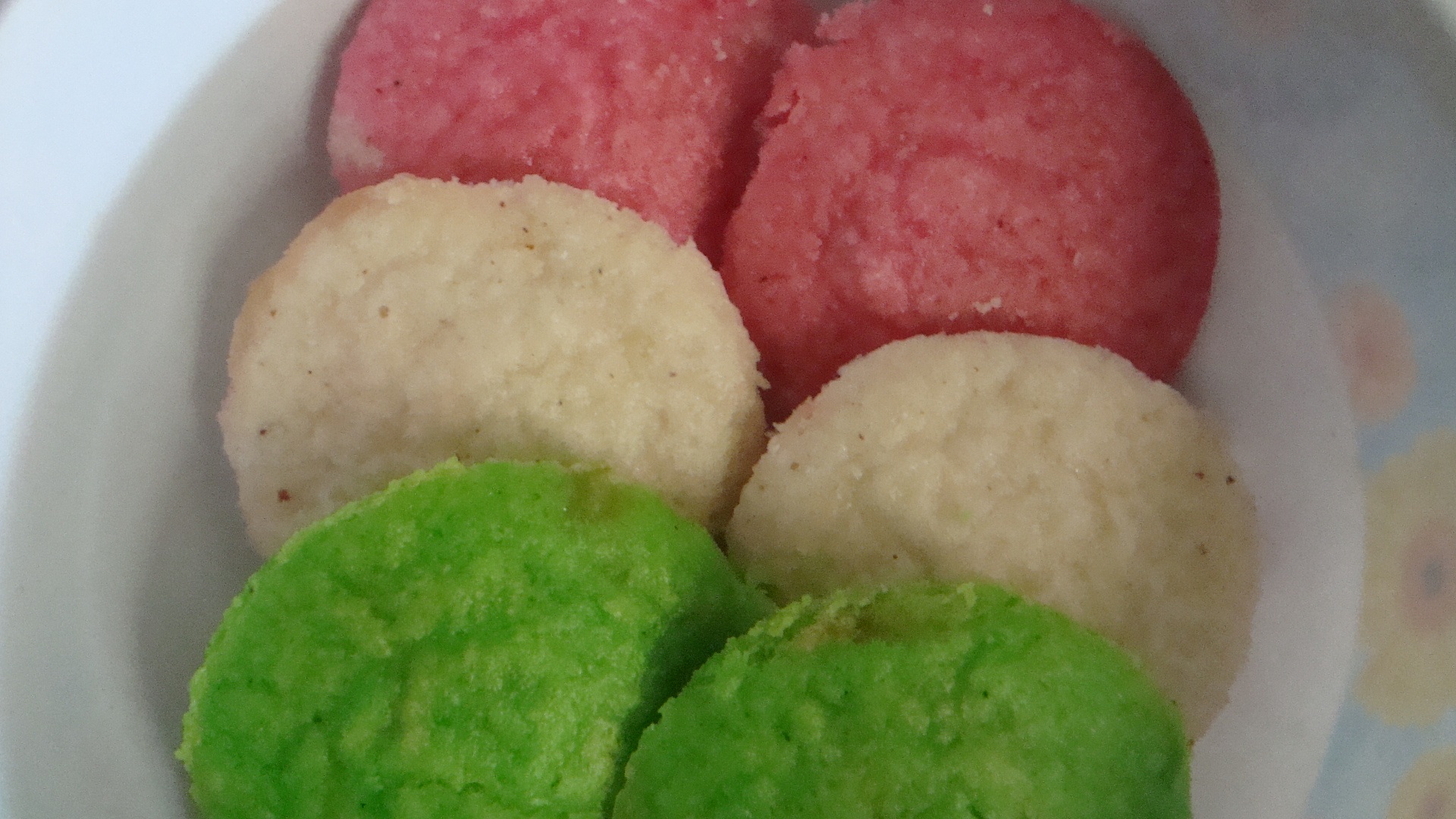
Wishing everyone a happy New Year! To start the Year on a sweet note, today’s recipe is that of steamed rice cakes.

Steamed rice cake

Time taken: 30 mins + 2 hours (for soaking)

Makes 6 cakes

Steamed rice cakeIngredients:

  • Rice – ½ cup
  • Urad dhal/ black gram flour – 2 tbsp, roasted
  • Coconut – 2 tbsp, freshly scraped
  • Sugar – 1 ½ tbsp
  • Baking powder – 1 tsp
  • Salt – pinch
  • Food colouring/ essence – optional

Method:

  1. Soak the rice in water for about 2 hours and then grind it to make a batter.
  2. Add the roasted urad dhal flour, scraped coconut, sugar, baking powder and salt to the batter. Mix well.
  3. If you would like your steamed cakes in different colours, divide the batter into separate bowls. Add the different food colours to each of the bowl. Here, my mother used green and red.
  4. Steam the batter for about 10 – 15 mins.
  5. Serve warm with tea. You could serve some honey or jam on the side, should you like it more sweeter.

Recipe source: Raji Thillainathan.
Panangkatti

I wanted to share one more palmyrah product this week. I will wrap up the palmyrah recipe series with ‘panangkatti’ or palmyrah sugar. During my great-grandmother’s time, ‘panangkatti’ was considered the regular sweetener for cooking and beverages and not the processed sugar of today. My mother recollects her grandmother serving her tea with a piece of panangkatti.

Very rich in nutrients and a good source of vitamin B12, ‘panangkatti’ is considered particularly good for diabetic patients as well as those seeking to reduce their weight. Whenever I travel to Jaffna, I always try to bring my parents some good ‘panangkatti’ as the best in the country is available only there and both my parents are diabetic.

While there are some people like my parents who prefer ‘panangkatti’ to regular sugar, its usage in the country has been on the decline over the last couple of decades. Therefore, its production has also reduced while the prices have gone up and it is now much more expensive than the regular sugar one can buy in any store.

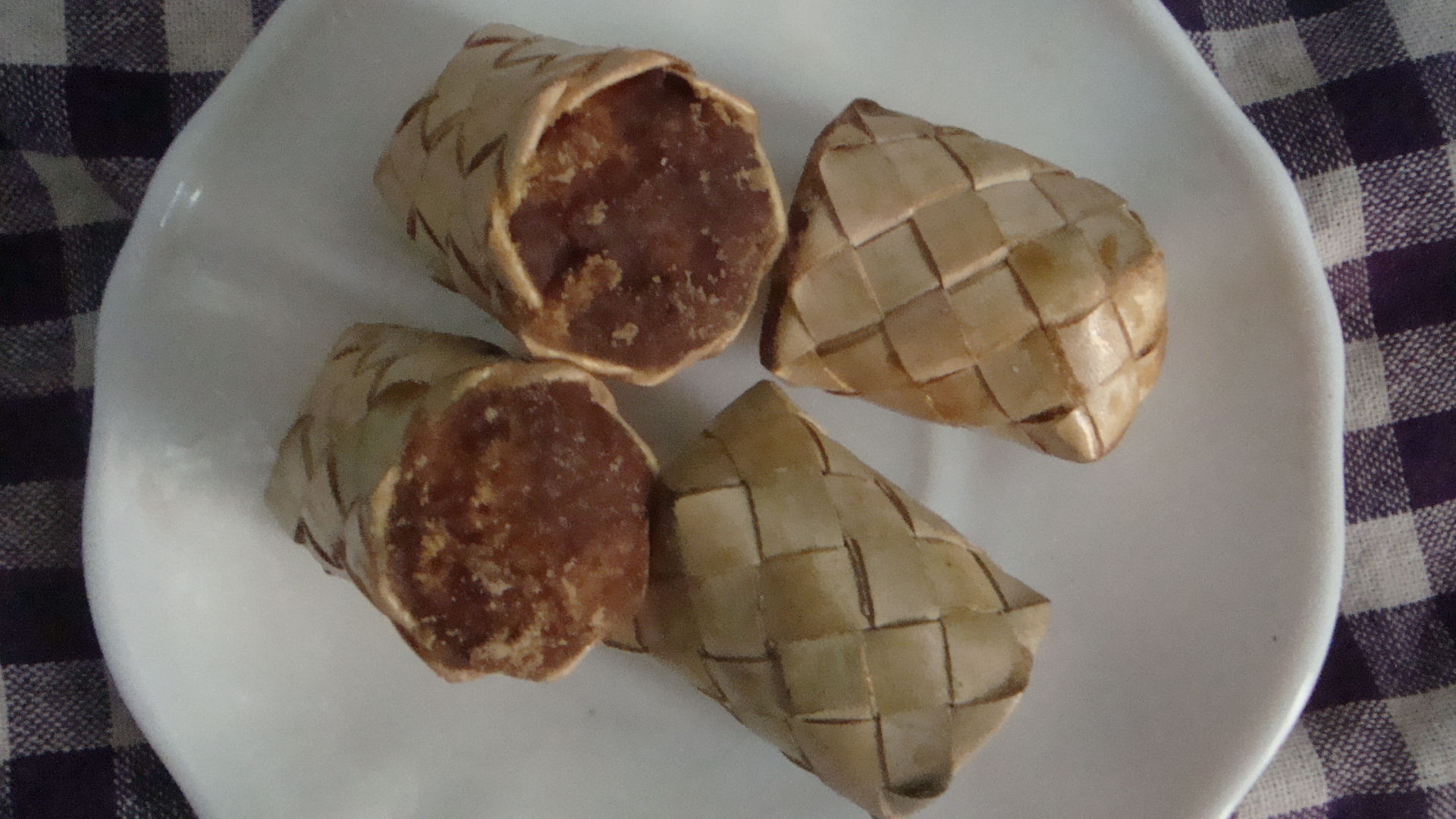
This is what my mother remembers of her grandmother’s recipe for making panangkatti, for those interested in knowing how it is made. The accompanying photo is of some ‘panangkatti’ that my mother had bought last week from Katpaham.

PanangkattiPanangkatti

Ingredients:

  • Palmyrah sap – ½ cup
  • Rice flour – 1 tbsp

Method:

  1. Stir the palmyrah sap (palm water) continuously in the pot over medium heat, till it thickens beyond the consistency required for ‘paani‘.
  2. Add a tbsp of rice flour and continue stirring till its consistency becomes denser and it is no longer watery.
  3. Scoop a tbsp of the ‘panangkatti’ mixture into the woven palmyrah leaf thimbles and let it cool and set.
  4. Store the ‘panangkatti’ thimbles in an air-tight container.

Recipe source: Raji Thillainathan.
Vegan Eggs

As I have often mentioned on this blog before, my mother enjoys being creative and experimental in her cooking. When she gets into that mode, she starts whipping up several dishes in succession. This weekend, we have been treated to a number of new dishes at home.

Today’s dish is a special treat and ideal for a weekend breakfast treat.

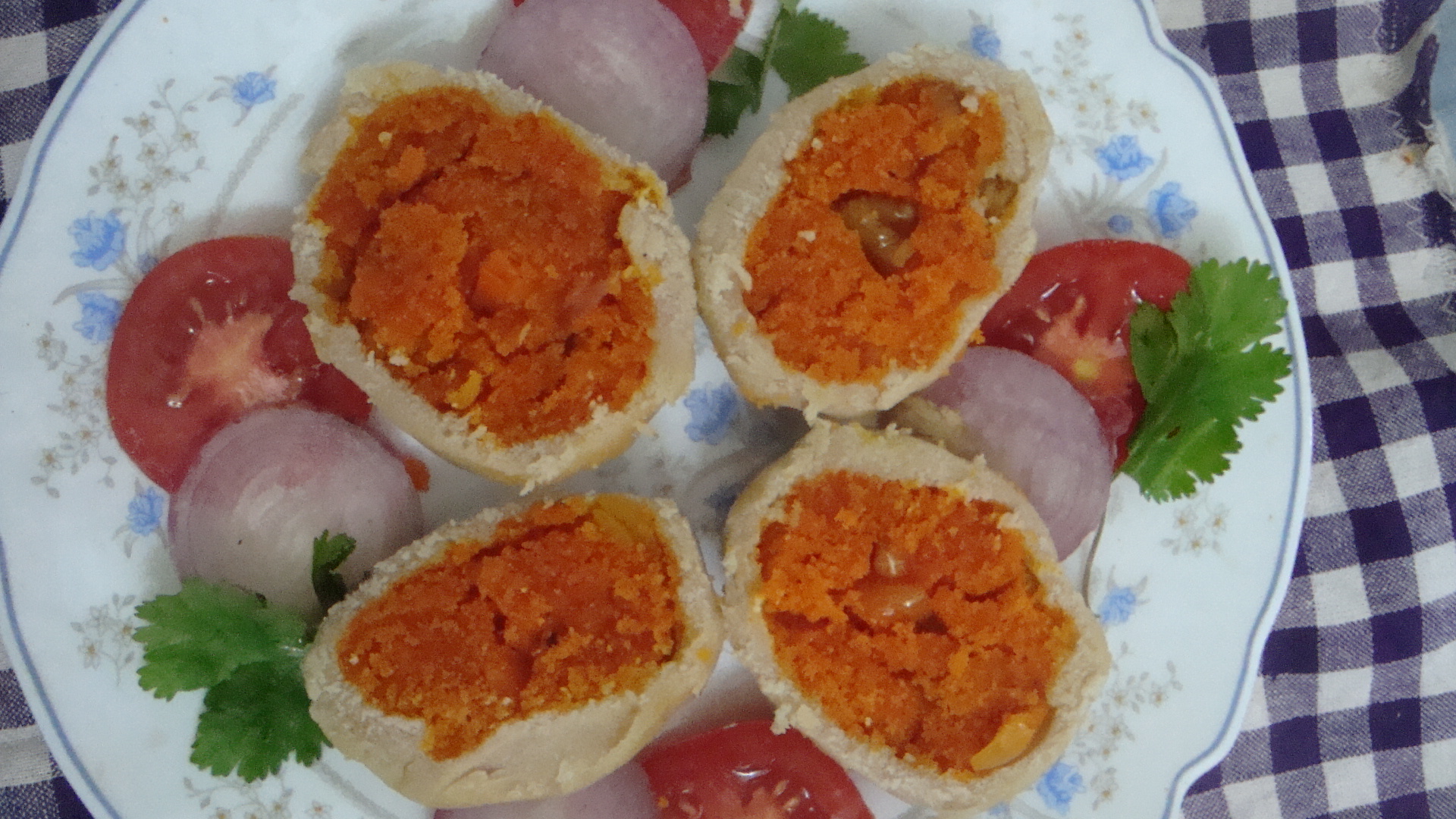
Vegan eggs

Time taken: 30 mins

Makes 4

Vegan eggs

Ingredients:

  • Rice flour – ½ cup, roasted or Wheat flour – ¾ cup, steamed
  • Semolina – ¼ cup, roasted
  • Onion – ½, chopped
  • Green chilli – 1, chopped
  • Carrot – 1 tbsp, grated
  • Walnuts – 1 tbsp, chopped
  • Vegetable oil margarine – 2 tbsp
  • Kesari powder or saffron – pinch
  • Salt, to taste
  • Pepper  – pinch

Method:

  1. Mix the flour with salt and pepper and hot water to make a dough. Divide the dough into 4 balls. Keep aside.
  2. Heat 2 tbsp margarine in a pan and lightly fry the chopped walnuts, onion, chilli and grated carrot for about 2 mins.
  3. Add ½ cup of water to the pan as well as salt, pepper and a pinch of kesari powder.
  4. As the water starts bubbling, add the semolina to the pan and stir it till it thickens and the chopped onion and walnuts have mixed well with the semolina. Make 4 balls from the semolina mixture.
  5. Roll out the rice flour dough balls into an oval disk.
  6. Place the semolina mixture balls at the center and close the edges, shaping it like an egg with the semolina mixture at its center.
  7. Steam the vegan eggs for about 5 – 10 mins.
  8. After cooling, slice the eggs into halves and serve with sliced onion, tomato and sauce.

Recipe source: Raji Thillainathan.