Green Beans Curry

I have not been as active on this blog during the past year in comparison to my first year. That was bound to happen at some point. It follows that after a year of much activity on this blog, I was relatively quieter in the last twelve months especially as I was away from home. It did not mean I stopped cooking. On the contrary, I did a lot of cooking much more than I do when I am at home but they were less focused on Sri Lankan recipes and when I did cook something Sri Lankan, I would choose one of my mother’s recipes already posted on this blog. I have been doing a lot of baking and I am delighted that I am now able to make delicious scones and pretty decent rye bread.

Having returned home last month, I look forward to resuming posting on this blog.

Today’s recipe is a simple green beans curry which I really like.
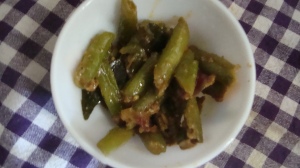
green beans curry

Green Beans Curry

  • Servings: 3
  • Difficulty: easy
  • Print

Ingredients:

  • Green beans  – 1 cup, chopped into 1” pieces
  • Onion – ½, chopped
  • Curry leaves – 1 sprig
  • Fennel seeds – 1 tsp
  • Curry powder – 1 tsp
  • Salt, to taste
  • Water – 1 cup
  • Coconut milk – ¼ cup

Method:

  1. Fry the chopped green beans, onion, curry leaves and fennel seeds lightly in a little oil for about 2 mins.
  2. Add the water, chilli powder and salt to taste.
  3. Cover and simmer over low heat for about 15 – 20 mins, until cooked.
  4. Add coconut milk and a little chilli powder, if the spice level is not sufficient.

Recipe source: Raji Thillainathan

Winged Bean and Dhal Curry

For this month, I am sharing a simple and delicious curry together with some 70s – 90s music from Sweden. DSC01073The following music clips takes me back to the early 90s when I listened quite a lot to these three Swedish music groups. How could I not start the music feature on music from Sweden without a song from ABBA? Actually, I was never a fan of their music but I listened to a lot of their music back then because some of my friends were huge fans and kept playing them a lot that some of the songs kind of seeped into my song lists. This very popular song is one such. There was a time in the early 90s when MTV played a huge part in introducing me to a lot of popular music. The next two song clips are from that time. The second song is ‘Don’t turn around’ by Ace of Base. The final song for this month is Roxette’s ‘It must have been love’.
Hope you enjoy trying out the curry and that you enjoyed going on a nostalgic trip back to the 90s!
DSC01074

Winged Bean and Dhal Curry

  • Servings: 4
  • Difficulty: easy
  • Print
Ingredients:

  • Winged beans – ¼ cup
  • Mysore dhal – ½ cup
  • Green chillies – 2
  • Onion – ½
  • Fennel seeds – 1 tsp
  • Curry leaves – a sprig
  • Turmeric powder – ½ tsp
  • Pepper – ½ or 1 tsp
  • Crushed chillies – ¼ tsp
  • Salt, to taste
  • Vegetable oil – 1 tbsp
  • Coconut or non-fat milk – 2 or 3 tbsp (optional)

Method

  1. Wash and chop the winged beans, green chillies and onion.
  2. Heat a tbsp of oil in a pan and fry the fennel seeds. Add the chopped onion, chillies and curry leaves and continue frying for 2 – 3 mins.
  3. Add the chopped winged beans to the pan and stir.
  4. Wash the dhal and add the dhal to the pan together with a cup of water and ½ tsp turmeric powder. Cook for 15 mins
  5. Add the pepper, salt and crushed chillies towards the end of the cooking. Stir well
  6. While the curry is good as it is, if you like to add milk, you can add 2-3 tbsp coconut or non-fat milk and cook for a few mins more.
  7. Remove from heat and serve warm with rice.

Recipe source: Raji Thillainathan.

Pulukodiyal Candy

Wishing you all a happy New Year! (the Sri Lankan New Year, or more precisely the Sri Lankan Buddhist and Hindu New Year)

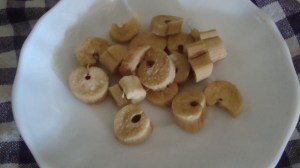
For today’s recipe, I decided to share a non-traditional New Year recipe. Something simple and tasty to make. My mother sometimes makes this candy when she receives too much of ‘pulukodiyal’ (sun-dried palmyrah root) from visiting relatives from the north. I would like to share this with you today. Palmyrah root is full of calcium and therefore considered nutritious in the north of Sri Lanka where it is harvested regularly.

DSC01287

Sliced sun-dried palmyrah root

Today, I would like to feature songs from two music groups that I have enjoyed listening to occasionally during the past decade. I was introduced to Il Divo’s music in a surreal setting in early December 2004. I was travelling on work to the north of the country and as the vehicle sped across dusty, remote roads, the radio belted out pop songs of the year. Suddenly, the powerful operatic voice of the four broke through the stifling heat surrounding the landscape we passed through. It was a special experience. The first song that I share here is the song that I listened to that hot afternoon over a decade ago.

The second is by Celtic Woman. Not sure how I came across their music but I did somewhere along the past decade. I liked their songs to the extent that I went for their concert when they performed at Theatre Royal Drury Lane in November last year. It was a fun experience.

Hope you enjoy the two songs and do try out the candy, if you happen upon some dried palmyrah root!
DSC01300
Wish you the best for the New Year!

Pulukodiyal Candy

  • Servings: 4
  • Difficulty: easy
  • Print

Ingredients:

  • Sliced ‘pulukodiyal’ – 1 cup
  • Roasted gram – 2 tbsp
  • Sugar – ¼ cup
  • Water

Method:

  1. Let the water and sugar simmer till it thickens into a syrup.
  2. Add the roasted gram and pulukodiyal and stir well, before removing from heat.
  3. Let it cool and the candied pulukodiyal is ready for eating.

Recipe source: Raji Thillainathan

Odiyal Kool

Today is my mother’s birthday and I felt like re-sharing one of my mother’s favourite recipes. Odiyal Kool is a traditional dish from north Sri Lanka and can be made as a vegetarian or non-vegetarian version. Today’s recipe is a vegetarian dish. OK1 For today’s music feature, I wish to share some song clips from youTube from the official vevo site of one of my favourite singers – Andrea Bocelli. The first is a music video of the song ‘Canto Della Terra’. The second song ‘Con Te Partiro’ is from a 2011 concert. I liked more an earlier version, where he sings with Sarah Brightman, but could not find it on the official site. The last clip is the music video of the song with Laura Pausini ‘Dare to Live’. Hope you enjoy the music and the recipe! Ok2
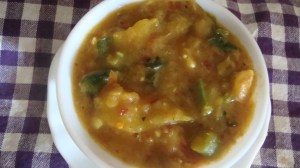
Odiyal Kool

  • Servings: 8-10
  • Difficulty: average
  • Print
Ingredients

  • Odiyal Flour – 1 cup
  • Chopped mixed vegetables (brinjal/ katharikkai, jackfruit seeds/ palakottai, yardlong beans/ paithangai, small green leaves/ pasali keerai or murungai ilai, manioc, ash plantain) – 100g each
  • Boiled rice – ½ cup
  • Dried red chillies – 5- 10, according to your taste
  • Cumin seeds – 1 tbsp
  • Pepper powder – 1tbsp
  • Tamarind extract – ½ cup
  • Turmeric powder – ½ tsp
  • Salt to taste
  • Water – 1 1/2 litres

Method:

  1. Dry grind the cumin seeds, red chillies and pepper and keep aside.
  2. Boil the vegetables in a pot with half litre water.
  3. Add another litre of water, along with the tamarind extract.
  4. As the water comes to a boil, slowly stir in the odiyal flour, avoiding lumps.
  5. Add the boiled rice to the pot.
  6. Add the ground spice mixture and the turmeric powder to the pot and salt to taste. Let it come to a boil.
  7. You can add a little water to adjust the consistency to your liking, e.g. if the water has dried up or you prefer a watery Kool.
  8. Serve hot in medium-sized bowls.

Recipe Source: Raji Thillainathan.

Chana Bateta

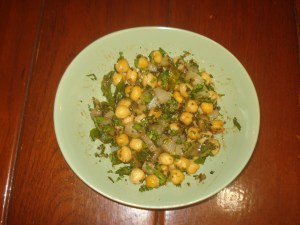
This month I am featuring the Bohra cuisine of Sri Lanka courtesy of Zahabia Adamaly. She shares here a recipe from a recipe book with permission from the authors. This is what Zahabia wrote to me about the dish.

“This is a popular dish used as a side to a main meal in Bohra meals. We also often have it as a snack or a light dinner because it is both filling and nutritious. The chickpeas and potatoes can be tempered as stated in the recipe and kept in the fridge for a few days. It can then be lightly warmed and mixed with the tamarind sauce and garnished just before serving. It is also tasty with a little yoghurt added into the above mix.

This recipe is from “From our Kitchen” a privately published recipe book by Femida Jafferjee and Sakina Galely.” Chana Bateta

Chana Bateta

  • Servings: 4
  • Difficulty: moderate
  • Print
Ingredients:

  • 250gms (8ozs) chick peas (Chana)
  • 4 medium sized potatoes
  • 1 onion
  • 1 tablespoon garlic paste
  • 1 teaspoon cumin seed (jeeru)
  • 2-3 green chillies
  • Pinch of turmeric powder
  • 1 teaspoon coriander and cumin seed powder
  • ½ to 1 teaspoon chillie powder
  • 2 tablespoons gram flour
  • Curry leaves
  • Pinch of soda bicarbonate

Tamarind chutney:

  • 100gms tamarind
  • 200gms (8ozs) jaggery grated
  • 1 teaspoon chillie powder
  • 2 teaspoons cumin powder
  • Salt to taste
  • 1 cup of water
  • Coriander leaves

Mix all together and boil. When tamarind is soft, jaggery has dissolved and is thick, remove and strain. Method: Soak the chickpeas overnight in water with a pinch of soda bicarbonate. In the morning throw the water. Add fresh water with little salt and boil chana in pressure cooker till soft. Do not throw the water remaining. Boil potatoes separately and cut into cubes. Heat oil in a pan and fry the onion, when it becomes transparent, add the garlic paste, curry leaves and whole cumin seed. When garlic gets light brown, add green chillies, turmeric, coriander/ cumin powder and red chillie powder. Cook for 2-3 mins, then add the gram flour and saute, for a further 5 minutes. Add boiled chickpeas with the water and allow to cook for a while. Add tamarind chutney as required. (the amount given may be more). Add the potatoes and serve garnished with coriander. Recipe source: Femida Jafferjee and Sakina Galely

Brinjal Curry

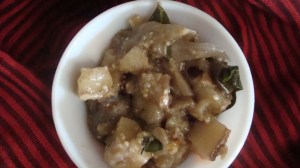
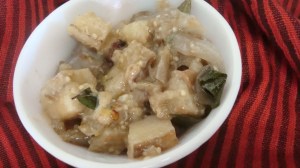
My recipe for february is a recipe from home – a recipe of my mother. This blog has been helpful to myself these past few months, as I have tried out one of my mother’s recipes that I shared here, when I find myself missing home. While I have shared three brinjal recipes of my mother before – katharikkai curry, katharikkai vathakkal and brinjal and green peas curry, today’s recipe is another way my mother cooks brinjal. It is a simple and very easy to make recipe, that I very much like, and is great with rice. Sharing this recipe at the Virtual Vegan Linky Potluck #30.
DSC01056
Today, I would like to share some popular French music from the 60s that I like. Starting with my favourite French singer – Edith Piaf. I started listening to her songs after watching the movie ‘La Vie En Rose’. This clip is one of her more famous songs – Non, Je ne regrette rien (1965).

The other song for today is considered the signature song of Charles Aznavour – La Boheme (1960).

Hope you enjoy the music while you try out this simple curry recipe! Have a lovely weekend!
DSC01057

Brinjal Curry

  • Servings: 3
  • Difficulty: easy
  • Print

Ingredients:

  • Brinjal – 1 cup, chopped
  • Green chilli – 1
  • Onion – 1/4, chopped
  • Coconut milk – 1/2 cup (thin) + 1/4 cup (thick)
  • Curry leaves
  • Salt, to taste
  • Lime juice

Method:

  1. Cook the chopped brinjal together with the chopped onion, green chilli and curry leaves in 1/2 cup of thin coconut milk for around 10 minutes. Add salt to taste.
  2. Then add 1/4 cup thick coconut milk and simmer for 5 mins.
  3. Remove from heat and stir in some fresh lime juice.
  4. Serve warm with rice.

Recipe source: Raji Thillainathan

Pongal

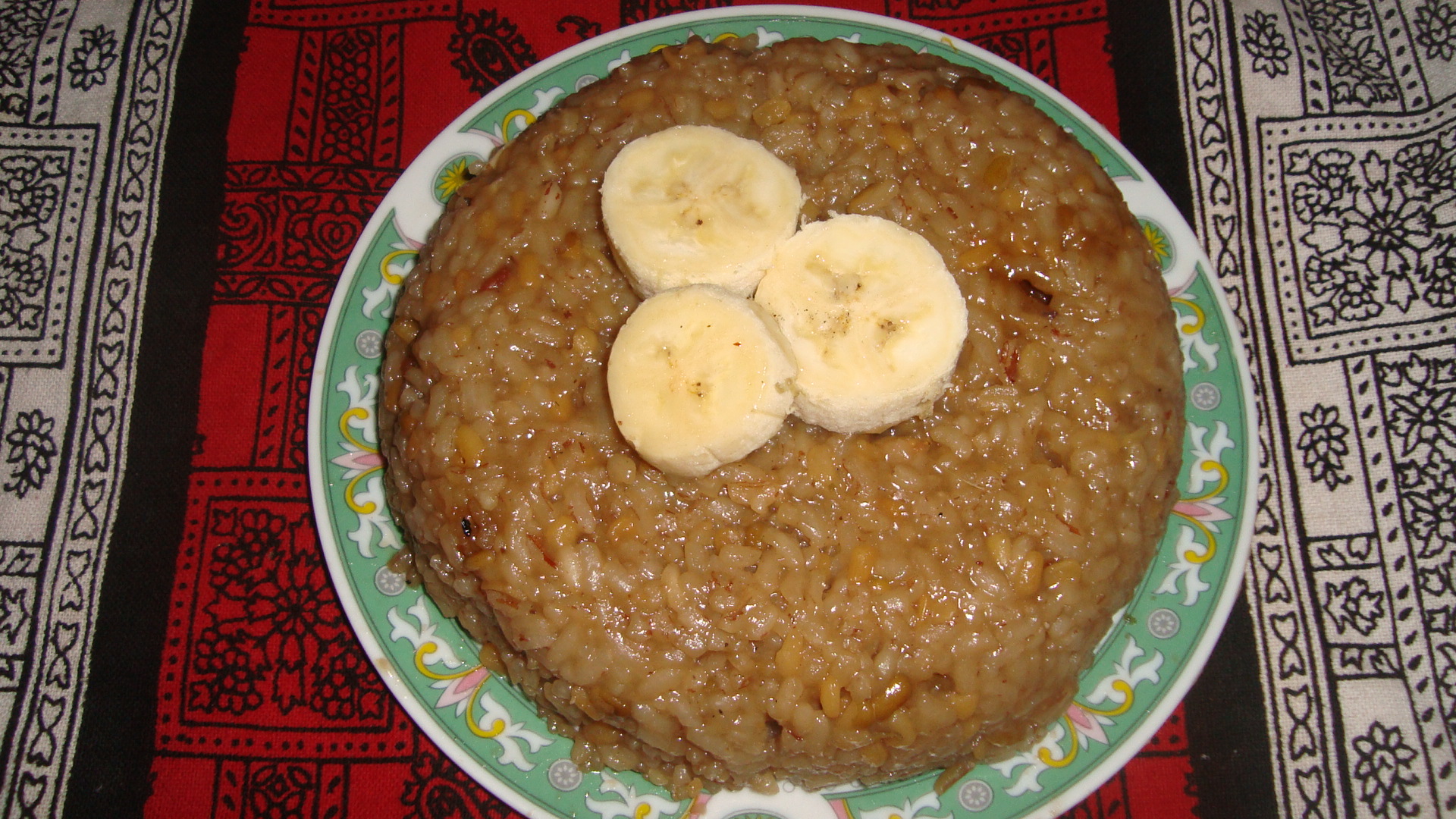
Today (or rather, tomorrow) is Thai Pongal festival celebrated by Tamils around the world. It is a harvest festival celebrated at the end of the harvest season in the tenth month (தை, Thai) of the Tamil calendar and is a festival offering thanks for a bountiful harvest (pongal, which also refers to the sweet rice dish made on that day) and for a prosperous year to come. In Sri Lanka, it is usually celebrated for a day whereas in India, it is a 3 or 4 day festival with a day celebrating the hard work of the cattle in the fields the previous year.

I am re-sharing the pongal recipe that I posted last year.
Pongal

One of my close friends and her family visited me last week which brought back pleasant memories from over a decade ago when I had first met her. So, for today’s music, I would like to feature the songs of a musician from her country that she introduced me to.

The first song is one of Dulce Pontes’ famous songs – Canção do Mar from her album (Lagrimas or Tears, 1993). This song was covered a decade later by Sarah Brightman.

Dulce Pontes contributed to the popular revival of Portuguese folk, Fado, in the 90s. The second song is one such song.

Hope you enjoyed the Portuguese music shared today and that you do try out the Pongal recipe! Happy Pongal!
Pongal

Pongal

  • Servings: 4-5
  • Difficulty: easy
  • Print

Ingredients:

  • Rice – 1 cup
  • Roasted split gram (without skin) – ¼ cup
  • Jaggery – 1 cup (grated)
  • Coconut – ½
  • Cardamom – 4 or 5, crushed
  • Cashew nuts – few, chopped
  • Raisins – 1 tbsp
  • Water

Method:

  1. Wash the rice and gram and cook them in a pot with 2 ½ cups of water. Cook for around 15 to 20 mins, till the water dries up.
  2. Grind and extract coconut milk by blending the freshly scraped half of a coconut with 1 cup of water.
  3. Once the rice and gram is cooked, add the grated jaggery and mix.
  4. Then, add the coconut milk and crushed cardamoms. Bring to a boil on high heat and cook for a few more minutes before reducing the heat.
  5. Add the chopped cashew nuts. Cook until the pongal mixture starts coming together and starts to thicken.
  6. Just before removing from heat, add the raisins and mix.
  7. Remove from heat and cover.
  8. Serve pongal with bananas.

Recipe source: Raji Thillainathan.

Breuder

During Christmas season, the popular cake/ bread that is ordered from bakeries in Sri Lanka is the breuder. This is a speciality of the Burgher cuisine of Sri Lanka. I had been trying for some time to find someone to contribute a home-made recipe of this delicious bread. I was delighted to finally come across another blogger and invited him to share his family recipe on this blog as well. Here is the guest post of Paul van Reyk, from My Buth Kuddeh food site, with his introduction to his family tradition of baking breuder and his recipe. Wishing you all a merry Christmas!

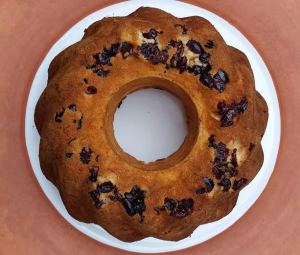
No Christmas at our house in Sri Lanka was complete without my grandmother’s breuder. It’s basically a cakey bread, based on a yeasted dough but with the sweetness of a sponge cake, related to Italian pannetone. It’s a direct entry into Sri Lanka cuisine via the Dutch Broodtulband named for the fluted ‘turban’ shaped mould used to make it. Further embedding the Dutch connection, brueder is traditionally eaten in Sri Lankan Burgher households in slices covered in butter and topped with a thick slice of Edam cheese. There is something very festive about that red waxy ball which sliced open reveals a pale European sun yellow cheese. Making the breuder, I am transported back to the kitchen of my childhood, watching my grandmother knead the dough, having the thrill of buttering the mould and pressing sultanas against the sides anxious that they stay in place, full of expectation as it was taken to my uncles house across the road as we didn’t have an oven, and then the excitement of un-moulding this magical transformation of so few ingredients hoping desperately that it comes away cleanly. The smile on grannie’s face when it does was more rewarding almost than the first bite into its soft, crumby heart.

breuder

Breuder

  • Difficulty: difficult
  • Print

Ingredients:

  • 500gms plain flour
  • 50 gms butter
  • baker’s yeast
  • 1 tsp sugar
  • water
  • 6 egg yolks
  • 250 gms caster sugar
  • 125 gms currants or sultanas or raisins or a mixture of them

Method:

  1. Make the dough the night before. Take as much yeast as is recommended for your particular yeast for making bread with 500 gms of flour (it can vary so read the packet or ask when you buy it), add the yeast and the sugar to a little hot water to get the yeast started. It will froth slightly. When it’s bubbling happily, add this to the flour and mix in well. Now slowly add water and keep mixing until you have a lump of dough that lifts easily out of the bowl or off the board. Knead it for 10 minutes or so. Put it in a bowl, cover the bowl with a damp tea-towel and leave it in a warm place to rise overnight.
  1. The next day, take the dough and add to it the butter, egg yolks and sugar. Add the first three yolks separately and mix in well each time. Then add the others also one at a time alternating with dollops of the caster sugar till it is all used up. What you will have now is a very thick wet doughy batter.
  1. Butter a turban mould. Put a good sprinkle of whatever dried fruit you are using on the bottom. Squish some dried fruit against the sides of the mould, too. Pour in the batter. Sprinkle more of the dried fruit on top of the batter. If you like, and I do, you can mix some dried fruits into the batter, too.
  1. Leave this in a warm place, the mould covered with a damp cloth, for 1 or 2 hours until it rises again (it won’t rise as much as the dough did overnight).
  1. Meanwhile, pre-heat your oven to very hot – around 220C.
  1. When the dough has risen the second time, put the mould in the oven and bake for 30 minutes. Check at that stage that the breuder is cooked by poking a bamboo skewer or similar into the dough. If it comes out clean, your breuder is ready. If it doesn’t, give the breuder 10 – 15 minutes more.

Tip: Putting some baking/greaseproof/brown paper on the top will reduce the likelihood of the dried fruit burning.

  1. When it’s cooked, take it out of the oven and leave it to cool in the mould. You should then be able to give the mould a good thump and have the brooder come cleanly out of it.

Resist all temptation to ice or otherwise muck around with the breuder! Just slice it up and have some butter and Edam or cheddar cheese to have it with. But you are allowed to make summer pudding with the left over breuder if you like, or indeed any of those bread pudding dishes.

Recipe source: Paul van Reyk

Semolina and Coconut Sweets

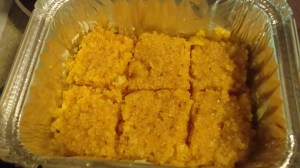
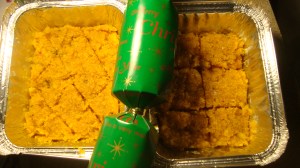
I wanted to make some Sri Lankan sweets this month. As I was browsing through some Sri Lankan food sites, I came across one that I wanted to try out. Coconut rocks are quite popular in Sri Lanka and are sold in most shops as well as occasionally made in homes. I decided to slightly adapt this recipe of Dhanish @My Sri Lankan Recipe, which merges semolina with the traditional sweet. I am bringing these scrumptious sweets to Angie’s Fiesta Friday.

DSC01346Today’s music features some Grammy award-winning musicians from Mali. I have a couple of friends who are huge fans of music from Mali, which is how I was introduced to some of the music I am sharing here.
The first music clip features Toumani Diabate and Ali Farka Toure.

The second clip is a music video by the group Tinariwen. They performed at the recent London jazz festival.

The last clip for today is a music video from Amadou and Mariam.

Enjoy the music while trying out a piece of the semolina and coconut sweet!

DSC01347

Semolina and Coconut Sweet

  • Servings: 12
  • Difficulty: easy
  • Print

Ingredients:

  • Semolina – 150g
  • Coconut – 50g, grated
  • Coconut water – 4 tbsp
  • Sugar – 4 tbsp
  • Cardamom – 1 tsp
  • Kesari powder – pinch
  • Almonds – 1 tsp, chopped
  • Vanilla essence – 1 tsp
  • Cream or condensed milk (vegans can substitute with non-dairy cream) – 4 tbsp

Method:

  1. Heat the coconut water and sugar together over low heat until it thickens.
  2. Then add the semolina, while continuously stirring.
  3. Once all the semolina has been added and the mixture starts to thicken, add the fresh, grated coconut.
  4. Mix well and add the cardamom, kesari, chopped almonds and vanilla essence to the mix.
  5. Finally stir in the cream or condensed milk before removing the pan from the heat.
  6. Transfer mixture to well-greased tray and let the sweet cool before slicing and serving.

Recipe adapted from My Sri Lankan Recipe

Potato Layered Pie

This week’s recipe is the last of the five recipes sent in by Trevor Martil. I am bringing this recipe, together with some lovely music from Senegal, to Fiesta Friday.

Today’s featured musician is Youssou N’Dour. The first clip is from an 80s concert of Le Super Etoile de Dakar.

The next clip is a music video (1994) composed by Youssou N’Dour, Neneh Cherry, Cameron McVey and Jonathan Sharp.

Hope you enjoyed the songs and do send me your feedback if you try out the recipe given below! 🙂

Potato Layered Pie

  • Servings: 4
  • Difficulty: average
  • Print

Ingredients:

  • 250g flaky pastry
  • 250g potatoes
  • 150g boiled minced meat (vegetarians can substitute this with mushroom or vegetarian sausage)
  • 30g butter or vegetable oil margarine
  • 1 egg
  • salt and pepper, to taste
  • MD ginger paste and garlic paste
  • 1 tablespoon MD tomato sauce and chilli sauce
  • onions
  • curry leaves
  • 30g cheese
  • parsley and chopped tomatoes, for garnish

Method:

  1. Make flaky pastry and keep aside.
  2. Stir-fry onions, curry leaves, ginger and garlic paste, boiled minced meat or vegetarian substitute and boiled mashed potatoes.
  3. Mix the tempered ingredients well.
  4. Add a beaten egg, sauces and seasoning.
  5. Roll the pastry cut into squares.
  6. Sprinkle cheese and parsley and the potato mixture. Roll it to a cone shape.
  7. Bake for 30 minutes.
  8. Garnish with parsley and tomatoes.

Recipe source: Trevor Martil.