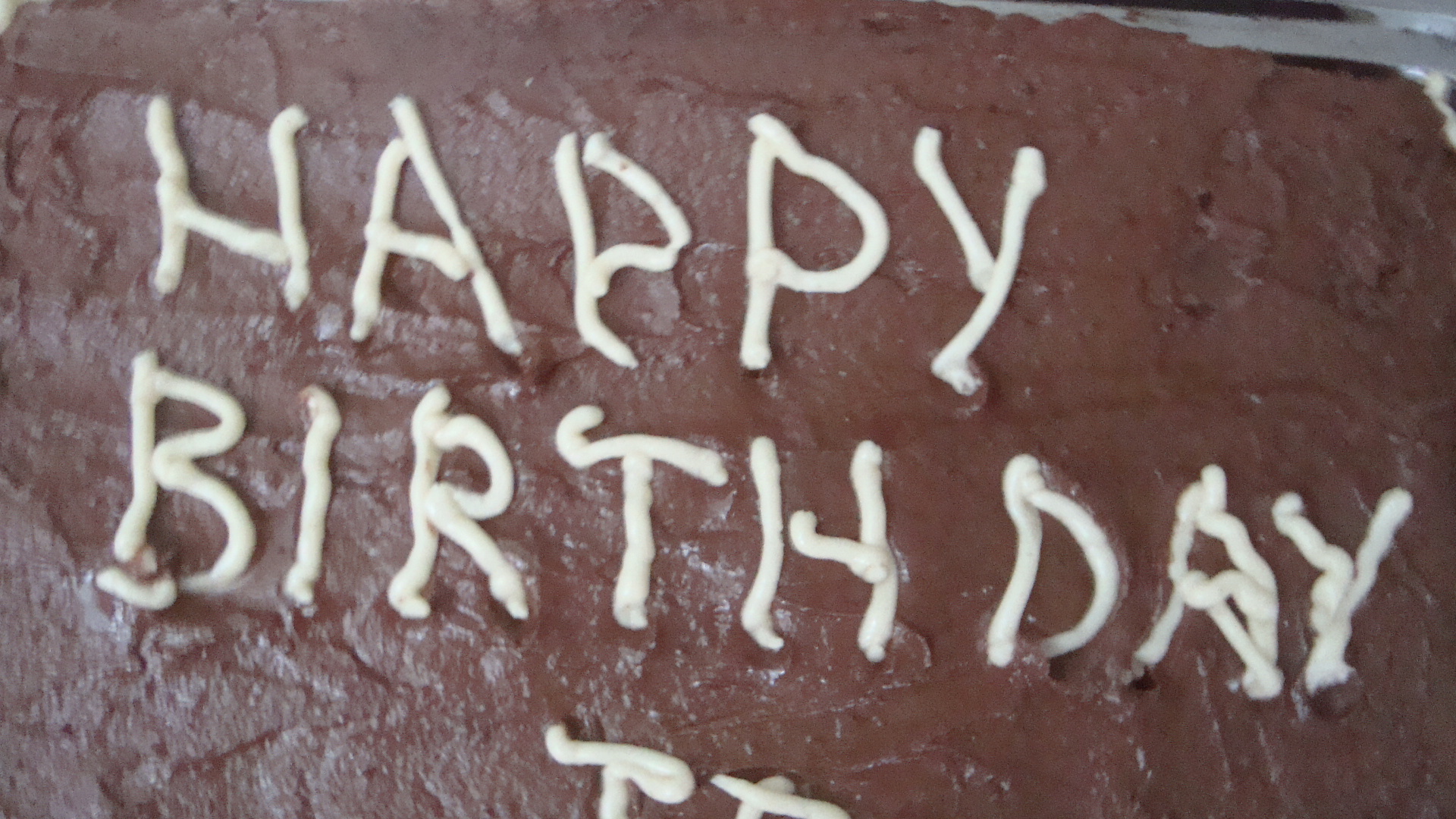
Egg-less chocolate cake

Chocolate cake

Time taken: 1 – 1 ¼ hrs

Serves 20 to 25

Chocolate cakeIngredients:

  • Condensed milk – 1 cup
  • Water – ½ cup
  • Vegetable oil margarine – 1 cup (250g) + ¼ cup (for icing)
  • Sugar – 1 cup +  ½ cup (for icing)
  • Multi-purpose flour – 2 cups
  • Semolina – ½ cup
  • Cocoa powder – ¼ cup + 2 tbsp (for icing)
  • Vanilla essence – ½ tsp + few drops (for icing)
  • Baking powder – 2 tsp
  • Baking soda – ¼ tsp

Method:

  1. Whisk the sugar and margarine in a bowl until creamy. Then, add the milk and continue whisking.
  2. Add the water and whisk till it is smooth and creamy.
  3. Sieve together the flour, semolina and cocoa powder. Add the baking powder and soda and mix.
  4. Gradually add the dry ingredients to the bowl of wet ingredients, mixing until there is a smooth batter.
  5. Transfer to cake tray and bake for about 45 mins – 1 hr at 170⁰C/340⁰F. Make sure you do not forget to check in around the 40 min mark (as my mother did this time) and take the cake out, without letting it over-bake else it will turn out too dry.
  6. Let the chocolate cake cool while preparing the chocolate icing.
  7. Mix 2 tbsp of cocoa powder with ½ cup of icing sugar in a bowl. The sugar can be reduced based on your tolerance level for sweets.
  8. Add the margarine little by little and whisk till the icing is creamy and smooth. Add the vanilla essence and mix well.
  9. Spread the chocolate icing evenly over the chocolate cake.

Recipe source: Raji Thillainathan.

Passion fruit cake

Today is Vijayathasami. The tenth day after the nine days of the Navarathri festival. It is considered auspicious to start new learning on this morning. Children who will be starting school in the coming year will have their ‘eadu thodakkal’ ceremony. The ‘eadu thodakkal’ is a ceremony where toddlers trace their first alphabets on a tray of grain and is usually held at the temple with the priest conducting the ceremony. One of my friend’s twins will be starting their ‘eadu thodakkal’ today and I feel sorry for her as they are two energetic boys who can’t keep still for a minute and I hope that she manages to keep them engaged at least for the alphabet tracing part.

For Vijayathasami, we have never really done anything at home other than visit the temple. At the start of the Navarathri, both at the temple and in the home, people plant the seeds of nine varieties of grain (nava thaniam) such as moong dal, chickpeas, urad dhal, kurakkan etc. and on the tenth day, the sprouts are collected and placed before the shrine in the home. The sprouts are supposed to symbolize growth, luck and prosperity. As a child, I used to keep a few of the sprouts in the school book of the subject that I wanted better grades on.

Today’s recipe for Vijayathasami is a non-traditional one – the recipe for my mother’s passion fruit cake as we enjoy baking at home.

DSC00110Passion fruit cake

Time taken: 55 mins

Serves 6 to 8

Passion fruit cakeIngredients

  • Low fat margarine (Sunflower or Canola) – ¾ cup + 2 tbsp
  • White sugar – ¾ cup
  • Passion fruit – ½ cup
  • Yoghurt – ½ cup
  • Water – ½ cup
  • Wheat flour – 1 cup
  • Semolina – ½ cup
  • Baking soda – ½ tsp
  • Baking powder – 1 tsp
  • Rose essence – few drops
  • Icing sugar – 6 tbsp
  • Lemon juice – 1 tsp
  • Vanilla essence – few drops

Method:

  1. Whisk the sugar and margarine till creamy.
  2. Add ½ cup of water, passion fruit, yoghurt to the creamed sugar and margarine and blend for about 2 mins.
  3. Add ½ tsp baking soda and 1 tsp baking powder.
  4. Stir in the flour and semolina gradually.
  5. Add a few drops of rose essence.
  6. Transfer to baking tray and bake for 45 mins at 170⁰C/340⁰F.
  7. Remove from oven and let the cake cool while you prepare the icing.
  8. Whisk 2 tbsp margarine, 6 tbsp icing sugar, 1 tsp lemon juice until creamy. Add a few drops of vanilla essence.
  9. Spread the icing over the cake evenly.
  10. Serve immediately or chilled.

Recipe source: Raji Thillainathan.

Pavatkai Kulambu

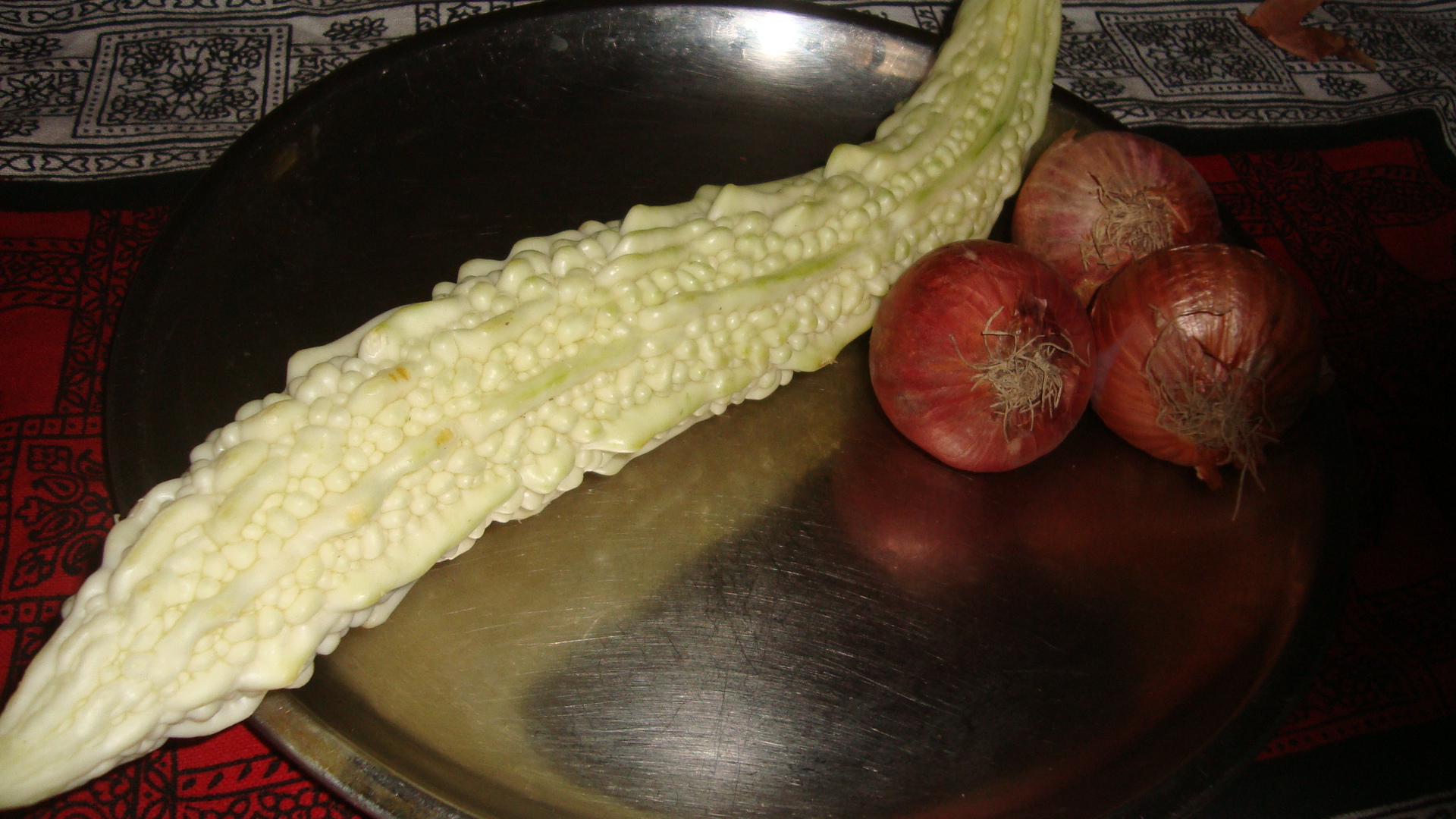
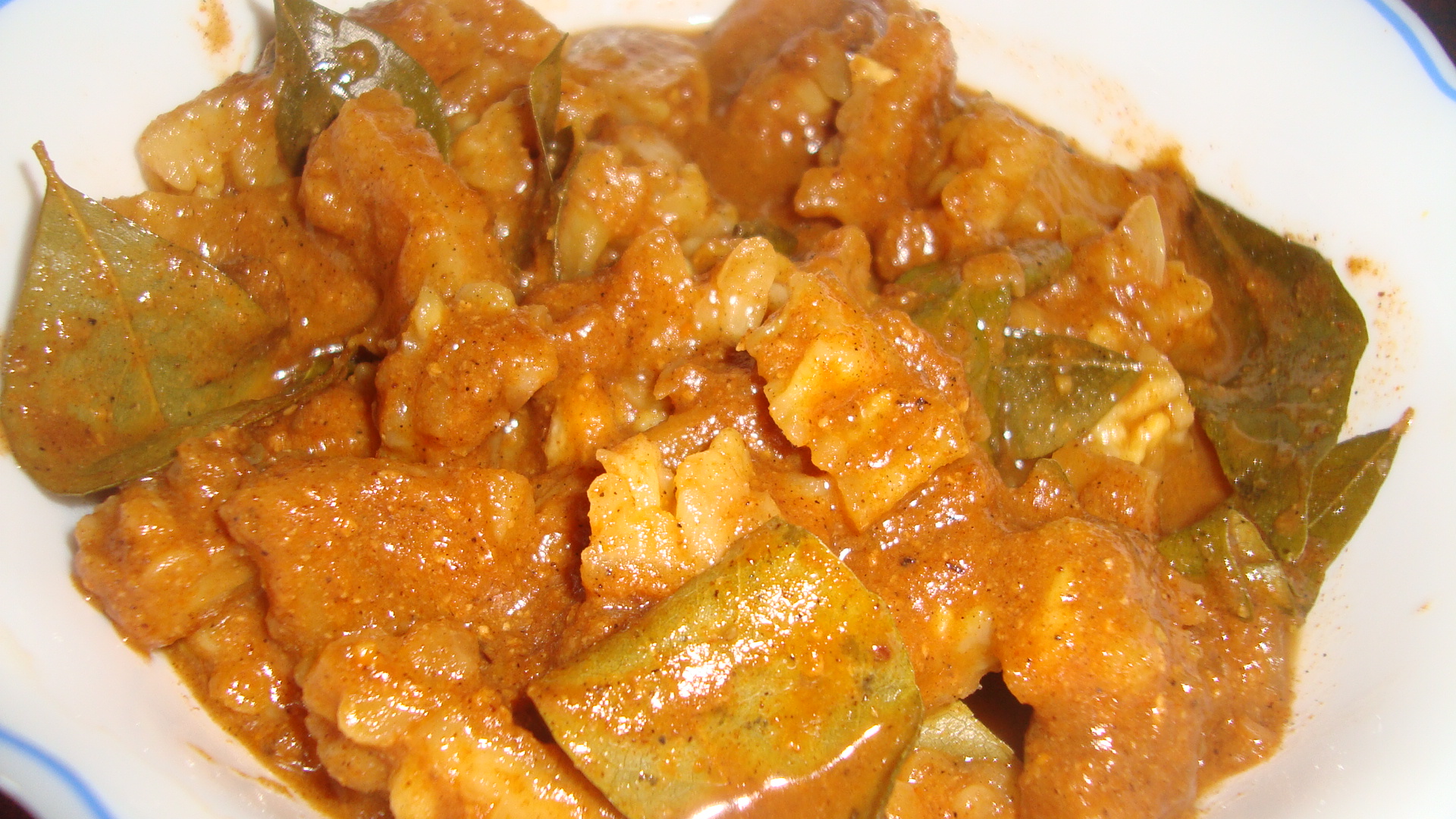
Today’s recipe is my mother’s delicious ‘pavatkai’ (bitter gourd) recipe. My grandmother used to first soak the chopped bitter gourd in fresh coconut water before cooking it to remove its bitterness. My mother prefers retaining a certain amount of the bitterness so she doesn’t use coconut water. Bitter gourd Pavatkai Kulambu Time taken: 30 – 40 mins Serves 4 Pavatkai curry Ingredients:

  • Bitter gourd/ pavatkai – 1 cup, chopped
  • Tamarind extract – 1 cup, thin consistency
  • Onion – ½ chopped
  • Curry leaves – 1 sprig
  • Coconut milk or non-fat milk – ¼ cup
  • Curry powder – 1 tsp
  • Sugar – 1 tsp
  • Salt, to taste

Method:

  1. Cook the chopped bitter gourd in water, in a pan, for about 5 to 10 mins on medium heat.
  2. Add the tamarind extract, curry powder, curry leaves, chopped onion and salt to taste to the pan.
  3. Let the ingredients combine and simmer on low heat for about 15 to 20 mins. If the bitter gourd is not tender enough as the liquid starts drying up, add ½ cup of water.
  4. Add ¼ cup of coconut milk or non-fat milk and a tsp of sugar. Mix well and let the curry simmer for another 5 to 10 mins on low heat.
  5. Remove from heat and serve with rice.

Recipe source: Raji Thillainathan.

Gulab Jamun

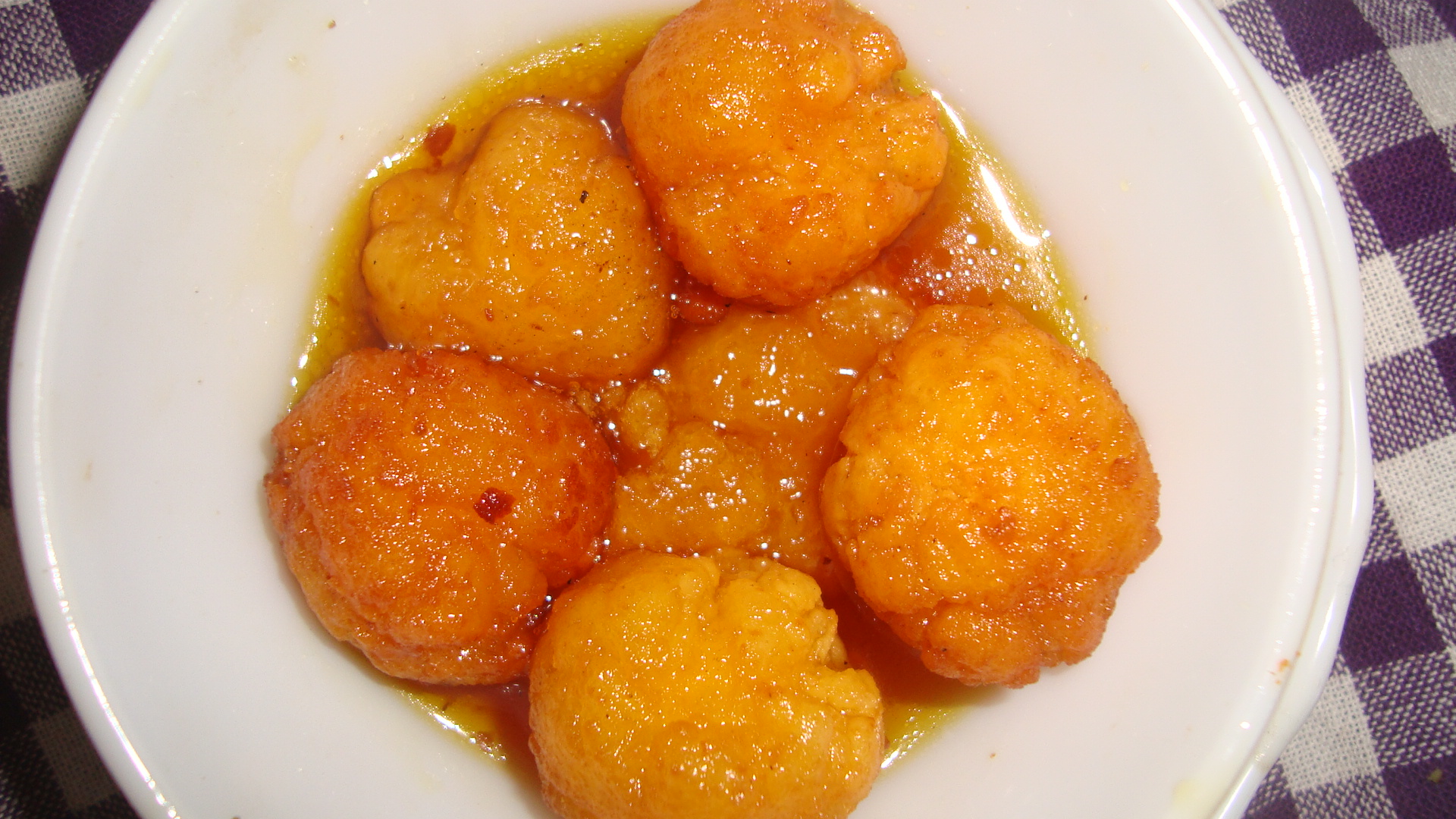
My favourite accompanying dessert for a puri and kadalai curry meal is gulab jamun. While I think this sweet originated from Punjab, it is very popular around Asia. Having a sweet tooth, I simply love this dessert though we hardly make it in our house anymore. Today, I will share my mother’s version of gulab jamun.

Gulab Jamun

Time taken: 30 mins

Makes 12 or 15 gulab jamun

Gulab jamun

Ingredients:

  • Milk powder – 6 tbsp
  • Wheat flour – 2 tbsp
  • Baking powder – ¾ tsp
  • Oil, for deep-frying
  • Water – ¾ cup
  • Sugar – ¼ cup
  • Kesari powder – pinch
  • Rose essence – few drops

Method:

  1. Mix the milk powder, wheat flour, baking powder and stir in a little water to knead the dough.
  2. Make small balls from the dough and place them on a plate. Let them rest for about 5 mins.
  3. Heat some oil in a pan on low heat.
  4. Once the oil is ready for deep-frying, drop a few of the balls at a time and deep-fry them. Ensure that they turn golden brown on all sides by turning them around.
  5. Remove from pan and place them on a plate with grease absorbing paper.
  6. In a sauce pan, boil ¾ cup of water with ¼ cup of sugar, a pinch of kesari powder and a few drops of rose essence.
  7. Once the syrup comes together, remove sauce pan from stove and transfer syrup to a bowl.
  8. Transfer the gulab jamun from the plate to the syrup bowl.
  9. Cover the bowl and let the gulab jamun absorb the syrup for some time.
  10. Serve warm

Recipe source: Raji Thillainathan.

Puri and Kadalai Curry

Today’s recipes are my childhood favourites and I guess, they still continue to be one of my favourites. Originating from North India, the dishes have become very much part of the cuisine of the sub-continent. In this post, I will focus on the main meal and in my next, the accompanying dessert.

Puri with Kadalai curry

(a) Puri

Time taken: 40 – 45 mins

Makes 6

Puri

Ingredients

  • Wheat flour – 1 cup
  • Salt – ½ tsp
  • Low fat oil – 2 tbsp + for deep-frying
  • Water, as required

Method

  1. Add ½ tsp salt and 2 tbsp oil to the wheat flour. Slowly stir in a little water and knead the flour mix into a ball of dough.
  2. Divide the dough into 6 smaller balls. Let it rest for about 15 to 20 mins.
  3. Heat some oil in a pan on low to medium heat.
  4. Roll out one of the small balls of dough.
  5. Keep a little container with water by your side and brush one side of the rolled out dough with water.
  6. Drop the rolled out dough into the hot oil, with the water side down. This helps the puri to puff up more. Yes, there will be a lot of crackling noise as water and oil react at first.
  7. Once the puri has risen to the surface, flip it to the other side so that the other side can be cooked and can also become puffy. It takes about 2 mins approximately to brown each side.
  8. Remove the puri from the pan and place on a dish covered with a grease absorbing paper.
  9. Serve with kadalai curry.

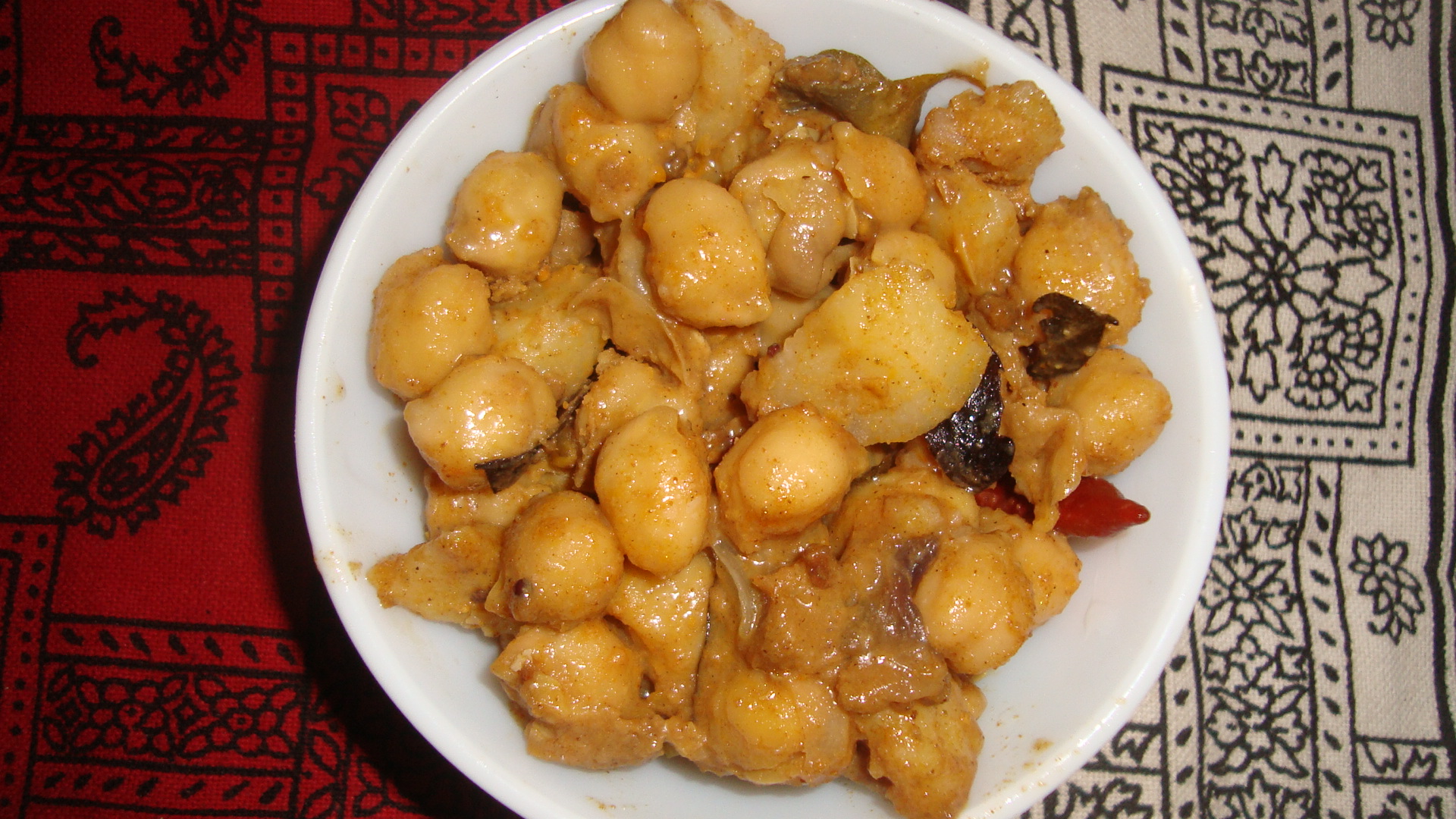
(b) Kadalai (chickpea) curry

Time taken: 40 mins + overnight soaking

Serves: 3

Kadalai curry

Ingredients:

  • Kadalai/ Chickpea – ½ cup
  • Onion – ½ , chopped
  • Mixed 3C (Cinnamon, cardamom and cloves) powder – 1 tsp
  • Fennel seeds – ½ tsp
  • Fenugreek seeds – ½ tsp
  • Curry leaves – 1 sprig
  • Rampe/ pandan leaf – small piece
  • Coconut milk or non-fat milk – 1 cup
  • Curry powder – 1 tbsp, or as required
  • Low fat oil, as required

Method:

  1. Soak the kadalai in water for a minimum of 3 hours and better, if soaked overnight.
  2. Rinse the soaked kadalai and boil it for 15 minutes in some fresh water.
  3. Drain and keep aside the kadalai.
  4. In a pan, heat a little oil and fry the chopped onion, fenugreek, mixed 3C powder, curry leaves and rampe for two minutes.
  5. Add the boiled kadalai to the pan and mix well.
  6. Stir in the coconut milk or non-fat milk and 1 tbsp curry powder. Let the kadalai curry simmer on low heat for 10 to 15 mins.
  7. If the curry dries up, add a little more milk and let it simmer a little more. The curry should have a rich consistency and not be watery when you remove from the heat.
  8. Serve hot with the puri.

Recipe source: Raji Thillainathan.

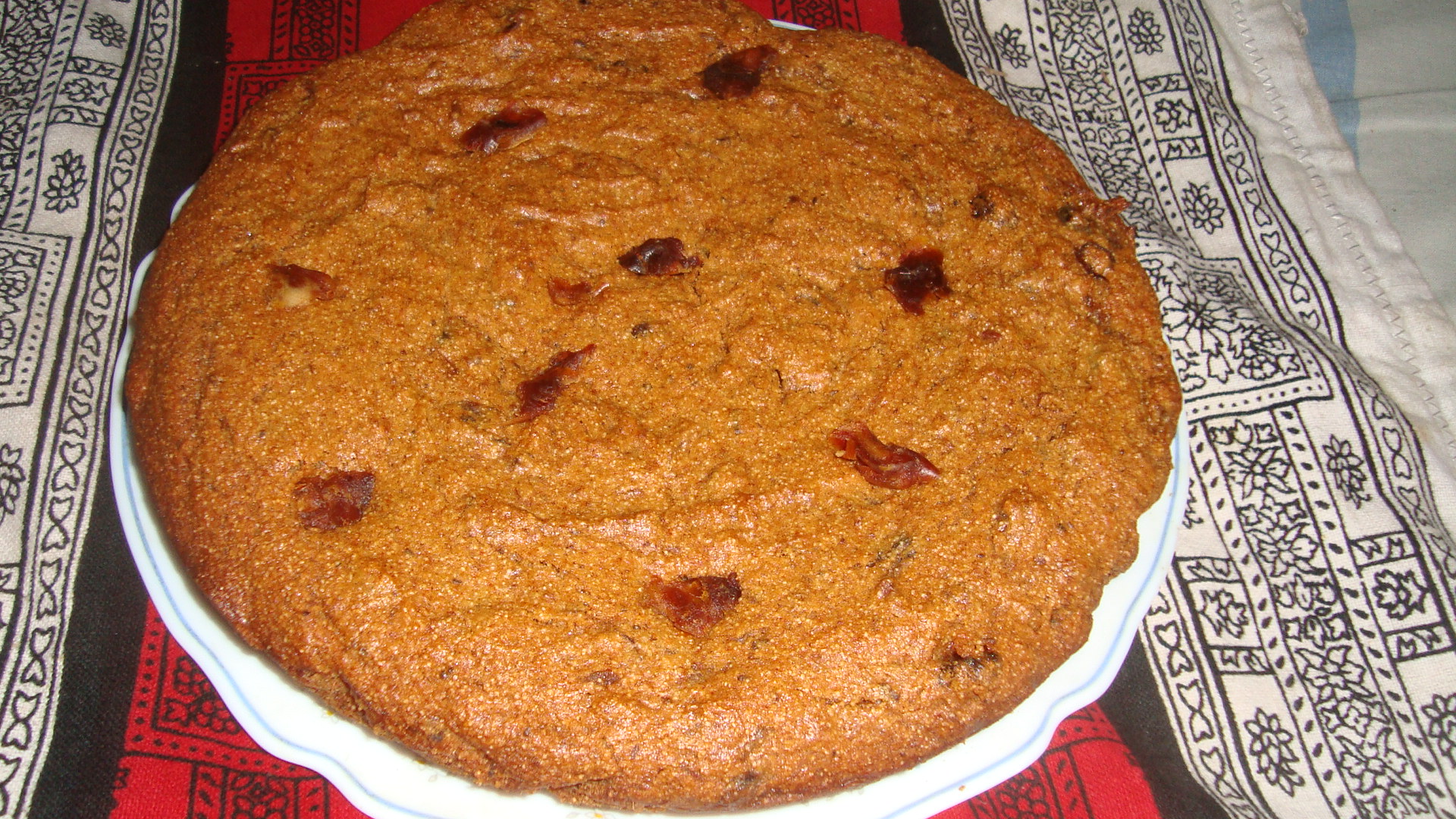
Egg-less Date and Raisin Cake

Among the several delicious cakes that my mother bakes, a special treat is her egg-less date and raisin cake that she makes on special occasions.

Date and raisin cake

Date and Raisin Cake

Time taken: 1 ½ hours + 3 hours (for marinating the dried fruits)

Serves 8 – 10

Slice of date cake

Ingredients:

  • Dates – 1½ cup (when chopped) or 300 g (before chopping)
  • Raisins – ½ cup (100 g)
  • Wheat flour – 2 cups
  • Semolina – ½ cup
  • Low fat vegetable oil margarine (e.g. Flora) – 1 ½ cup (250 g)
  • Brown sugar – 1 cup
  • Condensed milk – 1 cup (vegans can use almond cream or cashew nut cream or coconut cream as a substitute)
  • Vanilla essence – 2 tsp
  • Mixed 3C spice powder (Cardamon, Cloves and Cinnamon) – 1 ½ tsp
  • Sri Lankan Tea – 1/3 cup
  • Baking powder – 2 tsp
  • Baking soda – ¼ tsp + pinch (for marinating the dried fruits)

Method:

  1. De-seed the dates and chop them. Place the chopped dates in a bowl, together with the raisins.
  2. Add 1/3 cup of strong black tea, pinch of baking soda and the mixed 3C spice powder to the dates and raisins bowl. Cover and keep aside, for 2 – 3 hours, letting the dried fruits marinate in the tea and spice mix.
  3. Whisk together the margarine and sugar, adding the condensed milk or vegan substitute. If whisking by hand, add the ingredients slowly while continuing to whisk. If using a blender, blend the three together for about 10 minutes.
  4. Add the vanilla essence to the blend and mix.
  5. Sift the flour, semolina together with the baking powder and soda.
  6. Stir in the sifted flour and semolina gradually into the bowl of blended margarine, sugar and milk and mix.
  7. Add the marinated dried fruits to the batter and fold.
  8. Transfer the cake batter into a baking tray and bake in a pre-heated oven at 140⁰C/284⁰F for about 1 – 1 ¼ hours.
  9. Remove from oven and let it cool, before slicing and serving with some hot Sri Lankan tea or coffee.

Recipe source: Raji Thillainathan.

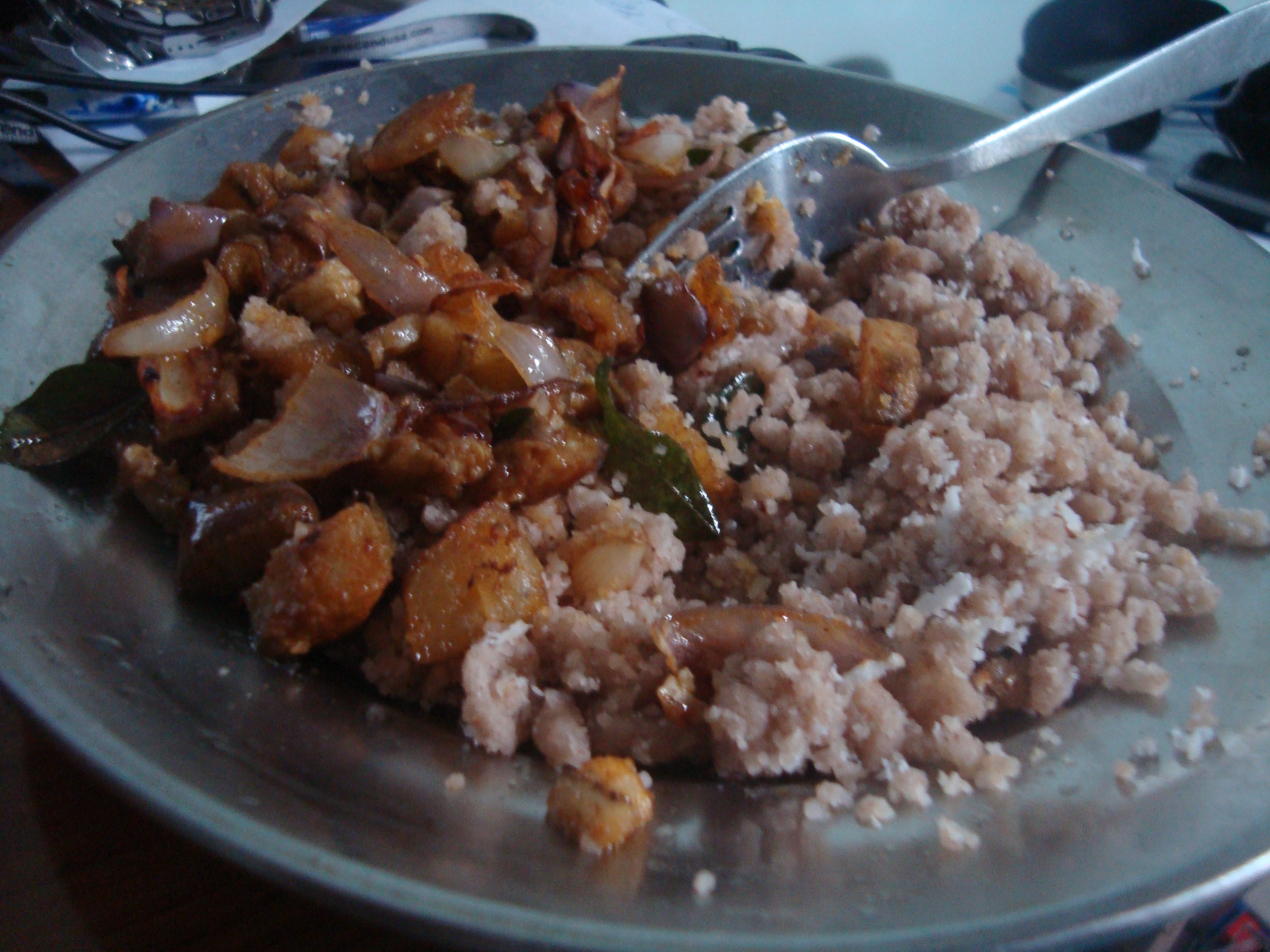
Pittu with Katharikkai

Today, I felt like sharing another of my family’s comfort food. During the weeks that my mouth was wired shut after my road traffic accident nearly a decade ago, the food that I felt like eating the most was pittu and katharikkai vathakkal. It was then that I found out that everyone in my family seemed to like it very much as well.

As pittu is made as either kulal pittu or regular pittu and my mother generally makes the katharikkai (brinjal) as a curry or vathakkal (stir-fry) to go with the pittu, I decided to share the recipes for all of them.

(a) Kulal pittu (pittu steamed in bamboo)

Time taken: 25 mins

Serves 3
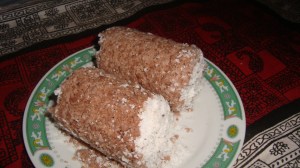
DSC09954

Kulal Pittu

Ingredients

  • Roasted rice flour – 1 cup
  • Steamed wheat flour – ¼ cup
  • Salt – ½ tsp
  • Scraped coconut – ¼ cup
  • Hot water, as required

Method:

  1. Mix the roasted rice flour and the steamed wheat flour. Add some salt.
  2. Pour the hot water (boiled and slightly cooled) slowly into the flour mixture and stir by hand till you have coarse, little balls.
  3. Divide into three sections of flour mixture.Divide the freshly scraped coconut into four parts.
  4. Take the bamboo steamer and layer the bottom with one part of the freshly scraped coconut. Then, take one of the divided sections of flour mixture and fill in the bamboo steamer. Layer again, with the second part of scraped coconut. Repeat for remaining two sections of flour mixture until the bamboo steamer is filled but not overflowing. Top with the final part of the scraped coconut.
  5. Steam for 10 to 15 minutes.
  6. Serve the kulal pittu with katharikkai kulambu.

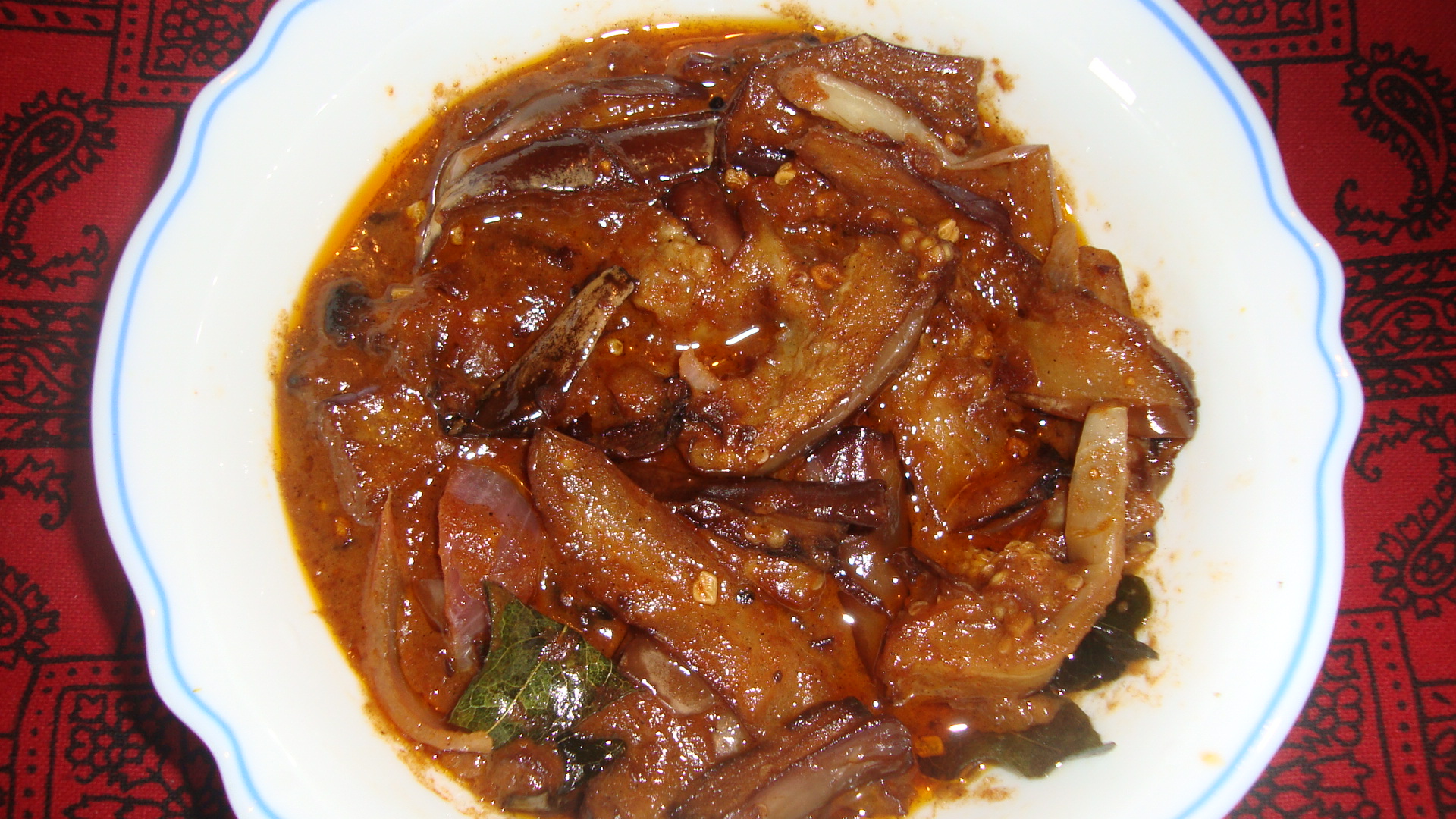
(b) Katharikkai Curry/ Brinjal curry

Time taken: 30 mins

Serves 4 to 5

Katharikkai curry

Katharikkai curry

Ingredients

  • Brinjal – 2 cups (1 or 1 ½ inch thin slices)
  • Onion – ½, chopped
  • Fenugreek seeds – 2 tsp
  • Curry leaves – 1 sprig
  • Tamarind extract – ½ cup
  • Coconut milk or non-fat milk (for non-vegans) – 1 cup
  • Curry powder – 1 ½ tsp
  • Sugar – 1 tsp
  • Salt, to taste
  • Low fat oil (sunflower or canola) – 2 tsp + for deep frying

Method:

  1. Cut the brinjals into 1 or 1 ½ inch thin slices till you have about 2 cups.
  2. Deep fry the brinjal slices they brown and keep aside.
  3. Heat 2 tsp oil in a pan and sauté the onion and curry leaves with the fenugreek seeds for a couple of minutes.
  4. Add the brinjal slices to the pan. Mix and fry for a few more minutes.
  5. Add the ½ cup of tamarind extract and simmer for a few minutes before adding the coconut milk or non-fat milk and the curry powder and salt, to taste.
  6. Let the curry simmer for 10 minutes.
  7. Finally, add the sugar, mix and quickly remove from heat. For curries that use tamarind, it is good to add some sugar at the end, just before removing from the stove, as it enhances the flavours.
  8. Serve with pittu or rice.

(c) Pittu with Katharikkai Vathakkal

Ingredients:

Time taken : 35 – 40 mins

Serves 3 to 4
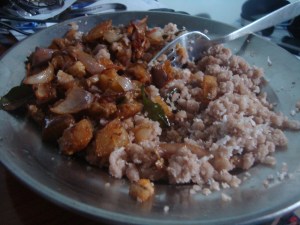
DSC07148

Pittu with Katharikkai Vathakkal

Ingredients:

  • For pittu, ingredients are the same as for kulal pittu – see (a) above
  • Brinjals – 2
  • Onion – ½
  • Chilli – 1
  • Curry leaves – 1 sprig
  • Curry powder – 1 tsp
  • Salt, to taste
  • Sesame oil – 2 tbsp

Method:

  1. For the regular pittu, follow steps 1 and 2 as for the kulal pittu. Then, mix in the freshly scraped coconut into the bowl of tiny flour balls. Steam the pittu mix in a normal steamer for about 10 – 15 minutes.
  2. Wash and clean the brinjals. Cut the brinjals lengthwise and then finely chop them into small pieces. Sprinkle some salt over the chopped pieces. Mix and keep aside.
  3. Finely chop up the onion and chilli.
  4. Heat 2 tbsp oil in a pan. Add the chopped brinjal pieces to the pan and fry them for 5 mins.
  5. Add the chopped onions and continue frying for another 5 mins. If needed, add a little more oil.
  6. At the end, add the curry powder, mix and fry for a couple of minutes before removing from heat.
  7. Serve the pittu with the katharikkai vathakkal.

Recipe source: Raji Thillainathan.

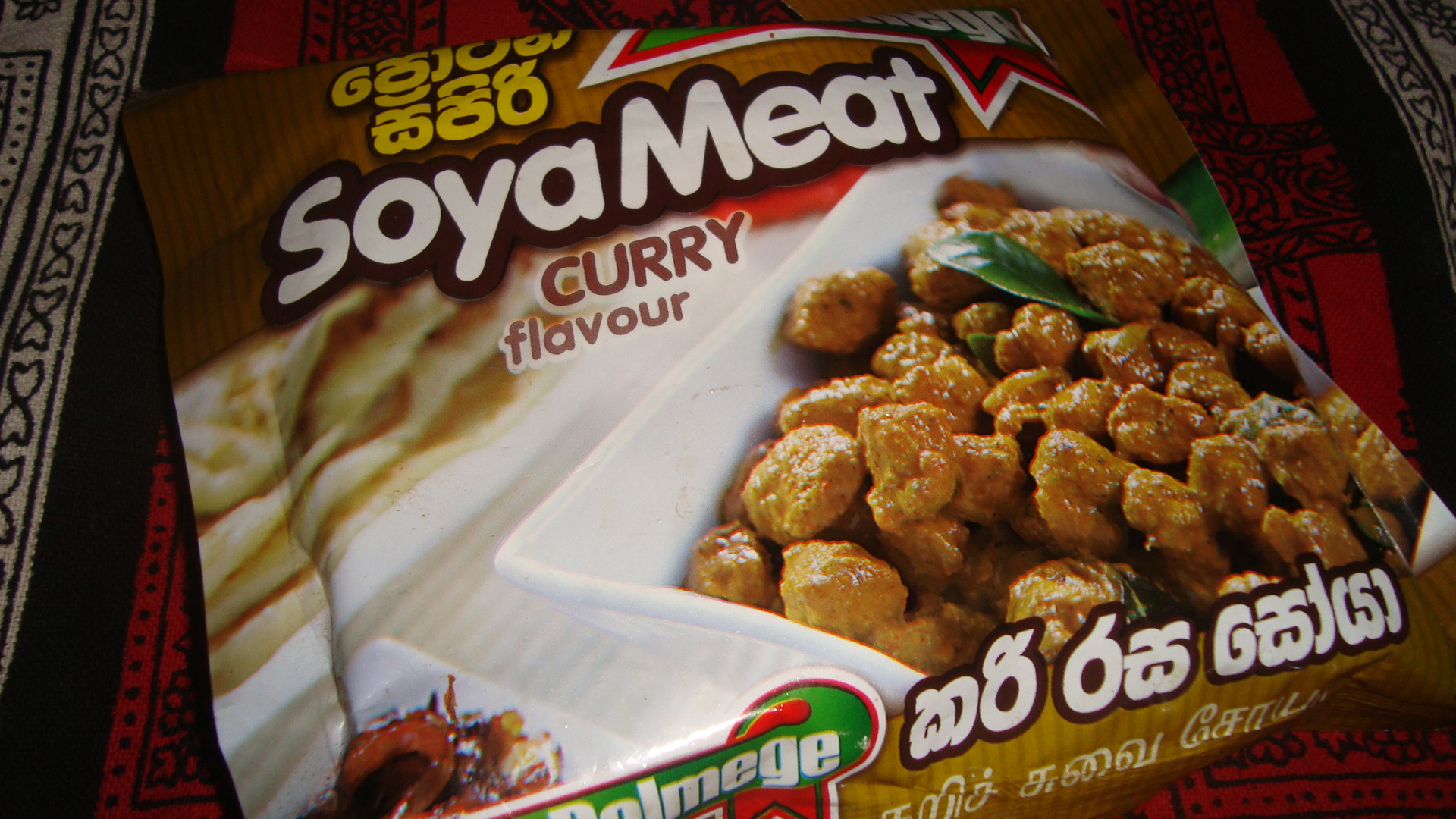
Soyameat Curry and Fried Soyameat

In the late 70s and early 80s, a lot of research was done in Sri Lanka on processed soyabeans as a means to alleviate protein deficiency amongst children and pregnant and lactating mothers. Soyameat was soon introduced in the market and promoted by the health ministry and the new and affordable food product became a hit in Sri Lankan households.

Soyameat

Today, I will share two ways my mother makes soyameat at home.

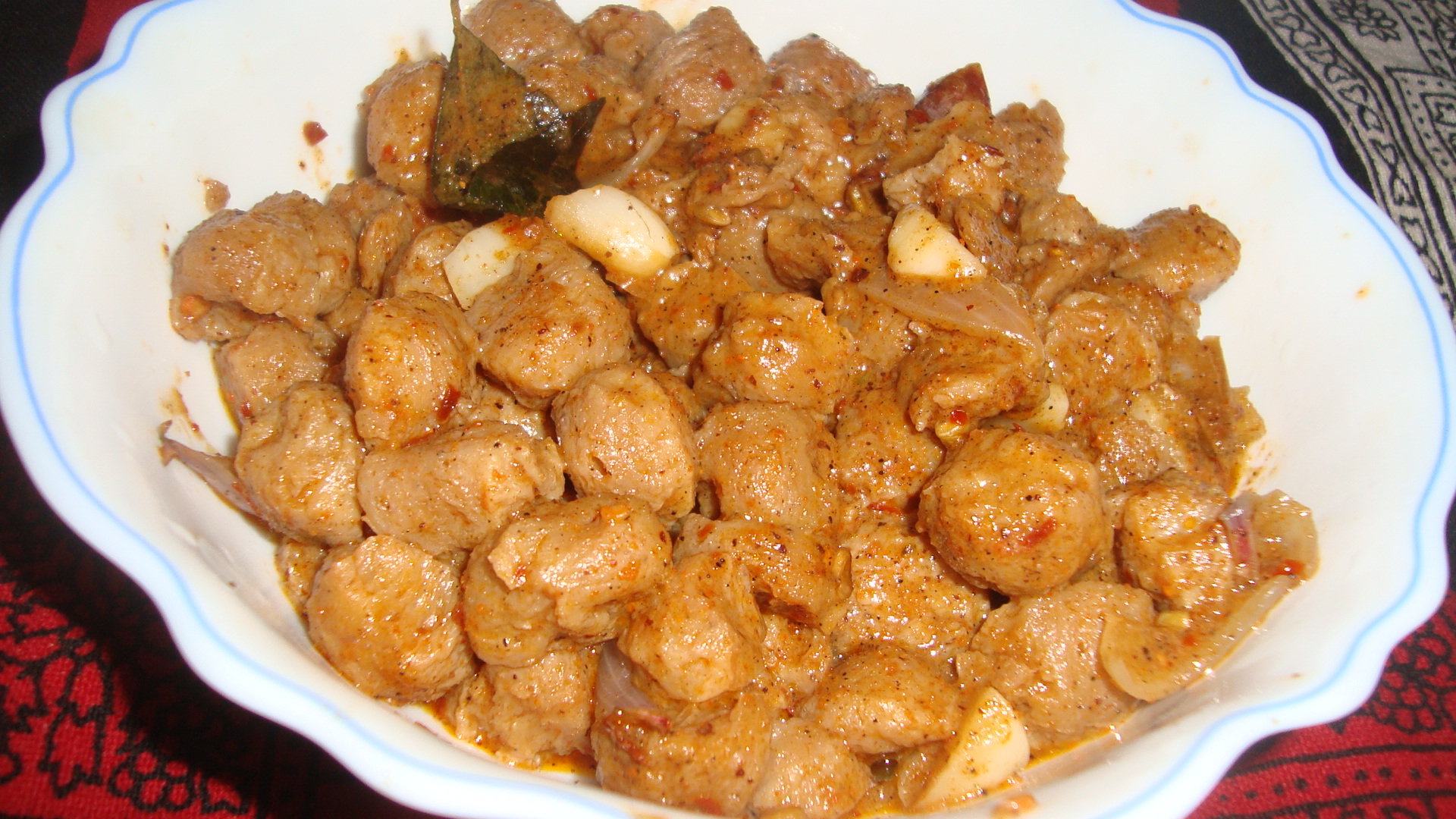
(a) Soyameat curry

Time taken: 15 – 20 mins

Serves 4 or 5

Soyameat curry

Ingredients:

  • Soyameat  – 1 packet
  • Onion – ½, chopped
  • Ginger – ½ “ piece, chopped
  • Garlic – 2 cloves, chopped
  • Fenugreek seeds – ½ tsp
  • Curry leaves – 1 sprig
  • Rampe leaf/ pandan – 1” piece
  • Coconut milk (for vegans) or non-fat milk – ½ cup
  • Curry powder – ½ tbsp
  • Salt, to taste
  • Low fat oil (sunflower or canola) – 1 tbsp

Method:

  1. In a bowl, Add 1 cup of boiling water and add the soyameat chunks. Add some salt and let the soya chunks soak for around 5 minutes. Drain out the water and keep aside.
  2. Heat 1 tbsp oil in a pan and fry the chopped onion, ginger, garlic and curry leaves and rampe with the fenugreek seeds for a minute or two.
  3. Then, add the soaked and drained soyameat chunks and mix well.
  4. Add the curry powder (you can alternatively use the curry powder mix that comes with the packet) and the coconut or non-fat milk.
  5. Let the curry cook for about 10 mins. Adjust salt, if required.
  6. Remove from heat.
  7. Serve with roti or rice.

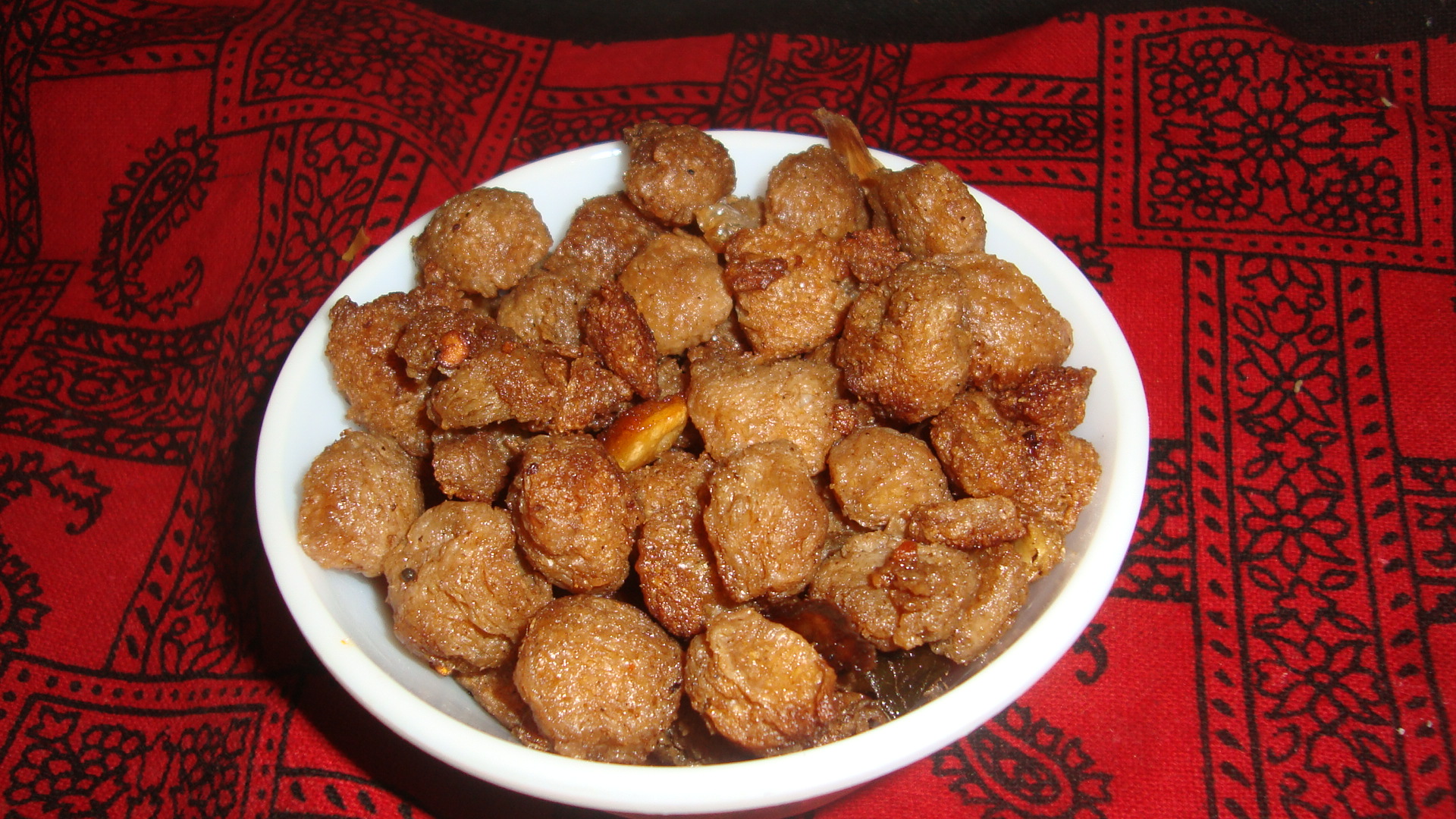
(b) Fried soyameat

Time taken: 20 mins

Serves 4 or 5

Fried soyameat

Ingredients:

  • Soyameat – packet
  • Onion – ¼ , chopped
  • Ginger – ½ “ piece, chopped
  • Garlic – 2 cloves, chopped
  • Curry powder – 1 ½ tsp
  • Salt, to taste
  • Oil – 1 tsp (for marinating) + for deep-frying.

Method:

  1. In a bowl, Add 1 cup of boiling water and add the soyameat chunks. Add some salt and let the soya chunks soak for around 10 minutes. Drain some of the water (not needed to have it dry) and keep aside.
  2. Heat 1 tsp oil in a pan and fry the chopped onion, ginger, garlic and curry leaves for a minute.
  3. Add the lightly drained soyameat chunks and mix well for a couple of minutes. Remove from heat and keep aside, allowing it to marinate.
  4. When cooled, squeeze out the liquid (excess water or oil) from the marinated soyameat mixture and deep-fry in a pan.
  5. Serve with rice.

Recipe source: Raji Thillainathan.

Dal curry

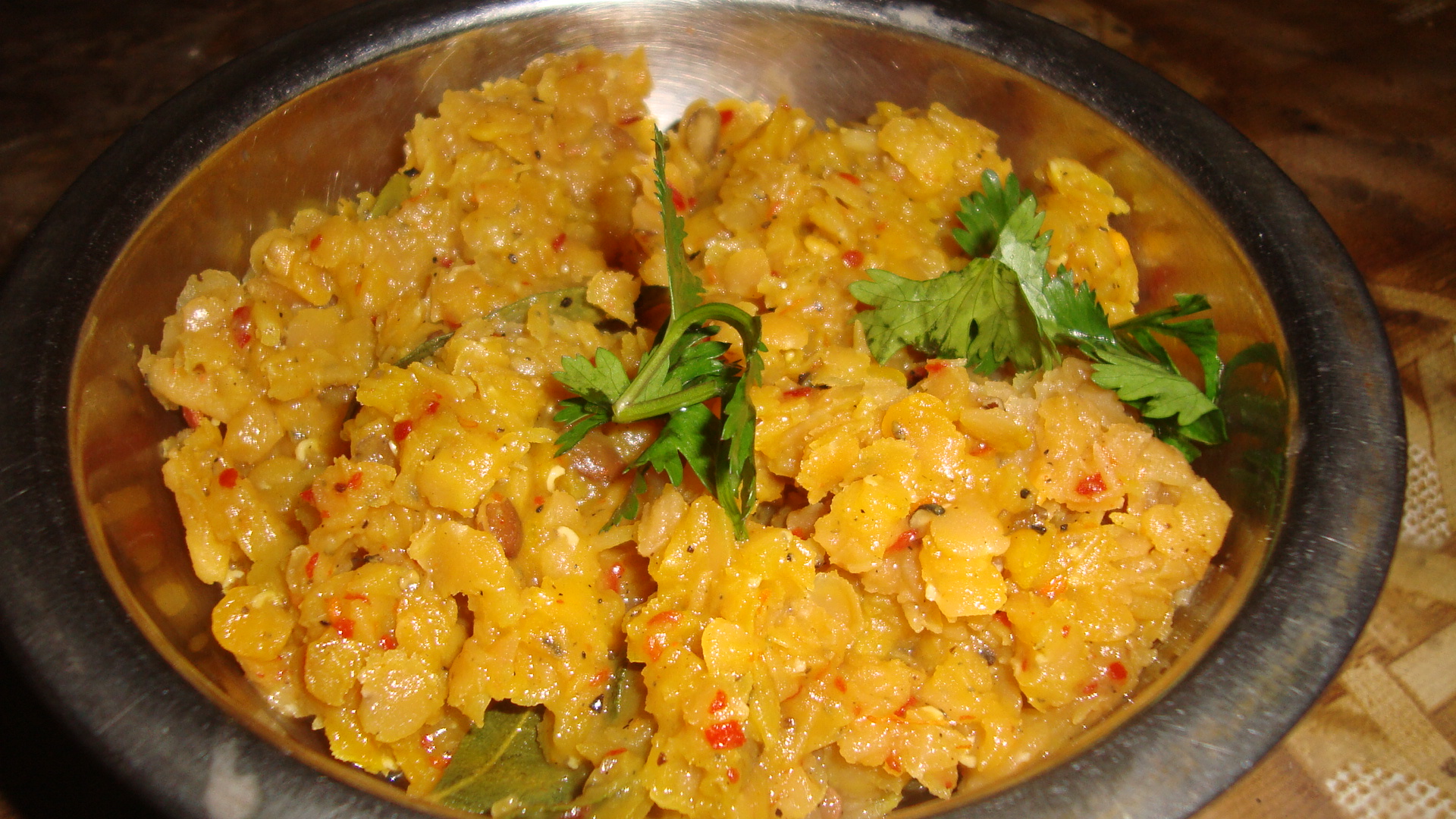
This is my mother’s recipe for cooking Mysore dal, a curry that is a regular at home.

Mysore dal curry

Time taken: 15 – 20 mins

Serves 4

Mysore dal curry

Ingredients

  • Mysore dal – 1 cup
  • Green chilli – 1
  • Onion – ¼
  • Curry leaves – 1 sprig
  • Rampe leaf/ pandan
  • Non-fat milk (for lacto vegetarians and better for those having cholesterol issues) or Coconut milk (for vegans) – ½ cup
  • Turmeric – ¼ tsp
  • Crushed chilli – 1 tsp
  • Garlic – 1, crushed
  • Pepper – ½ tsp
  • Salt, to taste

Method:

  1. Wash and clean the dal.
  2. Cook the cleaned dal in 1 ½ cups of water, together with the chopped green chilli, onion, curry leaves and rampe.
  3. Once the dal is cooked and the water dries up, add ½ cup of non-fat milk or coconut milk along with the crushed garlic, chilli flakes, turmeric powder, pepper powder and salt to taste.
  4. Let the dal cook for another few minutes till the ingredients combine.
  5. Remove from heat and serve with rice.

Recipe source: Raji Thillainathan.

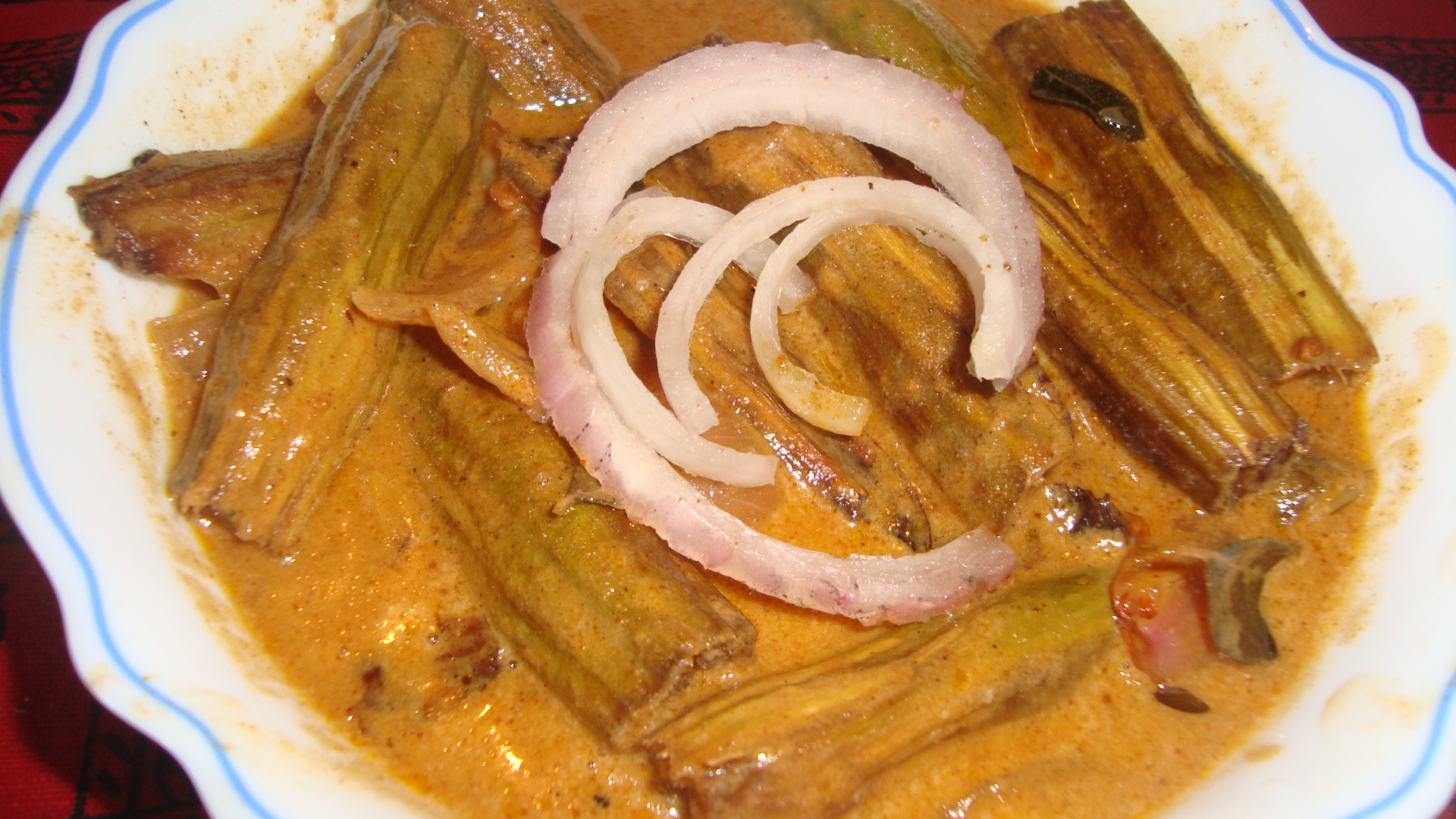
Drumstick curry

This is my mother’s recipe and this is the way she makes drumstick curry often at home. It is delicious.

Drumsticks

Cooking time: 25 – 30 mins

Serves 4 – 5 persons

Drumstick curry

Ingredients

  • Drumsticks – 2
  • Fenugreek seeds – 1 tbsp
  • Onion – ½
  • Curry leaves – 2 sprig
  • Curry powder – 1 tbsp
  • Salt – ½ tsp
  • Oil – 1 tbsp
  • Tamarind extract – ½ cup
  • Non-fat milk or coconut milk (for vegans) – 1 cup
  • Water – ½ cup

Method

  1. Cut the drumsticks into 2 inch pieces and clean by scraping lightly the skin.
  2. Deep fry drumstick pieces, till they are lightly browned.
  3. In a pan, heat a little oil and sauté the fenugreek seeds, onions and curry leaves.
  4. Add the fried drumstick pieces and mix well.
  5. Add the tamarind extract, non-fat milk or coconut milk and water, along with the curry powder and salt, to the pan.
  6. Cover and cook on medium heat for around 15 mins.
  7. Taste for salt and then increase heat and cook further for about 5 mins.
  8. Remove from heat and serve with hot rice or stringhoppers.

Recipe source: Raji Thillainathan.