Curry powder for fish dishes

This Jaffna curry powder is specifically used when making fish curries. It can also be used for making crab scraps gravy.

Curry powder - fish dishes

This quantity of curry powder can be used for 12 – 15 dishes.

Ingredients:

  • Dried red chillies – ½ cup, chopped
  • Coriander seeds – ½ cup
  • Cumin seeds – 1/3 cup
  • Fennel seeds – 2 tbsp
  • Fenugreek – 2 tsp
  • Turmeric piece – 1 small piece
  • Dried ginger – small piece
  • Pepper – 1 tbsp
  • Curry leaves – 2 sprigs

Method:

  1. Dry roast the ingredients lightly. Then, grind the roasted ingredients into a mixed spice powder.
  2. Store the curry powder in an airtight container.

Recipe source: Raji Thillainathan.

Squid curry

This is another of my grandmother’s seafood recipes, as remembered by my mother.

Squid curry/ Kanavai curry

Cooking time: 35 – 40 mins

Serves 4 or 5

Ingredients:

  • Squid/ Kanavai – 2 cups, well cleaned and chopped
  • Curry leaves – 1 sprig
  • Onion – 1, finely chopped
  • Ginger – ½“, finely chopped
  • Garlic – 1, finely chopped
  • Fenugreek seeds – 1 tbsp
  • Coconut milk – 1 ½ cup thin coconut milk + ½ cup thick coconut milk
  • Curry powder – 2 tbsp
  • Special curry powder for meat dishes – 2 tsp
  • Salt, to taste
  • Oil, as required
  • Lime juice – 1 tbsp

Method:

  1. Heat 1 tbsp oil in a pan and fry the finely chopped onion, ginger, garlic and curry leaves with the fenugreek seeds till the aroma emanates. Take care that it does not burn.
  2. Add another tbsp of oil and the cleaned and chopped squid. Mix well and cook on low heat for about 5 – 10 mins.
  3. Add 1 ½ cup of coconut milk to the pan, together with 2 tbsp of and salt. Cook on medium heat for about 15 minutes.
  4. Now, add the ½ cup of thick coconut milk and 2 tsp of the special curry powder for meat dishes and increase the heat. Cook the curry till it combines and comes together and the liquid begins to dry up.
  5. Remove from heat and add the lime juice and mix well.
  6. Serve with rice or pittu.

Recipe source: Raji Thillainathan.

Curry powder for meat based dishes

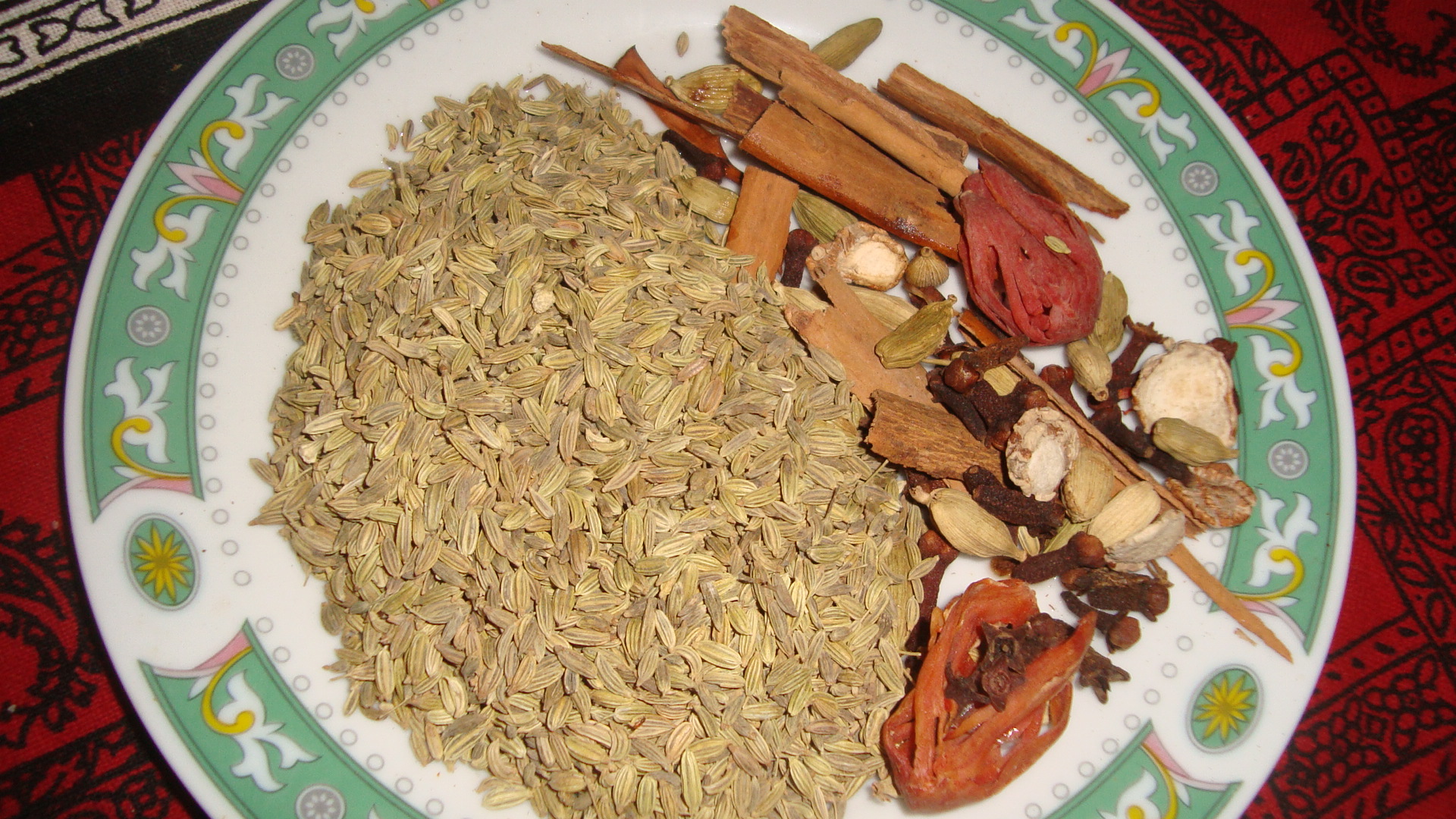
In addition to the regular all-purpose curry powder, this special blend curry powder is used for meat based dishes. At local grocery stores around Sri Lanka, one can buy little packets of ‘iraitchi sarakku’/ dried spices for meat curries.

Spices for meat dishes

This curry powder is used for chicken and other meat dishes as well as crabmeat and squid dishes.

Ingredients

  •  Fennel seeds – ½ cup
  • Cinnamon – 1 inch and thick
  • Cloves – 8 to 10
  • Cardamom – 6 to 8
  • Dried sathikkai/ nutmeg – 1
  • Dried kungumapoo/ dried saffron flower – 1 or 2

Method:

  1. Dry roast the ingredients lightly and then, grind the roasted ingredients into powder.
  2. Store the curry powder in an airtight container.
  3. This quantity of curry powder can be used for about 10 meat-based curries.

Recipe source: Raji Thillainathan.

Prawn vadai

My mother remembers having this prawn snack from her childhood days and even better, the way her mother used to make it.

Prawn Vadai/ Raal Vadai

Time taken: 40 mins + Soaking time – 3 or 4 hours

Makes 10 prawn vadai

Ingredients:

  • Prawns/ Raal – 10
  • Urad dal/ Ulunthu – 1 cup
  • Chillies – 3 or chilli powder – 1 tbsp
  • Onion – 1, chopped
  • Fennel seeds and Salt, to taste
  • Oil, for deep-frying

Method:

  1. Clean the urad dal and let it soak in a bowl of water for 3 – 4 hours, or overnight.
  2. Clean the prawns. Rub some salt over them and boil the prawns in some water for about 10 mins.
  3. Drain the urad dal and grind it together with the chopped chillies and onion till the batter is just right for vadai. Add some fennel seeds and salt, to taste and mix well.
  4. Dab some oil on one of your palms.
  5. Take a small ball of batter and flatten it slightly on your palm.
  6. Place one of the cooked prawns in the middle of the batter and close it up, forming a ball again.
  7. Flatten the ball of batter again, into the shape of a vadai and make a small hole in the middle, like a mini-doughnut.
  8. Deep fry the prawn vadai.
  9. Serve with some hot tea.

Recipe source: Raji Thillainathan.

Crab curries

Vegetarian readers of this blog can ignore my posts this weekend as I will be sharing some non-vegetarian recipes of my grandmother, as remembered by my mother from her teen years.

Being an island, seafood has played a major role in Sri Lanka’s cuisine. The way it is cooked differs in each coastal district around the country. Today, I will share two recipes of crab curries, from Jaffna, without any photos as the last time crab was cooked at home was when I was around 5 years old.

(a) Crab meat curry

Time taken: 30 mins

Serves 4

Ingredients:

  • Crab – 2
  • Onion – 1, chopped
  • Ginger – 1 tsp, chopped
  • Garlic – 1 tsp, chopped
  • Fenugreek seeds – 1 tbsp
  • Curry leaves – 1 sprig
  • Coconut milk – 1 cup
  • Curry powder – 1 tbsp
  • Oil – 1 tbsp

Method:

  1. Chop up the crabmeat of 2 crabs into about 8 pieces. You can either buy crabmeat already extracted from its shell, if available at your local stores, or you can clean and extract it yourself. Separate the rest of the crab parts from the main shell and reserve for the crab scraps gravy.
  2. Add some salt to the chopped up crab meat and keep aside.
  3. Heat a little oil in a pan and fry the chopped onions with 1 tbsp of fenugreek seeds and the curry leaves. Add the chopped ginger and garlic and fry for a few minutes till you get the aroma of tempering.
  4. Add the chopped up crab meat to the pan and mix well.
  5. After frying the crabmeat for about 5 minutes, add the coconut milk and the curry powder.
  6. Cook the crabmeat curry on low heat for around 15 mins till the liquid almost dries up.
  7. Serve crabmeat curry with stringhoppers, hoppers or pittu.

(b) Crab scraps gravy

Time taken: 30 mins

Serves 4

Ingredients:

  • Crab parts from 2 crabs, excluding the main shell and content
  • Onion – ½, chopped
  • Curry leaves – 1 sprig
  • Fenugreek – 1 tbsp
  • Oil – 1 tbsp
  • Tamarind extract – ½ cup
  • Coconut milk – 1 ½ cups
  • Curry powder – 1 ½ tbsp

Method:

  1. Heat 1 tbsp of oil in a pan and fry the chopped onions, curry leaves and the fenugreek seeds.
  2. Add the cleaned crab scraps that were reserved when cutting up the crab for the crabmeat curry and fry for some minutes.
  3. Add ½ cup of tamarind juice and let the mixture simmer for 2 mins before adding 1 ½ cups of coconut milk and 1 ½ tbsp of curry powder.
  4. Cook the crab feet gravy on low heat for about 10 – 15 mins. Take care to remove from heat before the gravy before it starts drying up.
  5. Serve the crab scraps gravy with rice.

Recipe source: Raji Thillainathan.

Panangai Paniyaaram

My aunt sent us some ‘panangai paniyaaram’ that she had made, after a visit to her home in Jaffna. So, I asked her to share the recipe for this Jaffna delicacy. I have also shared an introduction to the different ways the palmyrah is used in the north, at my mother’s request, and I hope I have covered the key aspects in my previous post.

Panangai Paniyaaram

Time taken: 45 mins – 1 hour

Makes 20 – 25 paniyaaram

Panangai Paniyaaram

Ingredients:

  • Very ripe Palm fruit (Panangai) – 1
  • Coconut milk – ¼ to ½ cup
  • Sugar – ¼ cup
  • Steamed wheat flour – 1 ½ cups
  • Oil, as required for deep frying

Method:

  1. Remove the skin of the palm fruit. If it is difficult, it can be held over a fire for a few minutes before the black outer skin is peeled off with a knife. This leaves the fibrous orange fruit and the three seeds.
  2. The fruit can be divided into three portions along with each of the three seeds. Mix each portion of the fruit and seed with a little water, in a basin, to make it pulpy.
  3. Strain the pulpy juice using a clean cloth and extract 1 cup of palm fruit juice.
  4. Boil the extracted palm juice, together with the coconut milk and sugar. Cook for 10 mins and then remove from heat.
  5. After the boiled mixture has cooled enough that you can put your finger in it without getting burnt or scalded, stir in the wheat flour slowly till the batter reaches a consistency that you can pick by hand. Not all the wheat flour needs to be used but just enough to reach this consistency. If the batter is still watery, add a little more steamed wheat flour.
  6. Heat some oil in a pan on low heat.
  7. Drop small balls of batter in batches of 5 to 6 and deep fry till they are orange/ golden throughout. Remove before they brown.
  8. Enjoy this Jaffna delicacy with some hot Sri Lankan plain tea and a piece of palm jaggery.

Recipe source: Vijayalakshmi Yogeswaran.

A little background on the Jaffna palmyrah

The Sri Lankan palmyrah (Borassus fabelliformis) is a variety of palm that grows extremely tall but the roots don’t look very strong. They are thin but inter-twined web-like which supports the palm tree.

For the people of the North, particularly Jaffna, the palmyrah tree traditionally has been the most important tree in their lives. Everything about a palmyrah tree is used.

The bunch of palm fruit is used in many ways in food. When the tops of tender palm fruit is cut off, one can see the three seeds inside which are like natural jelly in its early stages. This jelly-like substance is called ‘nungu.’ I remember during visits to my grandmother in my childhood, it was a treat to sample the ‘nungu’ she gave us. The fibrous part of the tender fruit is given to goats and cows. The ripened fruit on the other hand is used to make ‘panangai paniyaaram’ and ‘panaattu,’ both special delicacies of Jaffna. Palm jaggery made from the sap of the palm tree, is considered healthy and a better natural sugar substitute for people with diabetes.

The seed, when planted, sprouts roots which are highly nutritious particularly in Calcium. Only a few of the roots that are planted at a certain distance from each other are left untouched to grow into a tree. The rest of the roots (panangkilangu) are pulled out and boiled. They are either eaten boiled or sun-dried after boiling to make ‘Pulukodiyal.’ The ‘pulukodiyal’ is eaten as it is, with chips of coconut, or it is ground to make flour for a snack. When the roots are dried without boiling first and made into a flour, it is called ‘odiyal flour,’ the basic ingredient for making odiyal kool, another delicacy of Jaffna – the recipe of which I shared in my first few posts on this blog.

The palm leaf stalk called the ‘panai mattai’ is used for firewood and some of the palm leaves are periodically chopped off and used for roofing for huts and fencing. In ancient times, before paper came into use, dried and pressed palm leaves (panai olai) were used as writing material. The trunks of the palm are used in the construction of houses.

Nearly 95% of the palm trees in Sri Lanka grow in Jaffna, Killinochchi and Mannar in the north of the country with the remaining palm trees growing in parts of the eastern province, north central and north west and southern province. The potential of palm trees has not been realized in the rest of the country and even in the north where it has played a very significant role in the day to day lives of people, people have gradually reduced using it in the last few decades. The Palmyrah research institute and Palmyrah development board are currently trying to revive and promote this cottage industry.

Sura Sarakku Kulambu

This dish is particularly made for people recovering from severe illness and mothers recuperating from childbirth.

Sura Sarakku Kulambu

Ingredients:

  • Shark/ sura – 10 pieces
  • Onion – 1
  • Salt, to taste
  • Tamarind extract – 1 ½ cup
  • Sarakku powder mix (Coriander – 3 tbsp, Cinnamon – 2 tbsp, Pepper – 1 tsp, Turmeric – ½ tsp, Fenugreek – 1 tsp)

Method:

  1. Clean the shark pieces and place them in a pan.
  2. Chop up the onion and add to the pan. Pour some water and add some salt and cook on low heat for 10 to 15 mins.
  3. Add the sarakku powder to the pan and add the tamarind extract.
  4. Let the curry simmer for another 10 minutes or until the curry thickens and is not watery.

Recipe Source: Raji Thillainathan.

Pongal

My mother often recounts a story from her childhood years, particularly ones that include her grandmother. One story she is fond of narrating is about how her grandmother used to undertake her own farming and not use machines or chemicals. My great-grandmother, who was the last farmer in our family lost her husband at a young age and raised her three children on her own. She had some paddy land and a small vegetable farm, which she managed to buy with her own earning. While she did hire farm labourers when needed, she did a lot of work on her field herself. Also, she raised cows and goats and undertook organic farming. Compost was made on her farm and used in her field. She had her land ploughed with a hand-plough and planted the paddy seeds. When the seeds started growing, just like any other small time farmer, she undertook the weeding together with the help of some hired hands.

The harvesting season was a special process and the cut grain stalks would be loaded onto bullock carts and brought home for the grains to be separated from the husks. By the time they were brought home, it would be night. As there was no electricity in their home at that time, three or four petromax lamps were lighted. My mother remembers that she was very much excited during those days and didn’t want to go to sleep but stay up and watch. It seemed like a carnival at her grandmother’s home, with the place lighted up and movement of people throughout the night.

A pole was planted in the middle of the yard and large woven mats placed around the pole. The cut stalks were spread on the mat. The buffaloes were tied to the pole and two or three hired help would walk the buffaloes around the pole. This was the old process to separate the grains from the husks. My mother remembers watching the men walk the buffaloes calling out, “poli.” The stalks were then picked up and thrashed onto the mat and the grains would separate out and fall. These were then packed up in sacks.
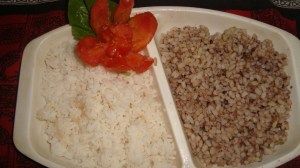
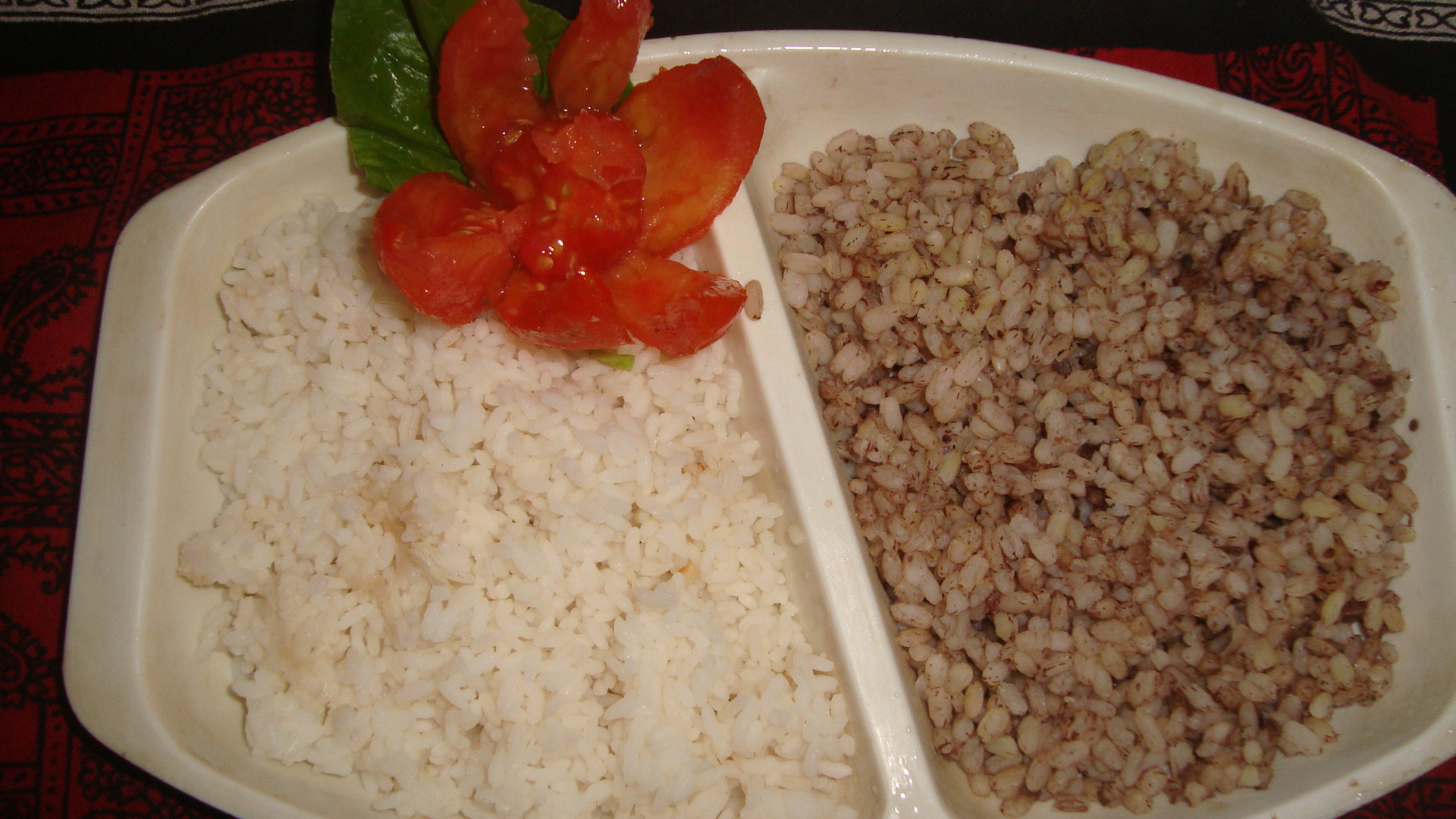
Local rice varieties

The first handfuls of grain were beaten in a stone or wood “ural” to separate the raw rice from the grain. This was made into the first pongal of the harvest. Everyone who helped would be invited for a meal and given bags of grains.

Family members who had died were also remembered on that day and a large variety of food was made. My mother mentions that a special offering was made that day, as part of the remembrance ritual, called the “puthir.” Her grandmother used to take some of the pongal made from the first rice from the harvest and spread it out on a large tray. Then, all types of available fruits were cut up and layered on top of the pongal. Honey was poured over the fruits. A sampling of all the vegetable curries that were made were also layered on top of the pongal-fruit-honey mix. Finally, ghee was poured over the tray of food and everything was mixed together. After the prayers were made, a little “puthir” was handed as “prasadham” (blessed offering) to everyone present.

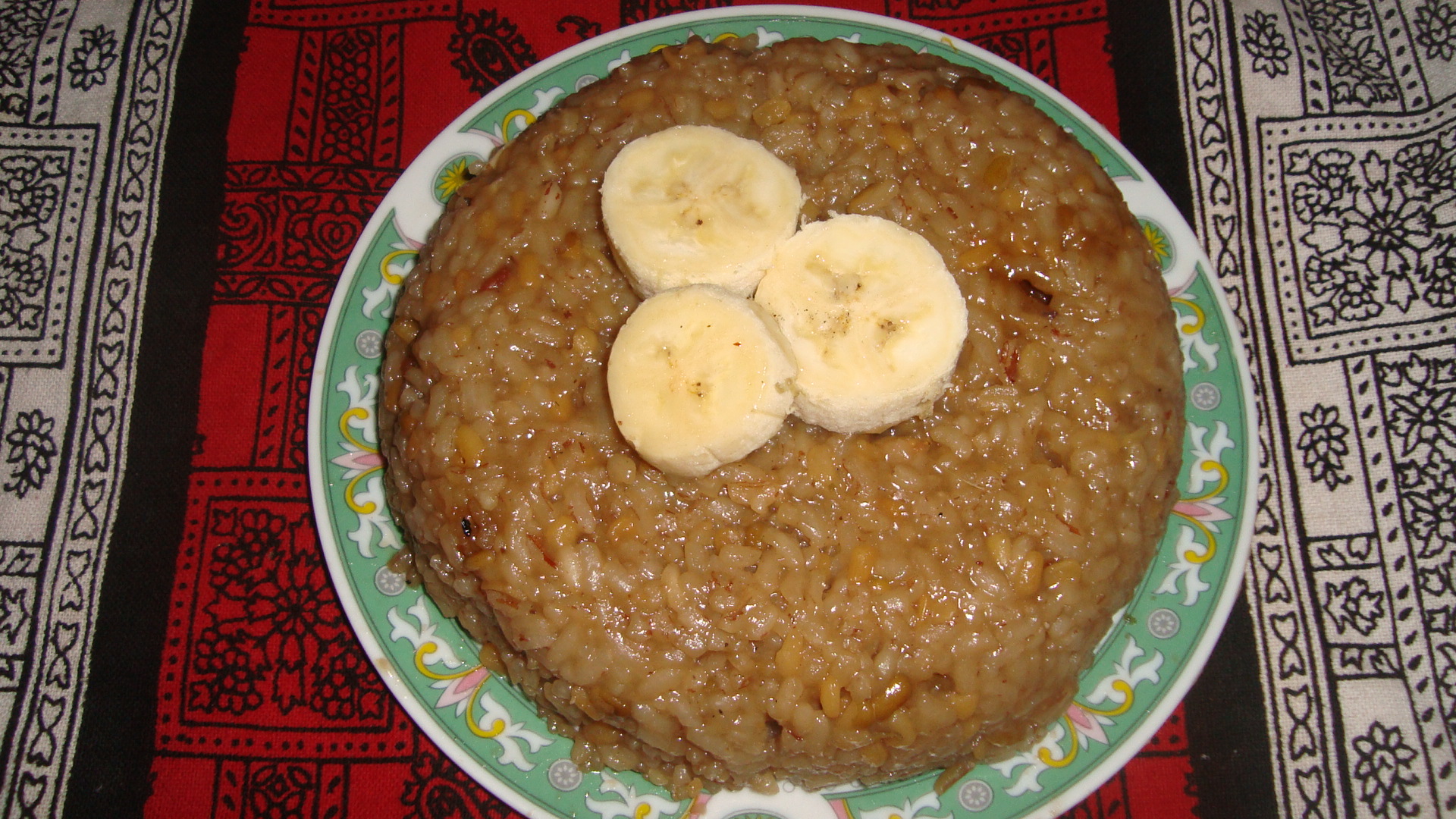
Today, I will share the recipe of pongal that is made with the first harvest of the season by farmers and by non-farmers on festival days such as the Pongal festival in January, New Year in April and other celebrations.

Pongal

Cooking time: 30 to 40 mins

Serves 4 or 5
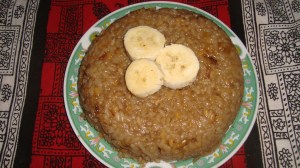
Pongal

Ingredients:

  • Rice – 1 cup
  • Roasted split gram (without skin) – ¼ cup
  • Jaggery – 1 cup (grated)
  • Coconut – ½
  • Cardamom – 4 or 5, crushed
  • Cashew nuts – few, chopped
  • Raisins – 1 tbsp
  • Water

Method:

  1. Wash the rice and gram and cook them in a pot with 2 ½ cups of water. Cook for around 15 to 20 mins, till the water dries up.
  2. Grind and extract coconut milk by blending the freshly scraped half of a coconut with 1 cup of water.
  3. Once the rice and gram is cooked, add the grated jaggery and mix.
  4. Then, add the coconut milk and crushed cardamoms. Bring to a boil on high heat and cook for a few more minutes before reducing the heat.
  5. Add the chopped cashew nuts. Cook until the pongal mixture starts coming together and starts to thicken.
  6. Just before removing from heat, add the raisins and mix.
  7. Remove from heat and cover.
  8. Serve pongal with bananas.

Recipe source: Raji Thillainathan.

Mushroom curry

My mother tells me that my grandmother was very fond of wild mushrooms and she liked picking them fresh. It seems that mushrooms sprout overnight after a heavy rainfall with a lot of thunder but they turn poisonous once the sun rises and they bloom. My grandmother used to go to her field just before dawn and pick the mushrooms, with its stalks, which grew under a particular huge tree. There were also snake holes around that tree where snakes did live but my grandmother was quite a fearless woman.

While her children and grandchildren no longer neither live near fields nor would we know how to identify good mushrooms and when we should pick them, my grandmother’s fondness for mushrooms has been transferred to everyone at home.

So, here’s my grandmother’s mushroom recipe as remembered and very often replicated at home by my mother.

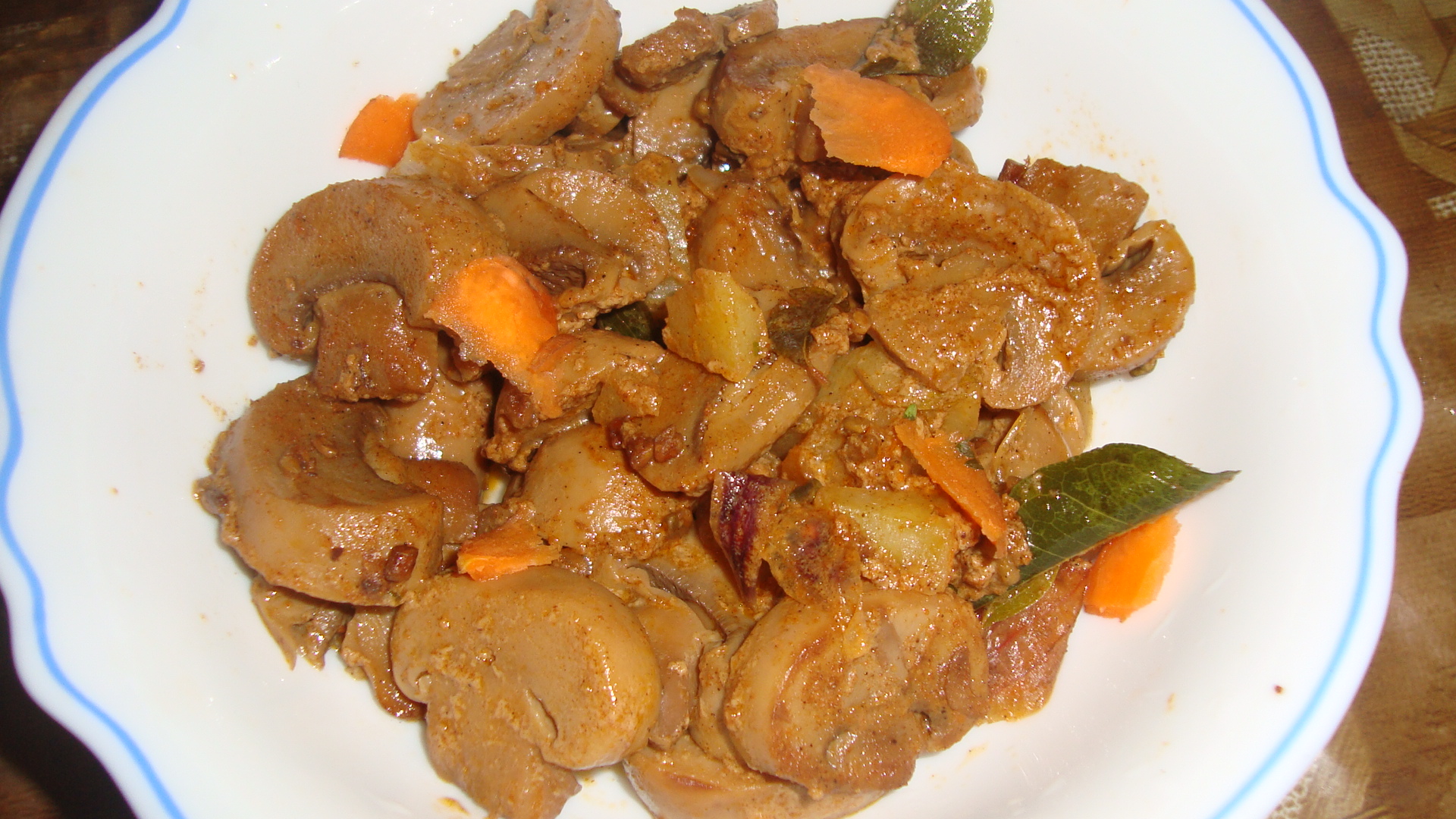
Mushroom curry

Cooking time: 15 mins

Serves 4

Mushroom curry

Ingredients

  • Mushrooms (Button/Agaricus or Crimini) – 1 cup, sliced
  • Garlic – 3 or 4 cloves
  • Ginger – 1” piece
  • Curry leaves – 2 sprigs
  • Coconut milk – 1 cup (thin or ½ cup coconut milk mixed with ½ cup water) + ¼ cup thick (optional)
  • Curry powder – 1 tbsp
  • Mixed dry roasted spice powder – fennel, cardamom, cinnamon and clove (3C + fennel) – 1 tsp
  • Salt, to taste

Method

  1. Heat 1 tsp oil in a pan and sauté the garlic, ginger and curry leaves.
  2. When the aroma begins to waft about, add the sliced mushrooms and mix well.
  3. Add 1 cup of thin coconut milk and add curry powder and salt. Cook for around 10 to 12 mins.
  4. Add the mixed dry roasted spice powder together with ¼ cup milk, if the curry has dried up or if you prefer it with gravy, and let the curry simmer for a few minutes before removing from heat.
  5. Serve hot with rice or rotis.

Recipe source: Raji Thillainathan.