Vendikkai Varai

Today’s recipe is a simple and tasty okra dish. For a slightly different version, try okra stir fry.

Vendikkai Varai/ Okra fry

Cooking time: 15 mins

Serves 3 – 4

VendikkaiIngredients:

  • Okra/ Vendikkai – 1 cup
  • Onion – 1
  • Malu miris/ banana pepper – 1
  • Curry leaves – 1 sprig
  • Lime juice – 1 tbsp
  • Crushed chillies – 1 tsp
  • Salt and pepper, to taste
  • Sesame oil – 1 tbsp

Method:

  1. Clean the okra and finely chop them. Add some lime juice and salt to the okra and keep aside.
  2. Finely chop the onion, malu miris and curry leaves and fry them for about 5 mins in a tbsp of sesame oil.
  3. Add the finely chopped and seasoned okra slices to the frying pan and continue frying for about 10 mins over medium heat.
  4. Towards the end, add salt and pepper and optionally crushed chillies.
  5. Serve with rice.

Recipe source: Raji Thillainathan.

Panangkatti

I wanted to share one more palmyrah product this week. I will wrap up the palmyrah recipe series with ‘panangkatti’ or palmyrah sugar. During my great-grandmother’s time, ‘panangkatti’ was considered the regular sweetener for cooking and beverages and not the processed sugar of today. My mother recollects her grandmother serving her tea with a piece of panangkatti.

Very rich in nutrients and a good source of vitamin B12, ‘panangkatti’ is considered particularly good for diabetic patients as well as those seeking to reduce their weight. Whenever I travel to Jaffna, I always try to bring my parents some good ‘panangkatti’ as the best in the country is available only there and both my parents are diabetic.

While there are some people like my parents who prefer ‘panangkatti’ to regular sugar, its usage in the country has been on the decline over the last couple of decades. Therefore, its production has also reduced while the prices have gone up and it is now much more expensive than the regular sugar one can buy in any store.

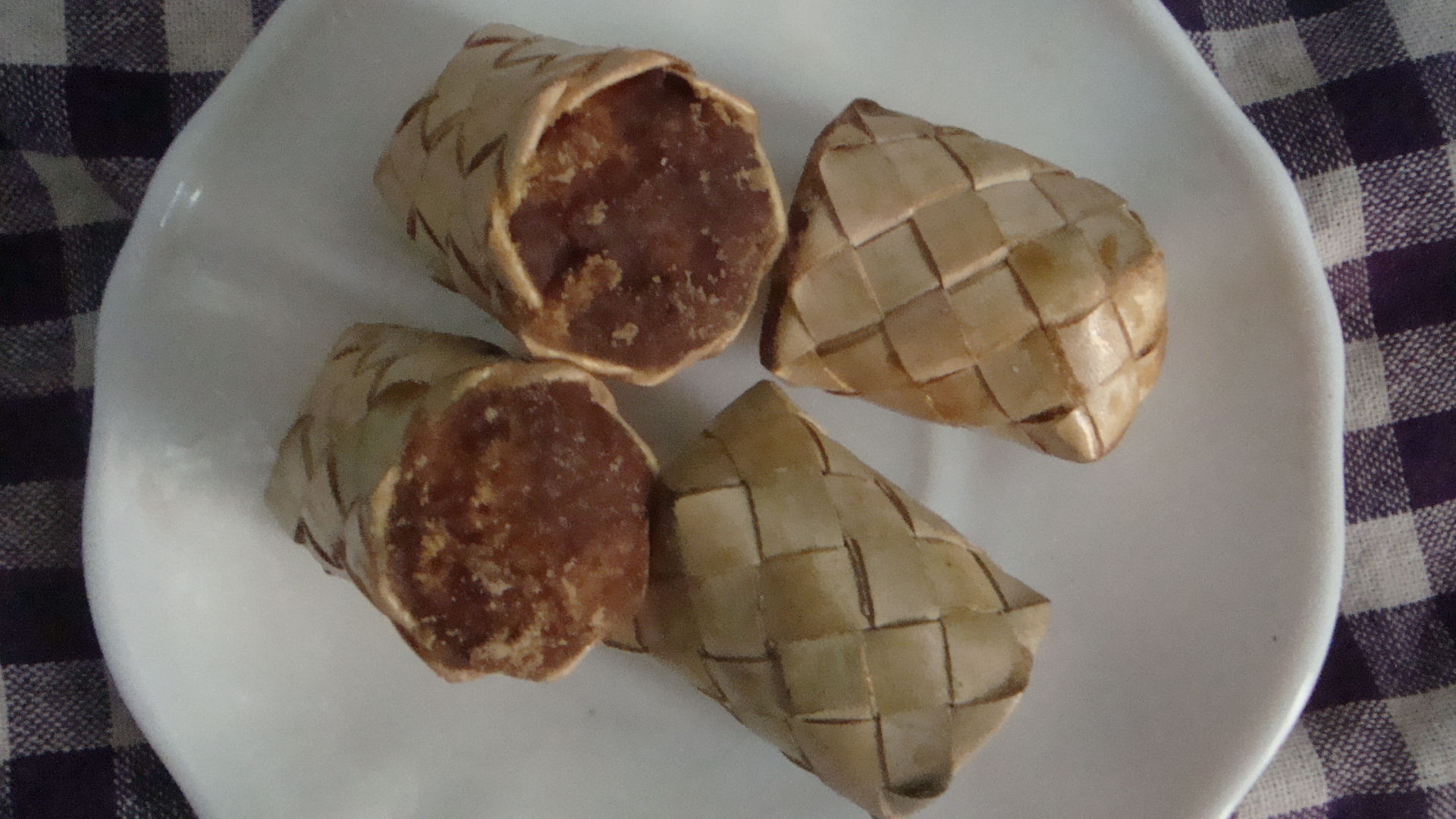
This is what my mother remembers of her grandmother’s recipe for making panangkatti, for those interested in knowing how it is made. The accompanying photo is of some ‘panangkatti’ that my mother had bought last week from Katpaham.

PanangkattiPanangkatti

Ingredients:

  • Palmyrah sap – ½ cup
  • Rice flour – 1 tbsp

Method:

  1. Stir the palmyrah sap (palm water) continuously in the pot over medium heat, till it thickens beyond the consistency required for ‘paani‘.
  2. Add a tbsp of rice flour and continue stirring till its consistency becomes denser and it is no longer watery.
  3. Scoop a tbsp of the ‘panangkatti’ mixture into the woven palmyrah leaf thimbles and let it cool and set.
  4. Store the ‘panangkatti’ thimbles in an air-tight container.

Recipe source: Raji Thillainathan.

Panaattu

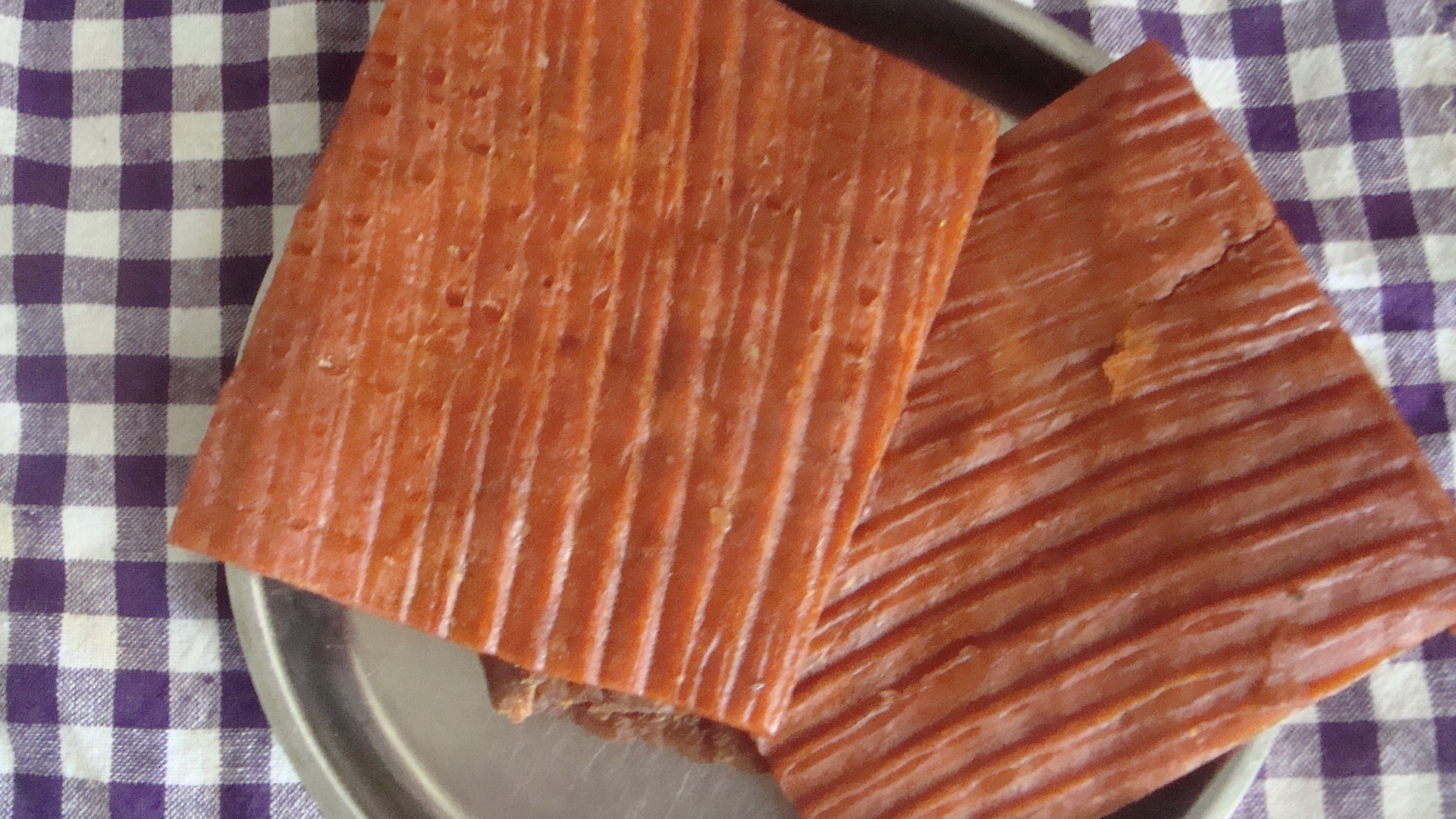
‘Panaattu’ is considered to have high levels of vitamins A and E. As far as my mother is concerned, it is something she has been fond of ever since she was a toddler. She bought a slab of ‘panaattu’ from the Katpaham outlet here so that I could take a photograph but she finds that it does not have the colour or consistency that her grandmother’s used to have. It is the first time that I have tasted ‘panaattu’ so I can’t compare.

PanaattuHere’s the method my great-grandmother used to make panaattu, as remembered by my mother from her childhood days. I am sharing it for those who are interested in knowing what or how ‘panaattu’ is made and for those who happen to have some palmyrah fruit and wish to try making some panaattu. For more ways that the palmyrah is used in the north of Sri Lanka, check out my earlier post on its background.

Ingredients:

Palmyrah fruit – 6, very ripe

Coconut oil, for coating the ‘panaattu’ layer.

Method:

  1. Peel the very ripe palmyrah fruit and then mix repeatedly with just enough water to be able to make the fruit pulp. Strain the pulp through a clean cloth.
  2. Spread the collected pulp as a thin layer over a woven palm mat and let it dry under the sun.
  3. Cover the mat during night.
  4. The next day, add another thin layer of palmyrah fruit pulp extract over the dried layer and continue to sun-dry. Repeat this process for 10 days, adding new thin layers each day till the thickness of the ‘panaattu’ is around ½ inch.
  5. Let the ‘panaattu’ dry under the sun till it reaches a maroonish-orange colour and can be cut through with a knife without it sticking to the knife.
  6. Slice the long panaattu roll into manageable pieces. Apply a little coconut oil and fold the cut pieces.
  7. Taking a woven palmyrah leaf container/ box, stock up the cut and oiled panaattu pieces.
  8. This can be then stored for a long time. My great-grandmother used to store the box of panaattu on a shelf above her cooking stove.
  9. Serve a piece of panaattu with tea or make some paani panaattu from it.

Recipe source: Raji Thillainathan.

Paani Panaattu

Two of my mother’s favourite snacks from her childhood days are ‘panaattu‘ and ‘paani panaattu’. She remembers her grandmother making them for their home consumption and storing them in little jars or earthen pots. When my mother and her sisters visited her, she would serve them these treats with tea or after a main meal.

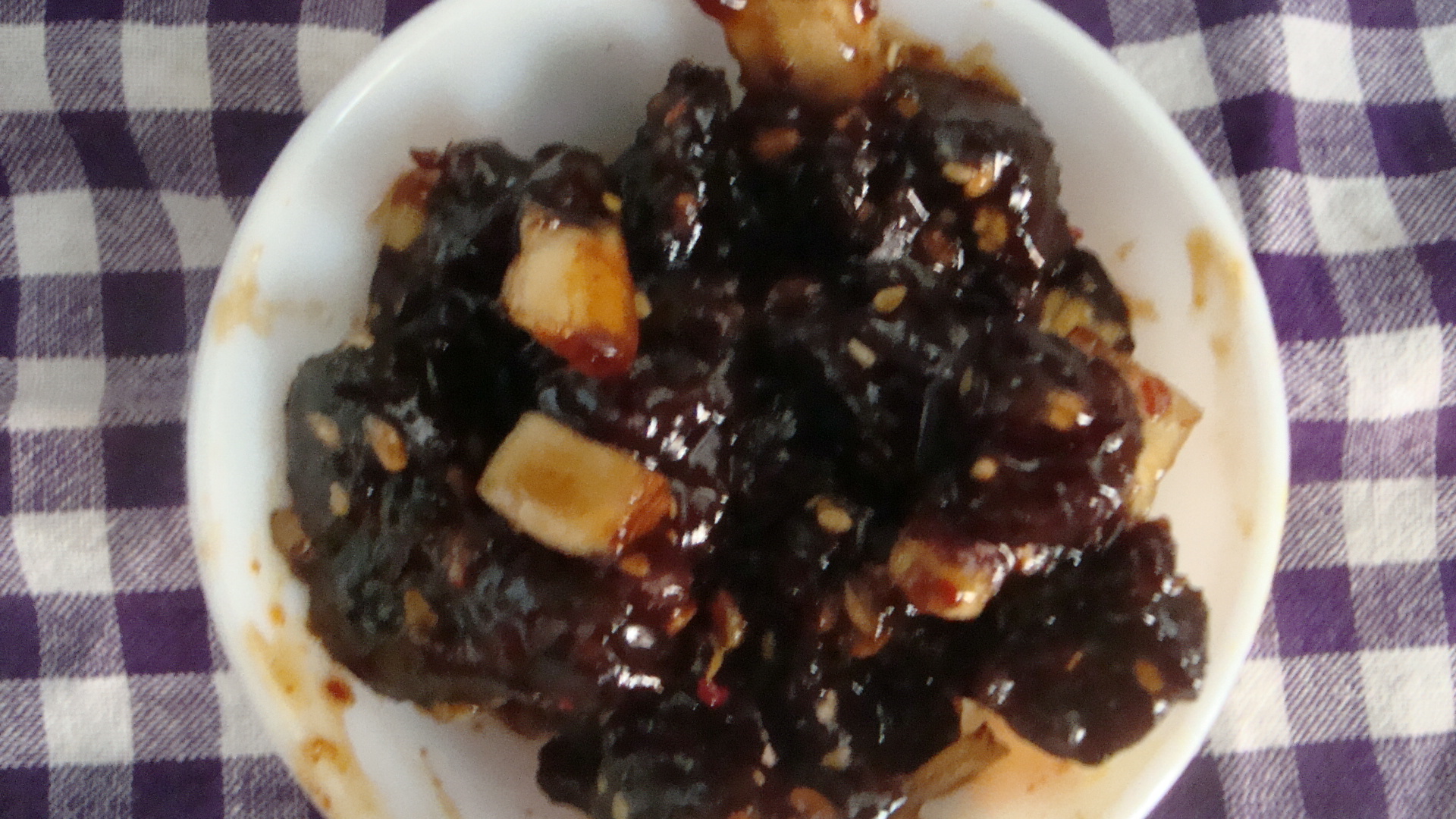
It is much easier today to buy a jar of ‘paani panaattu’, from the Katpaham outlets around the country, as my mother did this weekend. However, as palmyrah used to be and is still considered an intrinsic part of the north Sri Lankan culture and cuisine, I do like to know and share the recipes of how these traditional delicacies are made.

My mother felt that the ‘paani panaattu’ that she had bought didn’t quite taste the way she liked so she revamped it with the spices she remembers her grandmother had used. It was the first time that I tried ‘paani panaattu’ and I think this is another dish that is an acquired taste. It has quite a strong taste and is both spicy and sweet at the same time. My mother was delighted to go back to her childhood memories and favourite snacks while I enjoyed recording both recipes, as she remembered from her observations of my great-grandmother.

Paani Panaattu

The palmyrah sap is collected by tying a pot to the stem of the palm flower stump after it has been cut or gashed to allow the sweet water of the palm to be collected. To prevent fermentation, a little lime is added to the pot. This water that is collected is non-alcoholic, due to not being fermented, and it is considered nutritious particularly for the elderly.

The collected palm water is then heated and continuously stirred till it thickens into a brown treacle like substance called ‘paani’ . ‘Paani’ is usually stored in an earthen pot and it can be stored for a long time.
Paani panaattu

Time taken: 10 mins

Serves 4

Ingredients:

  • Paani – ½ cup
  • Panaattu – 1 cup
  • Coconut chips – 2 tbsp, roasted
  • Roasted rice – 1 tbsp
  • Crushed chillies – 1 tsp
  • Cumin powder – ½ tsp

Method:

  1. Chop up the panaattu into small pieces.
  2. Heat the paani in a saucepan over low heat for about 3 mins.
  3. Add the crushed chillies and cumin powder and stir well for about 2 mins.
  4. Add the coconut chips and roasted rice to the saucepan for about 1 min.
  5. Then, add the panaattu pieces and stir for about 2 mins.
  6. Stir well until it thickens and remove from stove, to allow the ‘paani panaattu’ to cool before serving. When making in larger quantities, transfer to an earthen pot or air-tight jar.

Recipe source: Raji Thillainathan.

Vadaham

My mother made a few dishes that she really likes, and which are specialties of Jaffna cuisine, this weekend so I will be sharing the recipes of those this week.

Today’s recipe is that of vadaham, a sun-dried and fried side dish made of some special ingredients. Vadaham is usually made in bulk during sunny days and preserved to be eaten over a long period. There are a few varieties of vadaham, the more popular ones made of neem flowers (vepampoo) or banana flower (valaipoo). The neem tree is considered one of the most medicinal trees and the flowers particularly good for diabetics.

My mother tells me that she learnt how to make vadaham by observing her aunt (my grand-aunt) making them. My grand-aunt was fond of the neem flower vadaham and she had mats placed around the neem tree at my grandmother’s house to collect the tiny flowers that fell off the tree. The flowers were then rinsed and dried before being used to make the vadaham.

The recipe I am sharing below is my grand-aunt’s recipe that my mother occasionally uses when she feels like making vadaham.

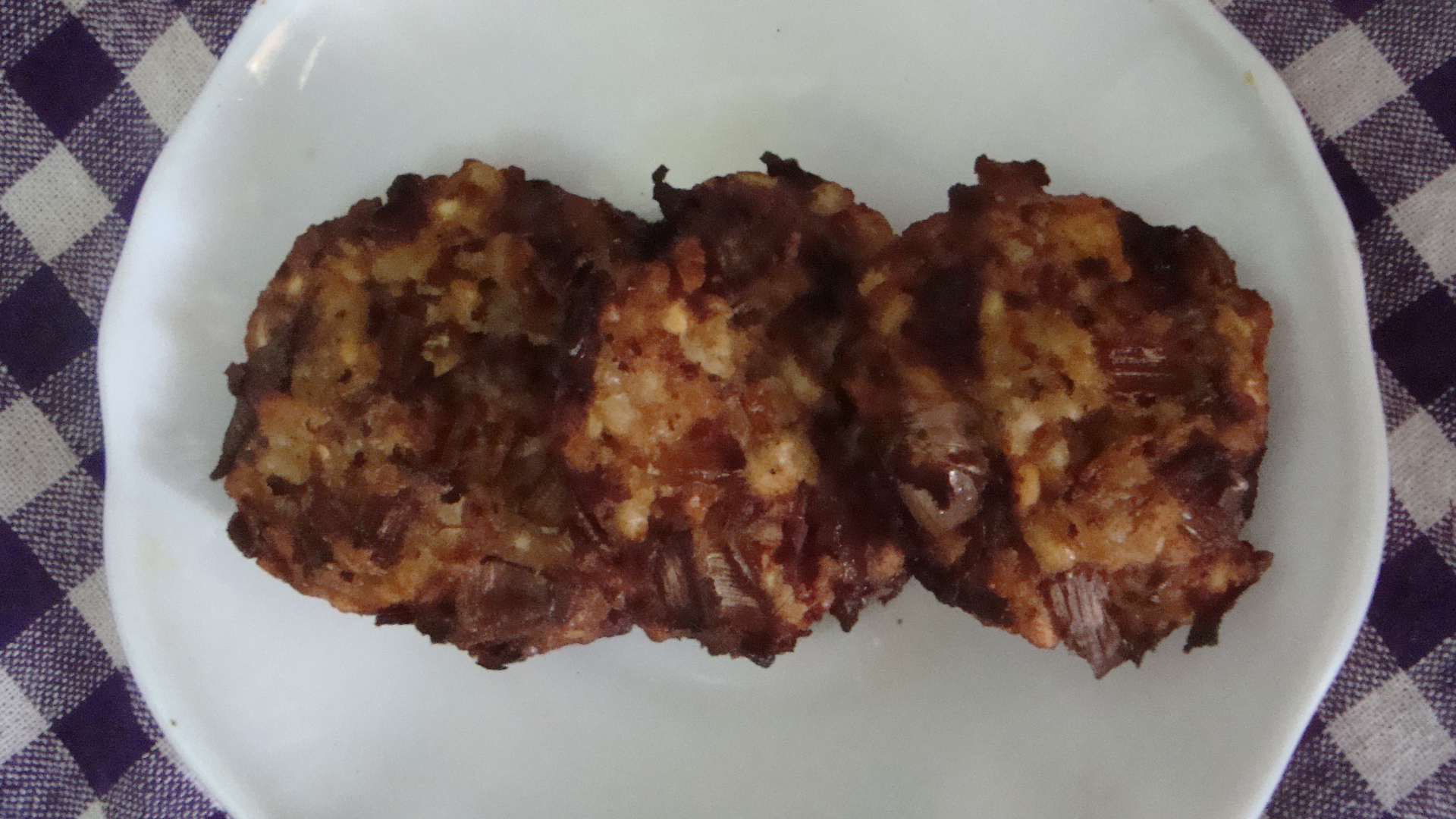
Vadaham

Time taken: 30 mins + the soaking time for the urad dhal + sun-drying of the vadaham

Makes 12 – 15

VadahamIngredients:

  • Banana flower – ½ cup, finely chopped
  • Urad dhal/ black gram – ½ cup
  • Crushed chillies – 1 tsp
  • Crushed onion – 1 tbsp
  • Cumin powder – 1 tsp
  • Turmeric powder – ½ tsp
  • Pepper – ½ tsp
  • Salt, to taste
  • Oil, for deep-frying

Method:

  1. Soak the urad dhal for about 3 hours and then drain and grind the dhal.
  2. Mix the finely chopped banana flowers with the ground urad dhal in a mixing bowl.
  3. Add to the mixing bowl the crushed chillies, onion, cumin powder, turmeric as well as pepper and salt to taste.
  4. Mix well and then make small, circular disks of ‘vadaham’.
  5. Sun-dry the ‘vadaham’ for 2 or 3 days and then bottle them in an air-tight jar. If you do not plan to make in bulk and are preparing the side dish for a meal within that day, you can omit the sun-drying part and directly make instant vadaham by moving on to the next step as my mother did this weekend. Some also prefer to simply use the sun-dried version directly without frying them.
  6. When you wish to serve them, simply deep-fry the required number and serve warm with rice and some curd and pickle.

Recipe source: Raji Thillainathan.

Spicy Ash Plantain Curry

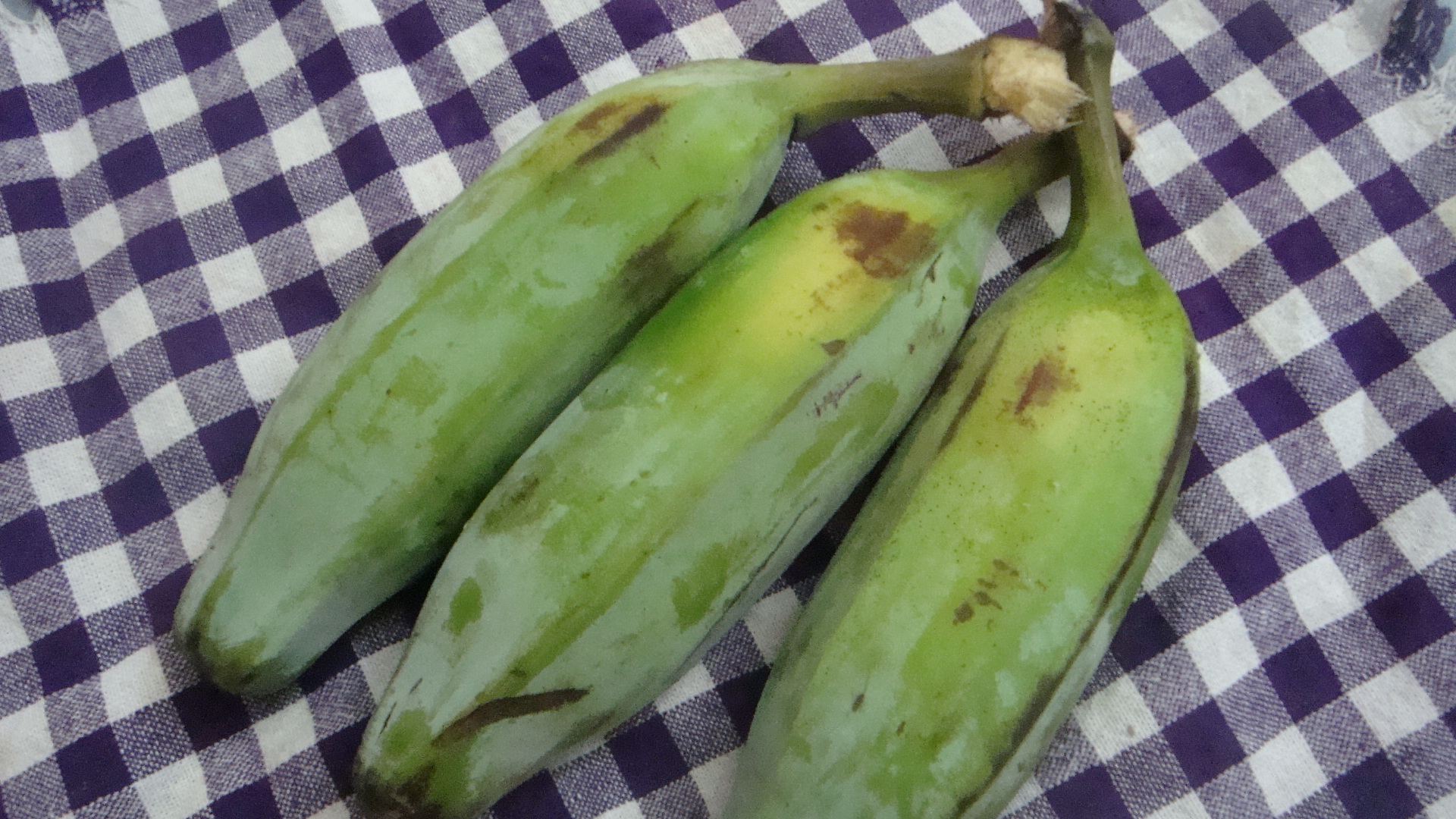
Ash plantain (Saambal Vaalai, as it is called in Tamil) is often used in Sri Lankan and South Indian cuisine. I am not very familiar with the varieties of plantains but as far as I am aware, ash plantain is the more common and popular variety in Sri Lanka and is a cooking plantain.

Today’s recipe is that of an ash plantain curry that my mother quite often makes at home.

ash plantainSpicy Ash plantain Curry

Time taken: 25 mins

Serves 3

Spicy Ash Plantain CurryIngredients:

  • Ash plantain – 2
  • Fenugreek seeds – 1 tsp
  • Onion – ½
  • Curry leaves – 1 sprig
  • Tamarind extract – ½ cup
  • Thin coconut milk – ½ cup
  • Curry powder – 1 ½ tsp
  • Salt, to taste
  • Sugar – 1 tsp
  • Low fat oil – 1 tbsp + more, for light frying

Method:

  1. Peel the ash plantains and slice them.
  2. Lightly fry the ash plantain slices in a little oil. Keep aside.
  3. In a pan, add 1 tbsp oil and sauté the fenugreek seeds, chopped onion and curry leaves for a minute.
  4. Add the lightly fried ash plantain slices to the pan. Mix well and continue stir-frying for another 2 – 3 mins.
  5. Then, add the tamarind extract to the pan, followed by the thin coconut milk and the curry powder.
  6. Season the curry with salt to taste. Mix well and cook the curry for about 10 mins till the gravy thickens.
  7. Just before removing the pan from stove, add a tsp of sugar and mix well.
  8. Serve the spicy ash plantain curry with rice.

Recipe source: Raji Thillainathan.

Spicy Carrot Curry

I was a finicky eater growing up – and one of the vegetables that I couldn’t stand for many years was carrots, particularly steamed carrots, which happened to be my mother’s favourite. Until one day, surprisingly, I started liking them. I now particularly like the smell of fresh carrots.

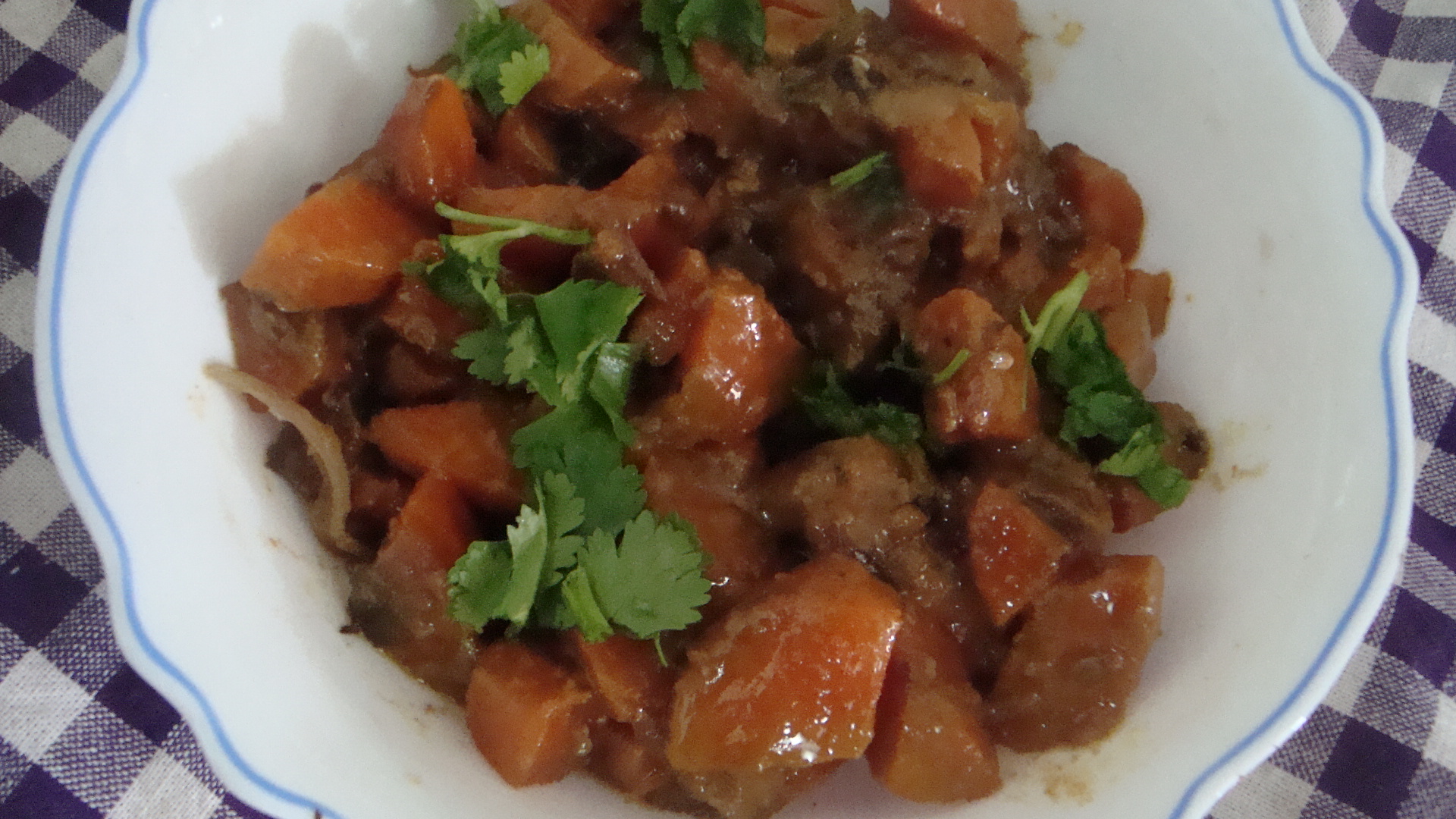
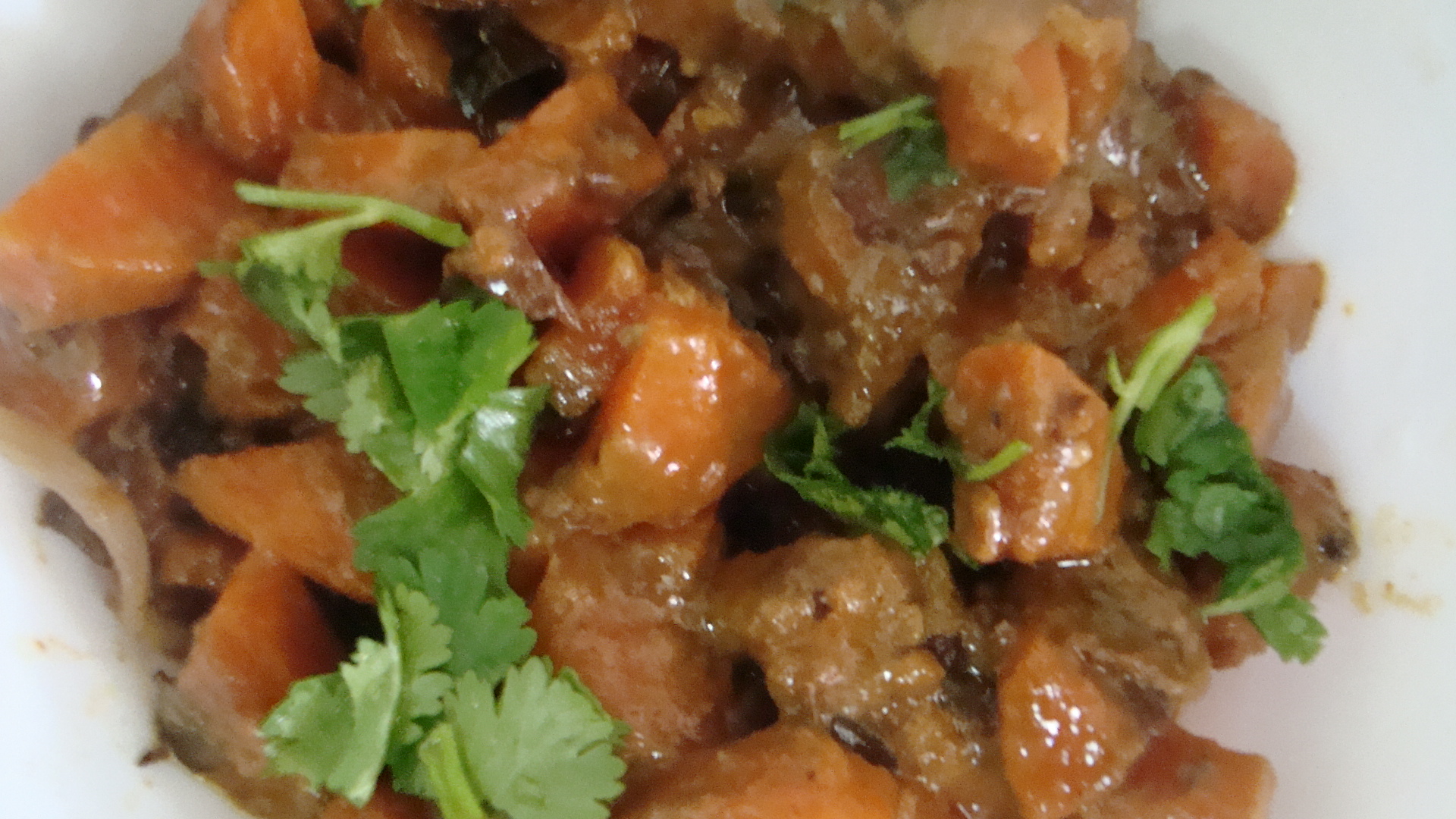
Today’s recipe is that of my mother’s spicy carrot curry.

Spicy carrot currySpicy Carrot Curry

Time taken: 20 – 25 mins

Serves 4

DSC00836Ingredients:

  • Carrots – 2, medium
  • Onion – ½
  • Ginger  – a small piece
  • Garlic – 2 or 3 cloves
  • Fenugreek seeds – 1 tsp
  • Curry leaves – 1 sprig
  • Green chilli – 1
  • Thin coconut milk – ¾ cup
  • Curry powder – 1 tsp
  • Salt, to taste
  • Low fat oil – 1 tbsp

Method:

  1. Clean the carrots, peel and chop them.
  2. Heat 1 tbsp oil in a pan over low heat and fry the fenugreek seeds and chopped ginger, garlic and onion for a min.
  3. Then, add the chopped carrots, curry leaves and chopped green chilli and continue frying for another 5 – 7 mins. Add a little oil if the carrots or onions start burning.
  4. Add the coconut milk to the pan, together with the curry powder.
  5. Cook for about 10 mins over medium heat. Add salt, to taste.
  6. Garnish with coriander and serve with rice.

Recipe source: Raji Thillainathan.

Seeni Ariyatharam

Today’s recipe is that of another Jaffna traditional festival snack – seeni ariyatharam. With the modification of one ingredient, it can be found in traditional festival Sinhalese and South Indian cuisine under the name of ‘athirasa.’ In Sri Lanka, ‘seeni ariyatharam’/’athirasa’ is most often made during the Sinhalese and Tamil New Year which comes around in April.

This is my mother’s recipe for seeni ariyatharam accompanied by a photo I took of some that a neighbour brought us for Theepawali earlier this month.

Seeni Ariyatharam

Time taken: 45 mins + soaking time for raw rice, if preparing flour from scratch

Makes 10

Seeni AriyatharamIngredients:

  • Raw rice – ½ cup
  • Sugar – ¼ cup
  • Cardamom – a few, crushed
  • Low fat oil – for deep-frying

Method:

  1. Soak the raw rice and then using a dry grinder, grind the rice into flour or alternatively, simply purchase the pre-prepared raw rice flour.
  2. Heat the sugar in ¼ cup of water in a sauce pan, with some crushed cardamom, over low heat.
  3. When the consistency is syrupy (not too thick), remove from the stove. Stir in the raw rice flour to make the dough. If the consistency of the dough seems too watery, add a tbsp of raw rice flour. It should also not be too thick but smooth.
  4. Heat the oil in the pan over low heat.
  5. Dab the surface of a small piece of banana leaf with water and then scoop a little of the ‘seeni ariyatharam’ dough onto the banana leaf and flatten it lightly into a circular shape.
  6. Drop the ‘seeni ariyatharam’ into the oil pan and deep-fry. Flip it to the other side so that both sides are browned before transferring onto a tray lined with grease absorbing paper.

Recipe source: Raji Thillainathan.

Ellu Pa

Today’s recipe is a traditional sweet from Jaffna called the “Ellu Pa.” This is a spiced sweet made of sesame seeds and it is one of my mother’s favourite.

The recipe I am sharing today is that of my great-grandmother, as remembered and occasionally made by my mother.

Ellu Pa

Time taken: 15 mins

Makes 4

Ellu PaIngredients:

  • Sesame seeds/ Ellu – ½ cup
  • Urad dhal/ black gram flour – ¼ cup, roasted
  • Sugar – ¼ cup
  • Pepper powder – ½ tsp
  • Cumin powder – ½ tsp

Method:

  1. First, grind the sugar and sesame seeds together in a blender.
  2. Then, add the urad dhal flour and continue grinding the mixture.
  3. Transfer the blended flour mix to a mixing bowl.
  4. Add the pepper and cumin powder to the bowl. Mix well.
  5. Add a little hot water and make the ‘ellu pa’ dough. Divide the dough into 4 balls.
  6. Serve with tea.

Recipe source: Raji Thillainathan.

Vaalai Poo Curry

Today’s recipe is the banana flower curry/ vaalai poo curry.

Vaalai Poo Curry/ Banana Flower Curry

Time taken: 30 mins

Serves 4

Vaalai Poo CurryIngredients:

  • Vaalai poo/ banana flower – 1 cup, chopped
  • Tomato – 1 large, chopped
  • Capsicum – 1, chopped
  • Onion – ½ cup, chopped
  • Fenugreek seeds – 1 tsp
  • Fennel seeds – 1 tsp
  • Oil – 1 tbsp
  • Coconut milk or non-fat milk – ½ cup
  • Curry powder – 1 tsp
  • Salt, to taste

Method:

  1. Clean and chop up the banana flower and add a little salt to it. Keep aside.
  2. Heat 1 tbsp oil in a pan and fry the fenugreek seeds, fennel seeds and chopped onion for a couple of mins.
  3. Add the chopped vaalai poo and chopped capsisum. Cover and fry for about 10 mins on low heat.
  4. Uncover the pan and add the chopped tomato, coconut milk and curry powder. Add some salt, to taste.
  5. Cook for about 5 mins until the curry has a nice gravy, before removing pan from stove.
  6. Serve with rice.

Recipe source: Raji Thillainathan.