Thuvaram Paruppu Koottu

Re-posting recipe: Today’s recipe is from my great-grandmother, as remembered and occasionally replicated by my mother.

Thuvaram Paruppu Koottu

Time taken: 1 hour, plus soaking time of dal about 3 – 4 hours

Serves 4

Thuvaram Paruppu Koottu

Ingredients:

  • Toor dal/ Thuvaram paruppu – ½ cup
  • Onion – ¼ + ½
  • Garlic – 2 + 2
  • Cumin powder – ½ tsp + ½ tbsp
  • Fennel powder – ½ tsp
  • Asafoetida – pinch + pinch
  • Salt – ½ tsp + more, to taste
  • Oil – 1 tsp + for deep-fry+ 1 ½ tbsp
  • Fenugreek – 1 tsp
  • Tomato – 1 big or 2 small
  • Dried red chillies – 3
  • Coriander powder – 1 tbsp
  • Grated coconut – 3 tbsp
  • Turmeric powder – ½  tsp
  • Pepper – 1 tsp
  • Tamarind extract – ½ cup (thin)
  • Water – ½ cup + ½ cup (optional)

Method:

  1. Soak the toor dal for 3 – 4 hours.
  2. Chop up ¼ onion and 2 garlic cloves and fry them in 1 tsp oil in a pan.
  3. Add ½ tsp cumin powder, ½ tsp fennel powder and a pinch of asafoetida to the pan. When the spices combine and their aroma starts coming out, add ½ tsp salt.
  4. Add the toor dal to the pan and mix well and quickly remove from heat.
  5. Grind the toor dal mixture, without water or just a little so that it can be made into a slab.
  6. Steam the slab of spiced toor dal.
  7. Cut the steamed block of toor dal into pieces and deep fry.
  8. Make a spice paste by grinding the scraped coconut and chopped chillies with 1 tbsp coriander powder, ½ tbsp cumin powder, ½ tsp turmeric powder, 1 tsp pepper powder and a pinch of asafoetida.
  9. Heat 1 to 1 ½ tbsp oil in a pan and fry the chopped onion (½ onion), 2 garlic cloves and the fenugreek seeds.
  10. When you get the aroma of the fried onion and garlic, add the spice paste, mix well and fry.
  11. Add the chopped tomatoes and ½ cup of water and let the tomatoes cook.
  12. Once the tomatoes are cooked, add the fried pieces of toor dal chunks and ½ cup of thin tamarind extract.
  13. Cook for about 10 – 15 minutes on low heat. If you prefer more gravy in your curry, add ½ cup of water.
  14. Garnish with coriander leaves and serve.

Recipe source: Raji Thillainathan.
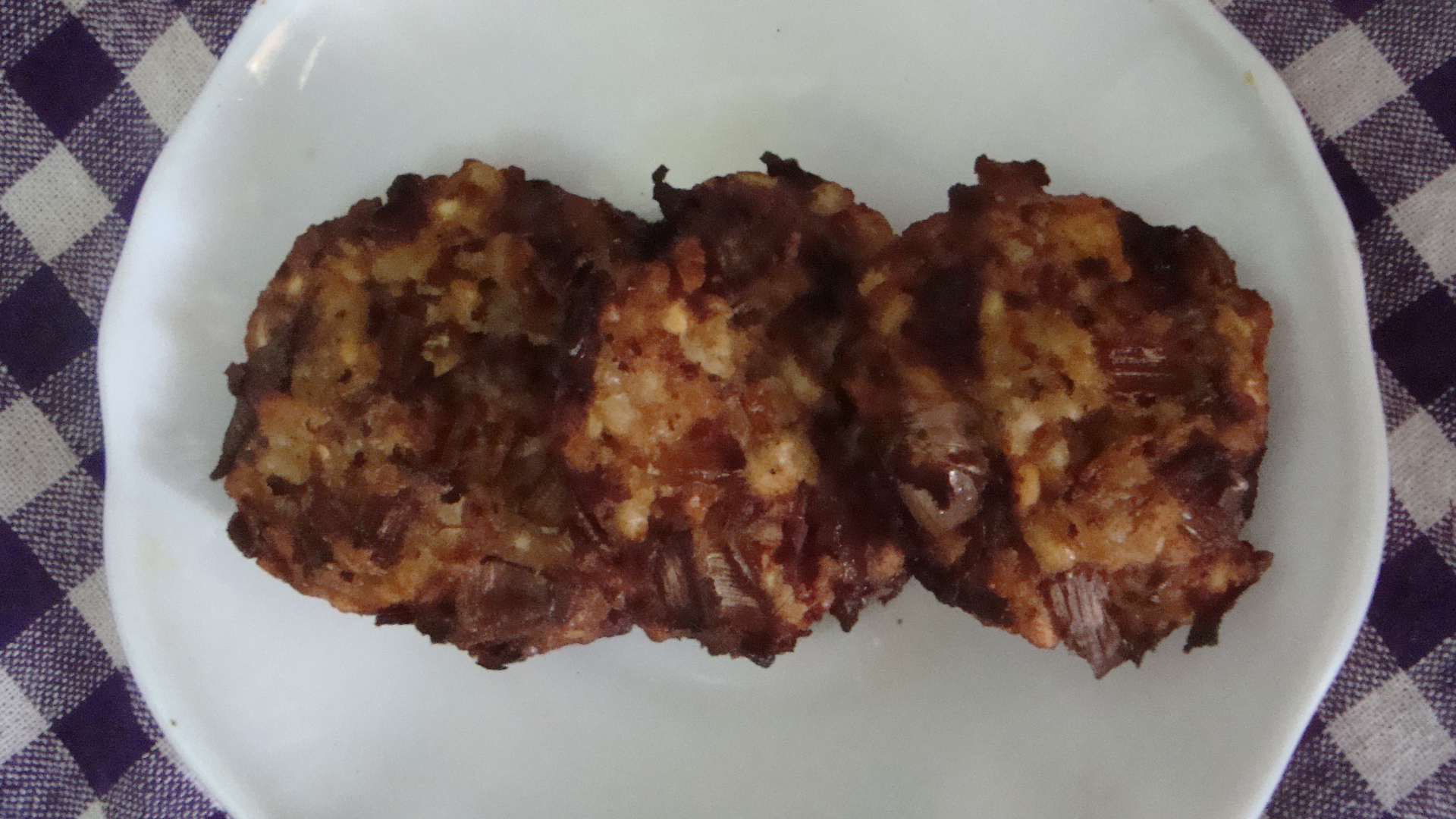
Vadaham

My mother made a few dishes that she really likes, and which are specialties of Jaffna cuisine, this weekend so I will be sharing the recipes of those this week.

Today’s recipe is that of vadaham, a sun-dried and fried side dish made of some special ingredients. Vadaham is usually made in bulk during sunny days and preserved to be eaten over a long period. There are a few varieties of vadaham, the more popular ones made of neem flowers (vepampoo) or banana flower (valaipoo). The neem tree is considered one of the most medicinal trees and the flowers particularly good for diabetics.

My mother tells me that she learnt how to make vadaham by observing her aunt (my grand-aunt) making them. My grand-aunt was fond of the neem flower vadaham and she had mats placed around the neem tree at my grandmother’s house to collect the tiny flowers that fell off the tree. The flowers were then rinsed and dried before being used to make the vadaham.

The recipe I am sharing below is my grand-aunt’s recipe that my mother occasionally uses when she feels like making vadaham.

Vadaham

Time taken: 30 mins + the soaking time for the urad dhal + sun-drying of the vadaham

Makes 12 – 15

VadahamIngredients:

  • Banana flower – ½ cup, finely chopped
  • Urad dhal/ black gram – ½ cup
  • Crushed chillies – 1 tsp
  • Crushed onion – 1 tbsp
  • Cumin powder – 1 tsp
  • Turmeric powder – ½ tsp
  • Pepper – ½ tsp
  • Salt, to taste
  • Oil, for deep-frying

Method:

  1. Soak the urad dhal for about 3 hours and then drain and grind the dhal.
  2. Mix the finely chopped banana flowers with the ground urad dhal in a mixing bowl.
  3. Add to the mixing bowl the crushed chillies, onion, cumin powder, turmeric as well as pepper and salt to taste.
  4. Mix well and then make small, circular disks of ‘vadaham’.
  5. Sun-dry the ‘vadaham’ for 2 or 3 days and then bottle them in an air-tight jar. If you do not plan to make in bulk and are preparing the side dish for a meal within that day, you can omit the sun-drying part and directly make instant vadaham by moving on to the next step as my mother did this weekend. Some also prefer to simply use the sun-dried version directly without frying them.
  6. When you wish to serve them, simply deep-fry the required number and serve warm with rice and some curd and pickle.

Recipe source: Raji Thillainathan.

Chickpea Cutlet

Chickpea cutlet

Time taken:  1 hour + soaking time for chickpeas (if not using canned)

Makes 4

Chickpea cutletIngredients:

  • Chickpeas – ½ cup, ground
  • Onion – ½, chopped
  • Green chilli – 1, chopped
  • Pepper – 1 tsp
  • Salt – ½ tsp
  • Coriander leaves – few, chopped
  • Wheat flour – ¼ cup
  • Bread crumbs
  • Low fat oil, for deep-frying

Method:

  1. Cook the chickpeas (if not using canned) for at least 30 mins and then grind it.
  2. Take ½ cup of the ground chickpeas in a mixing bowl and add the chopped onions and chilli.
  3. Season with salt and pepper and toss the coriander leaves into the mix.
  4. Toss the chickpeas mixture together and then divide into 4 balls.
  5. Prepare a batter by mixing the wheat flour with a little water.
  6. Coat the 4 cutlet balls in the batter and then roll them in the bread crumbs.
  7. Deep-fry the cutlets in low-fat oil over medium heat.
  8. Transfer the cutlets to a plate lined with grease absorbing paper, before serving.

Recipe source: Raji Thillainathan.
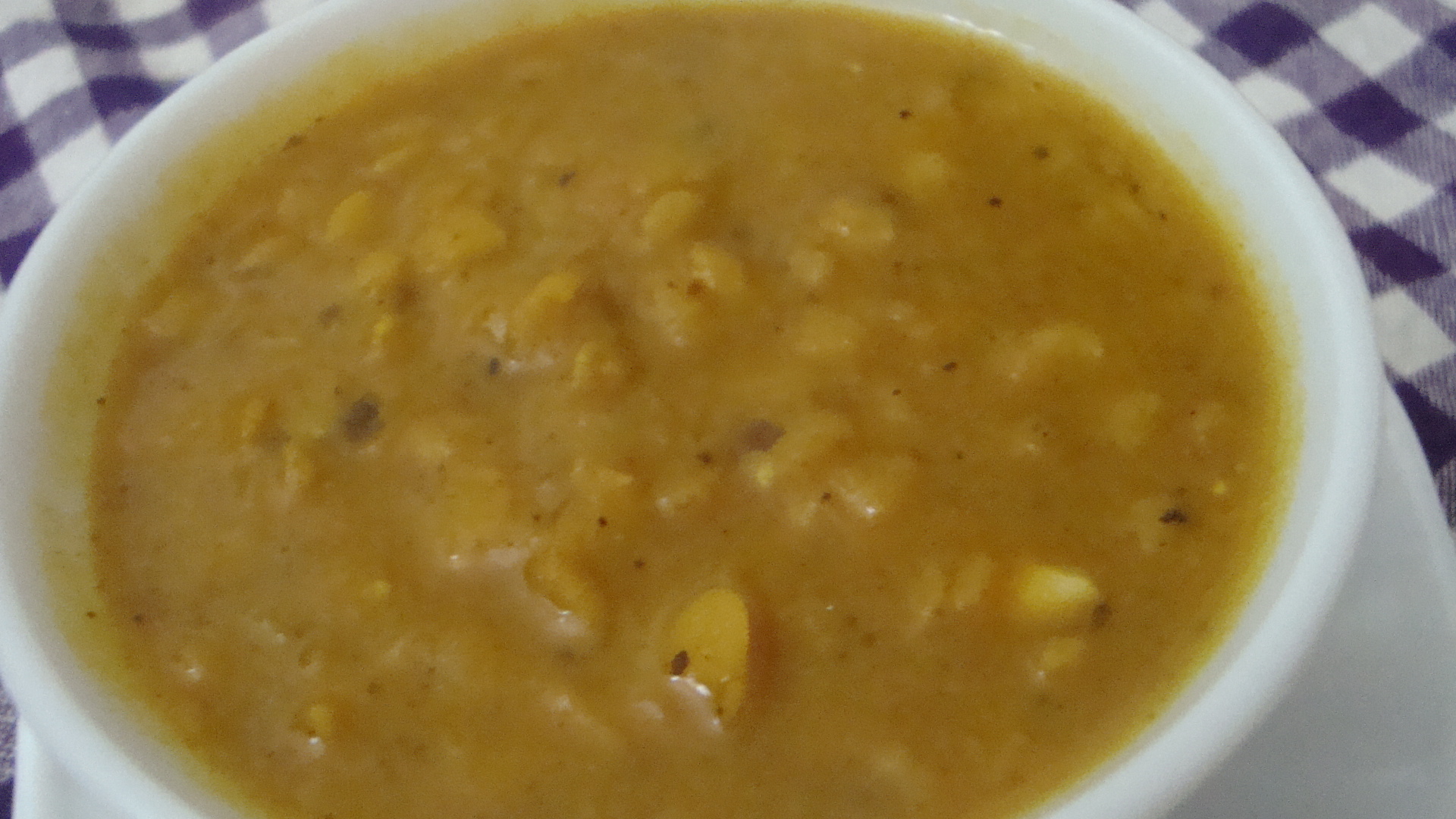
Ellu Pa

Today’s recipe is a traditional sweet from Jaffna called the “Ellu Pa.” This is a spiced sweet made of sesame seeds and it is one of my mother’s favourite.

The recipe I am sharing today is that of my great-grandmother, as remembered and occasionally made by my mother.

Ellu Pa

Time taken: 15 mins

Makes 4

Ellu PaIngredients:

  • Sesame seeds/ Ellu – ½ cup
  • Urad dhal/ black gram flour – ¼ cup, roasted
  • Sugar – ¼ cup
  • Pepper powder – ½ tsp
  • Cumin powder – ½ tsp

Method:

  1. First, grind the sugar and sesame seeds together in a blender.
  2. Then, add the urad dhal flour and continue grinding the mixture.
  3. Transfer the blended flour mix to a mixing bowl.
  4. Add the pepper and cumin powder to the bowl. Mix well.
  5. Add a little hot water and make the ‘ellu pa’ dough. Divide the dough into 4 balls.
  6. Serve with tea.

Recipe source: Raji Thillainathan.

Spicy Toor Dhal Gravy

Spicy Toor Dhal Gravy

Time taken: 35 mins

Serves 4 or 5

Toor Dhal GravyIngredients:

  • Toor Dhal/ Thuvaram Paruppu – ½ cup
  • Chilli powder – ½ tsp
  • Cumin powder – ½ tsp
  • Coriander powder – ½ tsp
  • Pepper powder – ¼ tsp
  • Turmeric powder – ¼ tsp
  • Tamarind juice – ½ cup to 1 cup, as required
  • Salt, to taste
  • Garlic – 3 cloves, crushed

Method:

  1. Soak the dhal for about 10 mins. Rinse and drain the dhal and transfer to a saucepan.
  2. Add 1 ½ cups of water to the dhal and cook for about 10 to 15 mins, over medium heat.
  3. Reduce to low heat and add the five spice powders (chilli, cumin, coriander, pepper, turmeric).
  4. If the water has dried up, add 1 cup of tamarind extract. If there is some water still in the pan, reduce the amount of tamarind extract added accordingly.
  5. Add salt, to taste and mix well.
  6. Cook for another 10 mins. Adjust gravy consistency by adding more tamarind extract, if required.
  7. Add crushed garlic just before removing from stove. Mix well.
  8. Serve with rice or chappathi.

Recipe source: Raji Thillainathan.

Sippi Sohi

Today’s Jaffna specialty snack recipe is that of “sippi sohi” (sea-shells). The snack actually resembles sea-shells if made in the traditional way. However, my mother generally makes her own colourful version of the sweet.

DSC00761Sippi Sohi

Time taken: 45 mins

Serves 6 – 8 persons

Sippi SoyiIngredients:

  • Rice flour – 1 cup, roasted
  • Urad dhal/ black gram flour – ¼ cup, roasted
  • Coconut milk – 1 cup
  • Sugar – ¼ cup
  • Water – 4 tbsp
  • Food colouring – optional
  • Oil, for deep-frying

Method:

  1. Combine the roasted rice flour and the roasted urad dhal flour and keep aside.
  2. Heat 1 cup of coconut milk, with a little salt, over medium heat. Once cooked, remove from stove and cool.
  3. When the milk has cooled slightly but is still warm, stir in the rice flour to make the dough.
  4. Roll out the dough and cut into little pieces. Alternatively, the traditional way of squeezing the dough through the mold can be used.
  5. Heat the oil and deep-fry the little pieces “sippi sohi” and transfer the fried pieces to a tray lined with grease absorbing paper.
  6. Prepare the sugar syrup by heating the sugar with water in a saucepan over medium heat.
  7. Food colouring can be added to the syrup, while heating in the saucepan. My mother used red food colouring here to have a colourful twist on the traditional plain syrup.
  8. Soak the fried “sippi sohi” into the sugar syrup till they are well coated and dry up.

Recipe source: Raji Thillainathan.

Paruthithurai Vadai

Theepawali Nalvaalthukkal! (Theepawali greetings)

For today’s specialty food, I would like to share a delicacy from my birthplace – the “Paruthithurai Vadai”. This vadai is generally prepared in Jaffna during festival seasons. While I have had the privilege of trying out this vadai in different places across Jaffna as well as at the homes of friends and relatives, the best, crunchiest “Paruthithurai/Thattai Vadai” that I have eaten to date has been that made by my mother. So, here’s the recipe for it.

Paruthithurai/ Thattai Vadai

Time taken: 1 ½ hours + 6 hours (soaking time)

Makes 50 – 60

DSC00782Ingredients:

  • Split urad dhal – 1 cup
  • Wheat flour – 1 cup, steamed
  • Wheat flour – 1 cup, regular not steamed
  • Crushed chillies – 1 or 2 tbsp
  • Onion – 1, ground
  • Curry leaves – chopped
  • Fennel seeds – 1 tbsp
  • Salt, to taste
  • Water, as required
  • Oil, for deep-frying

Method:

  1. Soak the split urad dhal for around 6 hours. Drain and peel the skin.
  2. In a mixing bowl, add the drained and peeled split urad dhal, wheat flour both steamed and regular, crushed chillies, ground onion, chopped curry leaves, fennel seeds, salt, bringing them together using a little water to make the ‘vadai’ dough.
  3. Divide the dough into 50 – 60 balls. Flatten each ball on a flat surface that will not stick. Alternatively, the dough can be rolled out and cut into thin circles using a cutter;
  4. Heat the oil for deep-frying. Do not let the ‘vadai’ dough sit out too long and transfer to the frying pan as soon as the dough has been made and the balls have been flattened into the thin ‘vadai’ shape.
  5. Deep-fry the vadai in batches until they are golden brown.
  6. Transfer the vadai to a tray lined with grease absorbing paper. The vadai can be stored, for many days, in an air-tight jar.

Recipe source: Raji Thillainathan.

Payatham Paniyaram

With Theepawali coming up this weekend, it’s time for some traditional snacks at home. My mother made a few quintessential Jaffna festival snacks so I will be sharing their recipes here.

Today’s recipe is my great grandmother’s recipe for ‘payatham paniyaram’ (a spiced green gram snack) which is a traditional Jaffna specialty made at all the festivals and celebrations in the peninsula. Plus, people tend to make this and send out to relatives in other cities or abroad as it keeps for a relatively long time.

Payatham Paniyaram

Time taken: 35 mins

Makes 20

Payatham paniyaaramIngredients:

  • Green gram – 1 cup, roasted flour
  • Red rice flour – 2 tbsp, roasted
  • Sugar – ½ cup
  • Cardamom – 6, crushed
  • White raw rice flour or wheat flour – ½ cup
  • Salt, to taste
  • Cumin powder, pepper powder, toasted coconut flakes – optional

Method:

  1. Combine the roasted green gram flour and the roasted red rice flour and keep aside.
  2. Melt ½ cup sugar in ¼ cup of water in a saucepan over low heat.
  3. When the syrup starts bubbling in a couple of mins, add the crushed cardamoms.  The optional cumin, pepper and toasted coconut flakes can be added now, if required. I prefer not to have the cumin or pepper added.
  4. Quickly add in the roasted green gram and red rice flour mix into the sauce pan, continuously stirring for a few mins, until the mixture is well-combined and easy to form into balls.
  5. Remove from stove and make about 20 balls of the spiced mixture.
  6. Make the dipping batter by combining the white raw rice flour (the preferred flour) or wheat flour with a little salt and water. Coat the balls in the batter.
  7. Heat the oil for deep-frying. Fry the balls until golden-brown on all sides. Transfer the ‘payitram paniyaram’ to a tray lined with grease absorbing paper.
  8. Serve when cooled. If coconut flakes are not added, the ‘paniyaram’ can be stored for many days.

Recipe source: Raji Thillainathan.

Chickpeas puff patties

Today’s recipe is a sweet variant of the regular patties that my mother makes more often.

Chickpeas puff patties

Time taken: 1 ½ hours

Makes 12

Puff pattiesIngredients:

  • All-purpose flour – 1 ½ cups
  • Vegetable margarine – 3 tbsp (for dough) + 1 tbsp (for filling)
  • Salt, to taste
  • Yeast – 1 tbsp
  • Chickpeas – 1 cup, boiled
  • Scraped coconut – ½ cup
  • Sugar – ¼ cup
  • Cardamom – 1 tsp, crushed
  • Low fat oil, for deep-frying

Method:

  1. Mix the flour, salt and margarine in a bowl.
  2. Add a little hot water to the yeast and add to the bowl. Mix well.
  3. Knead the mixture to form the dough and divide the dough into 12 balls. Cover and keep aside for an hour.
  4. Heat the sugar in a pan over low heat. After 1 min, add the freshly scraped coconut to the pan and stir fry for 2-3 mins.
  5. Add 1 tbsp of margarine and crushed cardamom to the pan. Mix well and stir fry for 1 – 2 mins.
  6. Add the boiled chickpeas to the pan and mix well. Remove pan from stove and let it cool.
  7. Coarsely grind the chickpeas mixture in a blender. Divide the ground chickpeas filling into 12 portions.
  8. Roll out the 12 balls of dough into circles. Scoop a portion of the chickpeas filling to the center of the circle. Fold the circular dough, by hand or using mold, into a half-moon shape over the filling.
  9. Heat the oil for deep-frying. Fry the patties over low heat, 3 at a time, until golden brown.
  10. Transfer the patties to a tray with grease absorbing paper.
  11. Serve hot.

Recipe source: Raji Thillainathan.
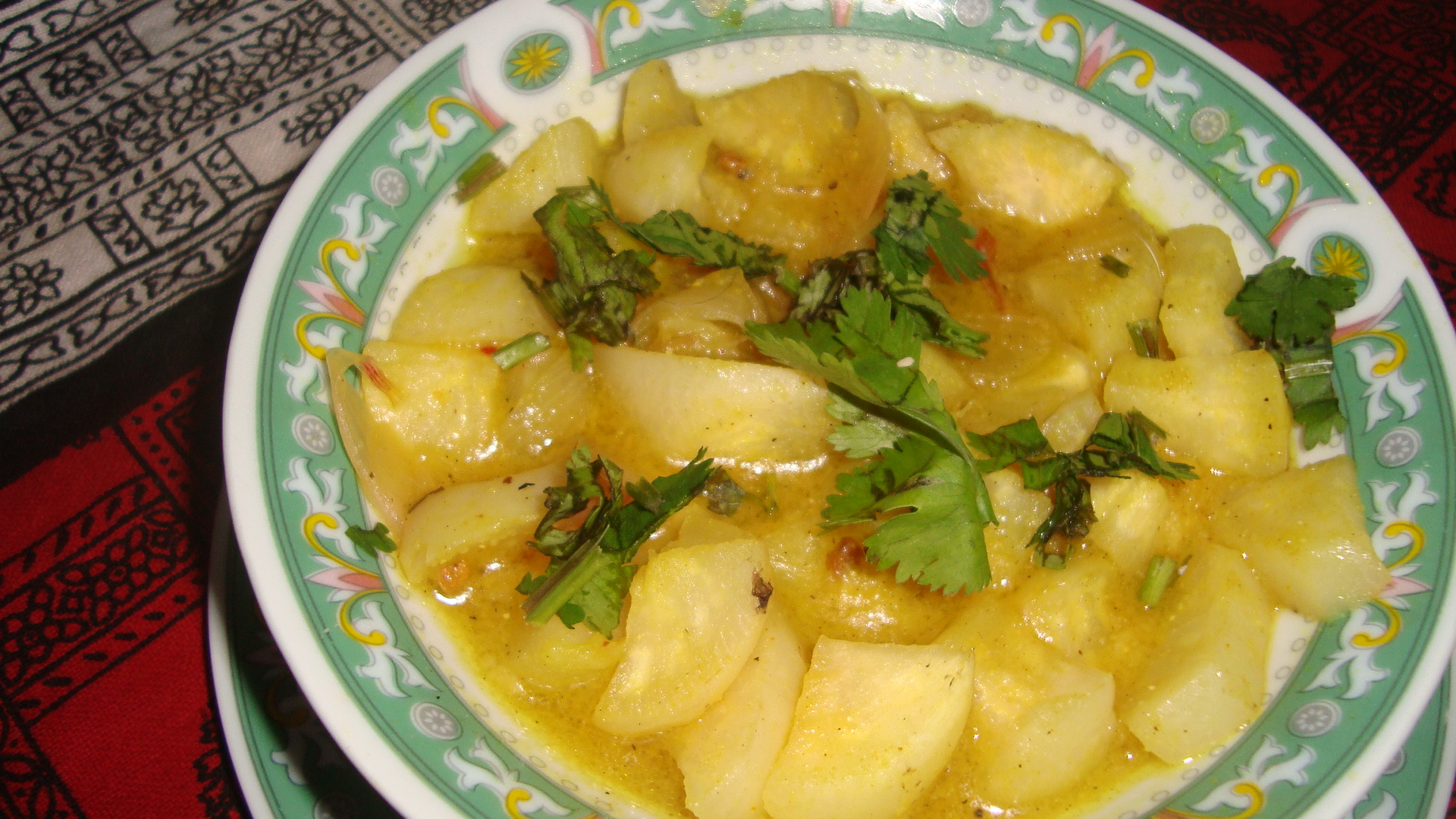
Radish curry

I have never really liked radish as I do not like its smell. However, occasionally, it is cooked at home and this is a recipe of my mother’s that makes eating radish tolerable for even those who dislike it. Radish is supposedly good for lowering cholesterol and fighting cancer.

Radish curry

Time taken: 15 – 20 mins

Serves 4

Radish curryIngredients:

  • Radish/ Mullangi – 1
  • Onion – ¼, chopped
  • Green chilli – 1, chopped
  • Urad dhal – 1 tsp, roasted and ground
  • Pepper – ½ tsp
  • Turmeric powder (optional)
  • Low fat oil – 1 tbsp

Method

  1. Wash and peel the radish before chopping it into smaller pieces.
  2. Heat a tbsp. oil in a pan and sauté lightly the chopped onion and chilli.
  3. Then, add the chopped radish to the pan and mix well.
  4. Add 1 ½ cups of water to the pan and cook the radish for about 10 mins.
  5. If the water dries up, add another ½ cup of water.
  6. Add 1 tsp roasted and ground urad dhal and stir.
  7. Add pepper and optional turmeric powder. Mix well and cook for a couple of minutes before removing from stove.
  8. Serve with rice.

Recipe source: Raji Thillainathan.