As this blog does require recipes that I record of my mother’s cooking or sent in by others and I also wish to be a bit more active on my other blogs, I will be making weekly or bi-weekly posts rather than daily posts as I did in the first few months of this blog.
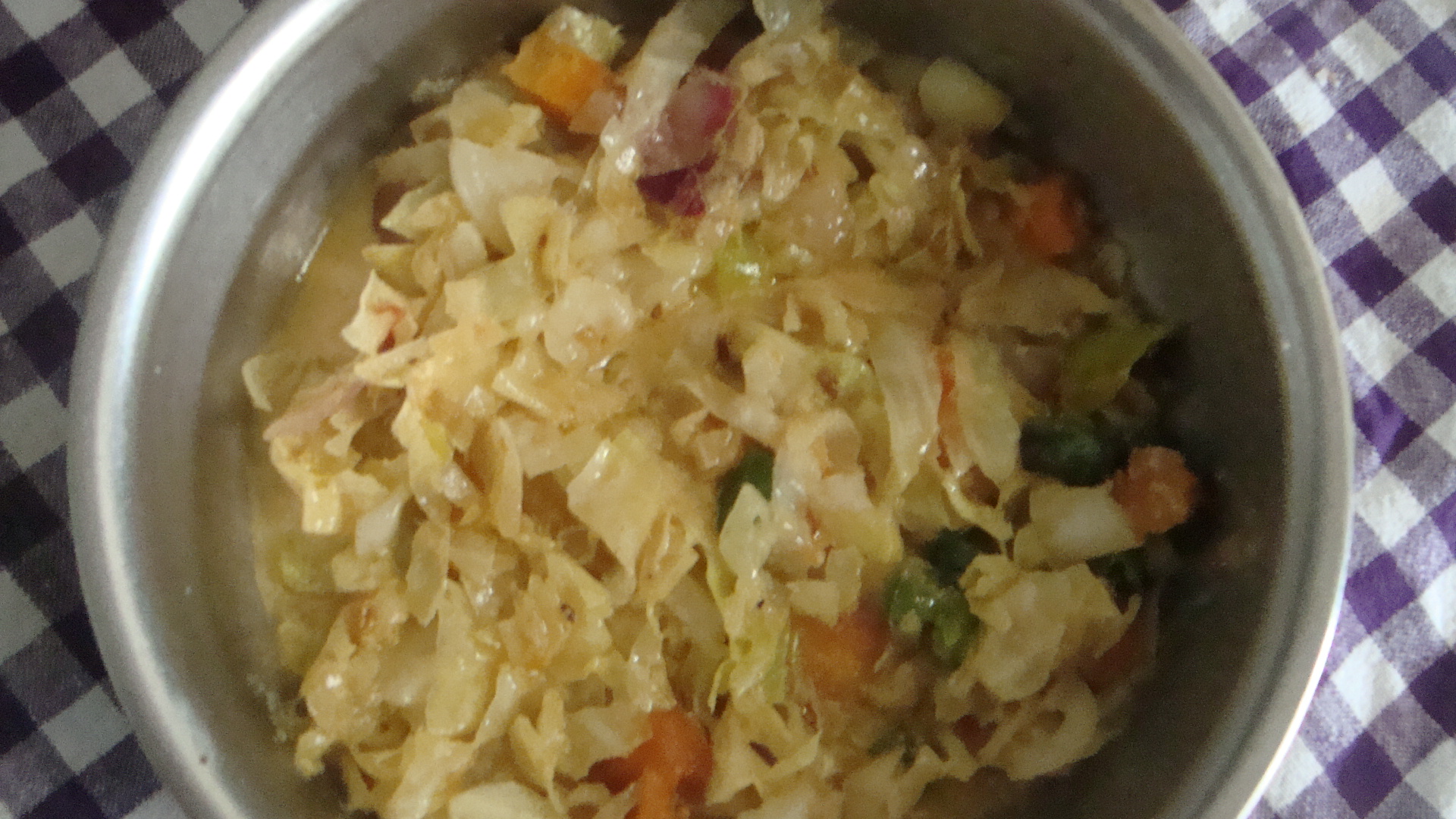
This weekend’s recipe is that of my mother’s spicy cabbage curry. If you prefer fried cabbage, try out the delicious cabbage fry or the cabbage and carrot fry recipes posted earlier on this blog.
Today’s recipe is that of a simple potato curry that is easy and quick to prepare when you are not in the mood for preparing something elaborate. What’s more, you are sure to like the results. For those who do not like their curries dry, check out the other potato curry recipe.
Potato curry – the drier version.
Time taken: 30 mins
Serves 4
Ingredients:
Potatoes – 2, large
Onions – 2, large
Curry powder – 1 or 2 tsp
Salt, as required
Low fat oil – 3 tbsp
Method:
Boil the potatoes. After the potatoes are boiled, peel and chop them into smaller pieces. Mix in the curry powder and some salt and keep aside.
Clean and chop the onions. Sprinkle with salt.
Heat 3 tbsp oil in a pan and fry the chopped onion for about 5 to 10 mins.
Once the onions starts changing colour and the aroma wafts about, add the seasoned, boiled potatoes to the pan and mix well. Cook for another 5 mins.
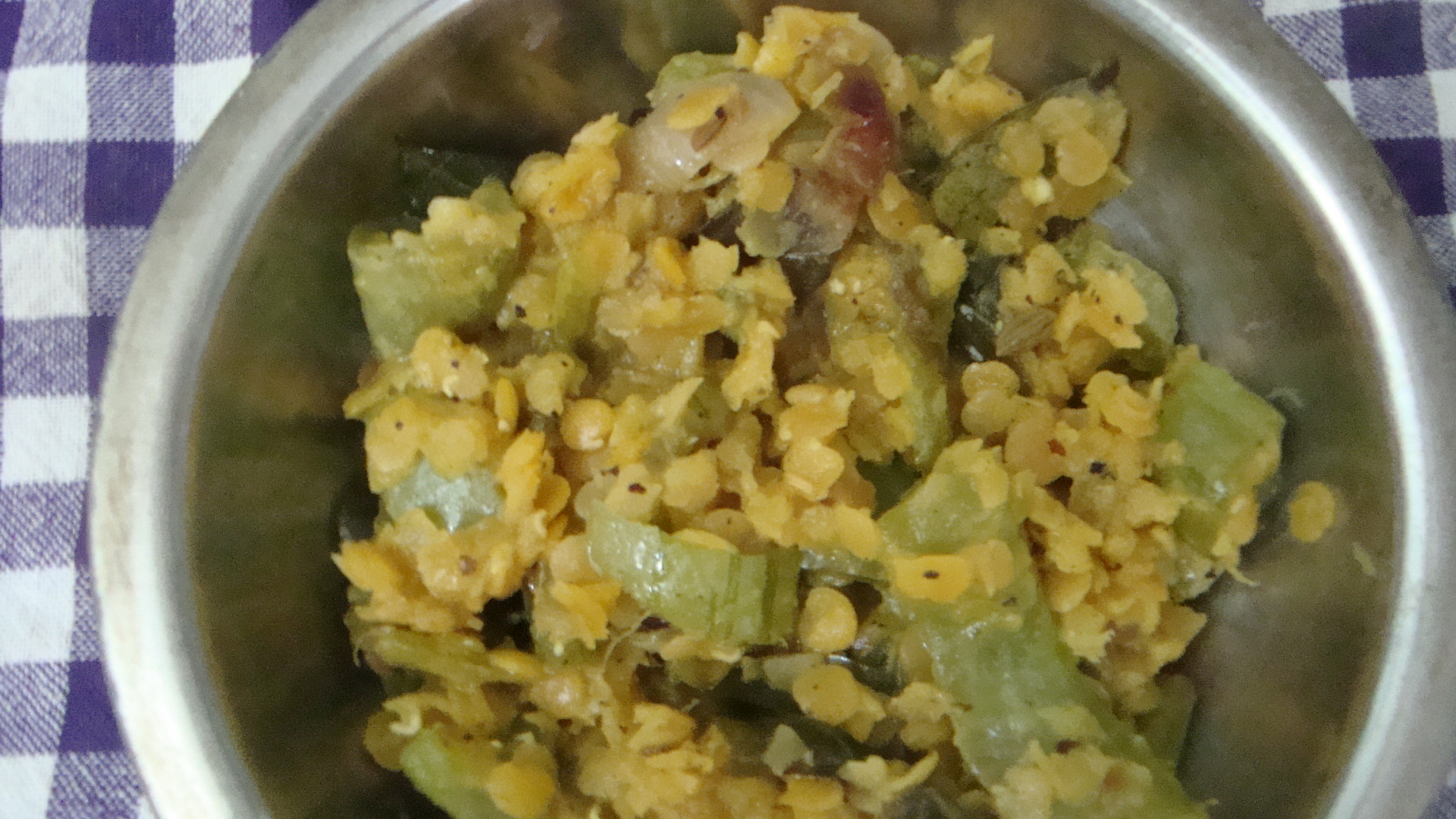
Today’s recipe is another snake gourd curry that my mother occasionally makes.
Dhal with Snake gourd
Time taken: 30 mins
Serves 4
Ingredients:
Mysore dhal – ½ cup
Pudalangai/ Snake gourd – ½ cup, chopped
Green chillies – 2
Onion – ½
Fennel seeds – 1 tsp
Curry leaves – 1 sprig
Rampe leaf/ pandan – 1 or 2 inch
Coconut milk – ¼ cup (optional)
Turmeric powder – ½ tsp
Crushed chillies – 1 tsp
Pepper – ½ tsp
Salt, to taste
Low fat oil – 2 tbsp
Method:
Clean the snake gourd and finely chop it.
Heat the oil in a pan and fry the chopped onion, green chillies, fennel seeds for a minute before adding the finely chopped snake gourd, curry leaves and rampe leaf. Cook for about 5 mins over low heat.
Rinse the dhal and add the dhal to the pan. Stir and add a cup of water and let the dhal and snake gourd cook.
Once the water has almost dried up and the vegetables have been cooked, add coconut milk. If you do not wish to use coconut milk due to cholesterol issues, simply add a ¼ cup of water or any alternative non-dairy milk of preference instead.
Add the turmeric powder, crushed chillies, pepper and salt to taste to the pan. Mix well and cook for about 5 mins.
Re-posting recipe: Today’s recipe is from my great-grandmother, as remembered and occasionally replicated by my mother.
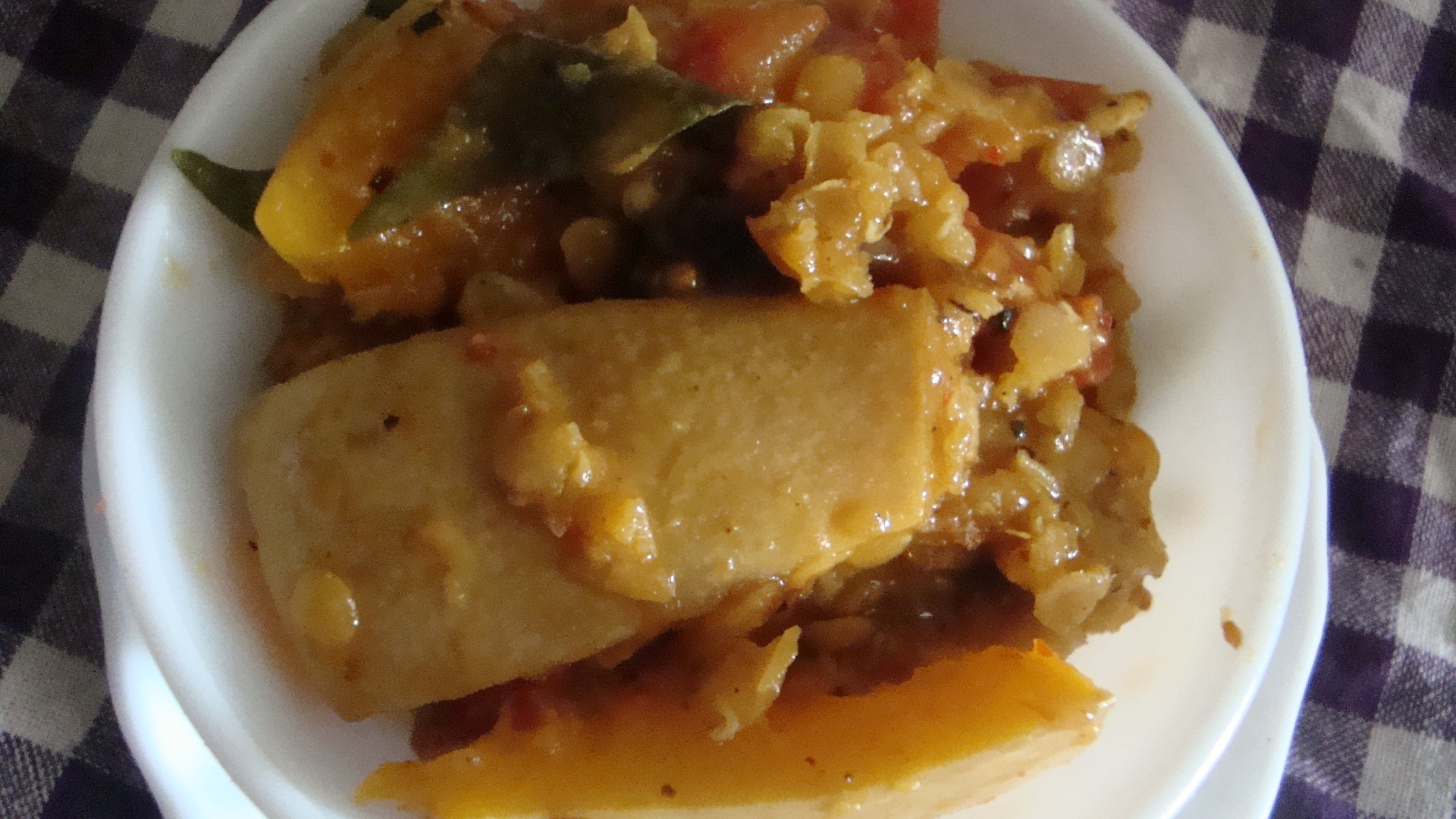
Thuvaram Paruppu Koottu
Time taken: 1 hour, plus soaking time of dal about 3 – 4 hours
Serves 4
Ingredients:
Toor dal/ Thuvaram paruppu – ½ cup
Onion – ¼ + ½
Garlic – 2 + 2
Cumin powder – ½ tsp + ½ tbsp
Fennel powder – ½ tsp
Asafoetida – pinch + pinch
Salt – ½ tsp + more, to taste
Oil – 1 tsp + for deep-fry+ 1 ½ tbsp
Fenugreek – 1 tsp
Tomato – 1 big or 2 small
Dried red chillies – 3
Coriander powder – 1 tbsp
Grated coconut – 3 tbsp
Turmeric powder – ½ tsp
Pepper – 1 tsp
Tamarind extract – ½ cup (thin)
Water – ½ cup + ½ cup (optional)
Method:
Soak the toor dal for 3 – 4 hours.
Chop up ¼ onion and 2 garlic cloves and fry them in 1 tsp oil in a pan.
Add ½ tsp cumin powder, ½ tsp fennel powder and a pinch of asafoetida to the pan. When the spices combine and their aroma starts coming out, add ½ tsp salt.
Add the toor dal to the pan and mix well and quickly remove from heat.
Grind the toor dal mixture, without water or just a little so that it can be made into a slab.
Steam the slab of spiced toor dal.
Cut the steamed block of toor dal into pieces and deep fry.
Make a spice paste by grinding the scraped coconut and chopped chillies with 1 tbsp coriander powder, ½ tbsp cumin powder, ½ tsp turmeric powder, 1 tsp pepper powder and a pinch of asafoetida.
Heat 1 to 1 ½ tbsp oil in a pan and fry the chopped onion (½ onion), 2 garlic cloves and the fenugreek seeds.
When you get the aroma of the fried onion and garlic, add the spice paste, mix well and fry.
Add the chopped tomatoes and ½ cup of water and let the tomatoes cook.
Once the tomatoes are cooked, add the fried pieces of toor dal chunks and ½ cup of thin tamarind extract.
Cook for about 10 – 15 minutes on low heat. If you prefer more gravy in your curry, add ½ cup of water.
Re-posting recipe: This is my grandmother’s recipe, as remembered and replicated by my mother. For my mother’s recipe, check out this post.
Drumstick curry
Cooking time – 25 minutes
Serves 3
Ingredients:
Drumstick/ Murungai – 1
Potato – 1 large
Onion – ½ medium sized
¼ fresh Coconut ~ ½ cup of scraped fresh coconut
Curry powder – 1 tbsp, can add another 1/2 tbsp for more spiciness
Salt to taste
Method:
Cut the drumstick into 2’’ pieces and chop up the potato and onion.
To the scraped fresh coconut, add some water and squeeze out the first coconut milk and keep aside. Reuse the coconut flakes and squeeze out the second milk by adding some water. If you don’t like to squeeze out the coconut milk by hand, simply use a blender and strain out the first and second milk. An alternative is to use ready-made coconut milk but the different consistencies expected in this dish will not be there. The first milk is richer in consistency and fats while the second milk is thinner in consistency.
In a sauce pan, add four cups of water to coconut milk obtained the second time – the second coconut milk.
Add the cut vegetables (drumstick, potato and onion) to the pan as well as the chilli powder and cook the vegetables.
Once the potato and drumstick pieces are cooked, add the reserved first coconut milk and salt and let it simmer for five minutes before taking off the heat.
Serve hot with rice or pittu or stringhoppers.
A slight variation in my great grandmother’s drumstick curry recipe is that she did not add potatoes to the drumsticks. Just before taking the curry off the heat, she lightly fried some chopped onion, dried red chillies and fennel seeds in a separate pan and added the tempered seasonings to the curry. This gives a nice aroma and flavour to the dish.
During my online search for blogs with a focus on Sri Lankan recipes, I came across Rice and Curry. I invited the author to share one of his recipes on this blog and he kindly agreed. So today’s guest blogger is Skiz Fernando and he will be sharing one of his favourite vegan recipes.
As a second-generation Sri Lankan-American, one of my main connections to the Motherland has been food. My mother used to make us rice & curry a couple of times a week, and we also used to get it at the various dinner parties thrown by the small community of Sri Lankans living in Baltimore, Maryland, where I grew up. Aside from cutlets and patties, which are any Sri Lankan kids’ favorites, I also developed a special affinity for brinjal curry. Since these dinner parties were usually ‘pot-luck,’ with everyone contributing a dish, I came to discover that the same lady was always responsible for bringing the brinjals, and that lady was none other than Aunty Manel.
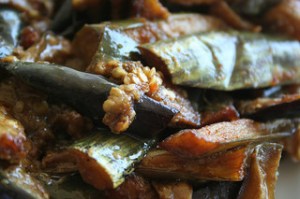
Eggplant curry
All the Sri Lankan ladies living in Baltimore were great cooks, so it just goes to show how special Aunty Manel’s brinjal curry was by the fact that it returned by popular demand to table after table, and dinner party after dinner party. I was not even really into vegetables at the time, but these brinjals were too sublime and tasty to be vegetables. It probably helped that they were deep-fried–as anything deep-fried tastes good–but it wasn’t obvious to me at the time. Only years later when I bugged Aunty Manel for the recipe, did I realize how labor-intensive this dish actually was, as you had to deep fry the eggplant before sautéing it with spices and coconut milk. Today, even though I have the recipe, the dish is challenging, but still worth the time and effort. Speaking as one who never liked eggplant, I always tell people that this is going to be their favorite way to eat the vegetable from now on.
Pan Asian: Aunty Manel’s Special Eggplant Curry
1 lb. (500 g) eggplant
1/4 tsp. turmeric
oil for deep-frying
2 tbsp. oil
1 onion, sliced
2-3 green chilies, sliced
1 sprig curry leaves
2 inch (5 cm) stick cinnamon
3 cloves
1 tbsp. raw curry powder
1-2 tsp. cayenne pepper
1 tsp. brown mustard seeds, ground
1/2 cup (125 ml) coconut milk
salt to taste
3 cloves garlic (A)
2 inch (5 cm) piece ginger (A)
1 tsp. sugar (A)
1 tsp. salt (A)
1 tbsp. apple cider vinegar (A)
1/2 cup (125 ml) water (A)
1.) Wash and cut eggplant into 2 in (5 cm) strips. Rub with salt and a dash of turmeric.
2.) Deep fry eggplant until golden brown. Drain on newspaper.
3.) Blend (A) list ingredients in a food processor.
4.) Heat oil in pan. Sauté onions, green chilies, and curry leaves until onions are translucent. Add cinnamon, cloves, and dry spices.
5.) Add (A) and bring to a boil.
6.) Reduce heat and add eggplant, coconut milk and salt. Toss well and simmer for 3-5 minutes.
Recipe Source: Skiz Fernando.
Short bio of Skiz Fernando:
Journalist, musician, and filmmaker, Skiz Fernando is the author of Rice and Curry: Sri Lankan Home Cooking (Hippocrene Books, 2011), a New York Times notable cookbook. He guided TV host Anthony Bourdain on a culinary tour of Sri Lanka for an episode of the popular Travel Channel series, No Reservations with Anthony Bourdain.
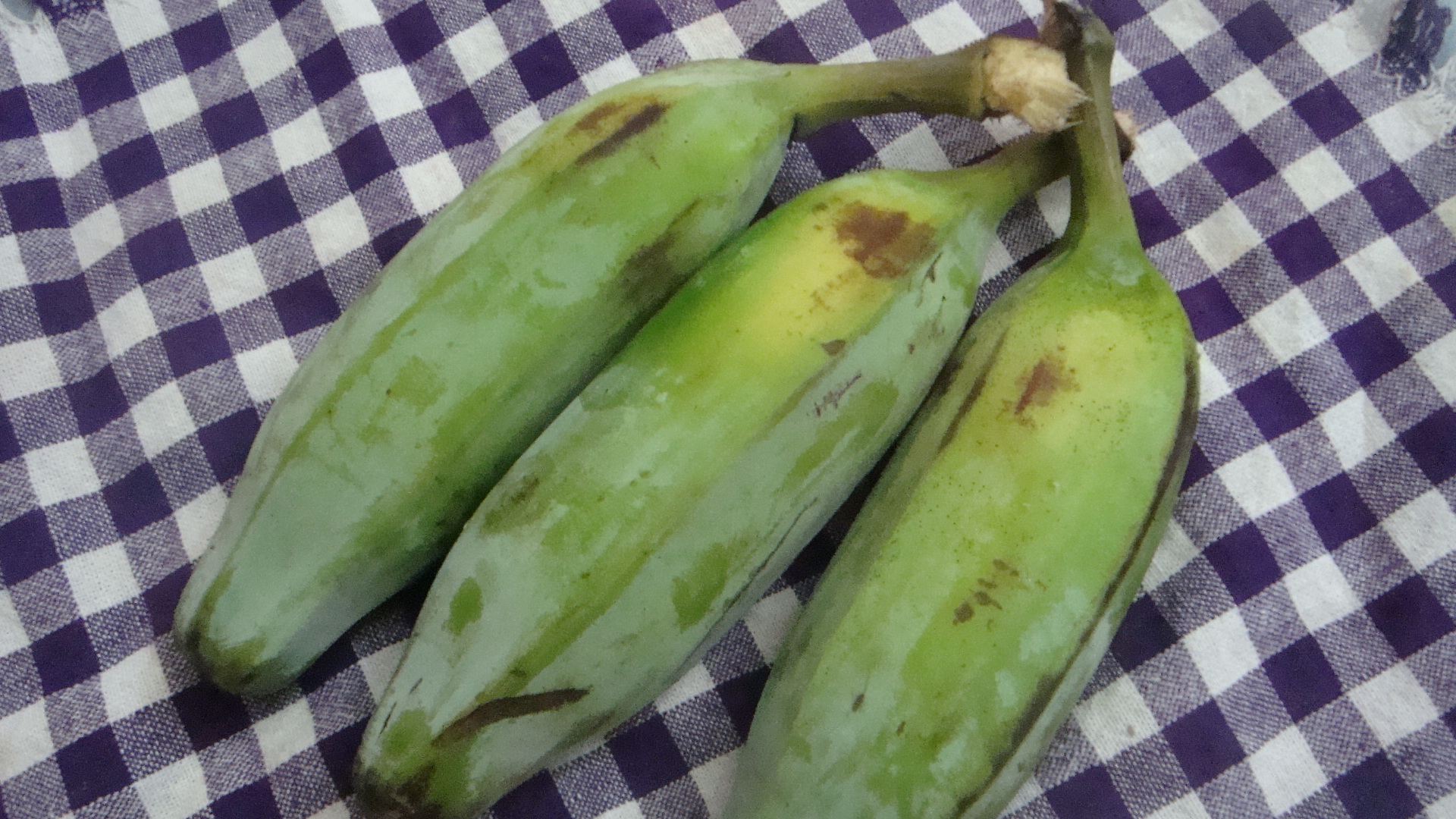
Ash plantain (Saambal Vaalai, as it is called in Tamil) is often used in Sri Lankan and South Indian cuisine. I am not very familiar with the varieties of plantains but as far as I am aware, ash plantain is the more common and popular variety in Sri Lanka and is a cooking plantain.
Today’s recipe is that of an ash plantain curry that my mother quite often makes at home.
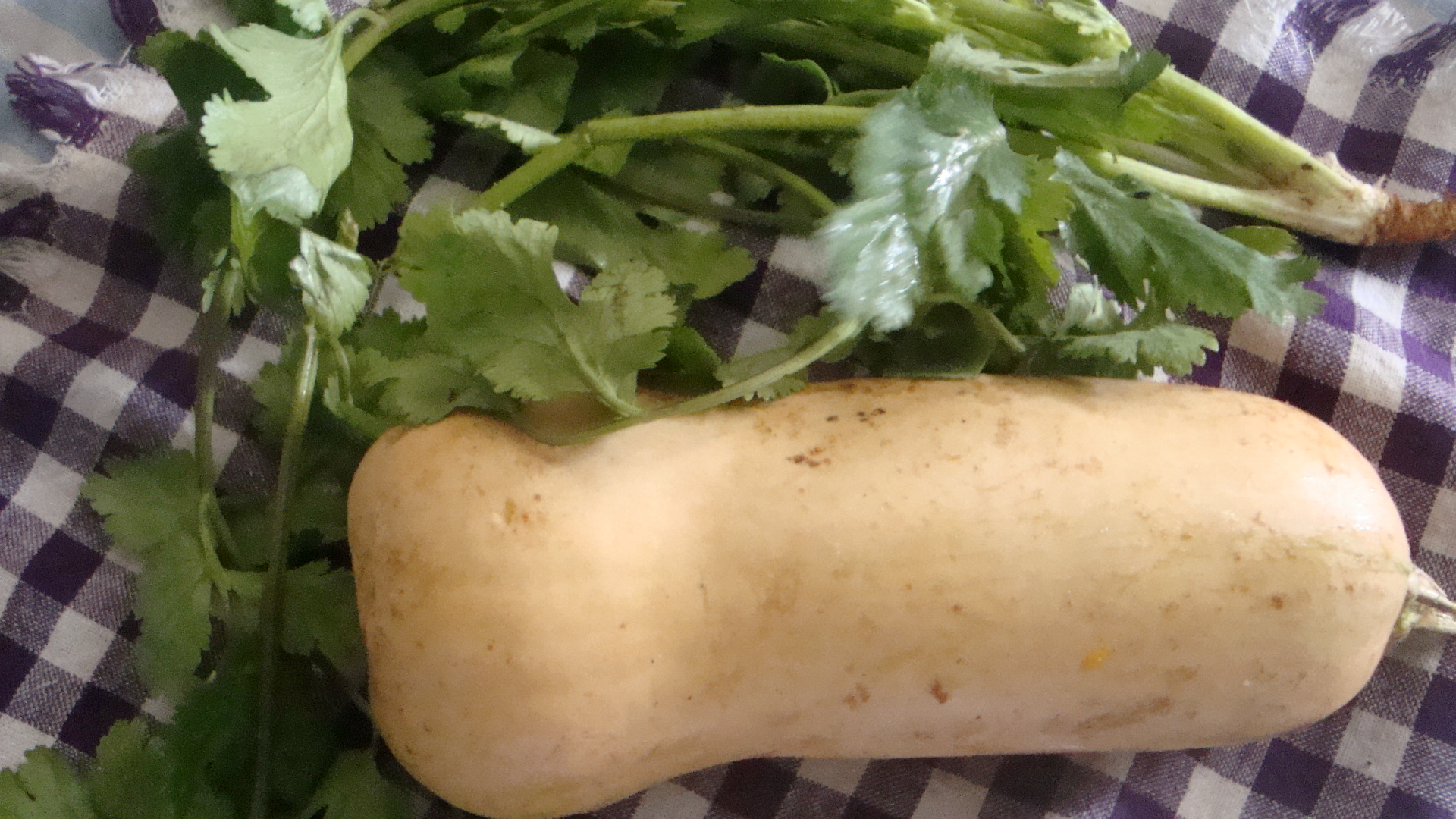
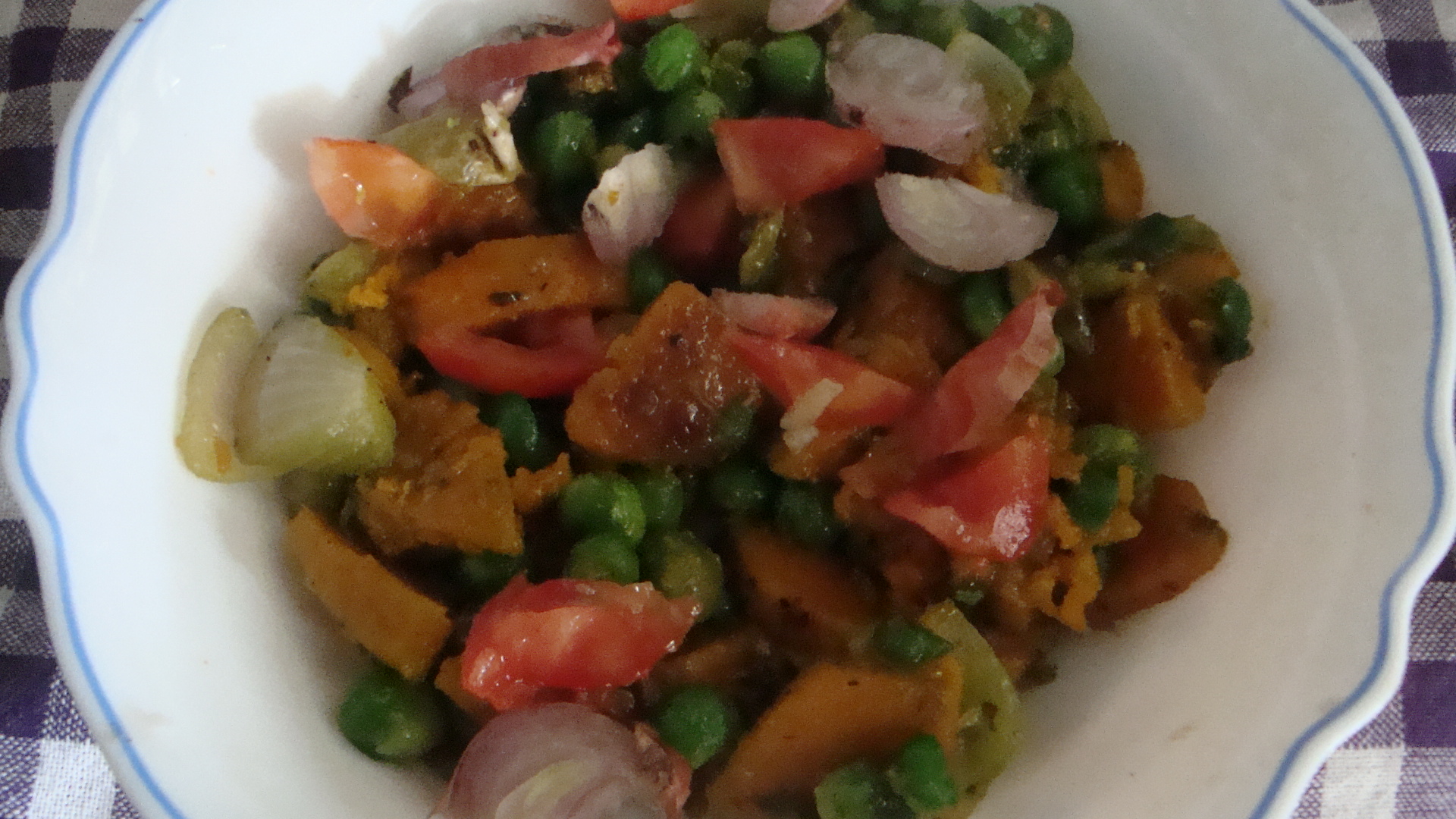
Today’s recipe is one of my mother’s simple and delicious pumpkin recipes. The butternut squash is called the ‘Dubai pumpkin’ for some reason in the markets of Colombo.
Butternut squash and green peas curry
Cooking time: 15 mins
Serves 3
Ingredients:
Butternut squash or regular pumpkin – ½ cup
Green peas – ¼ cup
Onion – ½
Green chilli – 1
Ginger – 1”
Garlic – 3 or 4 cloves
Thin coconut milk – ½ cup
Salt, to taste
Pepper – 1 tsp
Low fat oil – 1 tbsp
Method:
Peel the butternut squash and chop it up into smaller chunks.
Heat 1 tbsp oil in pan and fry the chopped ginger, garlic, green chilli and onion for a min or two.
Add the chopped butternut squash and green peas to the pan and stir fry for a few mins.
Add the coconut milk to the pan, as well as salt to taste, and cook for about 10 mins.
Add the pepper, when the milk is about to dry up, and remove the pan from stove.
Garnish with coriander leaves, chopped onion and tomato and serve warm with rice.
 Ingredients:




 A Taste of Sri Lankan cuisine