Cabbage and carrot fry

Cabbage and carrot fry

Time taken: 25 mins

Serves 4

Cabbage and carrot fryIngredients:

  • Cabbage – 1 cup, shredded
  • Carrot – ½ cup, grated
  • Malu miris – ½
  • Onion – ½
  • Fennel – 1 tsp
  • Ginger – ½ “, chopped
  • Garlic – 2 or 3 cloves, chopped
  • Turmeric powder – ½ tsp
  • Scraped coconut – 1 tbsp
  • Crushed chillies – 1 tsp
  • Low fat oil – 1 tbsp

Method:

  1. Clean and wash the cabbage and add salt and turmeric to the shredded cabbage.
  2. Heat a tbsp oil in a pan and fry the chopped onion, ginger, garlic and fennel seeds for a couple of mins.
  3. Add the cabbage and carrot to the pan and stir fry for another 7 – 8 mins.
  4. Add the freshly scraped coconut, mixed with a pinch of turmeric, and crushed chillies. Stir fry for another 5 mins.
  5. Serve with rice.

Recipe source: Raji Thillainathan.

Aval

A Navarathri festival favourite from childhood is ‘aval’, a simple, quick to prepare delicious snack. So, for the first day of the Saraswathie poosai, I would like to share this simple recipe for ‘Aval’.

I have always thought of ‘aval’ as a sweet snack, generally prepared during ‘home poosai’ (prayer ceremony) as a ‘prasadam’ (blessed offering), but I came across the Indore Kanda Poha a few months back and was happily surprised it was a savoury, breakfast food. Here though, I am sharing the traditional way it is prepared in north Sri Lanka.

Aval

Time taken: 10 – 15 mins

Serves 2

AvalIngredients

  • Aval (flattened rice or puffed rice) – ½ cup
  • Coconut – ¼ cup, scraped
  • Sugar – 3 tbsp or Jaggery – 2 tbsp, chopped
  • Crushed cardamom – 1 tsp
  • Cashew nuts – 1 tsp, chopped
  • Raisins – 2 tsp

Method:

  1. Rinse the ‘aval’ in a bowl of water and drain it.
  2. Add ¼ cup of hot water to the cleaned ‘aval’ and let it soak for 5 mins. Drain.
  3. Heat a pan on low heat and dry roast the coconut for about 2 mins.
  4. Add the jaggery or sugar to the pan and continue cooking for another 2 – 3 mins.
  5. Add the crushed cardamom to the pan and stir before adding the ‘aval’ to the pan. Mix well before removing from heat.
  6. Garnish with chopped cashew nuts and raisins.

Recipe source: Raji Thillainathan.

Kolukkattai

With the start of Navarathri today, I thought of posting nine of my mother’s recipes of some food that she typically makes during this nine-day festival. I have always been fond of Navarathri, since my childhood, and I think of all the religious festivals that my family has observed, this has been the favourite and better observed.

The nine days of the festival are dedicated to Goddesses starting with the first three days for Goddess Durga, symbolizing courage and strength, the next three days for Goddess Lakshmi, symbolizing wealth and beauty, the last three days for Goddess Saraswathi, symbolizing knowledge and wisdom. The last three days are the most special of the nine days.

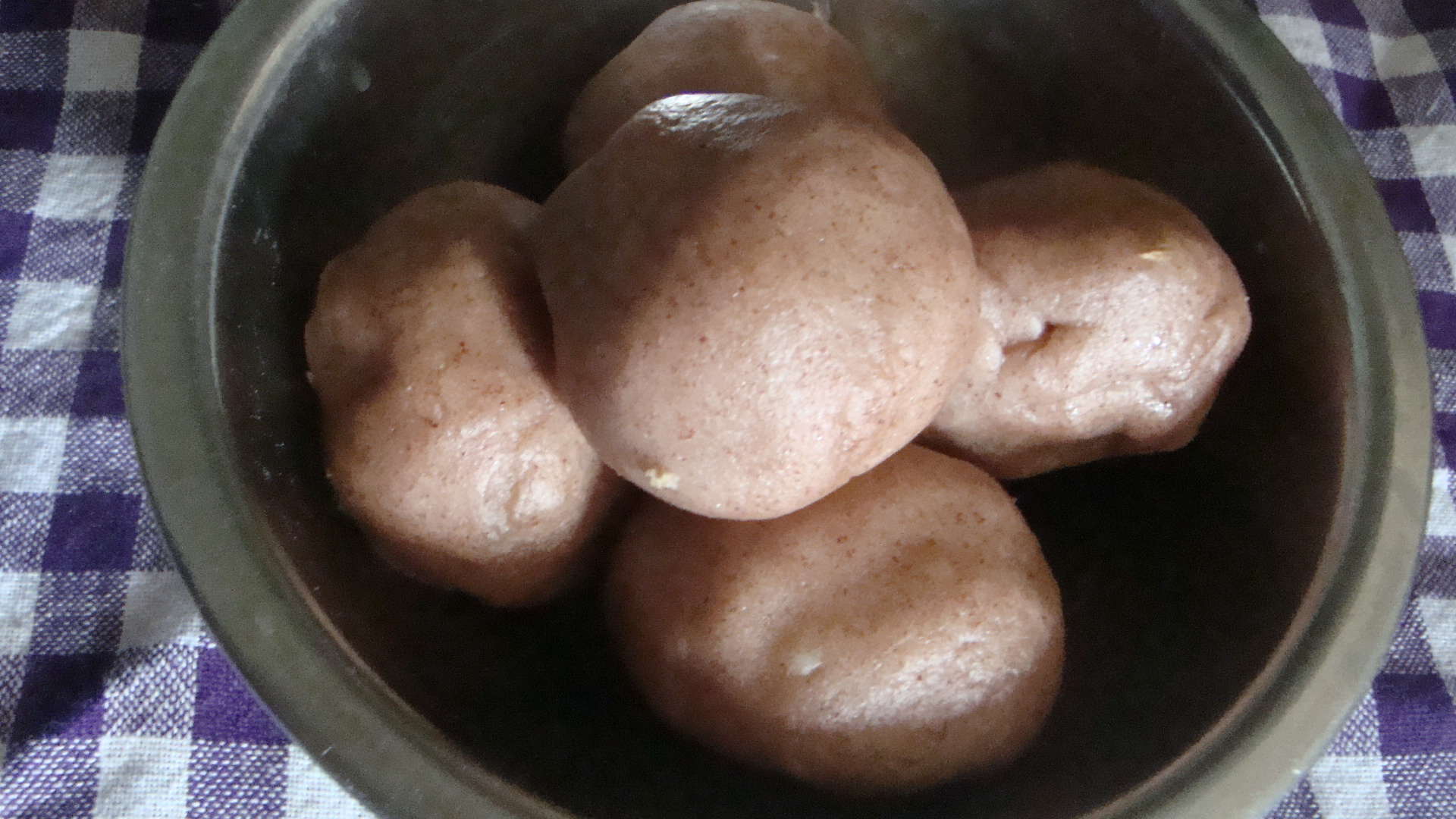
To start off the Navarathri food fest, I will first share one of my favourites – Kolukkattai. This is a steamed half-moon shaped dumpling made especially during the Aadi pirappu (July 15th, which is the first of the month of Aadi in the Tamil calendar) and during the ceremony that marks the arrival of a baby’s first teeth. It is actually ‘Mothaham’, a round shaped version of the kolukkattai, that is made during Navarathri but at my home, my mother prefers to make kolukkattai generally.
Mothaham

Mothaham

Kolukkattai

Time taken: 40 – 45 mins

Makes 10

Kolukkattai

Kolukkattai

Ingredients:

  • Green gram – ½ cup, roasted and split
  • Water
  • Wheat flour – ¾ cup
  • Rice flour – ¼ cup
  • Salt – pinch
  • Low fat oil, as required
  • Coconut –½ cup, freshly scraped
  • Jaggery – ¼ cup
  • Cardamom – 4, crushed

Method

  1. Boil the green gram in about 1 ½ cups of water, for about 20 mins, until it is well-cooked. Add water if the liquid dries up before the gram is cooked. Drain and keep aside.
  2. Meanwhile, mix the wheat flour, rice flour and a pinch of salt. Add hot water slowly while stirring the flour mix with a spoon.
  3. Add a little oil and bring together the mixture into a ball of dough.
  4. Divide the dough into 10 small balls, adding a little oil, to have a smooth dough mix.
  5. In a pan, cook the jaggery on low heat and stir as it melts.
  6. Add the scraped coconut and quickly stir for a couple of minutes, not allowing the coconut-jaggery mixture to burn.
  7. Add the boiled and drained green gram and the crushed cardamom to the coconut-jaggery mixture. Mix and remove from heat. Let the mixture cool.
  8. Roll out each of the ten small balls of dough and spoon 1 tbsp filling in the center of the rolled out dough. Close the dough wrap over the filling in a half-moon shape, by hand or using a pre-fabricated mold shell, or into a round dumpling shape. For the ceremony that marks the arrival of the baby’s first teeth, tiny coconut chips are embedded into the dents pressed by the mold or finger along one half of the half-moon shaped dumpling.
  9. Steam the ‘kolukattai’ (the half-moon shaped) or ‘mothaham’ (the round shaped dumpling) for about 10 mins.

Recipe source: Raji Thillainathan.

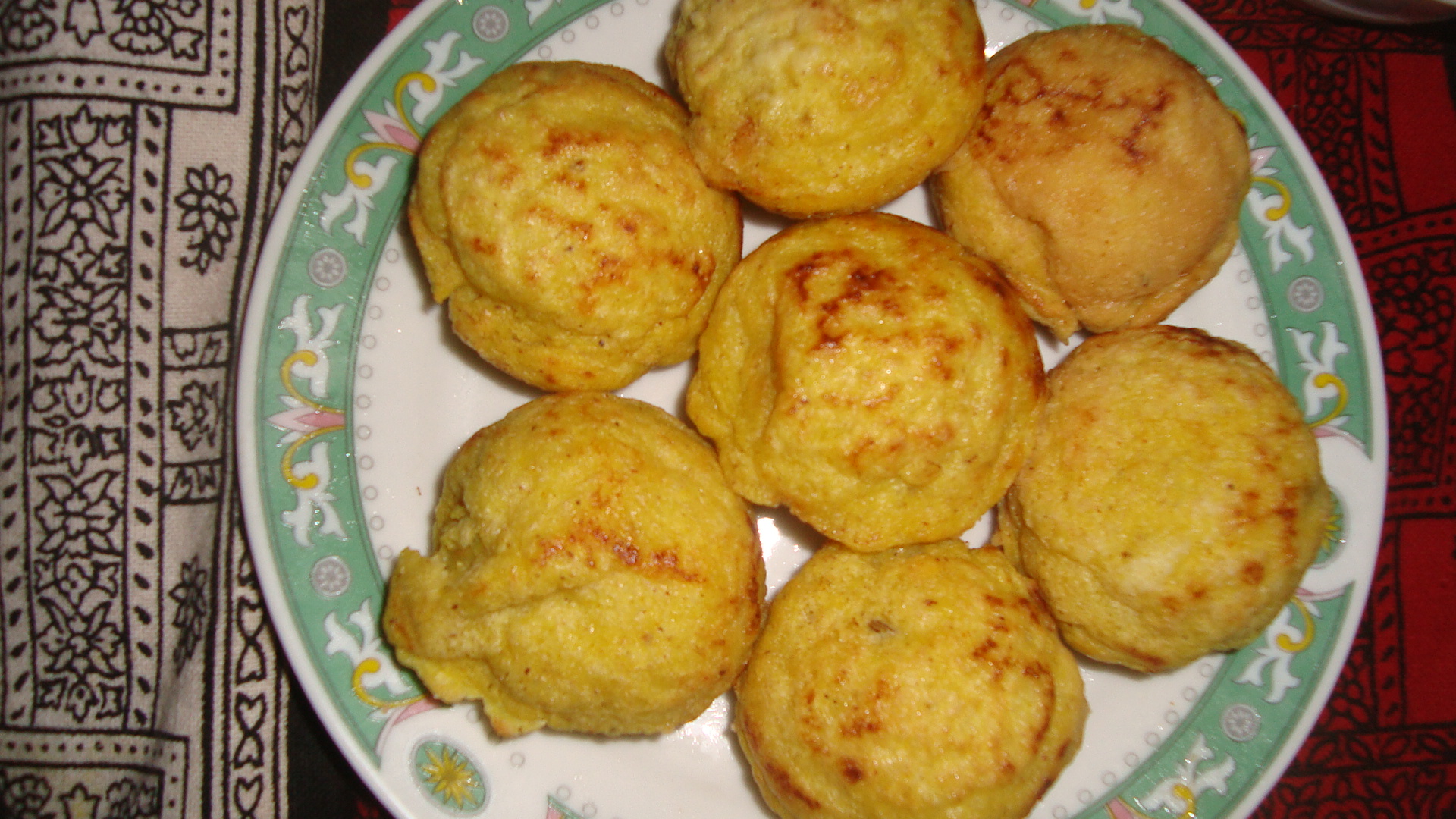
Kundu Thosai with Coconut Tamarind Sambal

A friend of my mother dropped by this morning with some breakfast treats that she had made so I decided to post the recipes for those two dishes. The first is kundu thosai with a coconut-tamarind sambal.

Kundu thosai with sambal

(a) Kundu thosai

Cooking time: 15 mins + preparation time: nearly 8 hours

Makes 24

Gundu thosai

Ingredients:

  • Black gram/ Urad dal/ Ulunthu – ½ cup
  • Raw rice – 1 cup
  • Fenugreek seeds – ¼ tsp
  • Pepper – ¼ tsp
  • Cumin seeds – ¼ tsp
  • Turmeric powder – ¼ tsp
  • Wheat flour – 2 tbsp
  • Oil, as required

Method:

  1. Soak ulunthu and rice for about 3 to 4 hours.
  2. Grind the soaked ulunthu and rice together with the fenugreek seeds, pepper, cumin seeds and turmeric powder.
  3. Mix the wheat flour in the blended mixture. The batter should be thick.
  4. Let the batter rest for about 3 to 4 hours.
  5. Place the special ‘kundu thosai’ pan on the stove on low heat.
  6. Pour a little oil in each of the 8 holes of the pan. Then, pour a tablespoon of batter in each.
  7. Cook the thosai for about 1 ½ to 2 mins each side. Flip to the other side so that both sides are browned.
  8. Serve hot with the coconut-tamarind sambal.

(b) Coconut-Tamarind Sambal

Time taken: 10 mins

Serves 4

Ingredients:

  • Freshly scraped coconut – ½ cup
  • Dried red chillies – 4 + 1
  • Onion – ¼ + ¼ , chopped
  • Curry leaves – 1 sprig
  • Fennel seeds – ½ tsp
  • Tamarind extract – ¼ cup
  • Salt, to taste
  • Oil, as required

Method:

  1. Soak four of the dried red chillies for a few minutes and then chop them up.
  2. Grind the soaked dried red chillies with the coconut and 1/4 onion and keep aside.
  3. Heat a tbsp or two of oil in a pan and fry the fennel seeds.
  4. When the seeds start spluttering, add the chopped ¼ onion and chopped dried red chilli and curry leaves.
  5. Add ¼ cup of tamarind extract to the pan and let it simmer.
  6. When the tamarind juice starts bubbling, add the ground chilli-onion-coconut mix and salt, to taste.
  7. Mix well and remove from heat.
  8. Serve with ‘Kundu’ thosai.

Recipe source: Ithayarani Jeyabalasingham.

Vegetable coconut curry

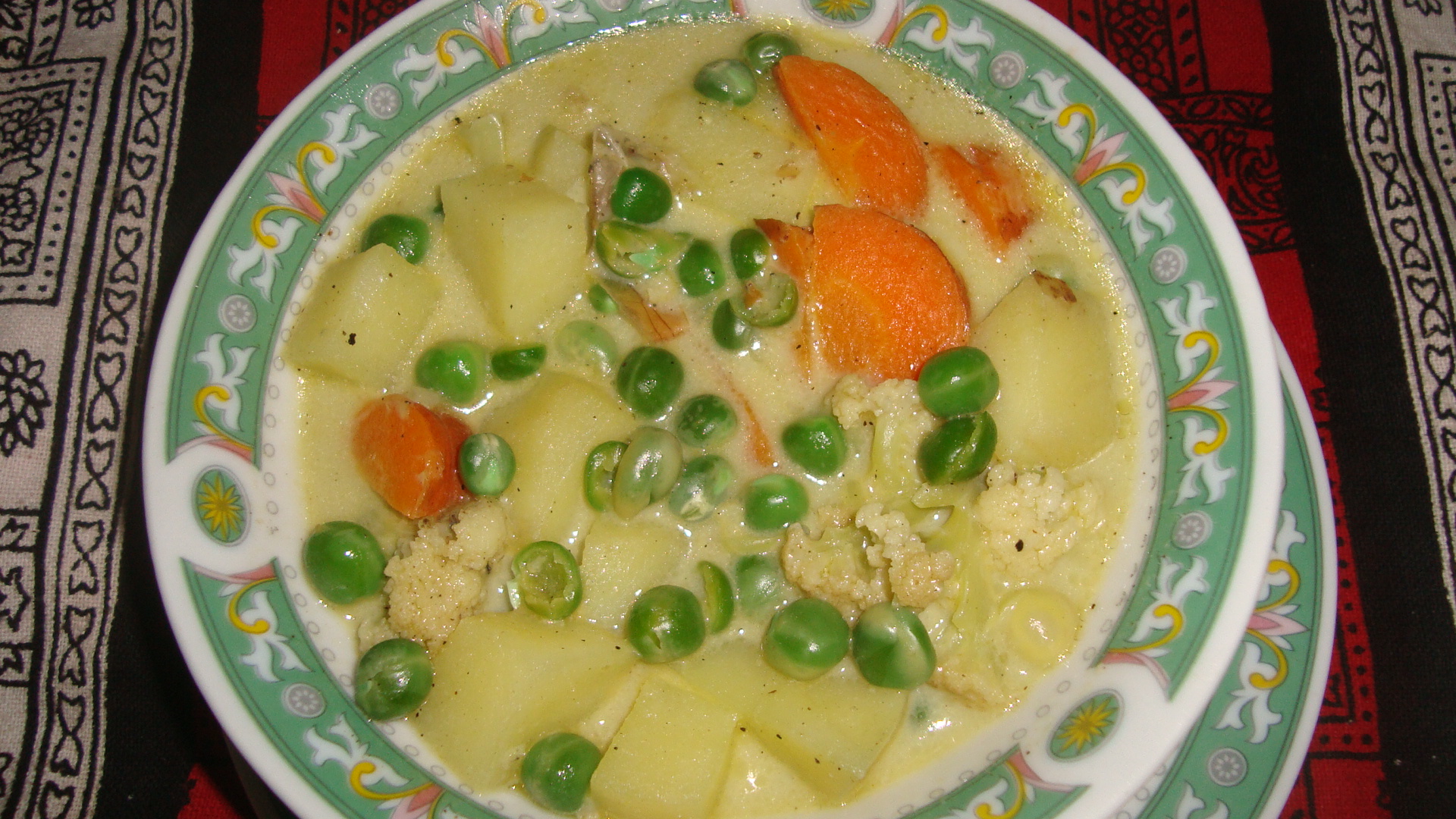
Today’s recipe is a curry recipe of my mother that I really like. It is a simple and delicious curry.

Vegetable coconut curry or Vellai curry, as it is known in Tamil

Time taken: 20 – 25 mins

Serves 4

Vegetable curryIngredients:

  • Cauliflower – ½ cup, chopped
  • Potato – ½ cup, chopped
  • Green peas – ¼ cup
  • Carrot – ½ cup, chopped
  • Onion – ¼, chopped
  • Chilli – 1, chopped
  • Coconut milk – ¼ cup
  • Pepper – ½ tsp
  • Lime juice – 1 tsp, or more as per taste

Method:

  1. Heat 1 tsp oil and sauté the chopped onion and chilli for a minute in a pan.
  2. Then, add all the chopped vegetables to the pan along with 1 cup of water and cook the vegetables for 10 mins.
  3. Add the coconut milk to the pan and cook the curry for another 5 mins.
  4. Add the pepper and cook for a couple of minutes before removing from heat.
  5. Squeeze some fresh lime/ lemon juice over the vegetable curry and serve with rice.

Recipe source: Raji Thillainathan.

Idiyappam with Sodhi

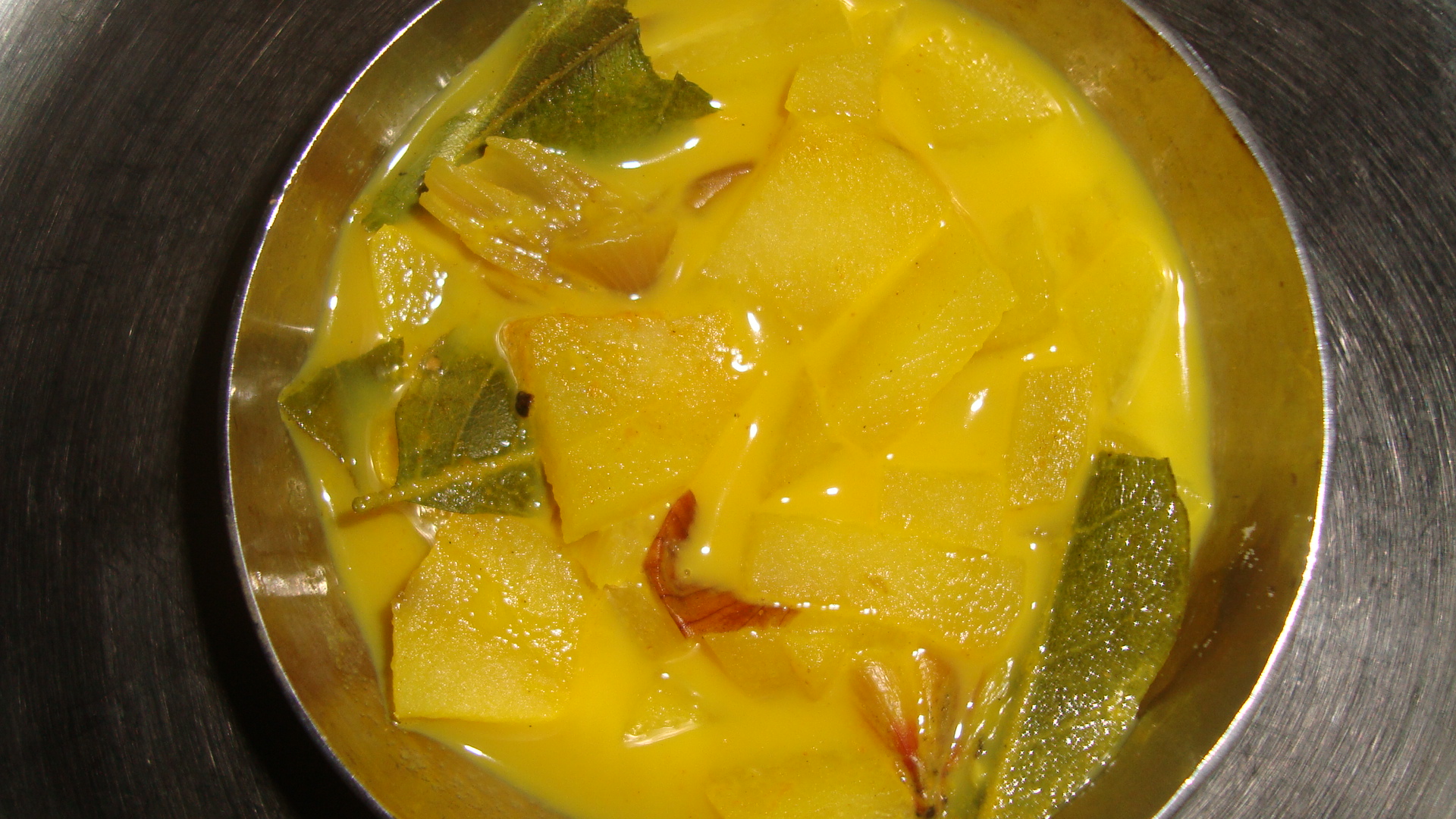
Idiyappam/ Idiyappa/ Stringhoppers with Kilanghu sodhi/ Ala hodhi is a food that is part of all the different cuisines of Sri Lanka. Everyone around the country either regularly or occasionally makes or buys stringhoppers. It is generally consumed for dinner or breakfast. While my mother has reduced making it as it is easier to buy them, she occasionally makes it when anyone at home is sick. It is considered lighter on the stomach and easily digestible.

Stringhoppers with Sodhi

Idiyappam/ Idiyappa/ Stringhoppers

Cooking time: 20 mins

Makes 10 – 12 stringhoppers

Stringhoppers

Ingredients:

  • Roasted rice flour – ½ cup
  • Steamed wheat flour – ½ cup
  • Salt, to taste
  • Water, as required

Method:

  1. Boil around 1½ cups of water and then cool it slightly for a couple of minutes so that it is still hot but not boiling hot.
  2. Mix the roasted rice flour, steamed wheat flour and some salt and add the hot water slowly, continuing to stir. The water needs to be carefully added so that there is not too much or too little but just enough to make it all come together as a dough and not stick to fingers when tested.
  3. Fill the stringhopper mould/ ural with some of the dough mix and squeeze out the string hoppers onto the stringhopper trays. There are stringhopper machines now that simplify this process.
  4. Place 5 or 6 trays, at a time, in the steamer and cook the stringhoppers for 5 mins.
  5. Serve stringhoppers with sodhi and any other curry.

Kilanghu Sodhi/ Ala Hodhi

Cooking time: 15 mins

Serves 3

Sodhi/ Hodhi

Ingredients:

  • Potato – 1
  • Chilli – 1
  • Onion – ¼
  • Curry leaves – 1 sprig
  • Coconut milk – 1 cup
  • Turmeric powder – ½ tsp
  • Pepper – ½ tsp
  • Salt, to taste

Method:

  1. Chop up the potato, chilli, onion and curry leaves and cook them in a pan with some water.
  2. Once the potato is cooked, add the coconut milk, turmeric, pepper and some salt, to taste.
  3. Bring the ‘sodhi’ to boil two or three times before removing from heat.
  4. Serve with the stringhoppers.

Recipe source: Raji Thillainathan.

Jaggery and coconut cake

My mother makes scrumptious cakes. Some of my favourites are the basic butter cake and the chocolate cake. However, on this site, I will share a cake recipe or two of my mother’s that is both vegan and made with typically Sri Lankan ingredients.

Today’s recipe is that of my mother’s jaggery and coconut cake. The key ingredient here is the jaggery.

Jaggery and Coconut cake

Time taken: 1 hour

Makes 12 – 16 pieces if baked in a 6”x6” baking pan

Jaggery and coconut cake

Ingredients:

  • Grated jaggery (palm or kithul) – 1 cup
  • Water – 1 cup
  • Low fat sunflower oil margarine (Flora, for e.g.) – ¾ cup (150g)
  • Wheat flour – 1 cup
  • Semolina – ¼ cup
  • Roasted coconut – ¼ cup
  • Coconut powder – 1 cup (100g)
  • Cardamom – 4
  • Vanilla essence – few drops
  • Baking powder – 1 tsp
  • Baking soda – ¼ tsp
  • Cashew nuts – ½ cup, chopped or a little for sprinkling (optional)

Method:

  1. Mix the wheat flour, semolina, baking powder and baking soda and keep aside.
  2. Put the jaggery, margarine, water in a blender. Add the vanilla essence and crushed cardamom seeds. Blend for about a minute or two.
  3. Then, add the coconut powder and roasted coconut to the mix in the blender and blend for another minute or two.
  4. Pour the batter into a mixing bowl.
  5. Stir in the flour mix gradually into the batter and mix well.
  6. Add the chopped cashew nuts and mix.
  7. Pour the batter into the baking pan and sprinkle some chopped cashew nuts on top.
  8. Bake in a preheated oven at 140⁰C/ 284⁰F for around 40 – 45 minutes.
  9. Serve with some Sri Lankan tea or fresh fruit juice.

Recipe source: Raji Thillainathan.

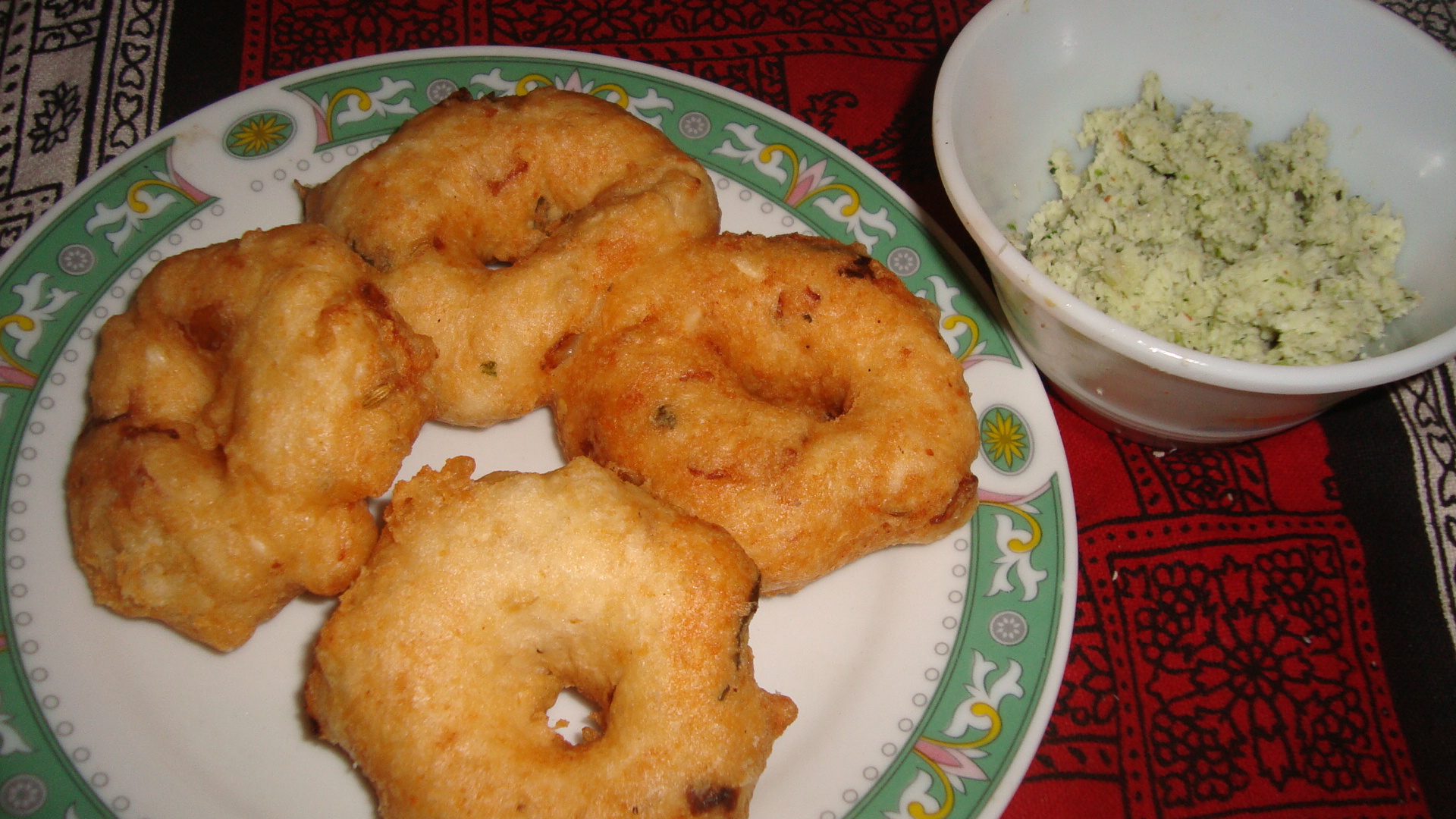
Vadai and Pachai Sambal

Black gram, or urad dhal, plays an important role in the cuisine of the north. It is one of the gram varieties cultivated in the seasons in between paddy cultivation and is a major source of nutrition.

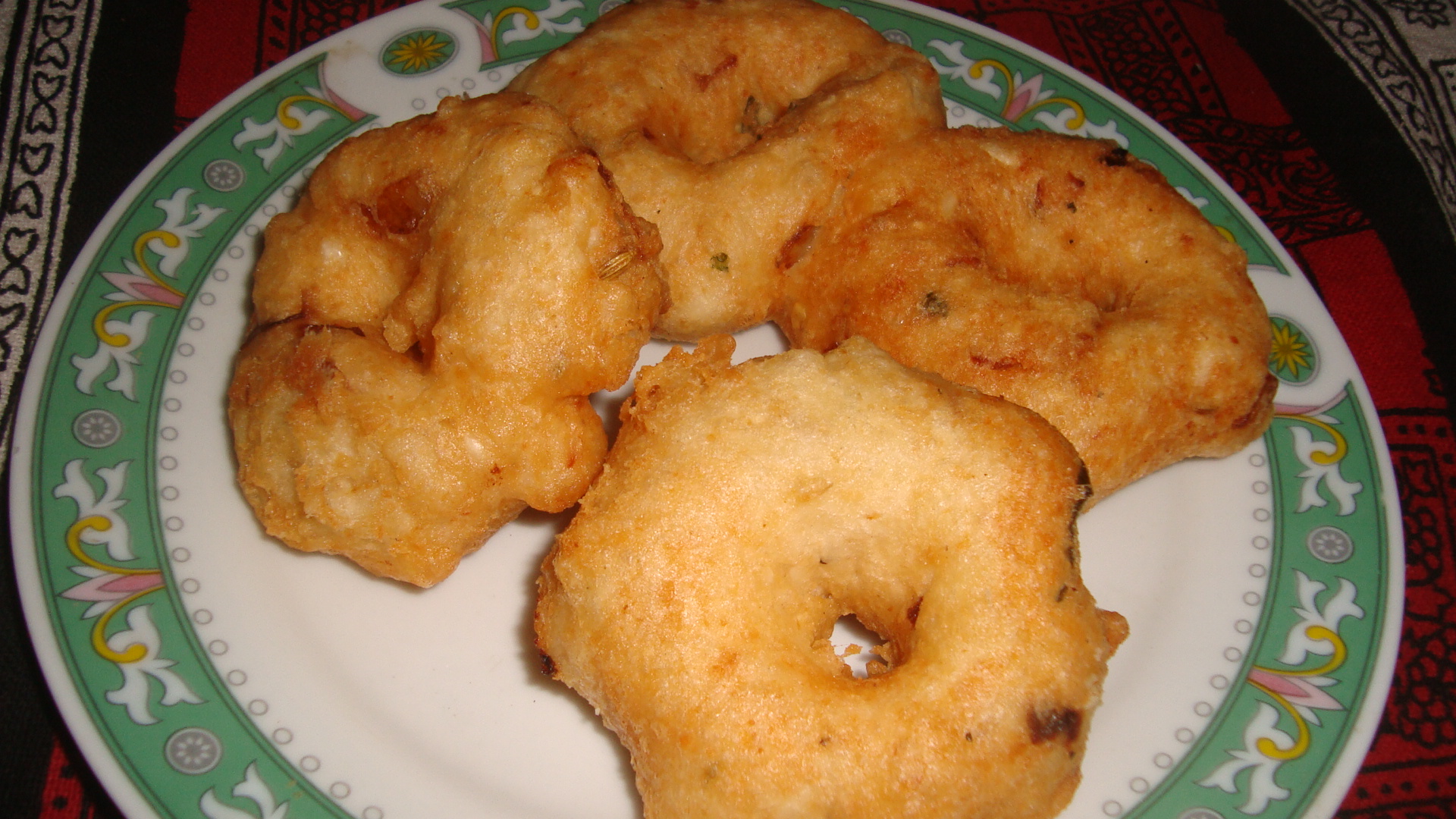
Today, I will share my mother’s recipe for her famous vadais as well as a green gram snack in my next post. Vadai can be breakfast food or a tea-time snack or can be served with lunch or dinner. It is the most common snack under the Tamil cuisine of the country and is quite popular around the country.

Vadai with Sambal

(a) Vadai

Cooking time: 20 – 30 mins + 4 hrs (fermenting time)

Makes 10 vadai

Vadai

Ingredients

  • Urad dal/ black gram – 1 cup, skin removed
  • Green chillies – 2, chopped
  • Onion – 1, medium sized and chopped
  • Curry leaves – 2 sprigs
  • Coriander leaves – 1 tbsp, chopped
  • Baking powder – 1 tsp (optional)
  • Low fat oil (sunflower or canola) – ½ litre (for deep frying) + 1 tsp (for sauté)
  • Salt, to taste

Method:

  1. Soak the black gram, without the skin, for 3 – 4 hours.
  2. Grind with a little water to thick batter.
  3. Heat 1 tsp oil in a pan and lightly sauté the chopped onion, chillies and curry leaves.
  4. Transfer the contents of the pan and the coriander leaves to the batter mix and add salt to taste. If you prefer, you can also add 1 tsp baking powder.
  5. Mix well and keep aside for 5 mins.
  6.  Heat ½ l oil in the pan.
  7. Take a piece of banana leaf or something equivalent, dab some water on the surface and put a spoonful of batter onto the leaf. Shape it into a round or elliptical shape with a hole in the middle, like a mini doughnut.
  8. Transfer to the oil pan, 3 to 4 at a time, and fry until golden brown on both sides.
  9. Serve with pachai sambal.

 (b) Pachai sambal

Preparation time: 5 – 10 mins

Serves 4

Pachai Sambal

Ingredients:

  • Freshly scraped coconut – ½ cup
  • Green chillies – 2, chopped
  • Onion – ¼, chopped
  • Ginger – ½ “ (optional)
  • Curry leaves – 1 sprig, chopped
  • Salt, to taste

Method:

  1. Mix and grind all ingredients and add salt, to taste.

Recipe source: Raji Thillainathan.

Kiri Koss

Today’s guest blogger is Indika and her favourite recipe is Kiri Koss.

Kiri Koss

Cooking time: 30 mins

Serves 5

Ingredients:

  • 3 cups of unripe Jack-fruit
  • 1 medium onion, finely chopped
  • 2 green chillies
  • 2 cups coconut milk
  • curry leaves
  • 1/2 tsp turmeric powder
  • 1 tsp curry powder
  • 1 tsp chillie powder
  • salt to taste

Method:

  1. Clean and de-seed the the Jack-fruit. Cut the Jack-fruit into thin long stripes. Clean the seeds and cut them into two.
  2. Mix the Jack-fruit, the seeds and all the other ingredients and the the coconut milk in a pan.
  3. Put the pan on a medium flame, cover and cook for about 30 mins, until the jack-fruit is well done.

Recipe source: Indika K.

Mulai keerai aviyal

This is my grandmother’s recipe, as often cooked at home by my mother. Since I was on an Indian culinary journey last month, I realize that this recipe resembles a simpler variant of the Kerala avial, sans the curd.

Mulai keerai aviyal

Cooking time: 10 – 12 mins

Serves 4

Mulai keerai

Ingredients:

  • Amaranth greens/ mulai keerai/ thampala – 2½ cup, washed thoroughly and finely chopped
  • Carrot – ½ cup, sliced
  • Chilli – 1, chopped
  • Onion – 1 small, chopped
  • Garlic – 1 or 2 cloves, chopped
  • Salt to taste
  • Water
  • Scraped coconut – 1 tbsp

Method:

  1. Put the washed and chopped vegetables in a pot with ½ cup of water and salt. Cook till the veggies are tender and the water dries up.
  2. Add the scraped coconut, mix well and cook for another 2 mins.
  3. Serve hot with rice.

Recipe source: Raji Thillainathan.