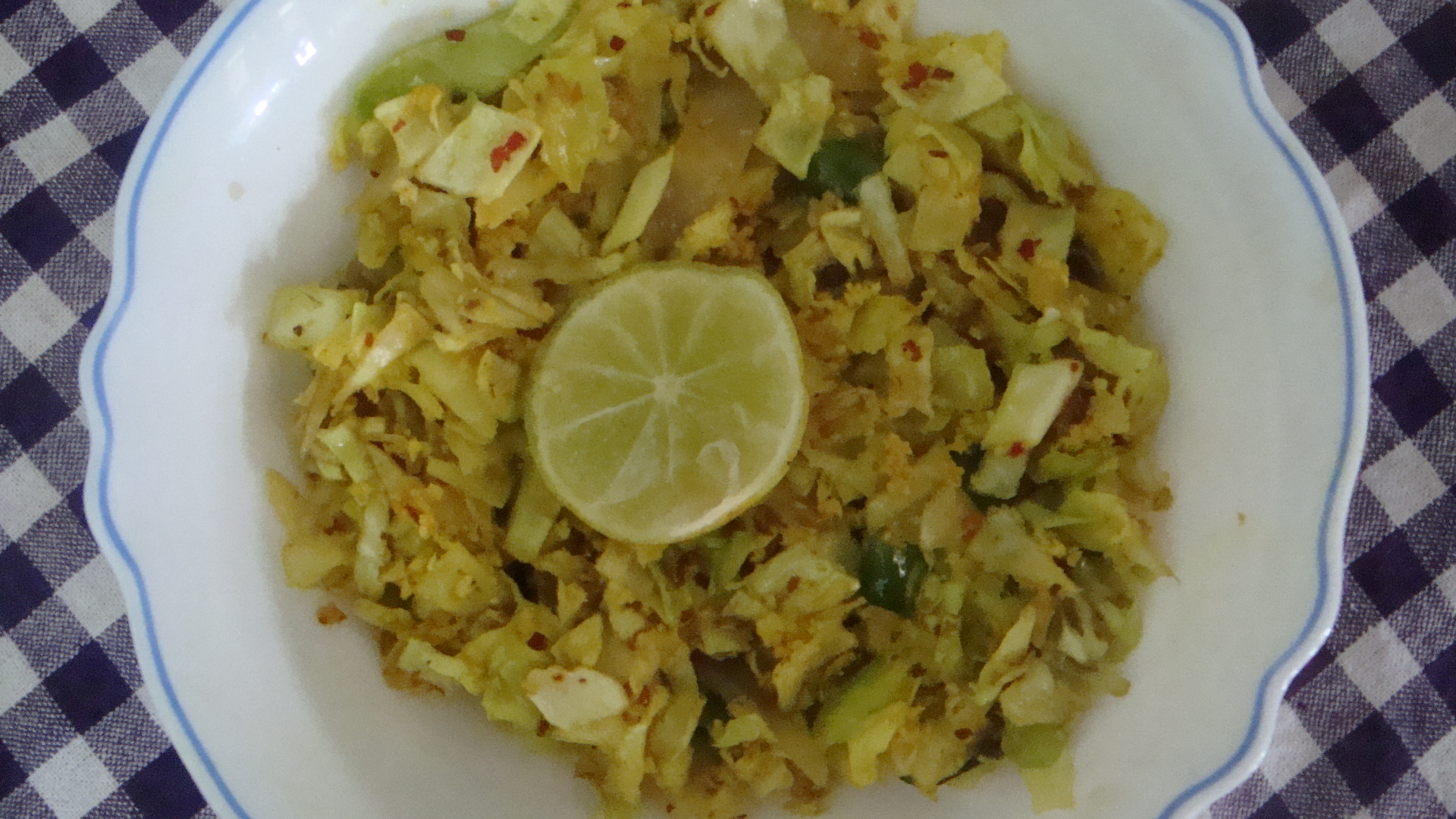
Mini Halapa

The first time I had halapa was during a train ride from Peradeniya to Colombo. An elderly woman with a basket got onto the train at one of the stations and I noticed that a lot of people were buying her food. I was curious and decided to try out the snack she had made as I did not recognize it. It turned out to be halapa and I was intrigued. It became quite a ritual during my undergraduate years to buy this particular woman’s halapa during my travel home.

I didn’t come across halapa again till many years later when I visited some remote villages in Hambantota district and was served halapa that people had made in their homes. Hence, the reason why I have placed this snack as a specialty of Hambantota besides the fact that kurakkan is primarily grown in Hambantota district and the northern province.

I decided to try my hand at making this snack today and after searching the web, found a recipe for it on srilankanmenu.blogspot.com that I have slightly adapted here according to my taste. While I have used banana leaves, I would recommend using kanda leaves, if you can get hold of it because it adds a unique flavour and texture to the halapa.
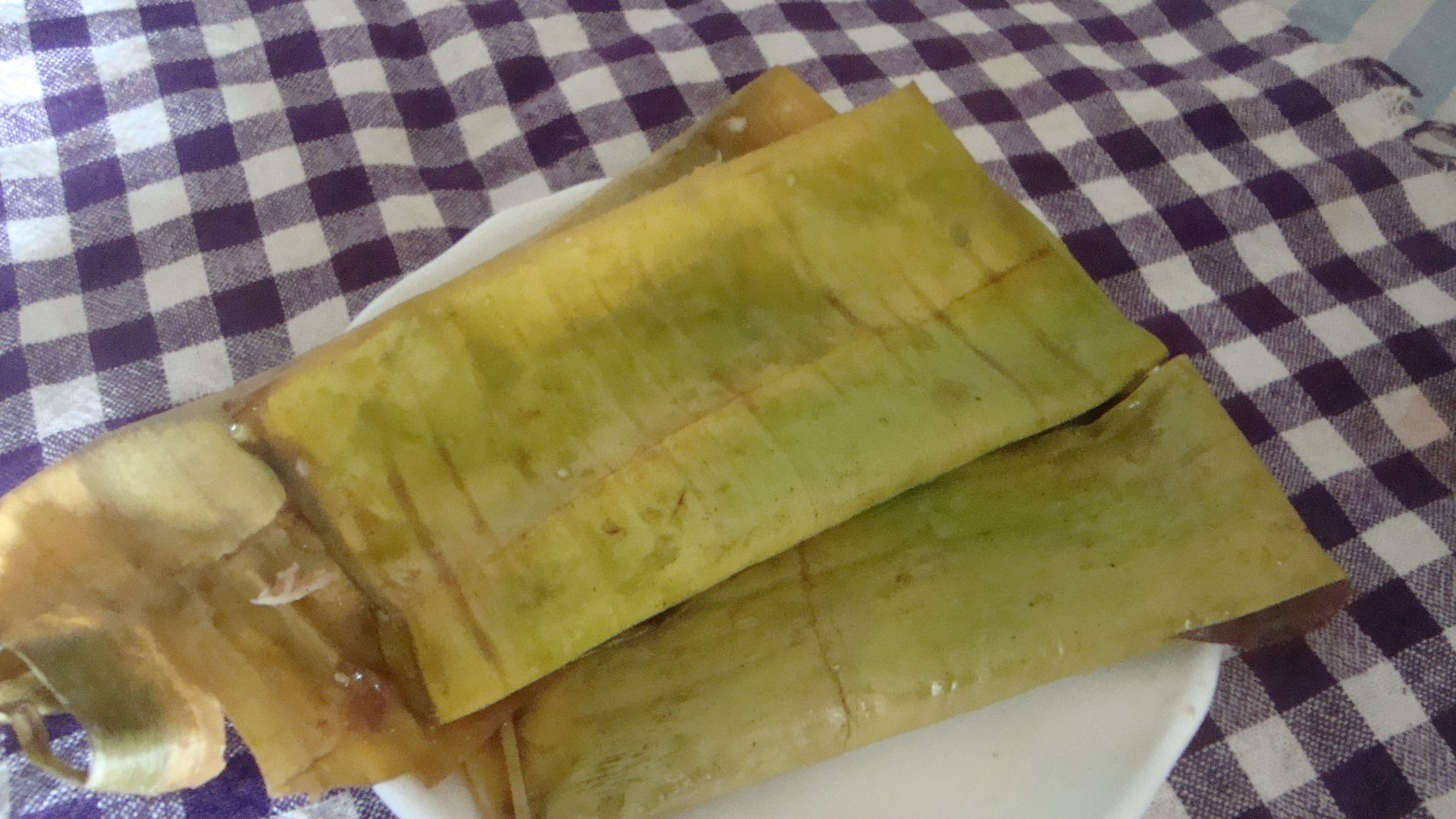
HalapaMini Halapa

Preparation time – ½ hour

Cooking time – 15 mins

Makes 12 mini halapa
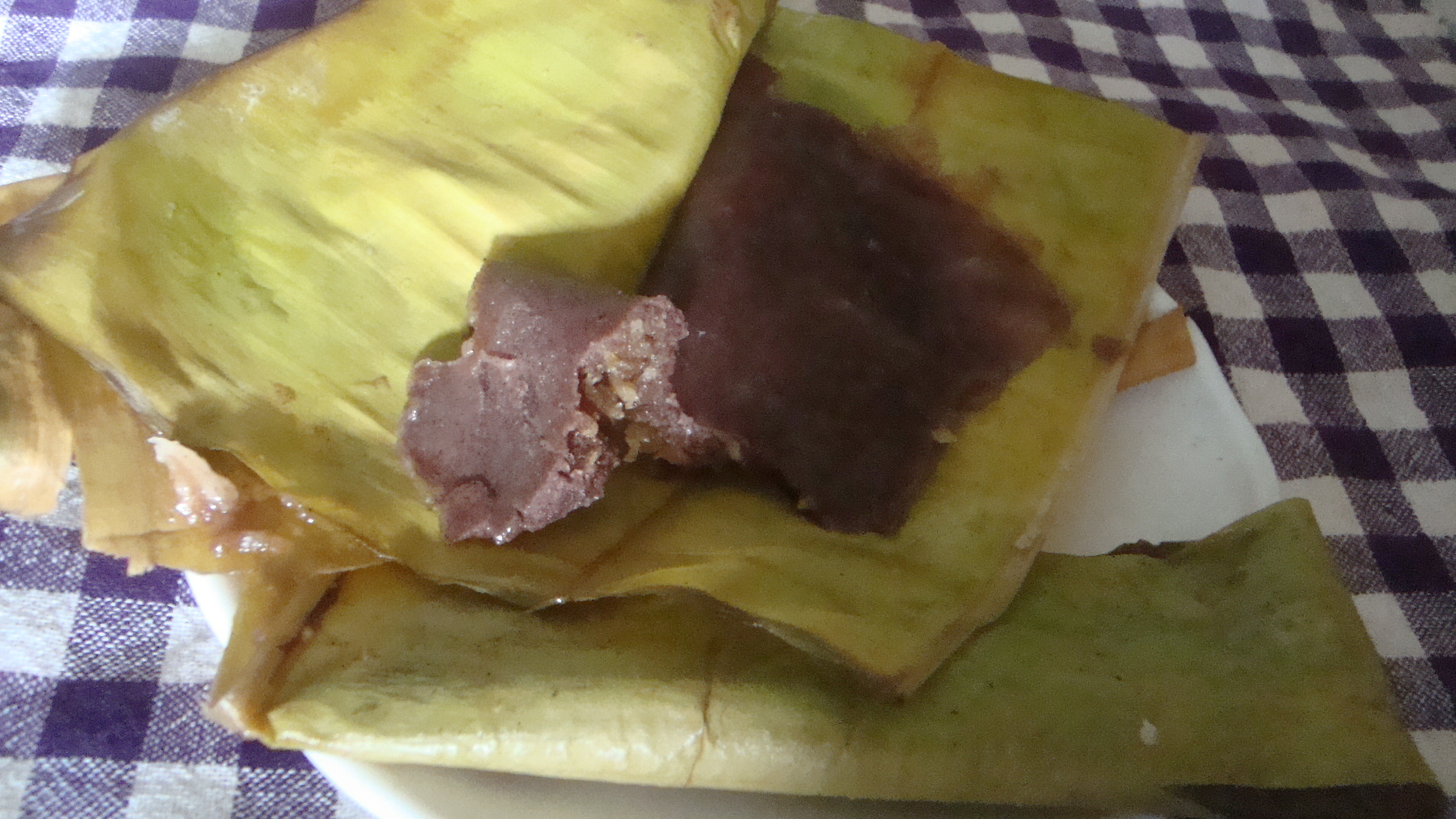
Mini halapaIngredients:

  • Kurakkan flour – 1 cup
  • Coconut – ½ cup, freshly scraped
  • Coconut treacle or kithul pani/ treacle – 4 tbsp
  • Salt, to taste
  • Banana or Kanda leaves

Method:

  1. Lightly heat the freshly scraped coconut in a saucepan and add the coconut treacle. Stir, while the mixture thickens. Remove from stove and allow it to cool.
  2. Add a pinch or two of salt to the kurakkan flour. Stir in the warm water and make the dough.
  3. Cut the banana leaf into 12 smaller pieces or use the kanda leaves.
  4. Taking a ball of the dough, spread it on a piece of banana leaf. Take a pinch of the coconut mixture and place it in the center and spread it lightly over the dough. Fold the leaf in half and ensure the edges are folded.
  5. Steam the halapa for 15 mins.
  6. Serve warm with tea.

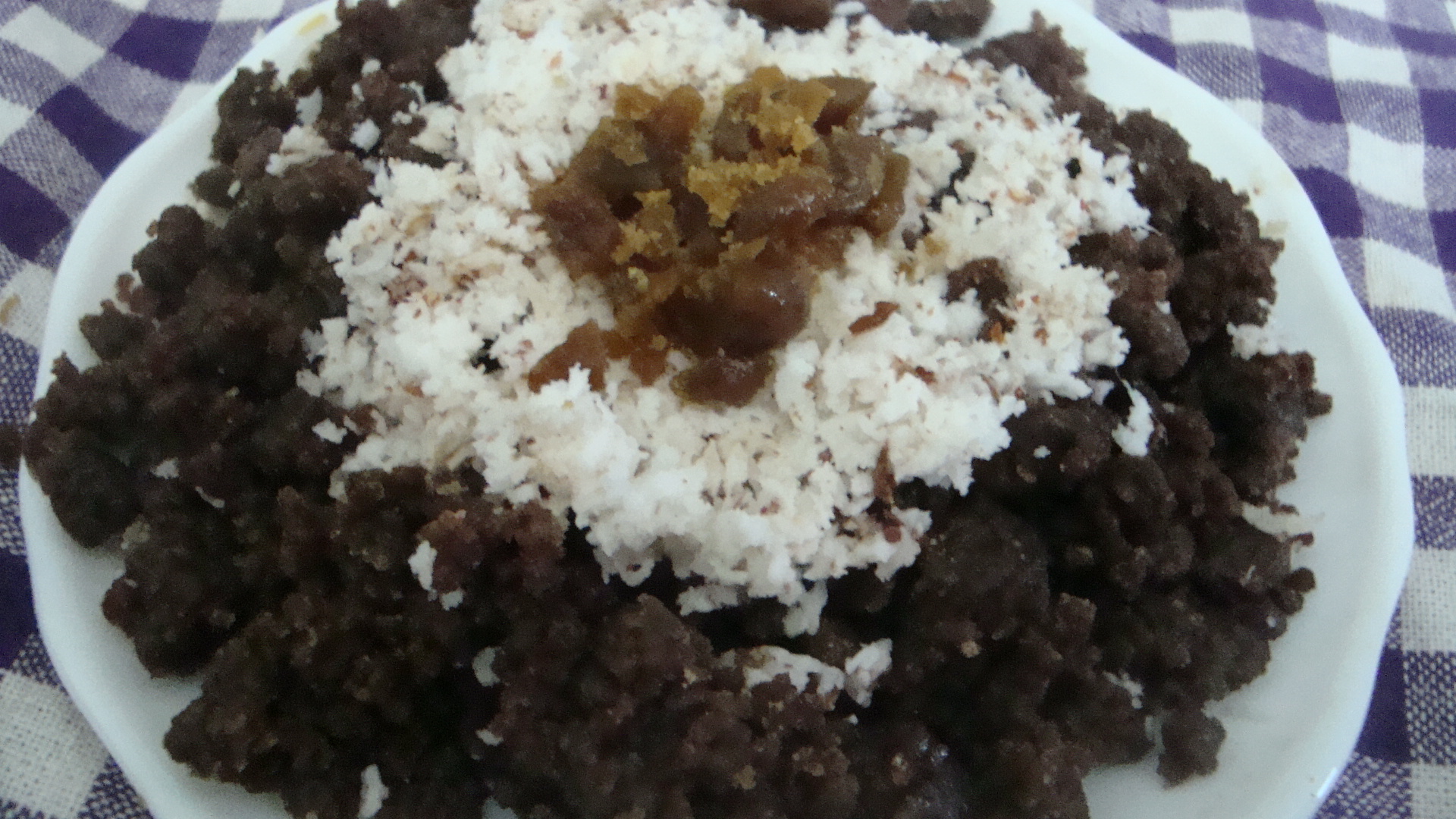
Kurakkan Pittu

Kurakkan, also known as ragi, is a type of millet that is gluten-free and diabetic friendly. At home, the most common and popular form of pittu is the rice flour pittu. Occasionally, my mother makes the atta flour pittu or the kurakkan flour pittu.

Below is the simple recipe for making kurakkan flour pittu. The rice flour pittu and atta flour pittu easily blend with any curries and is a convenient meal to prepare. Kurakkan, however, has a distinctive taste that I find does not easily merge with just any curry. As such, I prefer to eat kurakkan pittu simply sprinkled with coconut and jaggery.

Kurakkan Pittu

Time taken: 25 mins

Serves 2

Kurakkan pittuIngredients:

  • Kurakkan flour/ ragi – 1 cup
  • Coconut – ¼ cup, freshly scraped
  • Jaggery – 2 or 3 tbsp, finely chopped
  • Salt – pinch

Method:

  1. Add a pinch or two of salt to the kurakkan flour.
  2. Stir in boiled and slightly cooled water until the flour mixtures becomes coarse and grainy.
  3. Steam the kurakkan pittu for 10 mins.
  4. Mix the freshly scraped coconut and chopped jaggery into the steamed pittu and serve hot.

Recipe source: Raji Thillainathan.

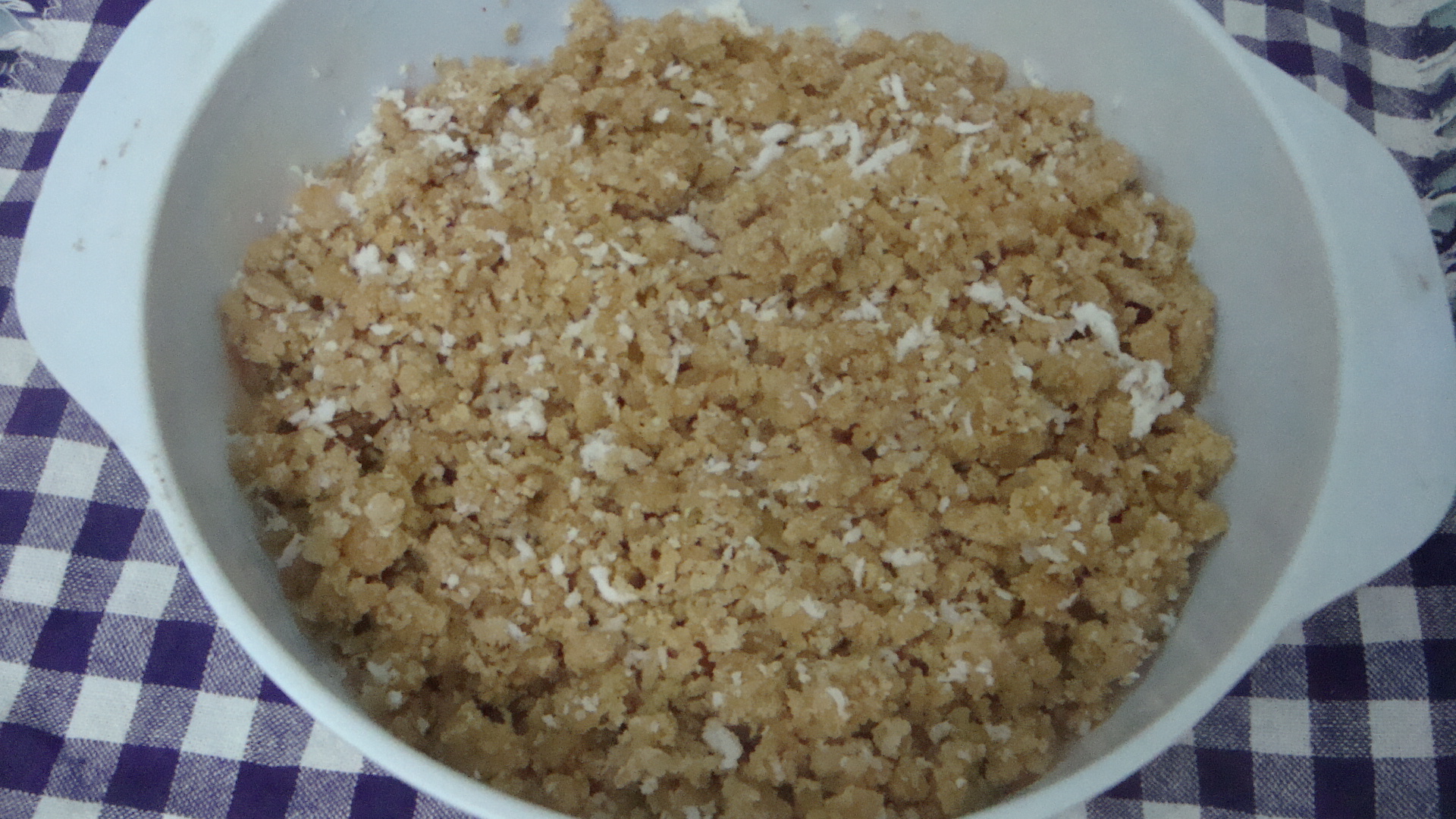
Atta Flour Pittu

Pittu is a dish that my mother often makes for dinner. She generally makes rice flour pittu. One of the varieties that she occasionally makes is the atta flour pittu, the recipe of which is given below.

Atta flour pittu

Time taken: 25 mins

Serves 2

Atta flour pittuIngredients:

  • Atta flour – 1 ½ cups
  • Coconut – 3 tbsp, freshly scraped
  • Salt – pinch

Method:

  1. Roast the atta flour over low heat for 5 mins.
  2. Remove from stove and add the salt.
  3. While still hot, stir in water at room temperature until the mixture becomes coarse, small particles.
  4. Add the freshly scraped coconut and mix well.
  5. Steam the pittu for 10 mins.
  6. Serve warm with any curry.

Recipe source: Raji Thillainathan.

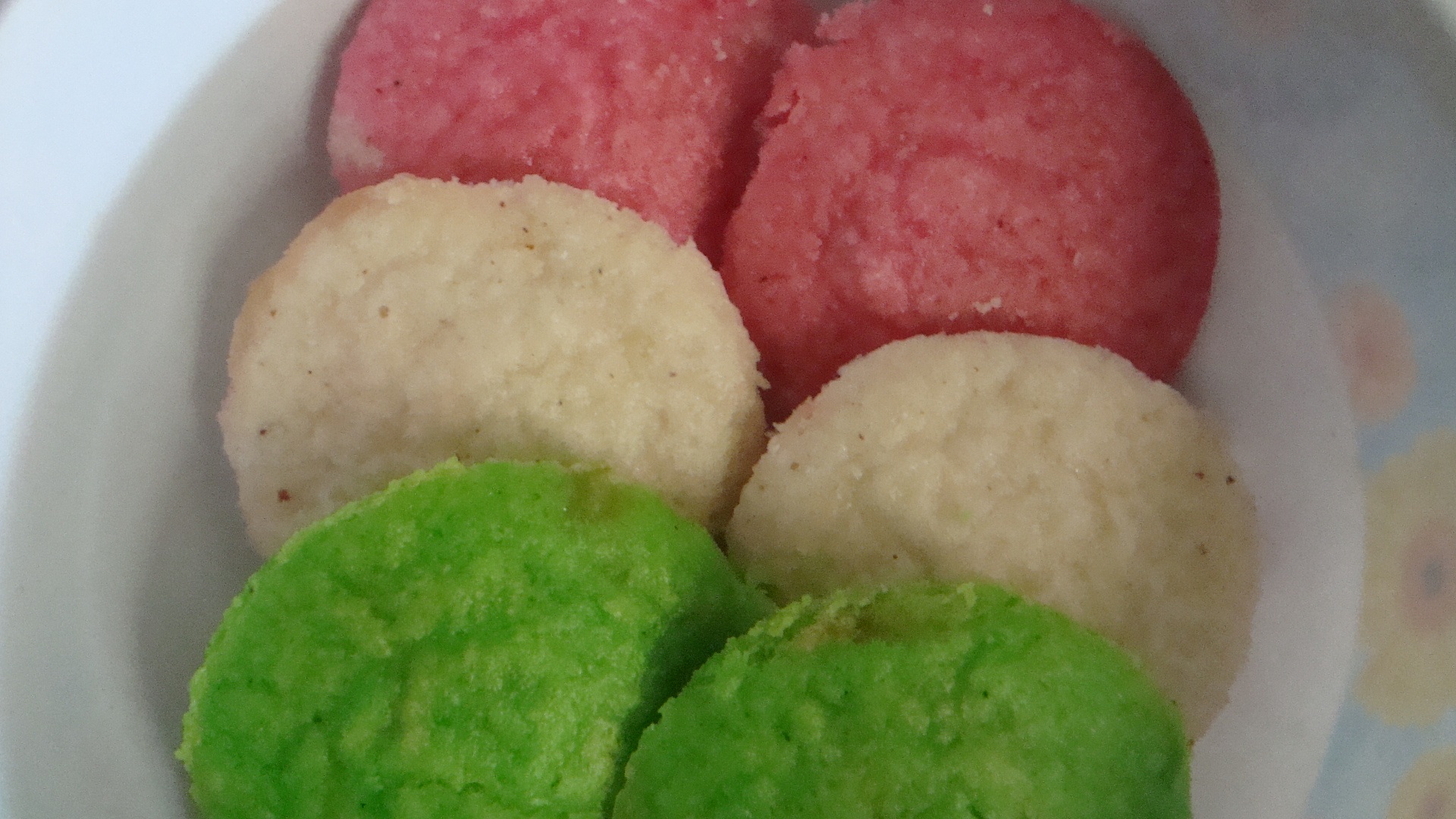
Steamed rice cakes

Wishing everyone a happy New Year! To start the Year on a sweet note, today’s recipe is that of steamed rice cakes.

Steamed rice cake

Time taken: 30 mins + 2 hours (for soaking)

Makes 6 cakes

Steamed rice cakeIngredients:

  • Rice – ½ cup
  • Urad dhal/ black gram flour – 2 tbsp, roasted
  • Coconut – 2 tbsp, freshly scraped
  • Sugar – 1 ½ tbsp
  • Baking powder – 1 tsp
  • Salt – pinch
  • Food colouring/ essence – optional

Method:

  1. Soak the rice in water for about 2 hours and then grind it to make a batter.
  2. Add the roasted urad dhal flour, scraped coconut, sugar, baking powder and salt to the batter. Mix well.
  3. If you would like your steamed cakes in different colours, divide the batter into separate bowls. Add the different food colours to each of the bowl. Here, my mother used green and red.
  4. Steam the batter for about 10 – 15 mins.
  5. Serve warm with tea. You could serve some honey or jam on the side, should you like it more sweeter.

Recipe source: Raji Thillainathan.

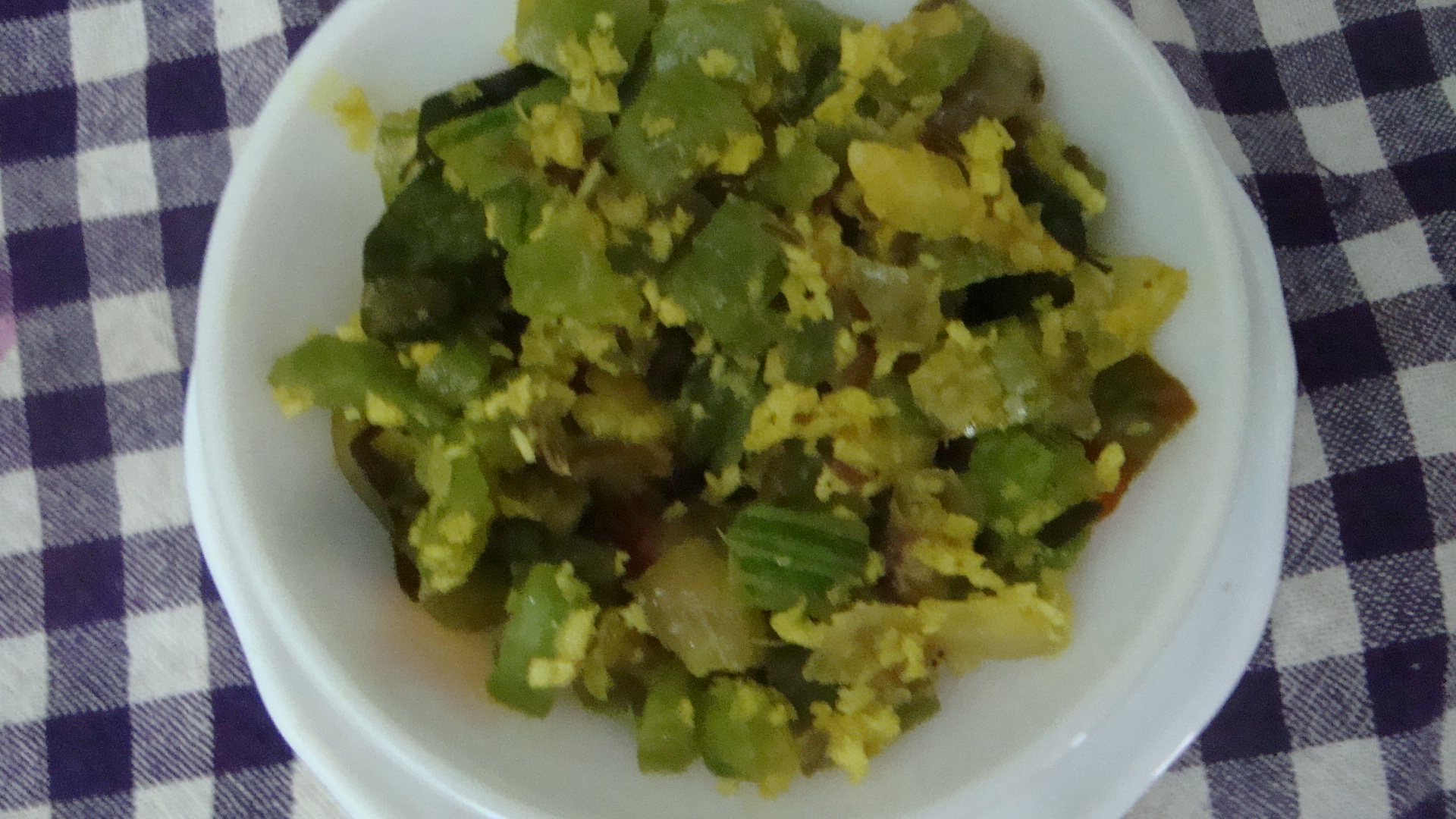
Fried Snake Gourd

I have always been quite fond of pudalangai/ snake gourd (scientific name: trichosanthes cucumerina). While it is cooked in different ways, my favourite is pudalangai kulambu – the recipe of which I will share when my mother cooks it. In the meantime, here is my mother’s recipe for fried snake gourd.

Pudalangai Varai/ Fried Snake gourd

Time taken: 20 mins

Serves 3

Fried snake gourd

Ingredients:

  • Pudalangai/ Snake gourd – ½ cup, chopped
  • Red chillies – 1 or 2
  • Onion – ½
  • Fennel seeds – 1 tsp
  • Curry leaves – 1 sprig
  • Crushed garlic – 1 tsp
  • Coconut – 2 tbsp, freshly scraped
  • Turmeric – ¼ tsp
  • Salt and pepper, to taste
  • Low fat oil – 1 tbsp

Method:

  1. Clean the snake gourd and chop it up finely. Mix some salt and keep aside.
  2. Heat a tbsp oil in a pan and fry the chopped red chillies, onion, fennel seeds and curry leaves for 2 mins.
  3. Add the finely chopped and salted snake gourd to the pan and continue stir-frying for 5 mins.
  4. Add 1 cup of water and season with salt to the pan. Cover and let the snake gourd cook till the water dries up.
  5. Remove the cover and add the crushed garlic, freshly scraped coconut and turmeric powder. Season with salt and pepper, as per your taste. Mix well and let it cook for 2 mins.
  6. Serve hot with rice.

Recipe source: Raji Thillainathan.

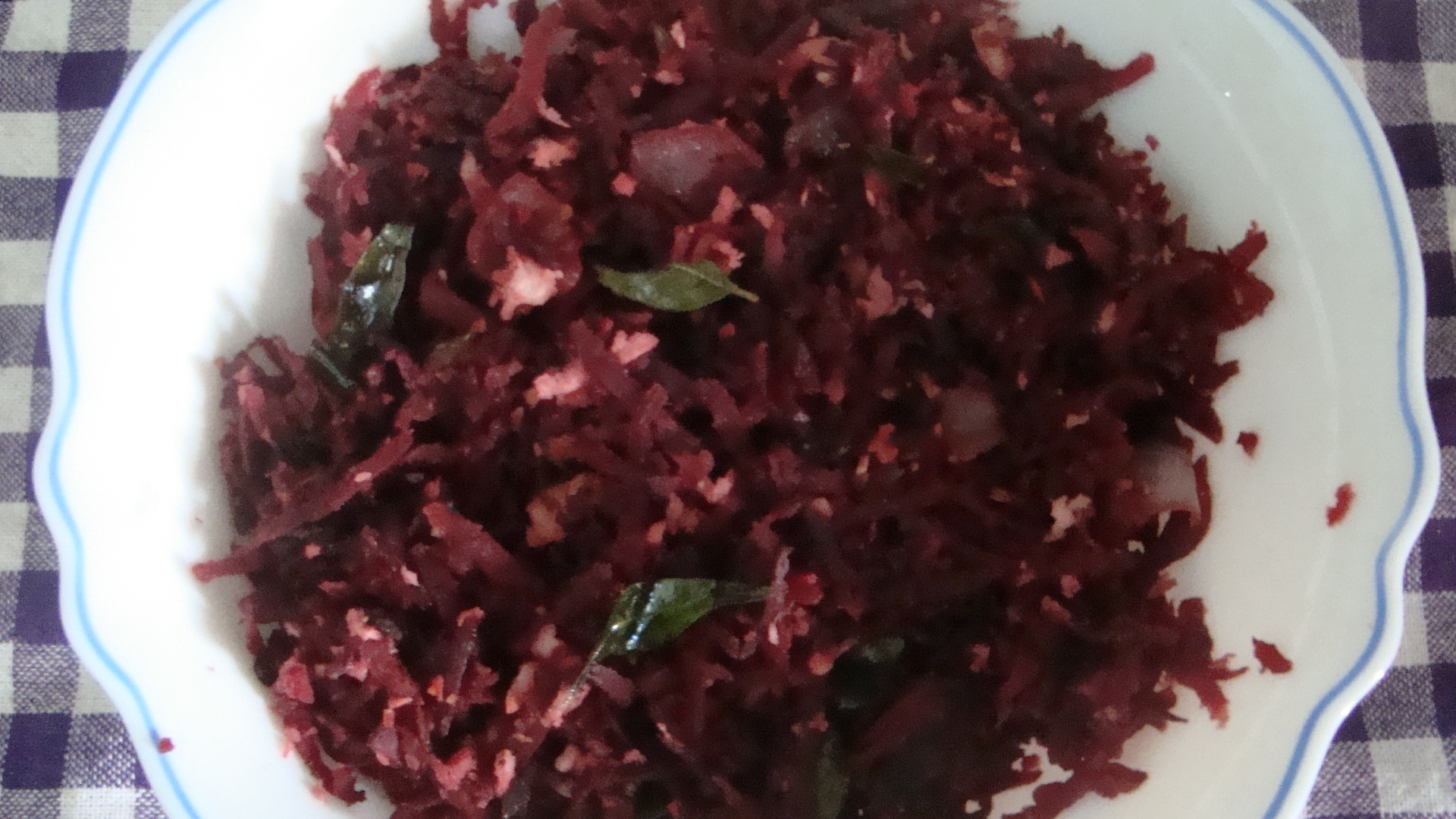
Beetroot Varai

Today’s recipe is that of a quick to prepare and delicious beetroot dish.

Beetroot Varai

Time taken: 15 mins

Serves 3

Beetroot varaiIngredients:

  • Beetroot – 1 cup, grated
  • Onion – 1
  • Green chillies – 2
  • Fennel seeds – 1 tsp
  • Curry leaves – 1 sprig
  • Coconut – 1 tbsp, freshly scraped
  • Pepper – ½ tsp
  • Salt – ½ tsp
  • Sesame/ Gingelly oil – 2 tbsp

Method:

  1. Mix ½ tsp salt with 1 cup of grated beetroot and keep aside.
  2. Heat 2 tbsp sesame oil in a pan and fry the fennel seeds, chopped onion, green chillies and curry leaves for a minute.
  3. Add the grated beetroot to the pan and stir-fry for 5 – 10 mins over low heat.
  4. Add 1 tbsp coconut and ½ tsp pepper to the beetroot mix and cook for another 2 mins.
  5. Serve the beetroot varai with rice.

Recipe source: Raji Thillainathan.

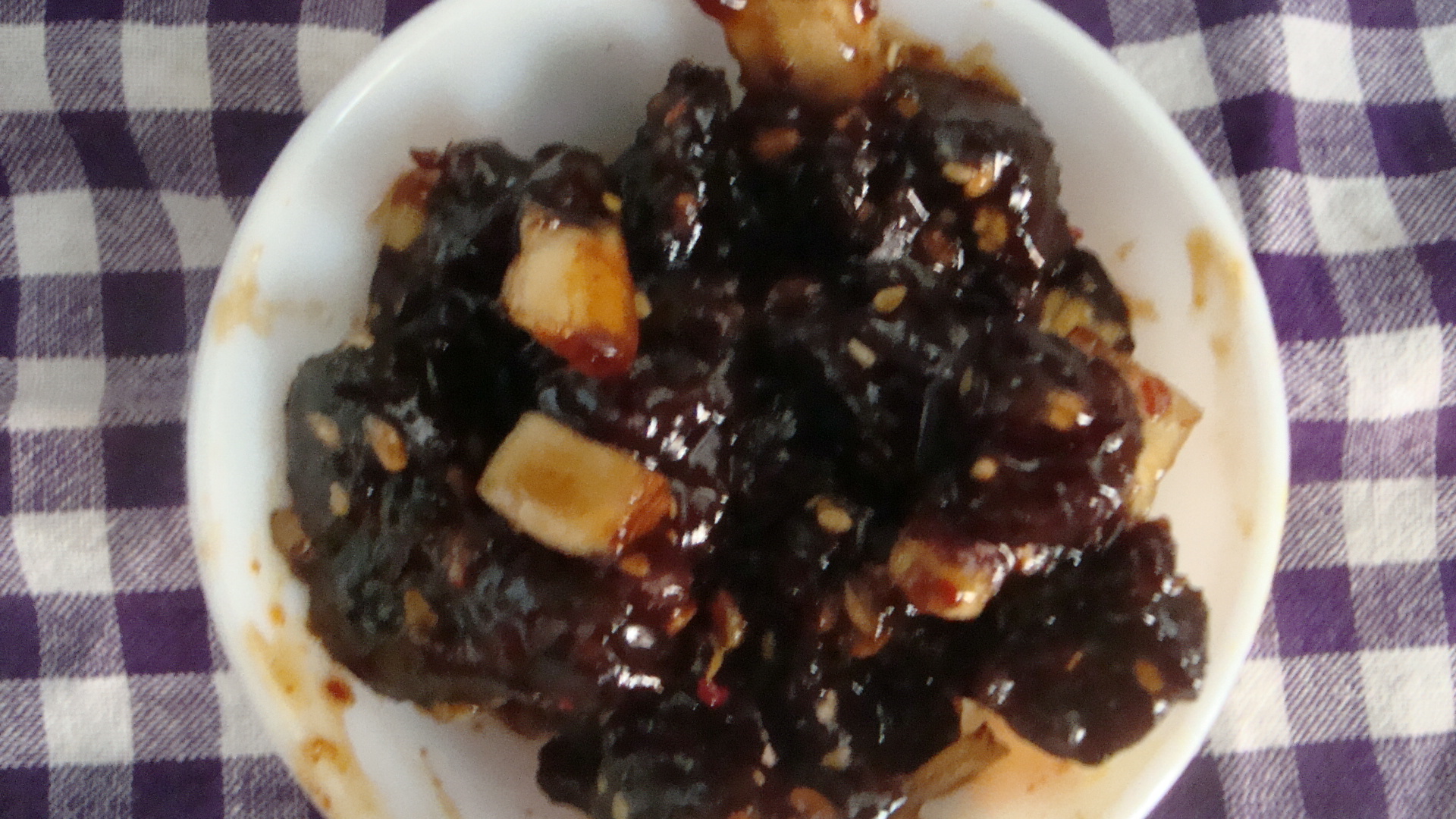
Paani Panaattu

Two of my mother’s favourite snacks from her childhood days are ‘panaattu‘ and ‘paani panaattu’. She remembers her grandmother making them for their home consumption and storing them in little jars or earthen pots. When my mother and her sisters visited her, she would serve them these treats with tea or after a main meal.

It is much easier today to buy a jar of ‘paani panaattu’, from the Katpaham outlets around the country, as my mother did this weekend. However, as palmyrah used to be and is still considered an intrinsic part of the north Sri Lankan culture and cuisine, I do like to know and share the recipes of how these traditional delicacies are made.

My mother felt that the ‘paani panaattu’ that she had bought didn’t quite taste the way she liked so she revamped it with the spices she remembers her grandmother had used. It was the first time that I tried ‘paani panaattu’ and I think this is another dish that is an acquired taste. It has quite a strong taste and is both spicy and sweet at the same time. My mother was delighted to go back to her childhood memories and favourite snacks while I enjoyed recording both recipes, as she remembered from her observations of my great-grandmother.

Paani Panaattu

The palmyrah sap is collected by tying a pot to the stem of the palm flower stump after it has been cut or gashed to allow the sweet water of the palm to be collected. To prevent fermentation, a little lime is added to the pot. This water that is collected is non-alcoholic, due to not being fermented, and it is considered nutritious particularly for the elderly.

The collected palm water is then heated and continuously stirred till it thickens into a brown treacle like substance called ‘paani’ . ‘Paani’ is usually stored in an earthen pot and it can be stored for a long time.

Paani panaattu

Time taken: 10 mins

Serves 4

Ingredients:

  • Paani – ½ cup
  • Panaattu – 1 cup
  • Coconut chips – 2 tbsp, roasted
  • Roasted rice – 1 tbsp
  • Crushed chillies – 1 tsp
  • Cumin powder – ½ tsp

Method:

  1. Chop up the panaattu into small pieces.
  2. Heat the paani in a saucepan over low heat for about 3 mins.
  3. Add the crushed chillies and cumin powder and stir well for about 2 mins.
  4. Add the coconut chips and roasted rice to the saucepan for about 1 min.
  5. Then, add the panaattu pieces and stir for about 2 mins.
  6. Stir well until it thickens and remove from stove, to allow the ‘paani panaattu’ to cool before serving. When making in larger quantities, transfer to an earthen pot or air-tight jar.

Recipe source: Raji Thillainathan.

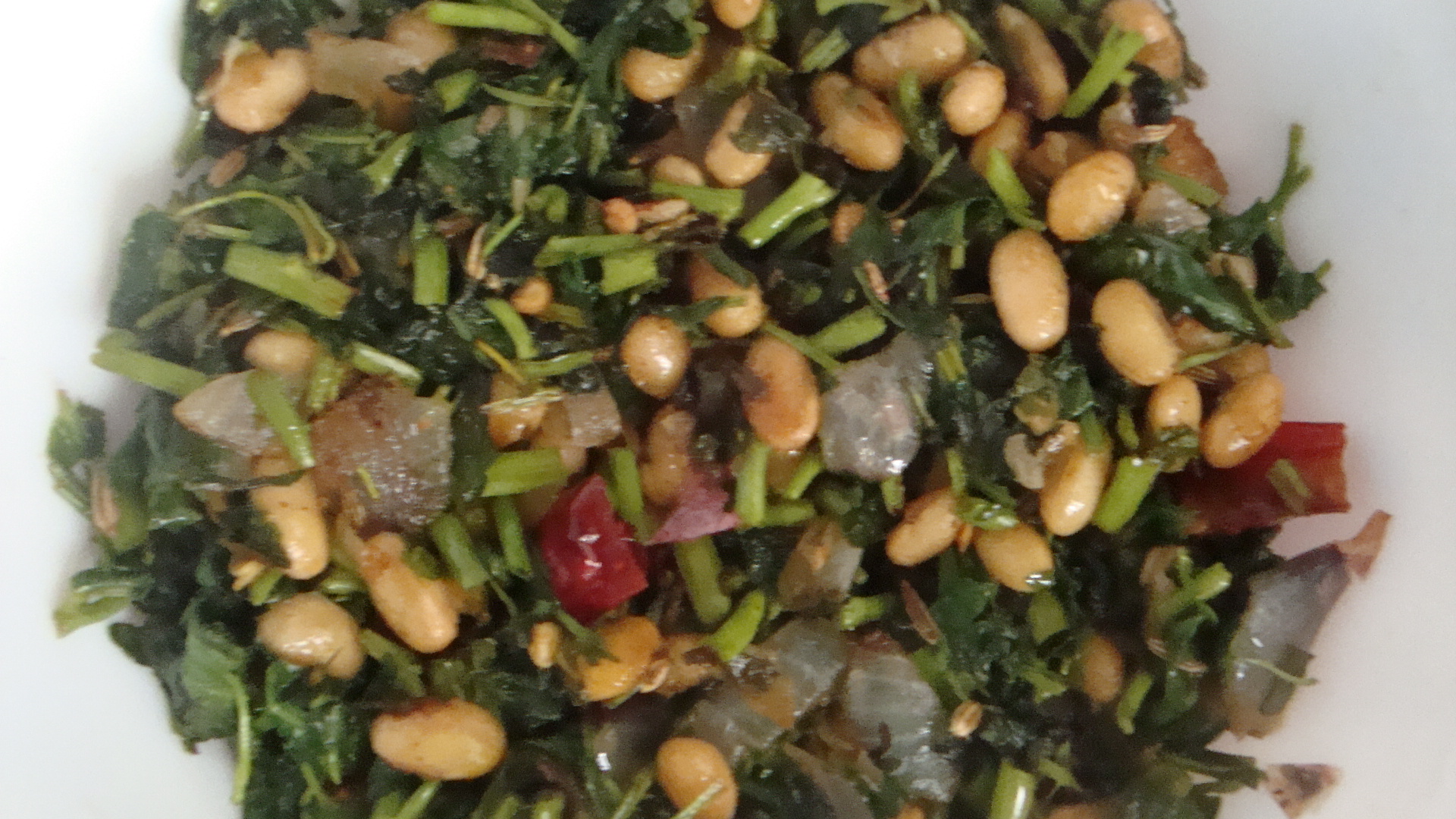
Soya bean and Kangkung Stir-fry

Of the four soya bean dishes my mother prepared last week, I like this easy-to-prepare soya bean and kangkung stir fry dish the most.

Soya bean and Kangkung stir-fry

Time taken: 15 mins (with pre-cooked soya beans)

Serves 2

Soya bean and kangkung stir fryIngredients:

  • Soya beans – ¼ cup, boiled
  • Kangkung – ½ cup, chopped
  • Onion – ½
  • Green chilli – 1
  • Dried red chilli – 1
  • Fennel seeds – 1 tsp
  • Coconut – 1 tbsp
  • Curry powder –  1 tsp
  • Salt, to taste
  • Low fat oil – 1 tbsp

Method:

  1. Clean and finely chop the kangkung.
  2. Heat 1 tbsp oil in a pan and sauté the fennel seeds, chopped green and dried red chillies and onion for 1-2 mins.
  3. Add the soya beans to the pan. Stir fry for another 2 mins.
  4. Mix in the kangkung and cook for 2- 3 mins over low heat.
  5. Add the freshly scraped coconut and continue stir frying for a few minutes before adding the curry powder. Continue cooking for another couple of minutes before removing pan from stove.
  6. Serve warm with rice.

Recipe source: Raji Thillainathan.

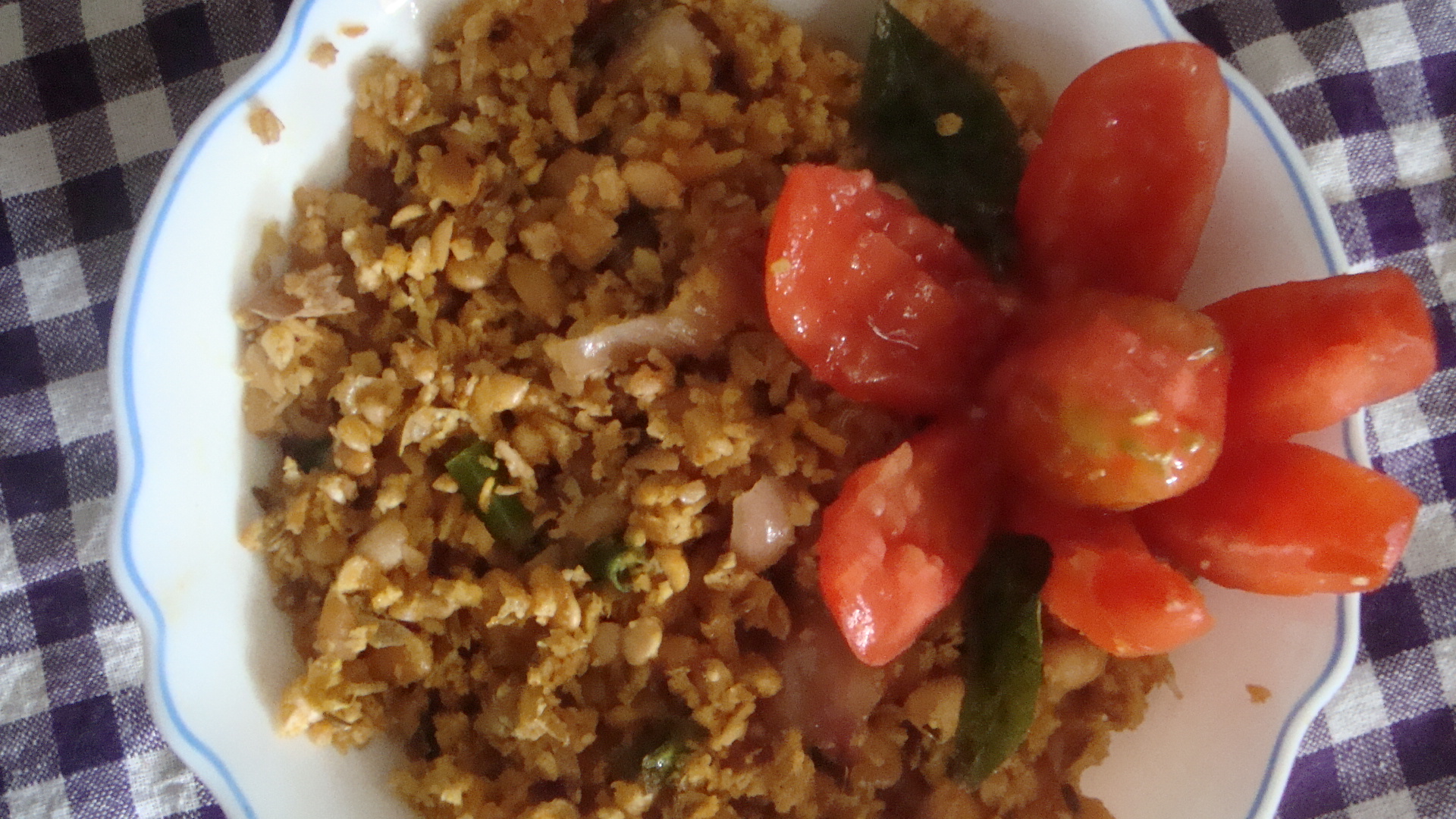
Soya bean Crumble

While soya bean is not so commonly cooked at home, we had some leftover soya beans from one of my cooking experiments. My mother therefore decided to cook up a few soya bean dishes over the week.

So, the key ingredient of the recipes on this blog for the next few days will be soya beans.

Soya bean Crumble

Time taken: 45 mins + soaking time (overnight)

Serves 4

Soya bean crumbleIngredients:

  • Soyabeans – ½ cup
  • Turmeric powder – 1 tsp
  • Chilli powder – ½ tsp
  • Salt, to taste
  • Red chilli – 1
  • Green chilli – 1
  • Onion – ½
  • Fennel seeds – 1 tsp
  • Curry leaves – 1 sprig
  • Scraped coconut – 1 tbsp
  • Low fat oil – 2 tbsp

Method:

  1. Soak the soya beans overnight and then rinse and cook the beans with water for 30 mins.
  2. Drain and grind the cooked soya beans in a blender for about 2 mins.
  3. Transfer the ground soya beans to a mixing bowl and add the turmeric powder, chilli powder and salt, to taste. Mix well and keep aside.
  4. Heat 2 tbsp oil in a pan and lightly fry the chopped onion, chillies, curry leaves and fennel seeds for a minute.
  5. Add the seasoned, ground soya bean mixture to the pan and stir fry for about 5 – 10 mins.
  6. Add the scraped coconut. Mix well and cook for about 2 mins.
  7. Serve the soya bean crumble with rice.

Recipe source: Raji Thillainathan.

Cabbage fry

Cabbage fry

Time taken: 20 mins

Serves 3 or 4

Cabbage fryIngredients:

  • Cabbage – 1 cup
  • Scraped coconut – 2 tbsp
  • Onion – ½
  • Red chilli – 1
  • Fennel seeds – 1 tsp
  • Curry leaves – 1 sprig
  • Turmeric – ½ tsp
  • Crushed chilli – ½ tsp
  • Salt, to taste
  • Sesame oil – 1 tbsp

Method:

  1. Finely chop the cabbage.
  2. Heat 1 tbsp sesame oil in a pan and lightly sauté the fennel seeds, chopped onion, red chilli and curry leaves for 1 to 2 mins.
  3. Add some salt to the pan.
  4. Mix in the chopped cabbage. Add another tsp oil if required and cook for about 10 to 15 mins.
  5. Towards the end, add the freshly scraped coconut, the turmeric and crushed chilli. Mix well before removing from stove.
  6. Serve warm with rice.

Recipe source: Raji Thillainathan.