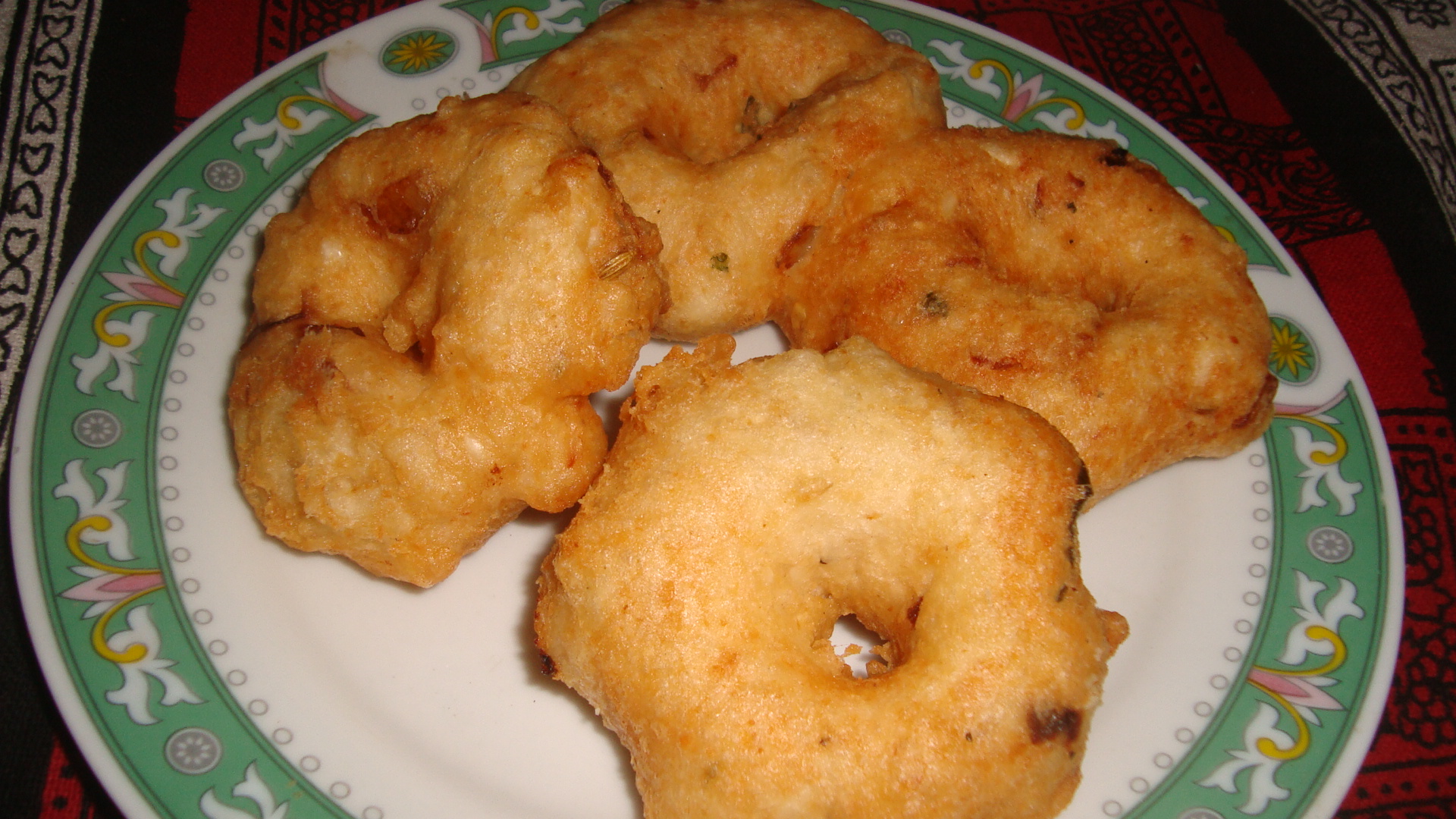
Payaru Soosiam

Green gram (Payaru/ Moongkatta) is used a lot in Sri Lanka as a nutritious food. It is generally cultivated in between paddy cultivation seasons.
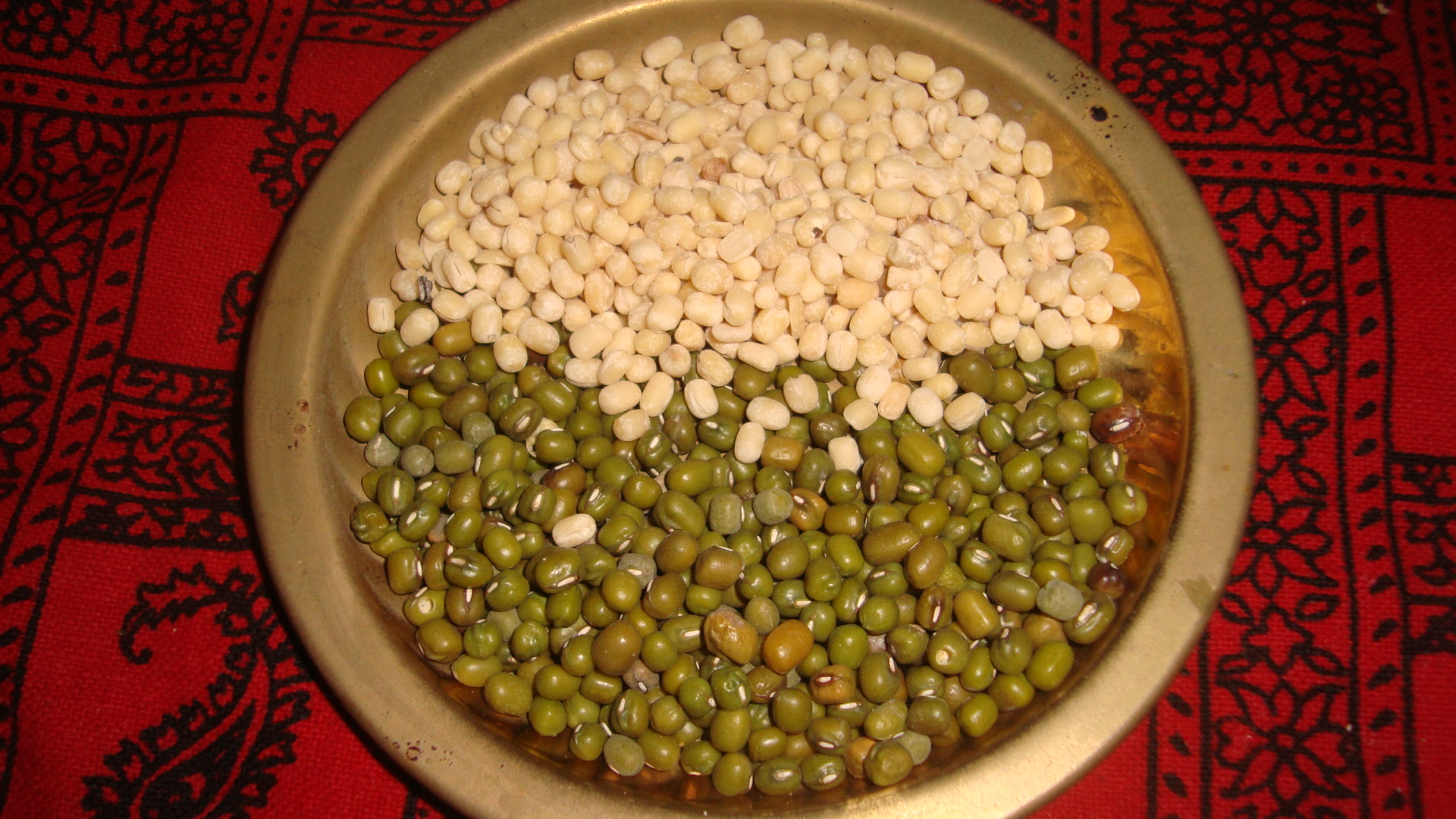
Green gram and Black gram, with skin peeled off

Green gram and Black gram, with skin peeled off

At home, my mother used to occasionally make us the ‘kadalaiparuppu soosiam’ (chickpea soosiam) more than ‘payaru soosiam’. During my undergraduate years at Peradeniya, I became fond of something that was called ‘moongkatta bole’ which was quite similar to ‘payaru soosiam’. It was one of the few things that I liked from what the university canteens offered. During my visits home, I mentioned this to my mother and since then, my mother makes ‘payaru soosiam’ more often than she does the chickpea soosiam.

So today, besides the ulunthu vadai recipe, I will also share my mother’s recipe for payaru soosiam/ moongkatta bole.

Payaru soosiam/ Moongkatta bole

Cooking time: 30 mins + 4 hours (soaking time)

Makes 10 soosiam
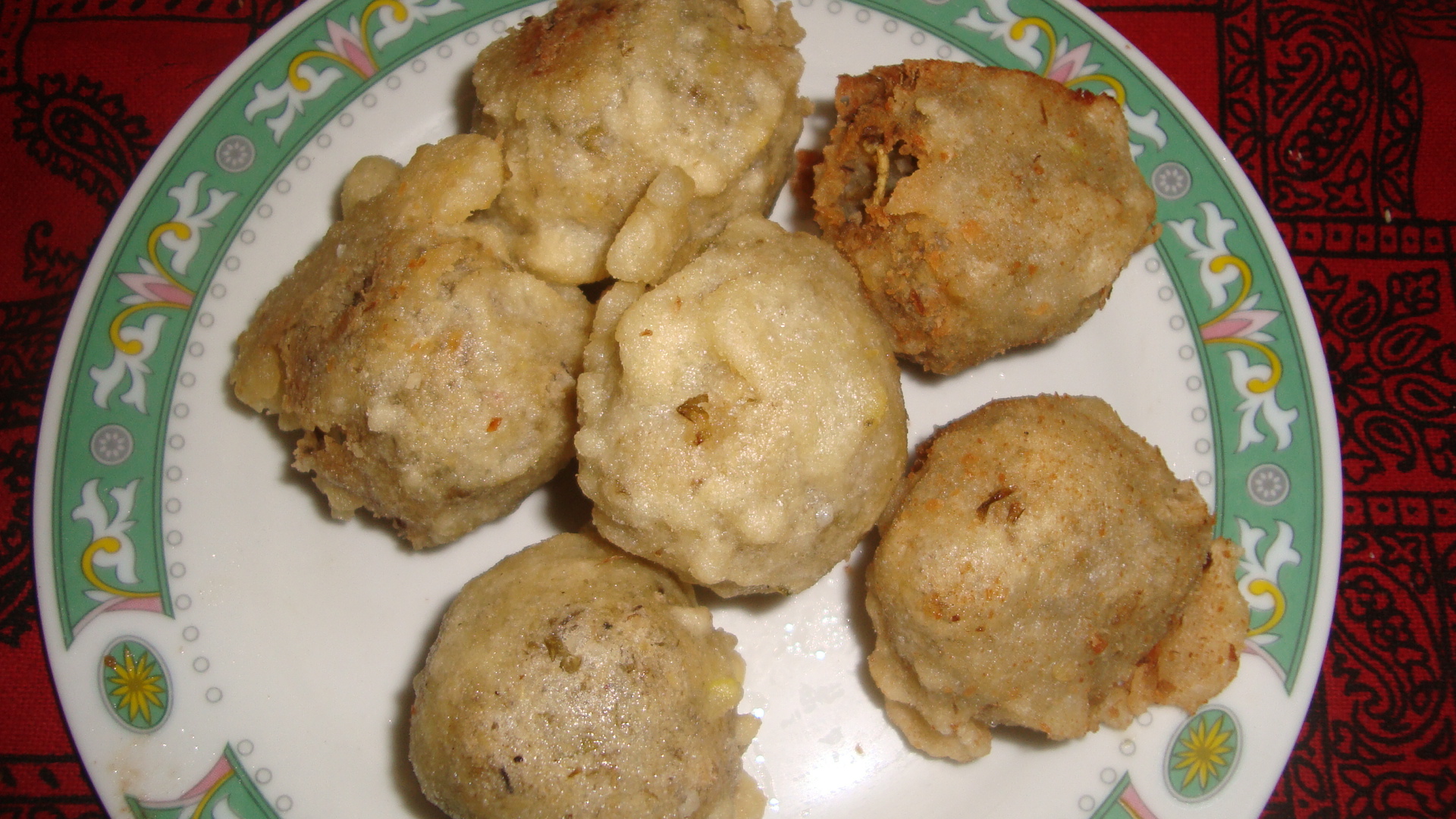
Payaru soosiam

Ingredients

  • Green gram – 1 cup
  • Freshly scraped coconut – ½ cup
  • Sugar – ¼ cup
  • Cardamom – 4 or 5
  • Wheat flour – ½ cup
  • Salt, to taste
  • Vanilla – few drops
  • Yellow food colouring – few drops (optional)
  • Water, as required
  • Low fat oil, for deep frying

Method

  1. Soak the green gram for about 3 – 4 hours.
  2. Cook the green gram with water for about 10 to 15 mins, until the gram is cooked. Drain off the water.
  3. Mix the boiled gram with scraped coconut, sugar and cardamom and grind.
  4. Make 10 balls out of the ground mixture and keep aside.
  5. Mix the wheat flour with salt.
  6. Add water little by little till a pancake batter consistency is reached.
  7. Add the vanilla extract and optional food colouring to the batter and mix well.
  8. Dip each ball in the batter, coat it thorougly and deep fry.
  9. Serve immediately with a hot cup of tea.

Recipe source: Raji Thillainathan.
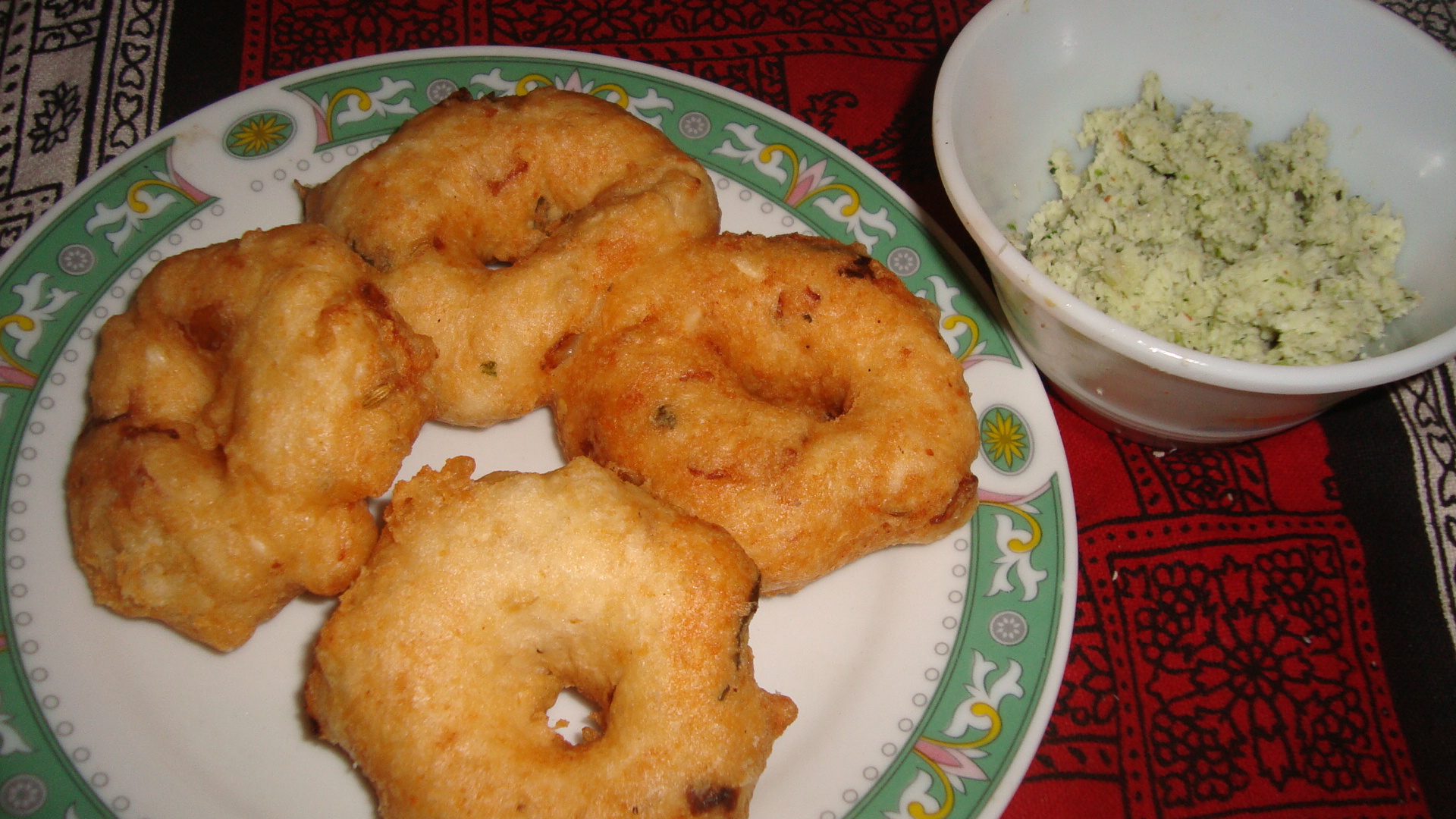
Vadai and Pachai Sambal

Black gram, or urad dhal, plays an important role in the cuisine of the north. It is one of the gram varieties cultivated in the seasons in between paddy cultivation and is a major source of nutrition.

Today, I will share my mother’s recipe for her famous vadais as well as a green gram snack in my next post. Vadai can be breakfast food or a tea-time snack or can be served with lunch or dinner. It is the most common snack under the Tamil cuisine of the country and is quite popular around the country.

Vadai with Sambal

(a) Vadai

Cooking time: 20 – 30 mins + 4 hrs (fermenting time)

Makes 10 vadai

Vadai

Ingredients

  • Urad dal/ black gram – 1 cup, skin removed
  • Green chillies – 2, chopped
  • Onion – 1, medium sized and chopped
  • Curry leaves – 2 sprigs
  • Coriander leaves – 1 tbsp, chopped
  • Baking powder – 1 tsp (optional)
  • Low fat oil (sunflower or canola) – ½ litre (for deep frying) + 1 tsp (for sauté)
  • Salt, to taste

Method:

  1. Soak the black gram, without the skin, for 3 – 4 hours.
  2. Grind with a little water to thick batter.
  3. Heat 1 tsp oil in a pan and lightly sauté the chopped onion, chillies and curry leaves.
  4. Transfer the contents of the pan and the coriander leaves to the batter mix and add salt to taste. If you prefer, you can also add 1 tsp baking powder.
  5. Mix well and keep aside for 5 mins.
  6.  Heat ½ l oil in the pan.
  7. Take a piece of banana leaf or something equivalent, dab some water on the surface and put a spoonful of batter onto the leaf. Shape it into a round or elliptical shape with a hole in the middle, like a mini doughnut.
  8. Transfer to the oil pan, 3 to 4 at a time, and fry until golden brown on both sides.
  9. Serve with pachai sambal.

 (b) Pachai sambal

Preparation time: 5 – 10 mins

Serves 4

Pachai Sambal

Ingredients:

  • Freshly scraped coconut – ½ cup
  • Green chillies – 2, chopped
  • Onion – ¼, chopped
  • Ginger – ½ “ (optional)
  • Curry leaves – 1 sprig, chopped
  • Salt, to taste

Method:

  1. Mix and grind all ingredients and add salt, to taste.

Recipe source: Raji Thillainathan.
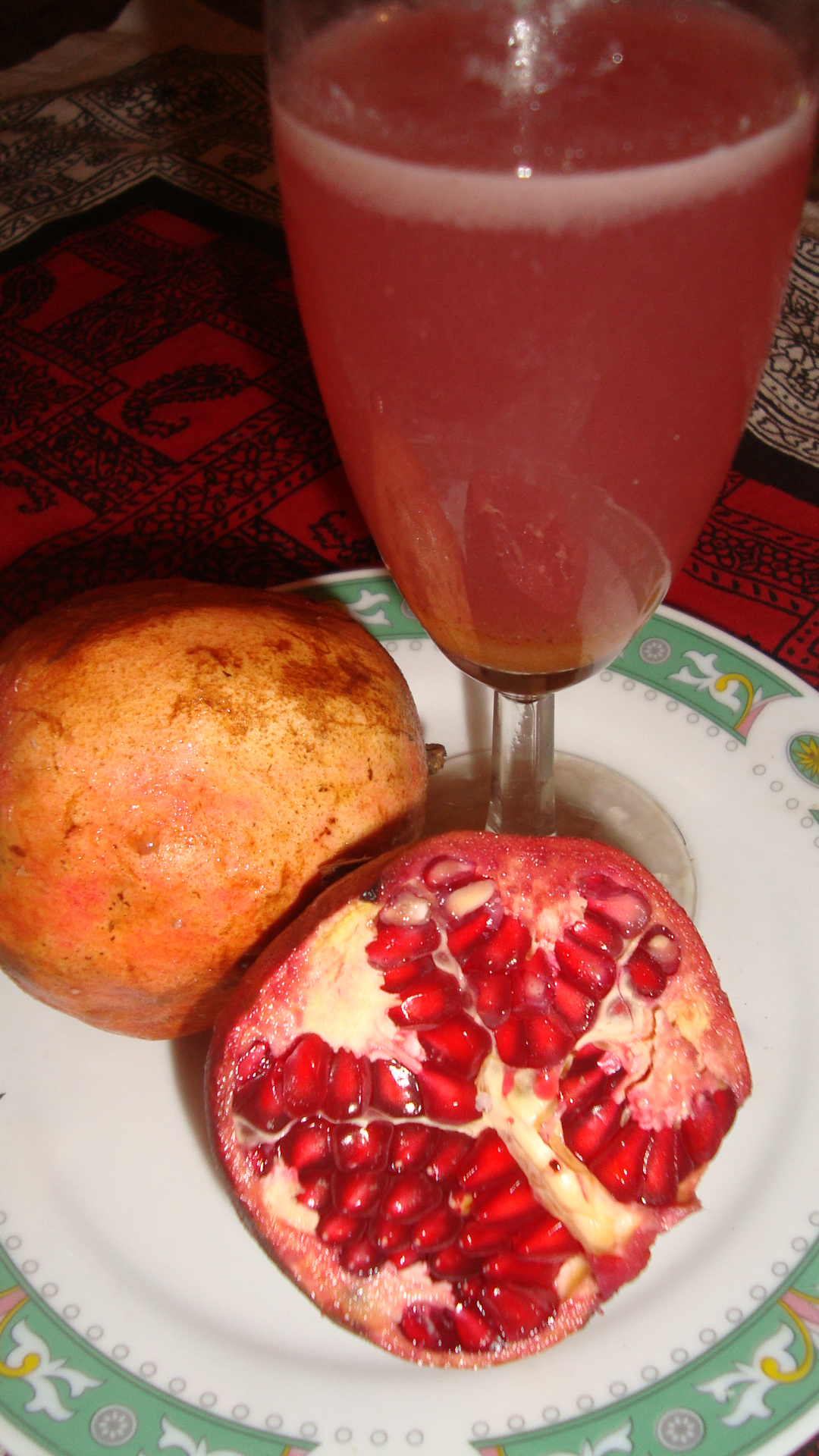
The wonders of pomegranate

During my visits to my grandmother’s house as a kid, my favourite reading corner was under the pomegranate, guava and gooseberry trees. My grandmother used to loosely tie some of the fruits with a cloth or bag, so that she could save a few for us, before the squirrels and birds had eaten them all. So, until recently, pomegranates were something that we occasionally bought because it reminded us of my grandmother and her home.

Ever since my mother read an article on the benefits of pomegranate for lowering cholesterol and blood pressure levels as well as reducing heart blocks (atherosclerosis plaque), she has been encouraging everyone at home to have pomegranate, either as a fruit or juice.

Pomegranate juice

My parents, who both have had heart surgeries and have had cholesterol issues for many years, seem to feel the difference and their cholesterol tests in recent months have drastically reduced to healthy levels.

While my father prefers drinking pomegranate juice by blending the fruit and straining out the juice, my mother prefers consuming pomegranate seeds.

She wanted me to share her way of consuming pomegranate seeds, as was indicated in the article that she read, so that it might be of benefit to others. It is said that pomegranate not only helps lower unhealthy cholesterol levels but also inhibits cancer. So, do try pomegranate on a regular basis and see if it does help you.

Ingredients:

  • Pomegranate seeds – 1 tbsp (either reserved after making the juice or possibly available in an Indian, Pakistani or Persian store)
  • Water – 1 cup

Method:

  1. Boil a cup of water with 1 tbsp pomegranate seeds, till it reduces to ½ cup.
  2. Remove from heat and cool.
  3. Drink the lukewarm mixture each morning, on an empty stomach.

Fish cutlets

Today’s guest blogger is Krishanti Weerakoon, a staff of UN and wife of the Sri Lankan High Commissioner to Canada.

FISH CUTLETS

This is a fool-proof  Sri Lankan recipe and on all of our postings overseas, this was an absolute favourite.  A versatile and excellent snack for coffee mornings, afternoon teas, lunches , cocktail parties,with pre dinner drinks or even  with dinner!! Make sure you have enough to go around as these small morsels have an explosion on your taste buds with the spices and aromatics and they are very popular. Reduce the intensity of the chillies depending on your guests’  tolerance for spice!!

Ingredients:
1 tin tuna ( 450 gram)
2 small green chillies cut finely
1 small onion diced
1/2  tsp black pepper
1/2 tsp chillie powder

I large potato peeled and boiled and mashed
I clove garlic crushed
1 tsp chopped ginger
I tsp each ground coriander and cummin

I tsp lime juice
I lb bread crumbs ( 450 gms)
2 eggs

3 tbsp flour
salt

1 pint oil for deep frying.

Method:
Mix all the ingredients except one egg and flour , breadcrumbs and oil in a bowl. Make small balls about the size of a  walnut.

Break the other egg into a bowl and beat lightly with a fork. Then  put the flour and breadcrumbs into two seperate bowls. Follow this order; first roll the cutlet in flour, then egg and lastly breadcrumbs. Treat it like an assembly line!! Use up all the fish mixture this way!

Heat oil to smoking point in a wok or fryer. Fry the cutlets until golden brown . Do not add too many at a time as it will lower the temperature of the oil and will not fry evenly. Ensure that oil stays hot when frying to ensure crispy cutlets. Serve with a nice dip either sweet chilli sauce or tomato/barbecue sauce.

Recipe source: Krishanti Weerakoon.