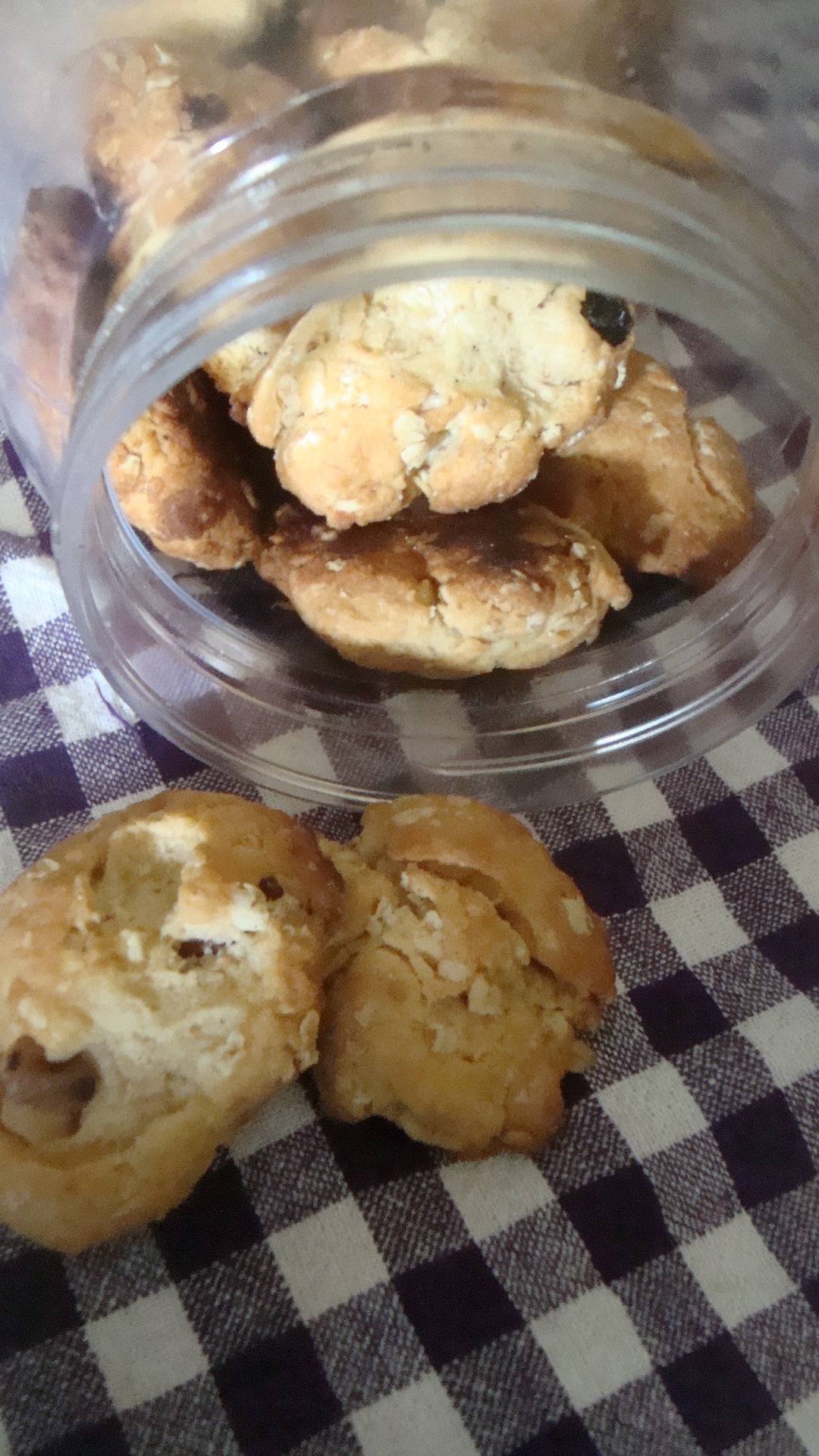
Paani Panaattu

Two of my mother’s favourite snacks from her childhood days are ‘panaattu‘ and ‘paani panaattu’. She remembers her grandmother making them for their home consumption and storing them in little jars or earthen pots. When my mother and her sisters visited her, she would serve them these treats with tea or after a main meal.

It is much easier today to buy a jar of ‘paani panaattu’, from the Katpaham outlets around the country, as my mother did this weekend. However, as palmyrah used to be and is still considered an intrinsic part of the north Sri Lankan culture and cuisine, I do like to know and share the recipes of how these traditional delicacies are made.

My mother felt that the ‘paani panaattu’ that she had bought didn’t quite taste the way she liked so she revamped it with the spices she remembers her grandmother had used. It was the first time that I tried ‘paani panaattu’ and I think this is another dish that is an acquired taste. It has quite a strong taste and is both spicy and sweet at the same time. My mother was delighted to go back to her childhood memories and favourite snacks while I enjoyed recording both recipes, as she remembered from her observations of my great-grandmother.

Paani Panaattu

The palmyrah sap is collected by tying a pot to the stem of the palm flower stump after it has been cut or gashed to allow the sweet water of the palm to be collected. To prevent fermentation, a little lime is added to the pot. This water that is collected is non-alcoholic, due to not being fermented, and it is considered nutritious particularly for the elderly.

The collected palm water is then heated and continuously stirred till it thickens into a brown treacle like substance called ‘paani’ . ‘Paani’ is usually stored in an earthen pot and it can be stored for a long time.
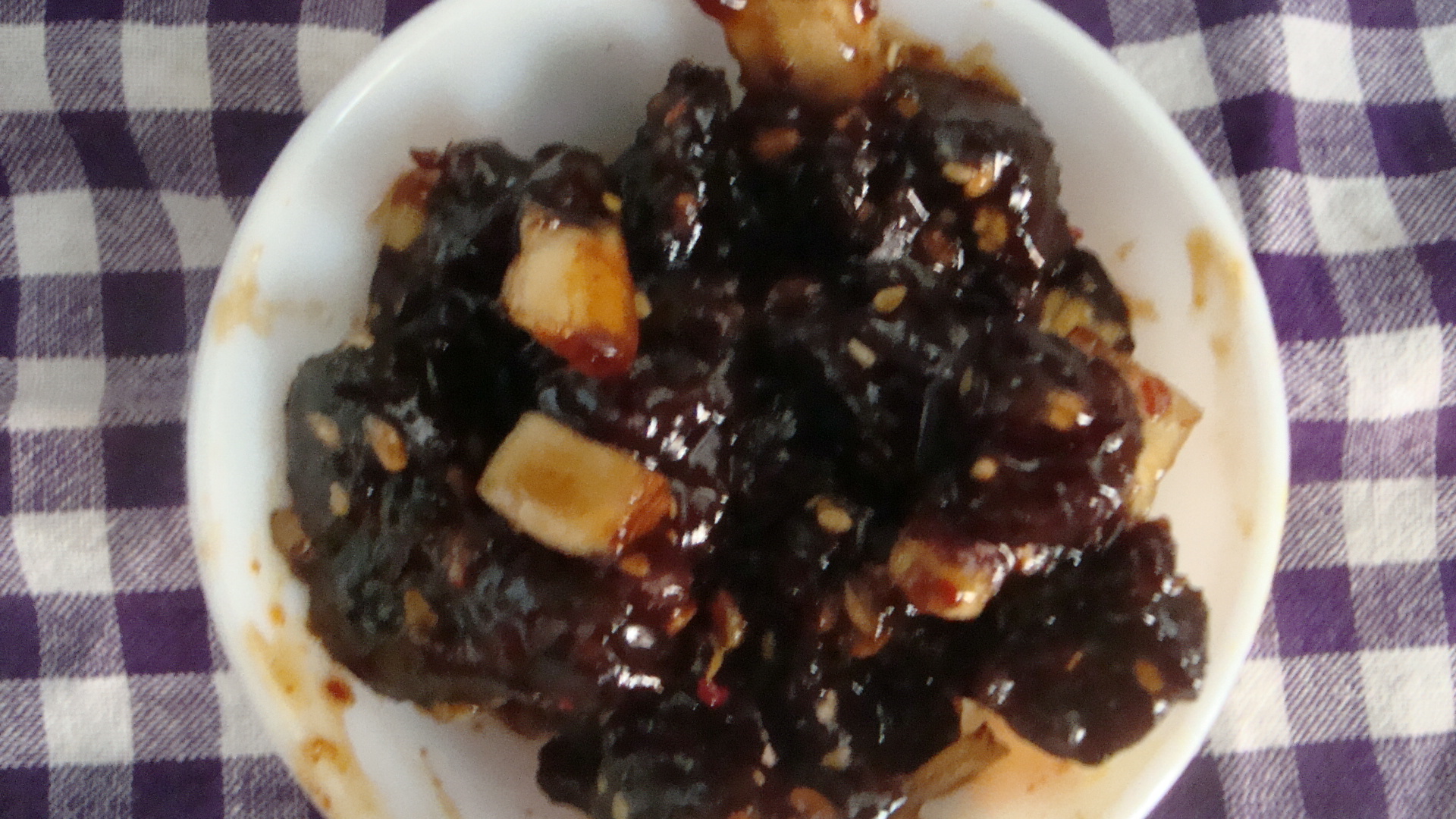
Paani panaattu

Time taken: 10 mins

Serves 4

Ingredients:

  • Paani – ½ cup
  • Panaattu – 1 cup
  • Coconut chips – 2 tbsp, roasted
  • Roasted rice – 1 tbsp
  • Crushed chillies – 1 tsp
  • Cumin powder – ½ tsp

Method:

  1. Chop up the panaattu into small pieces.
  2. Heat the paani in a saucepan over low heat for about 3 mins.
  3. Add the crushed chillies and cumin powder and stir well for about 2 mins.
  4. Add the coconut chips and roasted rice to the saucepan for about 1 min.
  5. Then, add the panaattu pieces and stir for about 2 mins.
  6. Stir well until it thickens and remove from stove, to allow the ‘paani panaattu’ to cool before serving. When making in larger quantities, transfer to an earthen pot or air-tight jar.

Recipe source: Raji Thillainathan.
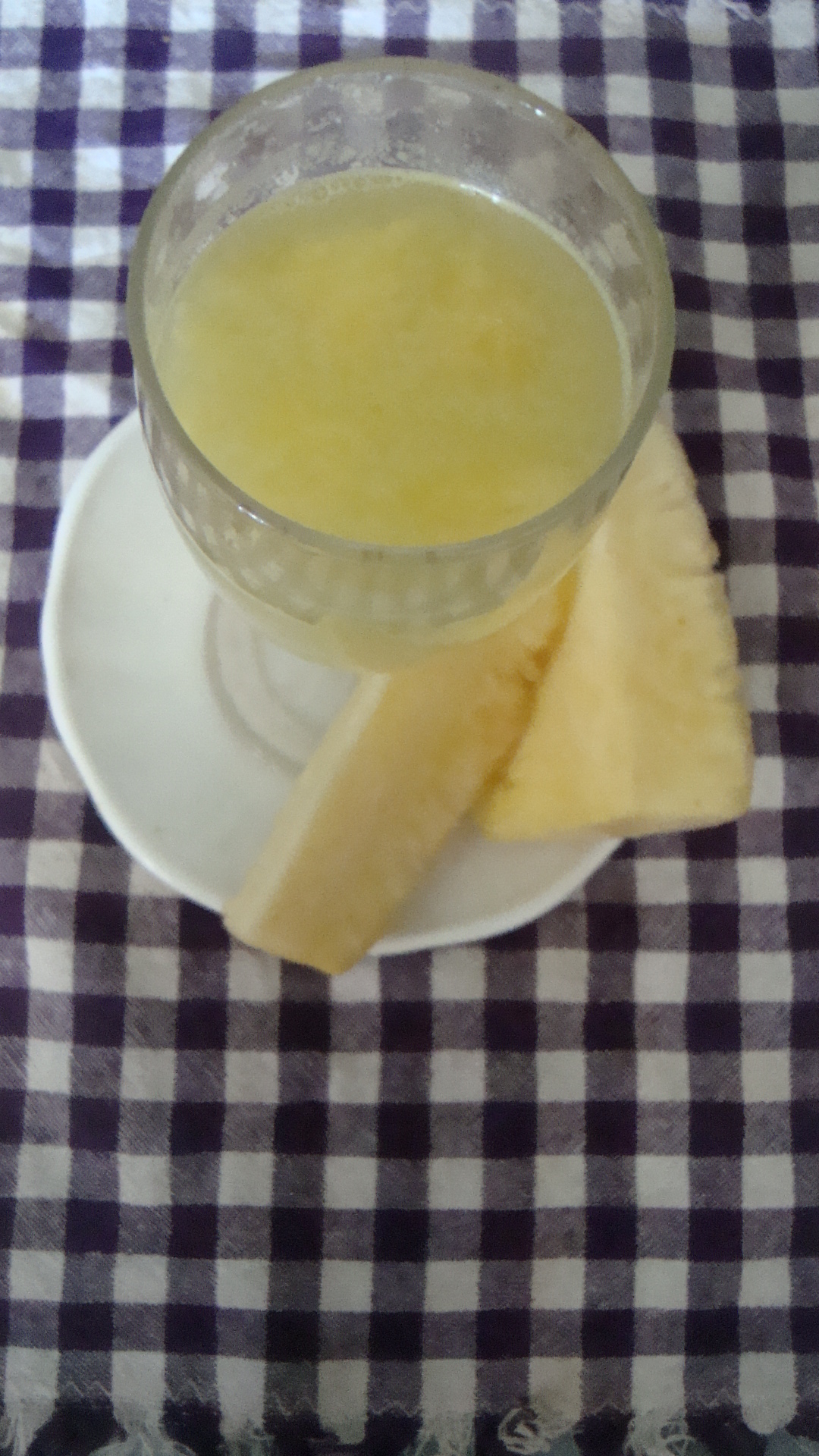
Pineapple juice

Of course, a post with a recipe for a pineapple cake has to be accompanied by a post on pineapple juice for the fresh fruit juice series of this blog. Rich in manganese, which helps in creating bone and connective tissues, and bromelain which helps in managing pain and inflammation, pineapples are an especially delicious and nutritious fruit.

Pineapple juiceSo go ahead and prepare yourself a glass of pineapple juice by blending ¼ cup of pineapple chunks with a cup of water and a tablespoon of sugar or less and a pinch of salt. 

Soya bean Vadai

Today’s recipe is a snack made from soya beans – a crunchy soya bean vadai.

Soya bean Vadai

Time taken: 15 – 20 mins (using pre-cooked soya beans)

Makes 6 or 7

Soya bean VadaiIngredients:

  • Soya beans – ½ cup, boiled
  • All-purpose flour – ½ cup
  • Onion – ½, chopped
  • Crushed chillies – 2 tsp
  • Fennel seeds – 1 tsp
  • Curry leaves – 1 sprig, chopped
  • Turmeric powder – ½ tsp
  • Salt, to taste
  • Low fat oil, for deep-frying

Method:

  1. Mix all the ingredients in a mixing bowl to prepare the ‘vadai’ dough. Divide the dough into small balls, around 6 or 7. Flatten each slightly.
  2. Heat the oil in a pan. When the oil is ready for frying, drop the ‘vadai’ in batches into the heated oil and deep fry them until they are golden brown on both sides.
  3. Serve warm with some Sri Lankan tea.

Recipe source: Raji Thillainathan.

Seeni Ariyatharam

Today’s recipe is that of another Jaffna traditional festival snack – seeni ariyatharam. With the modification of one ingredient, it can be found in traditional festival Sinhalese and South Indian cuisine under the name of ‘athirasa.’ In Sri Lanka, ‘seeni ariyatharam’/’athirasa’ is most often made during the Sinhalese and Tamil New Year which comes around in April.

This is my mother’s recipe for seeni ariyatharam accompanied by a photo I took of some that a neighbour brought us for Theepawali earlier this month.

Seeni Ariyatharam

Time taken: 45 mins + soaking time for raw rice, if preparing flour from scratch

Makes 10

Seeni AriyatharamIngredients:

  • Raw rice – ½ cup
  • Sugar – ¼ cup
  • Cardamom – a few, crushed
  • Low fat oil – for deep-frying

Method:

  1. Soak the raw rice and then using a dry grinder, grind the rice into flour or alternatively, simply purchase the pre-prepared raw rice flour.
  2. Heat the sugar in ¼ cup of water in a sauce pan, with some crushed cardamom, over low heat.
  3. When the consistency is syrupy (not too thick), remove from the stove. Stir in the raw rice flour to make the dough. If the consistency of the dough seems too watery, add a tbsp of raw rice flour. It should also not be too thick but smooth.
  4. Heat the oil in the pan over low heat.
  5. Dab the surface of a small piece of banana leaf with water and then scoop a little of the ‘seeni ariyatharam’ dough onto the banana leaf and flatten it lightly into a circular shape.
  6. Drop the ‘seeni ariyatharam’ into the oil pan and deep-fry. Flip it to the other side so that both sides are browned before transferring onto a tray lined with grease absorbing paper.

Recipe source: Raji Thillainathan.

Banana bun

This is a recipe of my mother. I remember the first time my mother ventured into using bananas in her baking. It was in mid 80s Jakarta, where every embassy had been invited to put up a stall, at a banana food festival and all food had to be made of banana. Besides organizing the Sri Lankan stall, my mother experimented and baked her first banana cake then. Ever since, she has tried using banana in different baked products.

This banana bun is great as both a tea-time snack and as breakfast food.

Banana bun

Time taken: 2 hours

Makes 9 buns

Banana bunIngredients:

  • Multi-purpose flour – 1 ½ cups
  • Yeast – 1 tbsp
  • Salt – 1 tbsp
  • Vegetable margarine – ¼ cup
  • Banana – ½ cup, mashed
  • Raisins – 1 tbsp
  • Cinnamon – ½ tsp, crushed
  • Vanilla essence – ½ tsp

Method:

  1. In a mixing bowl, add a pinch of salt to the flour.
  2. Prepare a yeast solution by adding ¼ cup of lukewarm water to a tbsp yeast and a tbsp salt. Let the solution rest for 2 – 3 mins before adding to the flour in the mixing bowl.
  3. Add the vegetable margarine and mashed banana to the mixing bowl as well and make the dough for the bun.
  4. Sprinkle the raisins, crushed cinnamon and vanilla essence and knead the dough. Divide the dough into 9 balls and let the dough rest for around 30 – 40 mins.
  5. Transfer to baking tray and bake at 170⁰C/338⁰F for 25 mins first on the lower shelf and for another 15 mins on the top shelf so that it is sufficiently browned.
  6. Serve warm, either plain or with a dab of margarine or sprinkled with sugar.

Recipe source: Raji Thillainathan.

Ellu Pa

Today’s recipe is a traditional sweet from Jaffna called the “Ellu Pa.” This is a spiced sweet made of sesame seeds and it is one of my mother’s favourite.

The recipe I am sharing today is that of my great-grandmother, as remembered and occasionally made by my mother.

Ellu Pa

Time taken: 15 mins

Makes 4

Ellu PaIngredients:

  • Sesame seeds/ Ellu – ½ cup
  • Urad dhal/ black gram flour – ¼ cup, roasted
  • Sugar – ¼ cup
  • Pepper powder – ½ tsp
  • Cumin powder – ½ tsp

Method:

  1. First, grind the sugar and sesame seeds together in a blender.
  2. Then, add the urad dhal flour and continue grinding the mixture.
  3. Transfer the blended flour mix to a mixing bowl.
  4. Add the pepper and cumin powder to the bowl. Mix well.
  5. Add a little hot water and make the ‘ellu pa’ dough. Divide the dough into 4 balls.
  6. Serve with tea.

Recipe source: Raji Thillainathan.

Sippi Sohi

Today’s Jaffna specialty snack recipe is that of “sippi sohi” (sea-shells). The snack actually resembles sea-shells if made in the traditional way. However, my mother generally makes her own colourful version of the sweet.

DSC00761Sippi Sohi

Time taken: 45 mins

Serves 6 – 8 persons

Sippi SoyiIngredients:

  • Rice flour – 1 cup, roasted
  • Urad dhal/ black gram flour – ¼ cup, roasted
  • Coconut milk – 1 cup
  • Sugar – ¼ cup
  • Water – 4 tbsp
  • Food colouring – optional
  • Oil, for deep-frying

Method:

  1. Combine the roasted rice flour and the roasted urad dhal flour and keep aside.
  2. Heat 1 cup of coconut milk, with a little salt, over medium heat. Once cooked, remove from stove and cool.
  3. When the milk has cooled slightly but is still warm, stir in the rice flour to make the dough.
  4. Roll out the dough and cut into little pieces. Alternatively, the traditional way of squeezing the dough through the mold can be used.
  5. Heat the oil and deep-fry the little pieces “sippi sohi” and transfer the fried pieces to a tray lined with grease absorbing paper.
  6. Prepare the sugar syrup by heating the sugar with water in a saucepan over medium heat.
  7. Food colouring can be added to the syrup, while heating in the saucepan. My mother used red food colouring here to have a colourful twist on the traditional plain syrup.
  8. Soak the fried “sippi sohi” into the sugar syrup till they are well coated and dry up.

Recipe source: Raji Thillainathan.

Paruthithurai Vadai

Theepawali Nalvaalthukkal! (Theepawali greetings)

For today’s specialty food, I would like to share a delicacy from my birthplace – the “Paruthithurai Vadai”. This vadai is generally prepared in Jaffna during festival seasons. While I have had the privilege of trying out this vadai in different places across Jaffna as well as at the homes of friends and relatives, the best, crunchiest “Paruthithurai/Thattai Vadai” that I have eaten to date has been that made by my mother. So, here’s the recipe for it.

Paruthithurai/ Thattai Vadai

Time taken: 1 ½ hours + 6 hours (soaking time)

Makes 50 – 60

DSC00782Ingredients:

  • Split urad dhal – 1 cup
  • Wheat flour – 1 cup, steamed
  • Wheat flour – 1 cup, regular not steamed
  • Crushed chillies – 1 or 2 tbsp
  • Onion – 1, ground
  • Curry leaves – chopped
  • Fennel seeds – 1 tbsp
  • Salt, to taste
  • Water, as required
  • Oil, for deep-frying

Method:

  1. Soak the split urad dhal for around 6 hours. Drain and peel the skin.
  2. In a mixing bowl, add the drained and peeled split urad dhal, wheat flour both steamed and regular, crushed chillies, ground onion, chopped curry leaves, fennel seeds, salt, bringing them together using a little water to make the ‘vadai’ dough.
  3. Divide the dough into 50 – 60 balls. Flatten each ball on a flat surface that will not stick. Alternatively, the dough can be rolled out and cut into thin circles using a cutter;
  4. Heat the oil for deep-frying. Do not let the ‘vadai’ dough sit out too long and transfer to the frying pan as soon as the dough has been made and the balls have been flattened into the thin ‘vadai’ shape.
  5. Deep-fry the vadai in batches until they are golden brown.
  6. Transfer the vadai to a tray lined with grease absorbing paper. The vadai can be stored, for many days, in an air-tight jar.

Recipe source: Raji Thillainathan.

Payatham Paniyaram

With Theepawali coming up this weekend, it’s time for some traditional snacks at home. My mother made a few quintessential Jaffna festival snacks so I will be sharing their recipes here.

Today’s recipe is my great grandmother’s recipe for ‘payatham paniyaram’ (a spiced green gram snack) which is a traditional Jaffna specialty made at all the festivals and celebrations in the peninsula. Plus, people tend to make this and send out to relatives in other cities or abroad as it keeps for a relatively long time.

Payatham Paniyaram

Time taken: 35 mins

Makes 20

Payatham paniyaaramIngredients:

  • Green gram – 1 cup, roasted flour
  • Red rice flour – 2 tbsp, roasted
  • Sugar – ½ cup
  • Cardamom – 6, crushed
  • White raw rice flour or wheat flour – ½ cup
  • Salt, to taste
  • Cumin powder, pepper powder, toasted coconut flakes – optional

Method:

  1. Combine the roasted green gram flour and the roasted red rice flour and keep aside.
  2. Melt ½ cup sugar in ¼ cup of water in a saucepan over low heat.
  3. When the syrup starts bubbling in a couple of mins, add the crushed cardamoms.  The optional cumin, pepper and toasted coconut flakes can be added now, if required. I prefer not to have the cumin or pepper added.
  4. Quickly add in the roasted green gram and red rice flour mix into the sauce pan, continuously stirring for a few mins, until the mixture is well-combined and easy to form into balls.
  5. Remove from stove and make about 20 balls of the spiced mixture.
  6. Make the dipping batter by combining the white raw rice flour (the preferred flour) or wheat flour with a little salt and water. Coat the balls in the batter.
  7. Heat the oil for deep-frying. Fry the balls until golden-brown on all sides. Transfer the ‘payitram paniyaram’ to a tray lined with grease absorbing paper.
  8. Serve when cooled. If coconut flakes are not added, the ‘paniyaram’ can be stored for many days.

Recipe source: Raji Thillainathan.

Raisins and Walnut cookies

Since there were still some fresh walnuts left at home, my mother decided to bake some of her heart healthy cookies. So, here’s the recipe for her raisins and walnut cookies.

Raisins and Walnuts cookies

Time taken: 35 mins

Makes 22

Walnut cookiesIngredients:

  • Multi-purpose flour – 1 ¼ cups
  • Oats – ½ cup
  • Raisins – 1 tbsp
  • Walnuts – 1 tbsp, chopped
  • Vegetable margarine – ¾ cup
  • Sugar – 2 tbsp
  • Milk or Water – ¼ cup
  • Baking powder – 1 tsp
  • Vanilla essence – 1 tsp

Method:

  1. Heat the margarine and sugar in a saucepan over low heat and melt the margarine.
  2. Add ¼ cup of milk or water to the sauce pan and stir well.
  3. Remove from stove and cool.
  4. Add 1 tsp baking powder to the flour and oats. Mix.
  5. Add the flour and oats mix, vanilla essence, raisins and chopped walnuts to the slightly cooled melted margarine sauce. Mix well to ensure that the mixture comes together as cookie dough. Add a little more flour, if the batter is still slightly watery.
  6. Divide the dough into 22 balls and flatten slightly before placing on baking tray.
  7. Bake at 220⁰C/428⁰F for 20 mins.
  8. Cool before serving.

Recipe source: Raji Thillainathan.