Prawn, Avocado and Egg salad

Today’s guest blogger is Rushda (lìng yīgè tóngxué). She told me she prefers salads when it came to cooking. So, I asked her to share one of her successful salad recipes.

Prawn, Avocado and Egg salad

I like experimenting with cooking and love to take up the challenge in making a dish out of whatever ingredients are available in my fridge when I decide to cook. I would also rather that someone else does the cooking and feeds me than do the cooking myself.
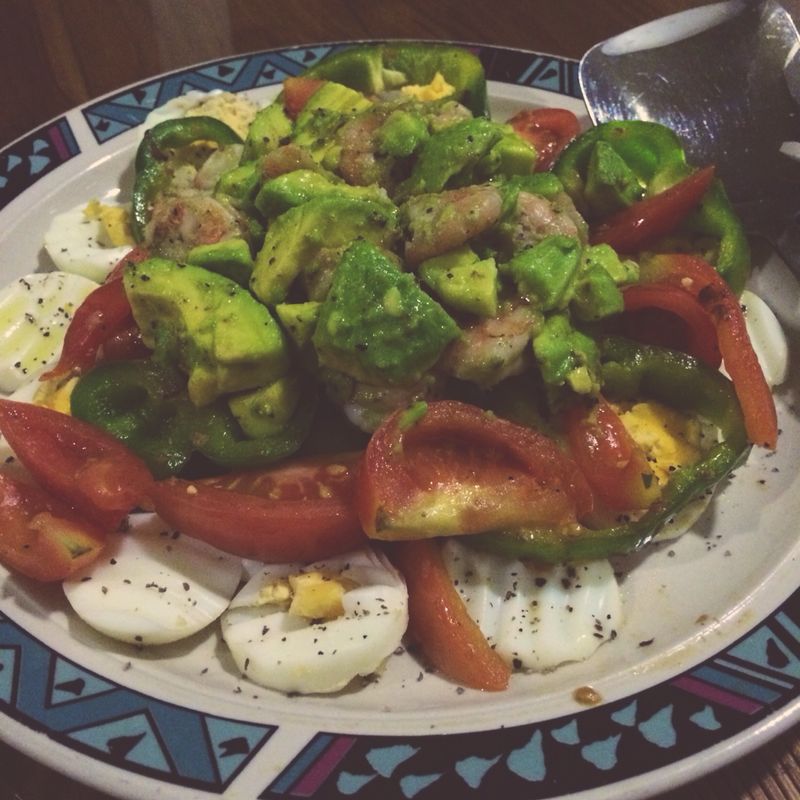
Rushda saladTime taken: 20 to 30 mins

Serves 2 or 3

Ingredients:

  • Boiled eggs –  2 or 3, sliced
  • Avocado – 1, cubed
  • Prawns or baby shrimps – handful
  • Tomatoes – 2 or 3
  • Bell peppers – 1 or 2 (different colours are better)
  • Lime juice – 1 or 2 tbsp
  • Mixed herbs – oregano and rosemary – ½ tsp (optional)
  • Black pepper – ½ to 1 tsp, crushed
  • Garlic – 2 or 3 cloves, crushed
  • Salt, to taste
  • Sugar, pinch
  • Vinegar – 1 tsp
  • Olive oil, as required

Method:

  1. Make the salad dressing by mixing olive oil, vinegar, pinch of sugar, mixed herbs and finely crushed garlic. Keep aside.
  2. Heat the cleaned and de-shelled prawns in a non-stick pan on low heat till it is cooked enough. Just sprinkle a bit of lime juice over it while cooking – don’t add water or oil while cooking. After the prawns are cooked and cooled, drizzle a bit of olive oil over it and sprinkle some pepper and salt over them. If salt is used here, it is not required to be used again in the recipe.
  3. Toast the roughly cut tomatoes in a wok or pan over low heat.
  4. Meanwhile, slice the boiled eggs, bell peppers and cube the avocado.
  5. Assemble the ingredients on the salad plate, in an eye-catching way.
  6. Drizzle the salad dressing over the salad.

Recipe source: Rushda.
Seeni Sambol

Since I started this blog, I have developed this tendency of asking fellow Sri Lankans I meet  to contribute one of their favourite recipes to the blog. One such instance was when I invited my Mandarin language classmates to contribute to the blog and starting today, over the next few weeks, the guest posts will feature a few recipes shared by my class.

Today’s guest blogger is Hasini Wanninayake. She is currently an international studies undergraduate at Kelaniya university and plans to join the foreign service after her graduation.

Seeni Sambol

This is a side dish that my mother often makes at home. It can be eaten with hoppers, kiribath or in a sandwich.

seeni sambalTime taken: 30 mins

Serves 5 to 6

Ingredients:

  • Onions – 5, large
  • Maldive fish – ¼ cup (optional)
  • Ginger – 1”, crushed
  • Garlic – 2 or 3 cloves
  • Cinnamon – 1 piece
  • Cloves – 3 or 4
  • Curry leaves – 1 or 2 sprigs
  • Rampe  – 1 or 2” piece
  • Sera/ Lemongrass – ½ “ pieces
  • Tamarind paste – 1 tsp
  • Vegetable oil – 4 to 6 tbsp
  • Sugar – 2 tsp
  • Salt, to taste

Method:

  1. Peel and finely chop the onions.
  2. Mix the first nine ingredients (onions to lemon grass) in a bowl with a pinch of salt.
  3. Heat the oil in a shallow pan.
  4. When the oil starts to sizzle, add the mixed ingredients to the pan and keep stirring for 10 to 15 mins.
  5. When the onions are well fried and dry, add the tamarind paste to the pan.
  6. Continue stirring until the ingredients are well mixed.
  7. Fry a few minutes longer until the mixture turns dark brown.
  8. Add the sugar and keep stirring for a little while longer. Adjust salt, if required, before removing from heat.

Recipe source: Hasini Wanninayake.

Kimbula Buns

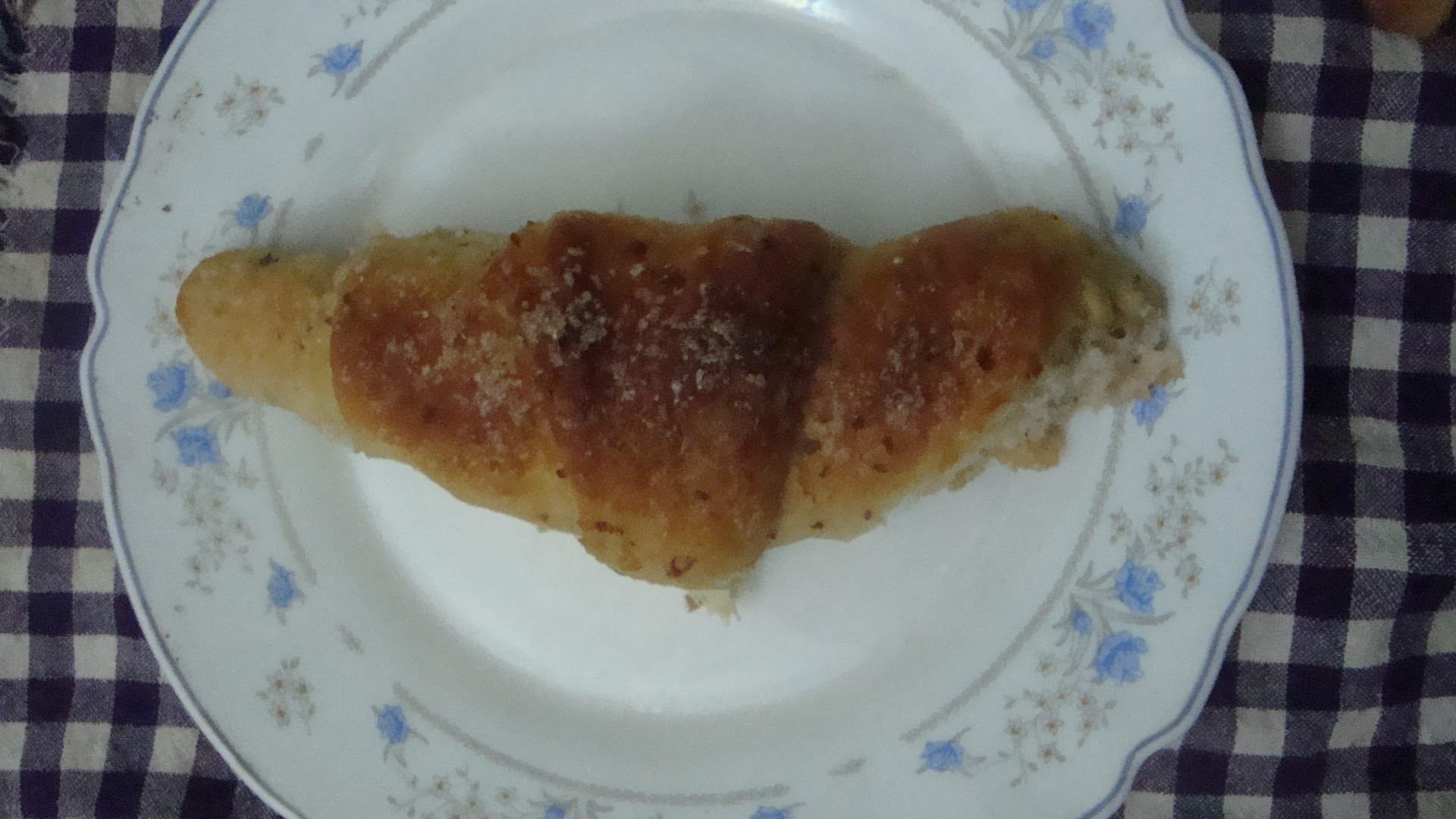
I think every bakery in Sri Lanka makes Kimbula buns. I first tried it out at my hostel canteen during my Peradeniya years and it became my regular breakfast along with a cup of coffee for the three years that I was there.

Kimbula buns – Kimbula means crocodile in Sinhala, is a crunchy sugar bun roughly sprinkled with sugar and has an elongated shape which earned it the name of one of the largest and common reptile in the country.

Since I enjoy baking the most when it comes to cooking, I decided to try making some kimbula buns. I found a couple of recipes on the web and a couple of weeks ago, I tried out this recipe. While Lani and her daughter Lorena love the milky taste of it, it was not what I was used to or expecting and it simply had too much milk powder.

DSC01084So, today, I decided I would try my own vegan version of the bun, based on Kitchen Cici’s bread recipe that I had tried out and enjoyed, and see if it could come anywhere close to the taste that I was used to. The resulting buns were still not what you would find in the bakery but they turned out good and as close as I got to the actual.

Kimbula bunsHere’s my amalgamated recipe of the recipes mentioned above, with my twist of vegan substitutions:

Kimbula Buns

Preparation time: 1 hour + dough resting time (1 hour + overnight in refrigerator)

Baking time: 30 mins

Makes 10 buns

DSC01115Ingredients:

  • All-purpose flour – 4 ½ cups
  • Almonds – a handful, ground
  • Flax seeds – 1 tbsp
  • Margarine – 4 tbsp
  • Brown sugar – ¼ cup
  • Salt – ½ tbsp
  • Instant yeast – 2 tsp
  • Warm water – 1 cup + 3 tbsp

Method:

  1. Add the sugar and yeast to a cup of warm water and let it rest for 10 mins in the mixing bowl.
  2. Roughly process the flax seeds with 3 tbsp water in a blender and transfer the mixture to the bowl. I didn’t process it to a fine powder.
  3. Add the margarine and ground almonds to the bowl. Mix well.
  4. Then, stir in gradually the flour ½ cup at a time, so that there are no lumps, until a smooth dough is formed. I was planning on using only 3 cups but ended up adding another 1 ½ cups so you may reduce or add more flour, as required, to make sure that the dough is not watery or too sticky.
  5. Cover the bowl with a clean cloth and let it rise for an hour.
  6. Punch down the dough that has doubled in size and transfer to a floured surface.
  7. Roll out the dough in parts, using a rolling-pin, so that it is easier to manage and cut out triangles.
  8. Take each triangle and roll it by hand, starting from the broader end of the triangle and finishing with the tip.
  9. Arrange them on the baking tray and place them in the refrigerator overnight so that you can bake them in the morning.
  10. Preheat oven at 170⁰C/ 338⁰F for a couple of mins.
  11. Brush the buns with melted margarine and sprinkle brown sugar over them.
  12. Bake for about 30 mins.
  13. Serve the buns fresh with a hot cup of coffee for breakfast.

Recipe source: Ahila Thillainathan.

Mini Halapa

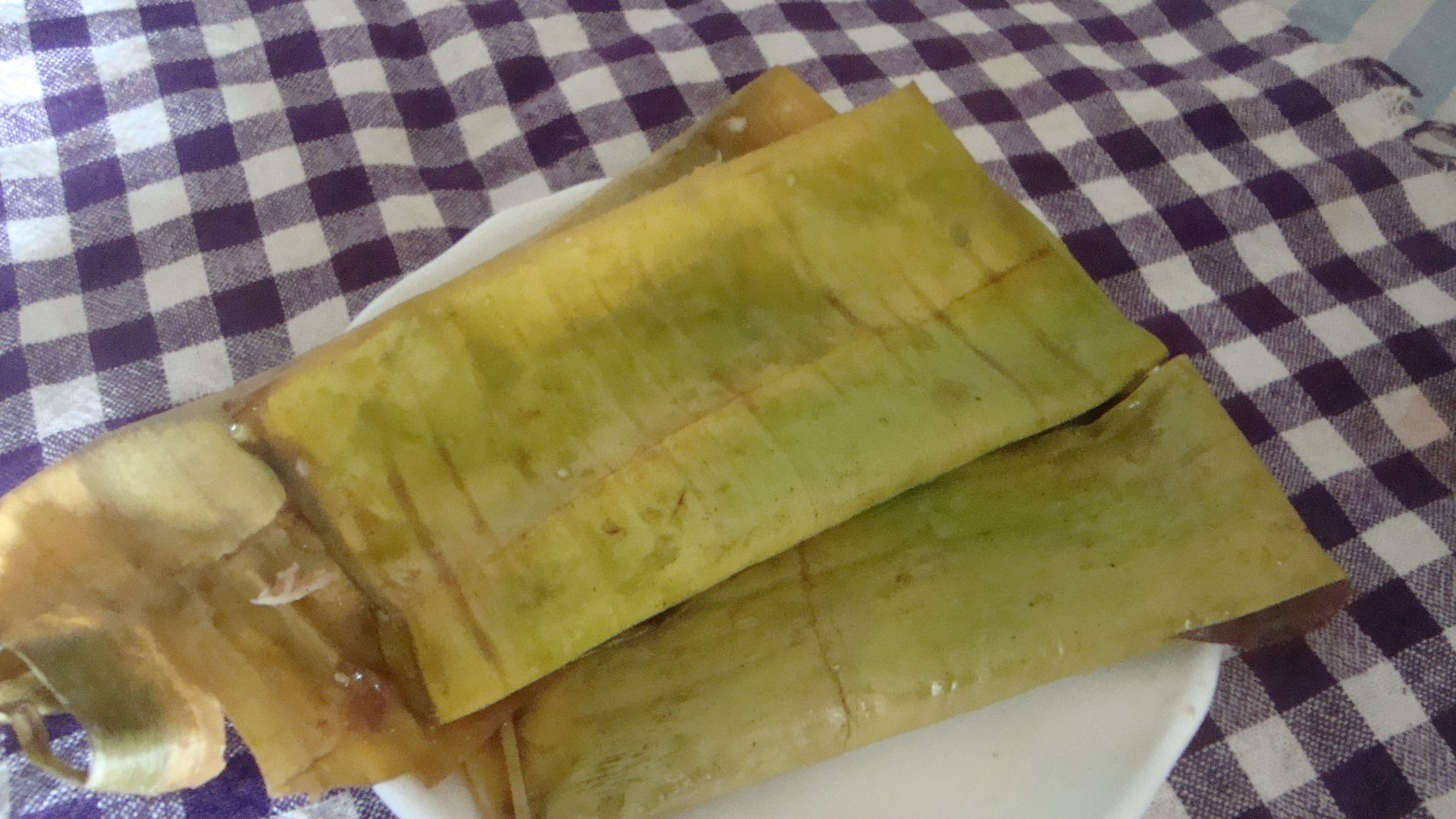
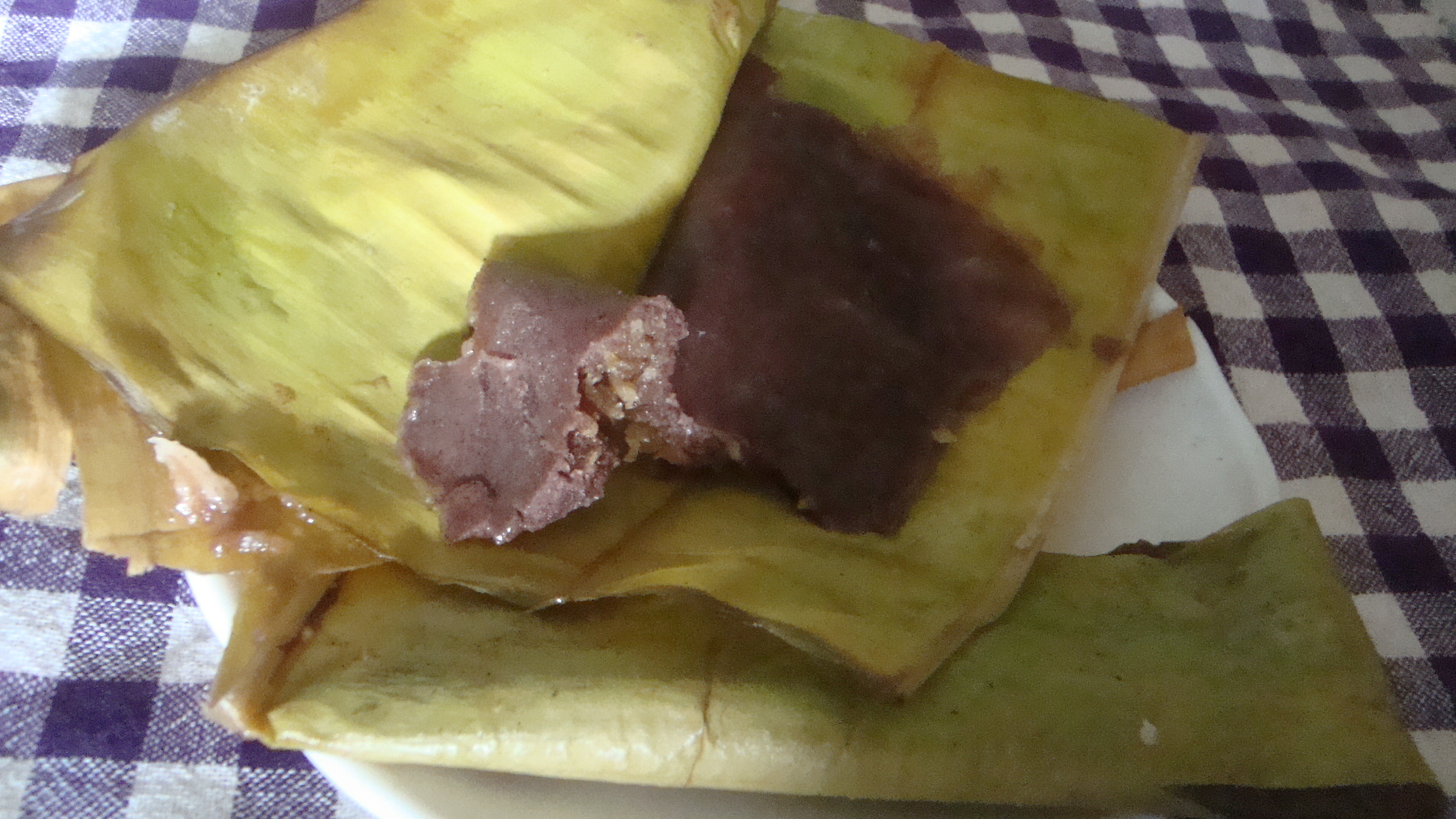
The first time I had halapa was during a train ride from Peradeniya to Colombo. An elderly woman with a basket got onto the train at one of the stations and I noticed that a lot of people were buying her food. I was curious and decided to try out the snack she had made as I did not recognize it. It turned out to be halapa and I was intrigued. It became quite a ritual during my undergraduate years to buy this particular woman’s halapa during my travel home.

I didn’t come across halapa again till many years later when I visited some remote villages in Hambantota district and was served halapa that people had made in their homes. Hence, the reason why I have placed this snack as a specialty of Hambantota besides the fact that kurakkan is primarily grown in Hambantota district and the northern province.

I decided to try my hand at making this snack today and after searching the web, found a recipe for it on srilankanmenu.blogspot.com that I have slightly adapted here according to my taste. While I have used banana leaves, I would recommend using kanda leaves, if you can get hold of it because it adds a unique flavour and texture to the halapa.

HalapaMini Halapa

Preparation time – ½ hour

Cooking time – 15 mins

Makes 12 mini halapa

Mini halapaIngredients:

  • Kurakkan flour – 1 cup
  • Coconut – ½ cup, freshly scraped
  • Coconut treacle or kithul pani/ treacle – 4 tbsp
  • Salt, to taste
  • Banana or Kanda leaves

Method:

  1. Lightly heat the freshly scraped coconut in a saucepan and add the coconut treacle. Stir, while the mixture thickens. Remove from stove and allow it to cool.
  2. Add a pinch or two of salt to the kurakkan flour. Stir in the warm water and make the dough.
  3. Cut the banana leaf into 12 smaller pieces or use the kanda leaves.
  4. Taking a ball of the dough, spread it on a piece of banana leaf. Take a pinch of the coconut mixture and place it in the center and spread it lightly over the dough. Fold the leaf in half and ensure the edges are folded.
  5. Steam the halapa for 15 mins.
  6. Serve warm with tea.

Papaya Curry

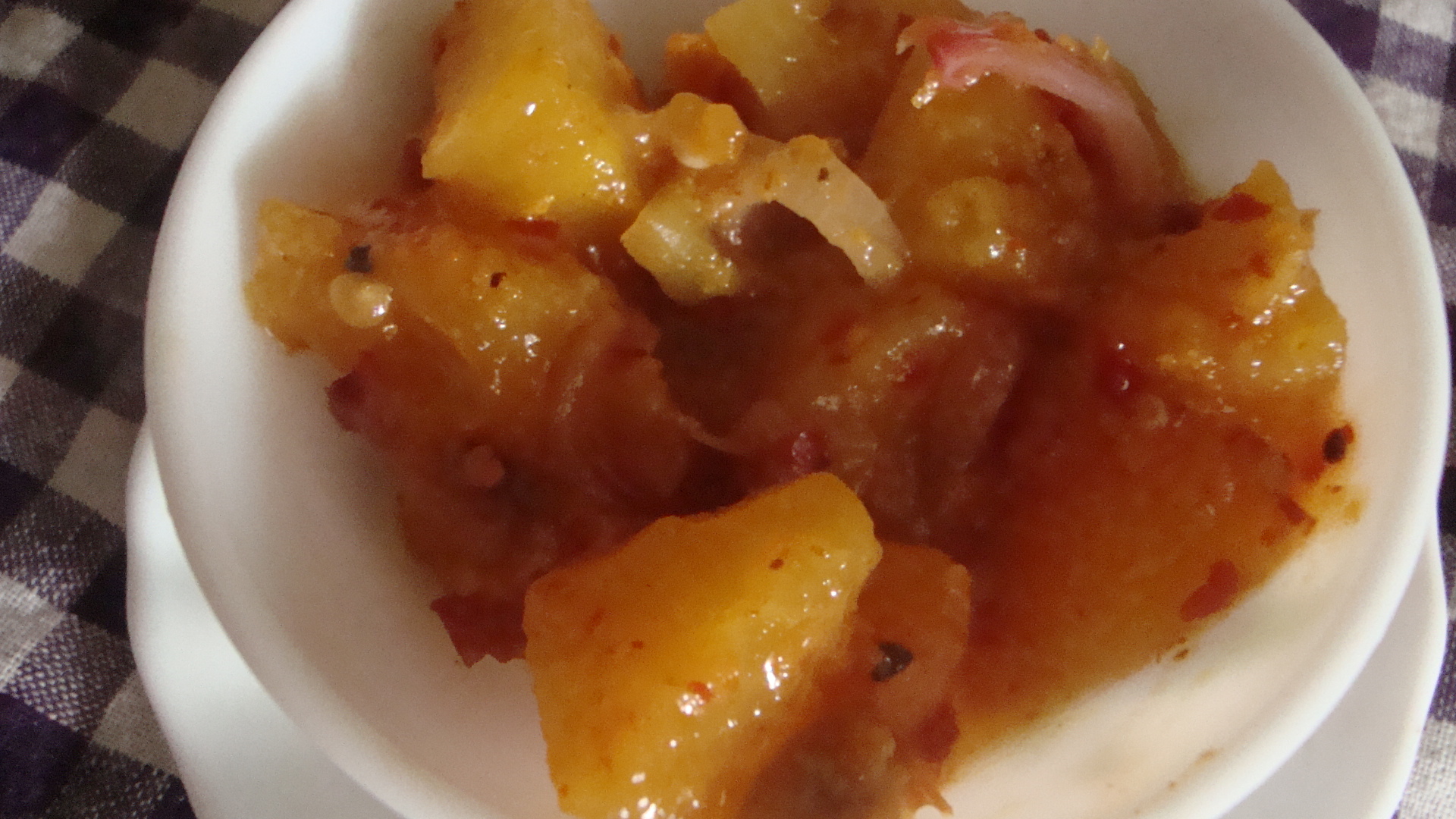
Today’s recipe is that of a papaya curry recipe. While papaya is used in pickles or acharu here, a curry is not so common but my mother likes experimenting with her curries and this turned out delicious. This is also the dish I am sharing for Angie’s Fiesta Friday #2.

Papaya Curry

Time taken: 20 mins

Serves 3

Papaya curryIngredients:

  • Papaya, half-ripe – 1 cup, chopped
  • Onion – ½
  • Capsicum/ Malu miris – 1
  • Fennel seeds – 1 tsp
  • Cloves and Cinnamon – 1 tsp, crushed powder
  • Crushed chillies – 1 tsp
  • Lime – 1 ½
  • Sugar – 1 tbsp
  • Low fat oil – 1 tbsp

Method:

  1. Heat 1 tbsp oil in a pan and lightly fry the chopped onion, malu miris and fennel seeds for 2 minutes.
  2. Then, add the chopped papaya, crushed chillies and the crushed cloves and cinnamon powder to the pan, together with ¼ cup of water.  Cover and cook for about 5 minutes.
  3.  Squeeze and add the juice from 1 ½ limes and the sugar to the pan. Mix well and cook for another 5 minutes. Add a little water if the liquid dries up before that.
  4. Serve with rice.

Recipe source: Raji Thillainathan.

Cassava Thuvaiyal

Today’s guest post is by Krishanthy Kamalraj, who has previously shared her recipe for murukku on this blog. We have another of her lovely snack recipes, with a short intro about the dish from her, today.

Cassava Thuvaiyal

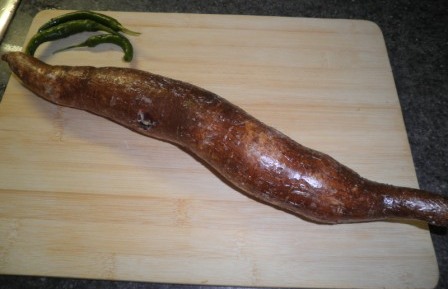
This is somewhat different from Cassava curry. Those days, people in Jaffna usually had cassava plants in their home garden for their own consumption. My grandmother used to make this dish, when we wanted a spicy and filling snack. She dug out immature cassava yam from the garden and made very delicious cassava thuvaiyal for us.

Ingredients

  • 1 medium size immature cassava yam
  • 2-4 dry red chilies
  • ¼ cup small onions
  • ¼ cup grated coconut
  • Mortar and pestle or Mixer or grinding stone
  • Salt to taste

Recipe

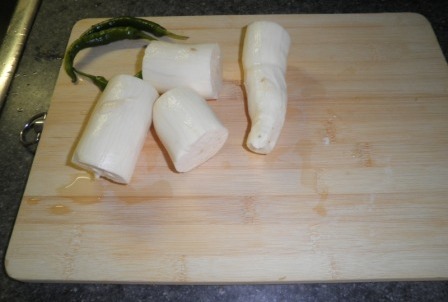
1. Thoroughly wash cassava yam and peel the skin.

Cassava2. Cut the yam into small cubes.

Cassava 23. Put the cut cassava pieces in a cooking pan.

4. Add ¼ cup of water into the pan and cook well over medium heat.

5. When cassava has been cooked well (able to slightly smash cassava pieces with spatula), remove from heat.

6. In a mortar, add salt and red chilies. Pound well until it becomes a paste.

chilli paste7. Add cooked cassava and pound well with pestle until it mixes well with chili paste.

8. Add cleaned small onions into the mixture and pound well.

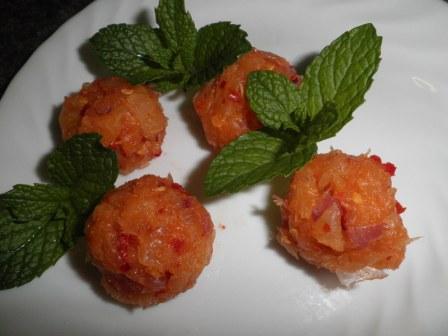
9. When the mixture has reached the consistency to make small balls, take out  from mortar.

10. Using hand, make small balls of the mixture.

11. Now cassava thuvaiyal is ready to serve.

Cassava thuvaiyal

Recipe source: Krishanthy Kamalraj.

Chickpea Fritters

Xīnnián Kuàilè!

Angie (The Novice Gardener) has started her blog event ‘Fiesta Friday‘ auspiciously on the Chinese New Year. So, Wishing you all a happy Lunar New Year and a wonderful party at Angie’s fiesta!

A Taste of Sri Lankan Cuisine’s contribution to the event is this snack recipe of my mother’s – chickpea fritters, which is a very popular snack both in Sri Lanka and India.

Chickpea fritters

Time taken: 30 mins + 3 hours (soaking time)

Serves 8

DSC01041Ingredients:

  • Split chickpea/ kadalai paruppu – ½ cup
  • Chickpea flour – ½ cup
  • Wheat flour – ¼ cup (optional)
  • Onion – 1, chopped
  • Turmeric – ¼ tsp
  • Crushed chillies – 1 to 2 tsp
  • Curry leaves – 1 sprig
  • Carom/ Omam seeds – ½ tsp
  • Salt
  • Low fat oil, for deep-frying

Method:

  1. Soak the chickpea for about 3 hours.
  2. Then, coarsely grind it, i.e. do not grind it to a puree or flour but rather half-grind it so that there are smaller bits of chickpea. Transfer to a mixing bowl.
  3. Add the rest of the ingredients to the bowl and make the fritter dough.
  4. Heat the oil in a pan until it sizzles.
  5. Pinch off a little dough at a time and drop it in the pan. Fry till the fritters are golden brown.
  6. Serve with tea.

Recipe source: Raji Thillainathan.

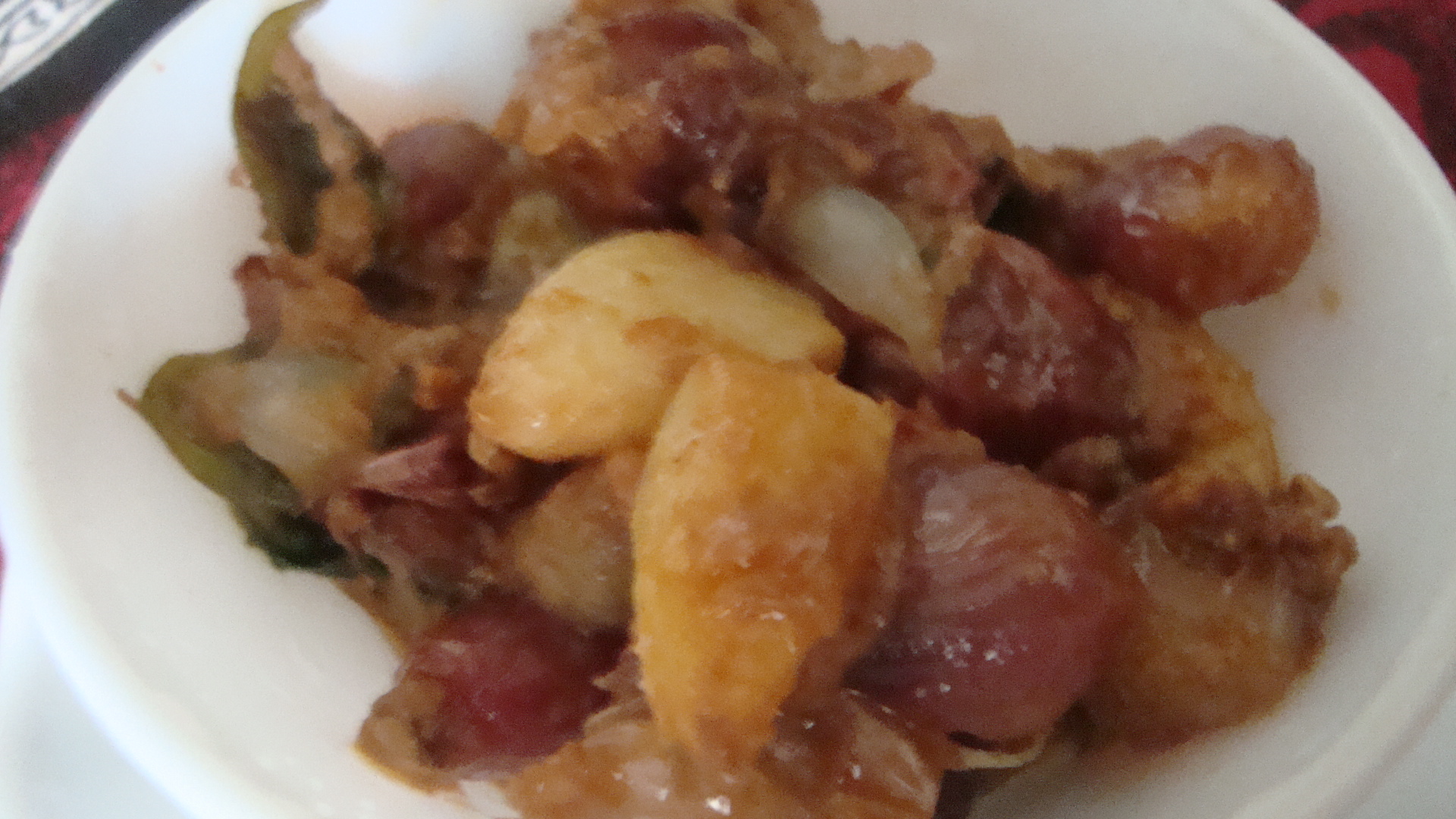
Garlic and Shallot Curry

Another garlic curry recipe of my mother, this time with shallots. For another version of a garlic curry, do check out the earlier post of the beetroot and garlic curry recipe.

Garlic and Shallot Curry

Time taken: 20 mins

Serves 3

Garlic and Shallot CurryIngredients:

  • Garlic – ¼ cup
  • Shallots – ½ cup
  • Fenugreek seeds – 1 tbsp
  • Tamarind extract – ½ cup
  • Curry powder – 1 tsp
  • Salt, to taste
  • Coconut milk – ¼ cup
  • Sugar – 2 tsp
  • Low fat oil – 1 tbsp

Method:

  1. Clean the garlic and shallots.
  2. Heat 1 tbsp oil in a pan and add the fenugreek seeds. Then, add the shallots and fry for a couple of minutes, before adding the garlic and frying further for a few minutes.
  3. Add the tamarind juice, curry powder and salt to taste to the pan. Mix well and cook for about 5 minutes.
  4. Add the coconut milk and sugar to the pan and cook for another 5 minutes, until gravy thickens and a nice aroma wafts about.
  5. Serve warm with rice or pittu or stringhoppers.

Recipe source: Raji Thillainathan.

FFF

Pudalangai Kulambu

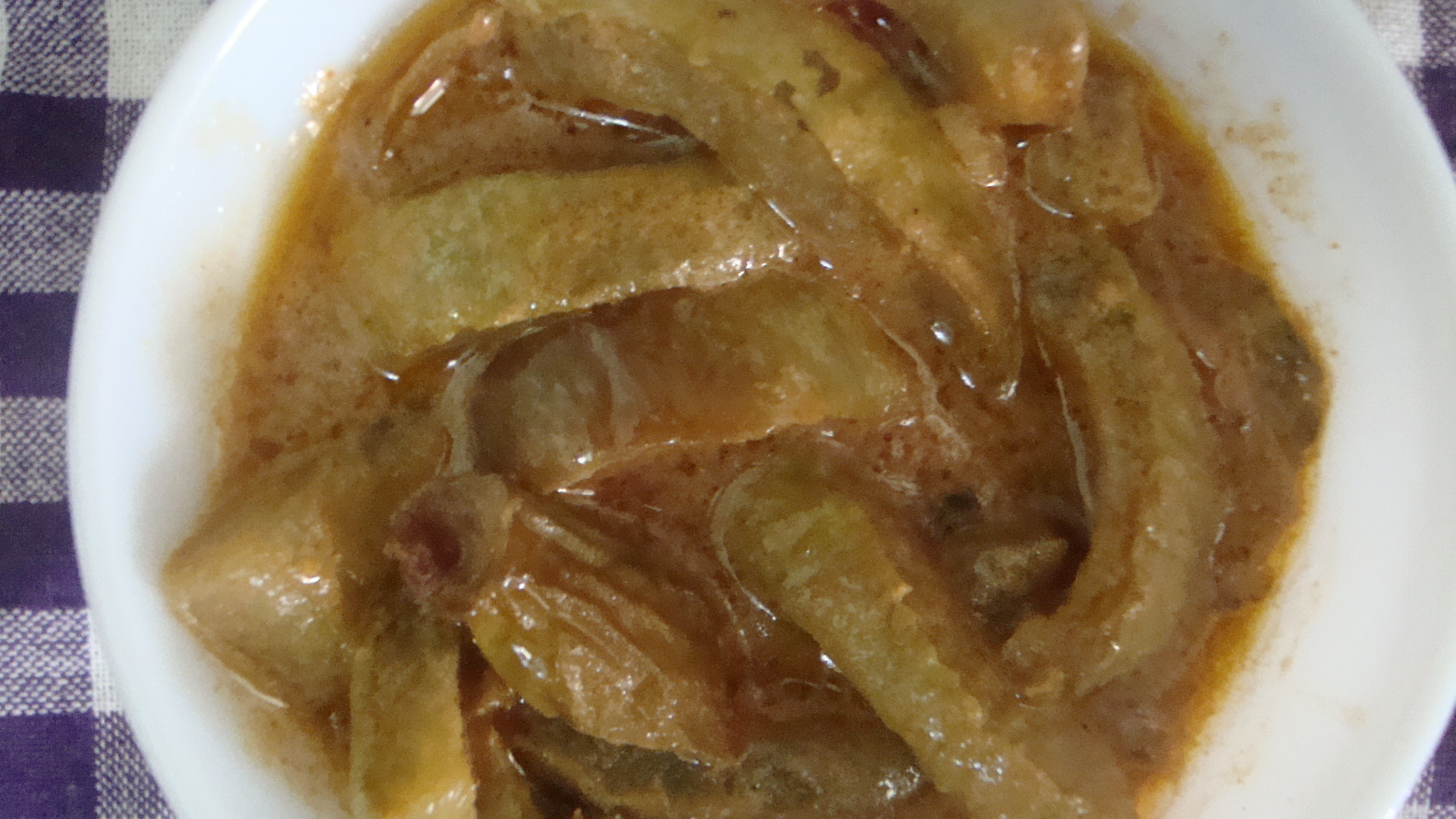
Today’s curry recipe is one of the dishes that I like a lot – pudalangai kulambu or snake gourd curry.

Pudalangai Kulambu

Time taken: 30 mins

Serves 2 or 3

Pudalangai KulambuIngredients:

  • Snake gourd – 1 cup, chopped
  • Onion – ½ , chopped
  • Fenugreek seeds – 2 tsp
  • Curry leaves – 1 sprig
  • Tamarind – ½ cup
  • Coconut milk – ½ cup
  • Curry powder – 1 tsp
  • Salt, to taste
  • Low fat oil – 2 tbsp

Method:

  1. Heat 1 tbsp oil in a pan and fry the onion and fenugreek seeds for a couple of minutes.
  2. Then, add another tbsp oil to the pan and add the chopped snake gourd and curry leaves. Continue frying for a few minutes.
  3. Add the tamarind and milk to the pan, together with the curry powder and salt to taste. Let the curry cook for about 10 – 15 mins over medium heat.
  4. Remove pan from stove when the gravy thickens.
  5. Serve warm with rice or pittu.

Recipe source: Raji Thillainathan.

Cabbage Fritters

Today’s recipe is that of cabbage fritters.

In addition to checking out the recipe below, I would like to invite you to visit this post on one of my other blogs – Perspectives Quilt for a brief introduction about one of my books that can be freely downloaded today on Amazon Kindle.

Cabbage fritters

Time taken: 25 mins

Serves 4 or 5

Cabbage frittersIngredients:

  • Cabbage – ½ cup, shredded
  • Onion – ½, chopped
  • Green chillies – 1 or 2, chopped
  • Crushed red chillies – 1 tsp
  • Chickpea flour – ¼ cup
  • Wheat flour – ¼ cup
  • Ginger – ½ tsp, crushed
  • Garlic – ½ tsp, crushed
  • Salt, to taste
  • Oil, for deep-frying

Method:

  1. Mix all the ingredients, except the oil, together adding a little water to make the fritter dough.
  2. Divide the fritter dough into 4 or 5 portions.
  3. Deep-fry until golden brown.
  4. Serve with rice or as it is.

Recipe source: Raji Thillainathan.