Sura Sarakku Kulambu

This dish is particularly made for people recovering from severe illness and mothers recuperating from childbirth.

Sura Sarakku Kulambu

Ingredients:

  • Shark/ sura – 10 pieces
  • Onion – 1
  • Salt, to taste
  • Tamarind extract – 1 ½ cup
  • Sarakku powder mix (Coriander – 3 tbsp, Cinnamon – 2 tbsp, Pepper – 1 tsp, Turmeric – ½ tsp, Fenugreek – 1 tsp)

Method:

  1. Clean the shark pieces and place them in a pan.
  2. Chop up the onion and add to the pan. Pour some water and add some salt and cook on low heat for 10 to 15 mins.
  3. Add the sarakku powder to the pan and add the tamarind extract.
  4. Let the curry simmer for another 10 minutes or until the curry thickens and is not watery.

Recipe Source: Raji Thillainathan.

Pongal

My mother often recounts a story from her childhood years, particularly ones that include her grandmother. One story she is fond of narrating is about how her grandmother used to undertake her own farming and not use machines or chemicals. My great-grandmother, who was the last farmer in our family lost her husband at a young age and raised her three children on her own. She had some paddy land and a small vegetable farm, which she managed to buy with her own earning. While she did hire farm labourers when needed, she did a lot of work on her field herself. Also, she raised cows and goats and undertook organic farming. Compost was made on her farm and used in her field. She had her land ploughed with a hand-plough and planted the paddy seeds. When the seeds started growing, just like any other small time farmer, she undertook the weeding together with the help of some hired hands.

The harvesting season was a special process and the cut grain stalks would be loaded onto bullock carts and brought home for the grains to be separated from the husks. By the time they were brought home, it would be night. As there was no electricity in their home at that time, three or four petromax lamps were lighted. My mother remembers that she was very much excited during those days and didn’t want to go to sleep but stay up and watch. It seemed like a carnival at her grandmother’s home, with the place lighted up and movement of people throughout the night.

A pole was planted in the middle of the yard and large woven mats placed around the pole. The cut stalks were spread on the mat. The buffaloes were tied to the pole and two or three hired help would walk the buffaloes around the pole. This was the old process to separate the grains from the husks. My mother remembers watching the men walk the buffaloes calling out, “poli.” The stalks were then picked up and thrashed onto the mat and the grains would separate out and fall. These were then packed up in sacks.
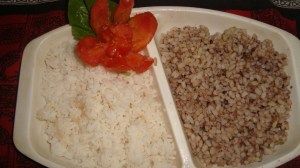
Local rice varieties

The first handfuls of grain were beaten in a stone or wood “ural” to separate the raw rice from the grain. This was made into the first pongal of the harvest. Everyone who helped would be invited for a meal and given bags of grains.

Family members who had died were also remembered on that day and a large variety of food was made. My mother mentions that a special offering was made that day, as part of the remembrance ritual, called the “puthir.” Her grandmother used to take some of the pongal made from the first rice from the harvest and spread it out on a large tray. Then, all types of available fruits were cut up and layered on top of the pongal. Honey was poured over the fruits. A sampling of all the vegetable curries that were made were also layered on top of the pongal-fruit-honey mix. Finally, ghee was poured over the tray of food and everything was mixed together. After the prayers were made, a little “puthir” was handed as “prasadham” (blessed offering) to everyone present.

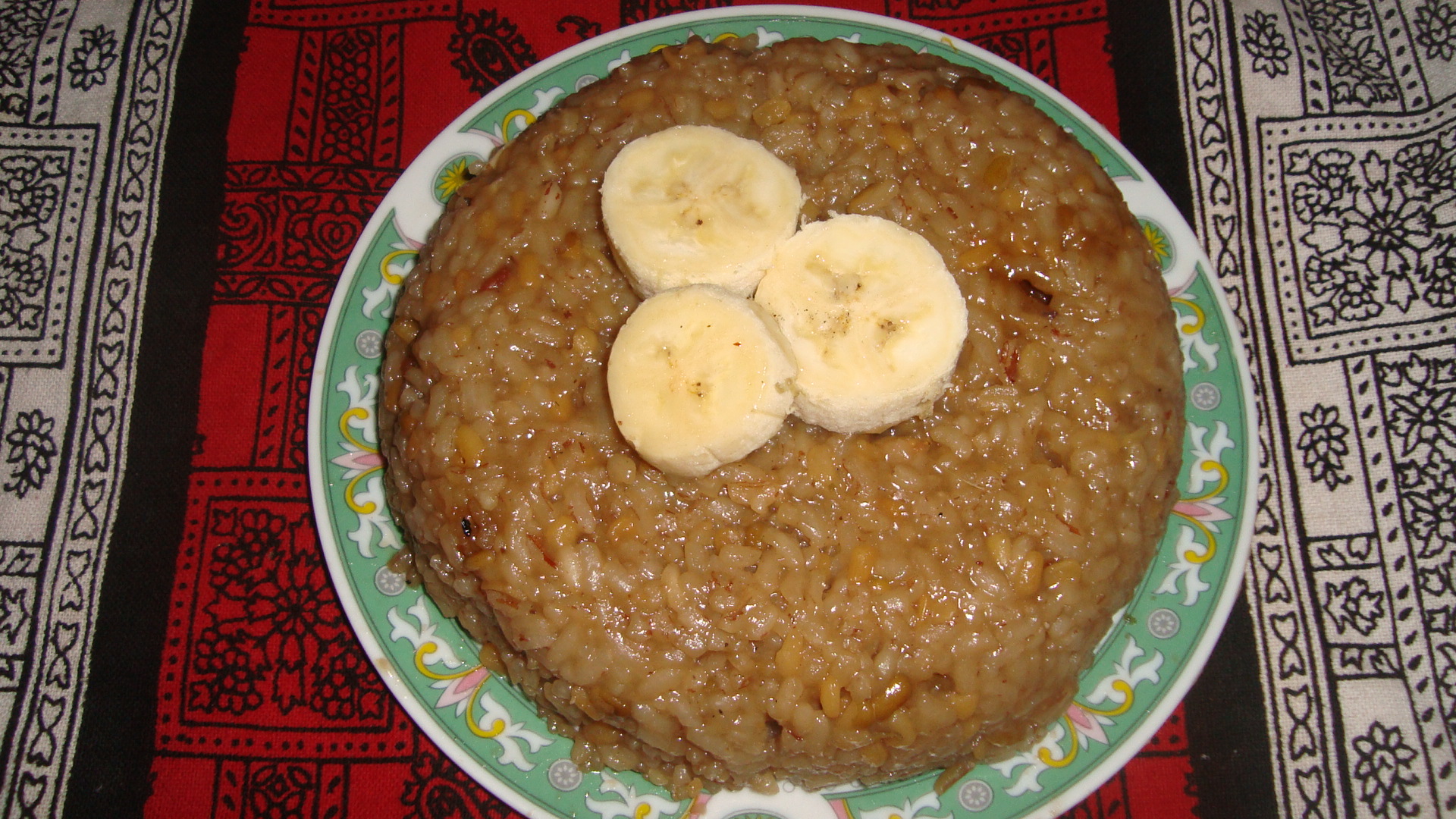
Today, I will share the recipe of pongal that is made with the first harvest of the season by farmers and by non-farmers on festival days such as the Pongal festival in January, New Year in April and other celebrations.

Pongal

Cooking time: 30 to 40 mins

Serves 4 or 5
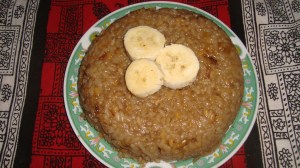
Pongal

Ingredients:

  • Rice – 1 cup
  • Roasted split gram (without skin) – ¼ cup
  • Jaggery – 1 cup (grated)
  • Coconut – ½
  • Cardamom – 4 or 5, crushed
  • Cashew nuts – few, chopped
  • Raisins – 1 tbsp
  • Water

Method:

  1. Wash the rice and gram and cook them in a pot with 2 ½ cups of water. Cook for around 15 to 20 mins, till the water dries up.
  2. Grind and extract coconut milk by blending the freshly scraped half of a coconut with 1 cup of water.
  3. Once the rice and gram is cooked, add the grated jaggery and mix.
  4. Then, add the coconut milk and crushed cardamoms. Bring to a boil on high heat and cook for a few more minutes before reducing the heat.
  5. Add the chopped cashew nuts. Cook until the pongal mixture starts coming together and starts to thicken.
  6. Just before removing from heat, add the raisins and mix.
  7. Remove from heat and cover.
  8. Serve pongal with bananas.

Recipe source: Raji Thillainathan.

Vadai and Pachai Sambal

Black gram, or urad dhal, plays an important role in the cuisine of the north. It is one of the gram varieties cultivated in the seasons in between paddy cultivation and is a major source of nutrition.

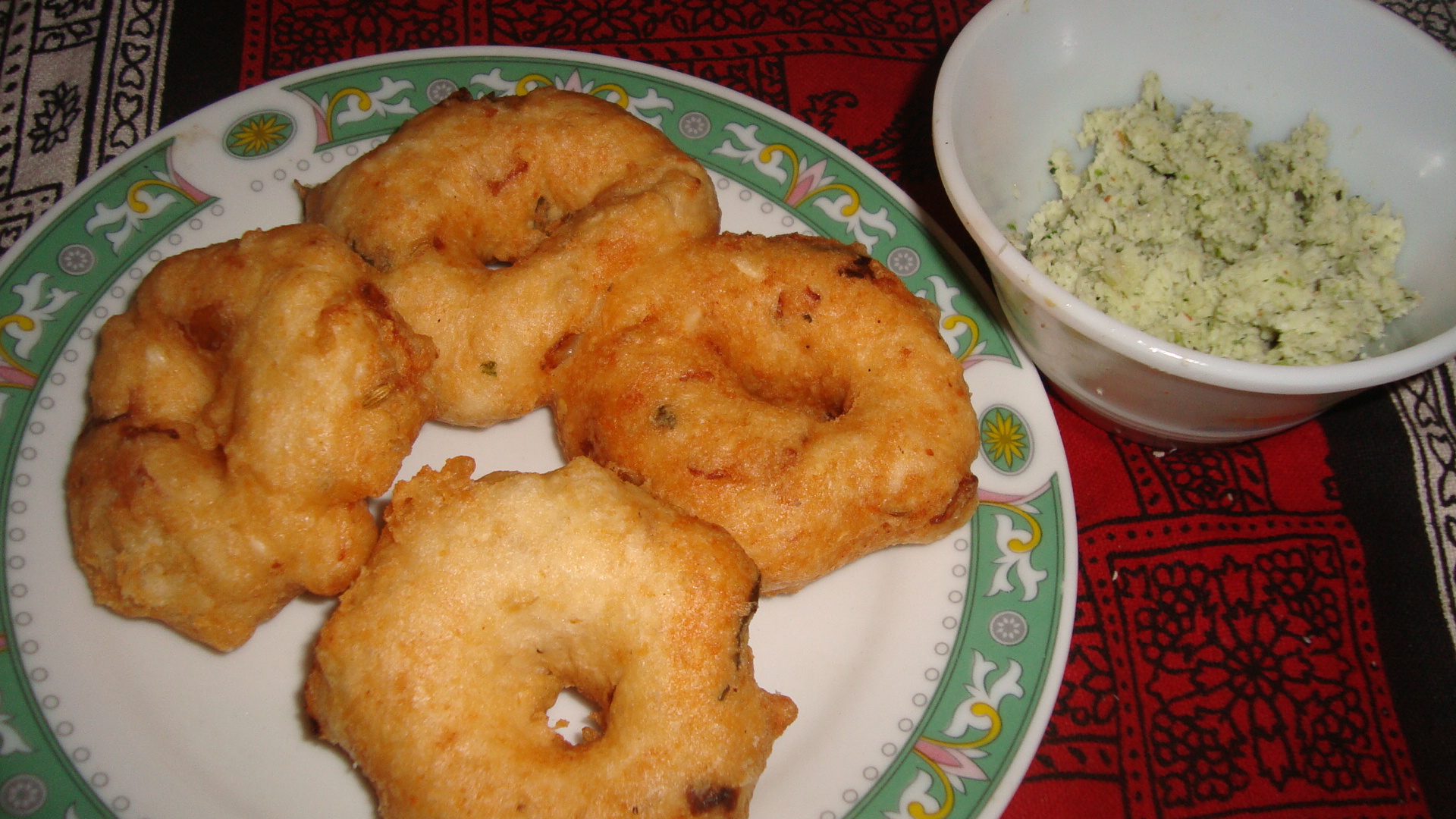
Today, I will share my mother’s recipe for her famous vadais as well as a green gram snack in my next post. Vadai can be breakfast food or a tea-time snack or can be served with lunch or dinner. It is the most common snack under the Tamil cuisine of the country and is quite popular around the country.

Vadai with Sambal

(a) Vadai

Cooking time: 20 – 30 mins + 4 hrs (fermenting time)

Makes 10 vadai

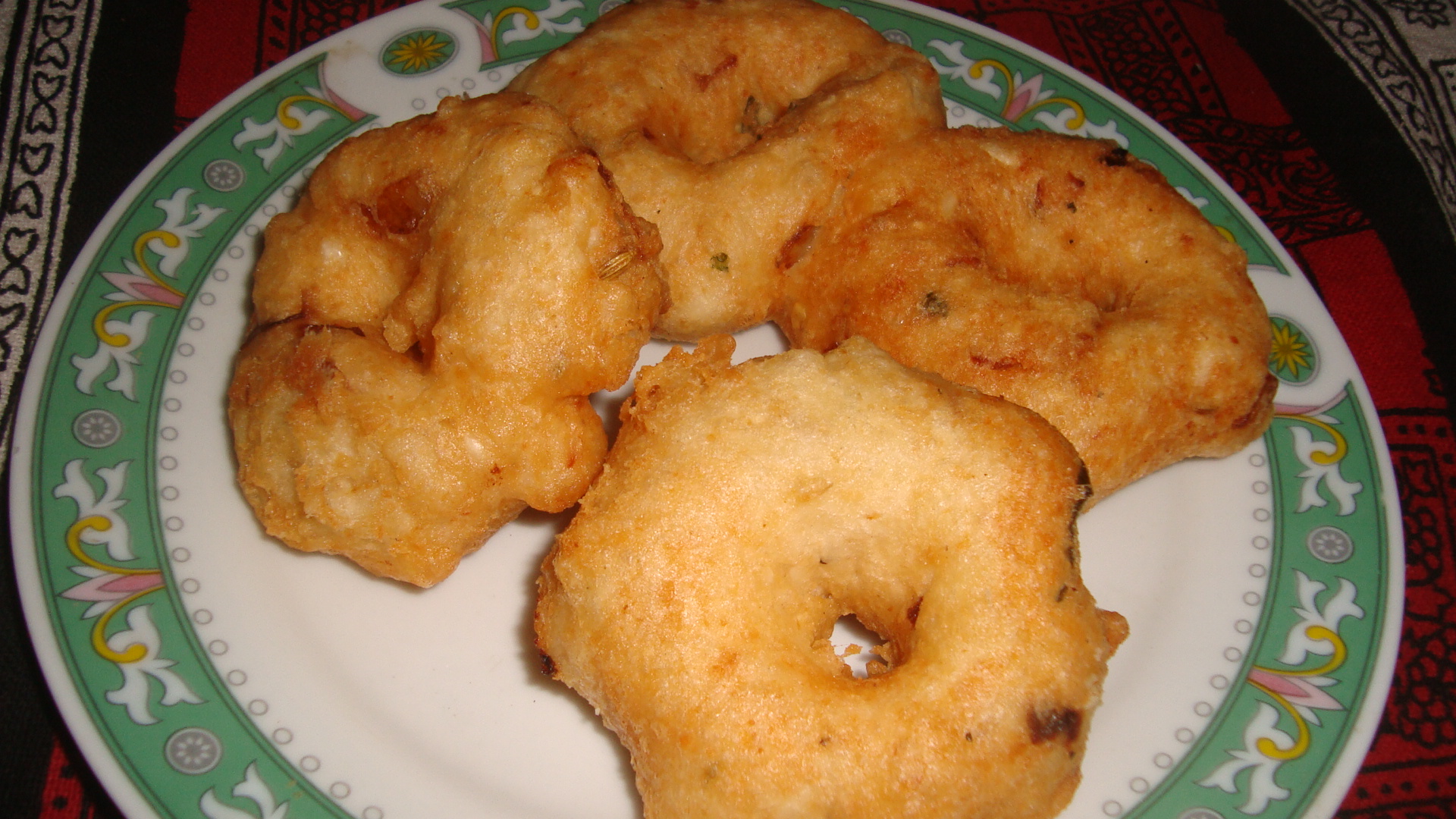
Vadai

Ingredients

  • Urad dal/ black gram – 1 cup, skin removed
  • Green chillies – 2, chopped
  • Onion – 1, medium sized and chopped
  • Curry leaves – 2 sprigs
  • Coriander leaves – 1 tbsp, chopped
  • Baking powder – 1 tsp (optional)
  • Low fat oil (sunflower or canola) – ½ litre (for deep frying) + 1 tsp (for sauté)
  • Salt, to taste

Method:

  1. Soak the black gram, without the skin, for 3 – 4 hours.
  2. Grind with a little water to thick batter.
  3. Heat 1 tsp oil in a pan and lightly sauté the chopped onion, chillies and curry leaves.
  4. Transfer the contents of the pan and the coriander leaves to the batter mix and add salt to taste. If you prefer, you can also add 1 tsp baking powder.
  5. Mix well and keep aside for 5 mins.
  6.  Heat ½ l oil in the pan.
  7. Take a piece of banana leaf or something equivalent, dab some water on the surface and put a spoonful of batter onto the leaf. Shape it into a round or elliptical shape with a hole in the middle, like a mini doughnut.
  8. Transfer to the oil pan, 3 to 4 at a time, and fry until golden brown on both sides.
  9. Serve with pachai sambal.

 (b) Pachai sambal

Preparation time: 5 – 10 mins

Serves 4

Pachai Sambal

Ingredients:

  • Freshly scraped coconut – ½ cup
  • Green chillies – 2, chopped
  • Onion – ¼, chopped
  • Ginger – ½ “ (optional)
  • Curry leaves – 1 sprig, chopped
  • Salt, to taste

Method:

  1. Mix and grind all ingredients and add salt, to taste.

Recipe source: Raji Thillainathan.

Kiri Koss

Today’s guest blogger is Indika and her favourite recipe is Kiri Koss.

Kiri Koss

Cooking time: 30 mins

Serves 5

Ingredients:

  • 3 cups of unripe Jack-fruit
  • 1 medium onion, finely chopped
  • 2 green chillies
  • 2 cups coconut milk
  • curry leaves
  • 1/2 tsp turmeric powder
  • 1 tsp curry powder
  • 1 tsp chillie powder
  • salt to taste

Method:

  1. Clean and de-seed the the Jack-fruit. Cut the Jack-fruit into thin long stripes. Clean the seeds and cut them into two.
  2. Mix the Jack-fruit, the seeds and all the other ingredients and the the coconut milk in a pan.
  3. Put the pan on a medium flame, cover and cook for about 30 mins, until the jack-fruit is well done.

Recipe source: Indika K.

Polos and Kos Mallung

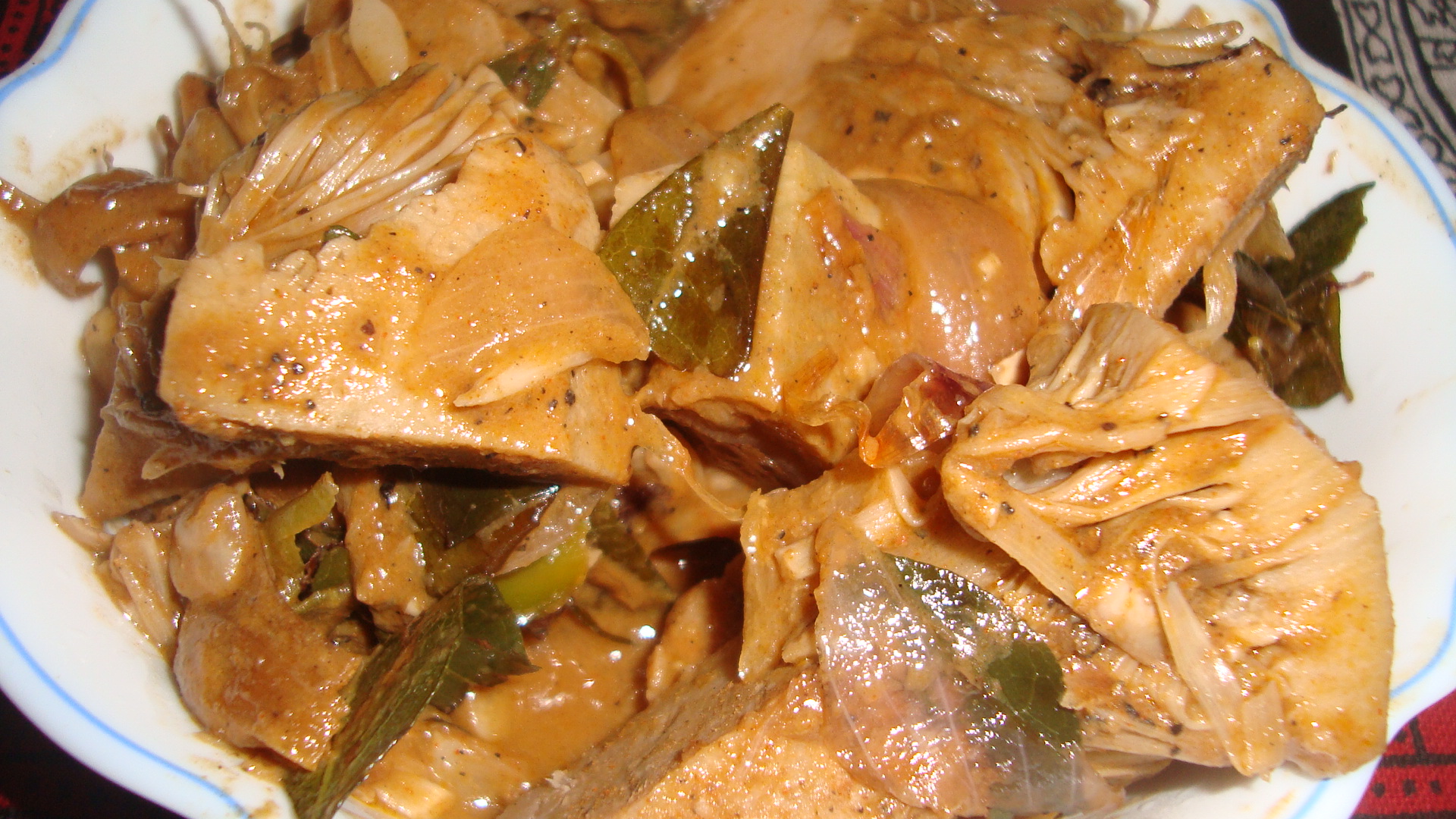
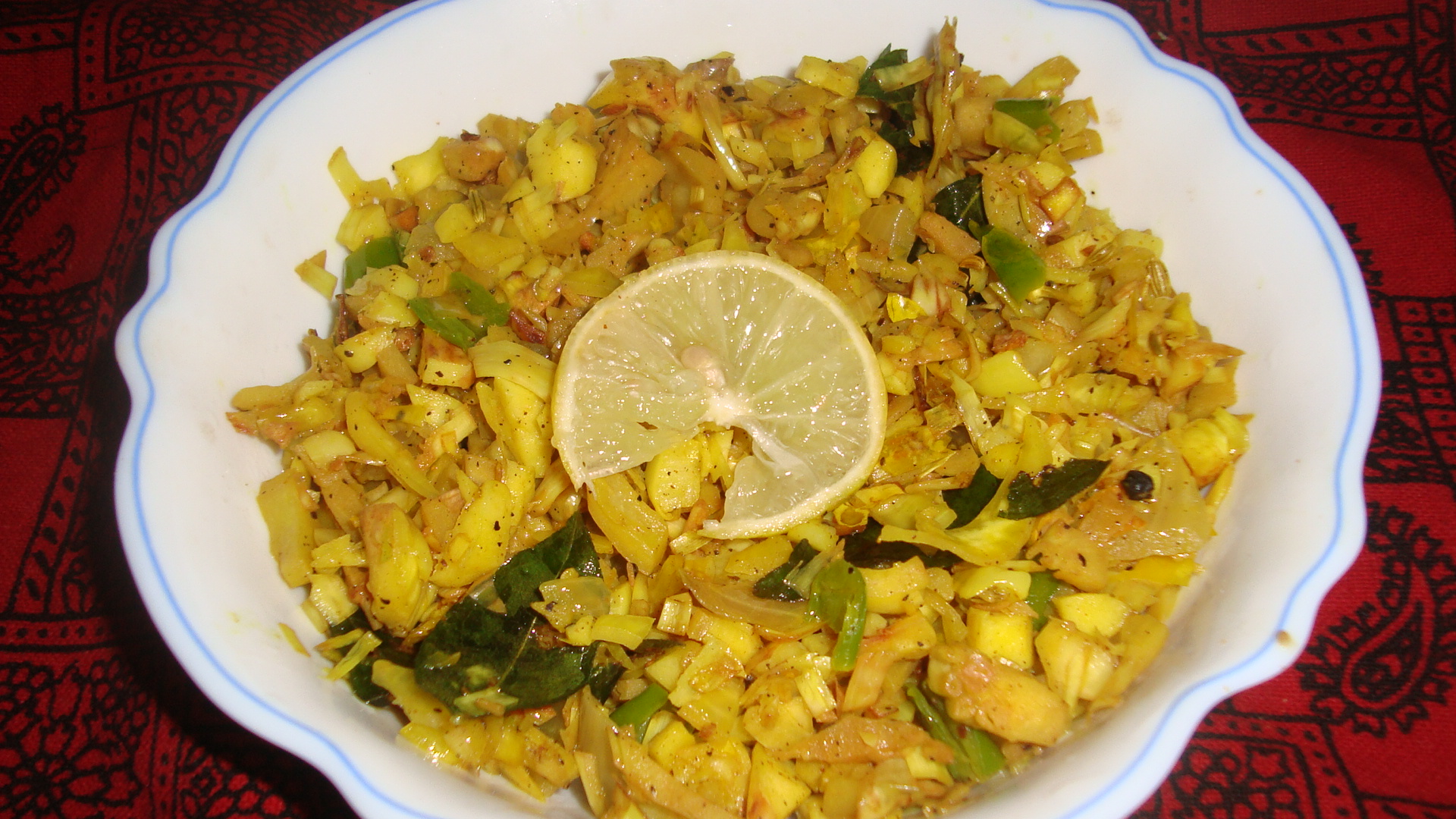
Jackfruit, both the unripe and ripe fruit, is very popular in Sri Lanka. The unripe jackfruit is cooked in different styles across the country. My mother and I like the Southern style. My mother’s unripe jackfruit dishes therefore are a slightly adapted version of her friend’s recipes for polos and kos mallung.  While I will certainly post the long and traditional way of cooking polos when someone sends me the recipe for it, today I would like to share the adapted recipes that my mother uses.

(a) Polos

Cooking time: 1 hour

Serves 4

Polos

Ingredients

  • Unripe jackfruit/ kos/ palakkai – 2 ½ cup (250 g), chopped and cleaned after peeling off skin
  • Chillies – 2
  • Coriander seeds – 1 tsp
  • Cumin seeds – 1 tsp
  • Cloves – 3
  • Cinnamon – small piece
  • Cardamon – 3
  • Ginger – ½”
  • Garlic – 3 – 4 cloves
  • Curry leaves – 1 sprig
  • Rampe leaf/ pandan
  • Onion – ½, large and chopped
  • Freshly scraped coconut – ¼ cup
  • Salt, to taste – 1 tsp
  • Tamarind extract – ¼ cup or Goraka/ Garcinia Cambogia – small piece
  • Water – 1 ½ cups

Method:

  1. Put the cleaned and chopped up raw jackfruit in a pot. Add 1 ½ cups of water and cook for about 15 – 20 minutes till the water dries up. Remove from heat and drain off the water.
  2. Dry roast the chillies, coriander and cumin, grind them and add to the pot.
  3. Crush the ginger and garlic and add the ginger-garlic paste to the pot.
  4. Add the cloves, cinnamon and cardamom together with the chopped onion, curry leaves and rampe leaf to the pot.
  5. Blend ¼ cup of freshly scraped coconut with 2 cups of water. Strain and add the coconut milk to the pot.
  6. Add the goraka piece or tamarind extract to the pot.
  7. Add salt to taste and mix all ingredients in the pot well.
  8. Put the pot back on the stove and cook for 10 minutes.
  9. Then, reduce to low heat and simmer for about 30 mins. If the ingredients are scaled up, the simmering time also needs to be increased. For e.g. if 1 Kg of jackfruit is being cooked, the simmering time will need to be at least 2 hours.
  10. If you prefer having more gravy in your polos curry, add a little coconut milk and cook for a few minutes more before removing from heat.
  11. Serve with rice.

(b) Kos Mallung

Cooking time – 25 mins

Serves 4

Kos Mallung

Ingredients:

  • Young, unripe jackfruit/ kos/ palakkai – 2 cups, finely chopped after peeling off the skin and cleaning it
  • Salt – ½ tsp + more, as per taste
  • Pepper – ½ tsp
  • Turmeric – ½ tsp
  • Garlic – 4 – 5 cloves, chopped
  • Green chillies – 2
  • Onion – 1, small, chopped
  • Curry leaves – 1 sprig
  • Scraped coconut – 1 tbsp (optional)
  • Lime juice – 1 tsp
  • Low fat oil (canola or sunflower) – 1 tbsp
  • Water – ½ cup

Method:

  1. Marinate the finely chopped unripe jackfruit flesh and seed with ½ tsp salt, pepper and turmeric powder. Keep aside for about 10 minutes.
  2. Heat 1 tbsp oil in a pan and sauté the chopped garlic, chillies, onion and curry leaves for 2 minutes.
  3. Add the marinated finely chopped jackfruit to the pan. Mix well.
  4. Add ½ cup water and test for salt, adding more if required. Cover and cook on low heat for 10 minutes.
  5. Uncover after 10 minutes and if there is still water in the pan, cook till the water dries up.
  6. If you like adding scraped coconut, you can add the freshly scraped coconut now and remove from heat.
  7. Add 1 tsp lime juice. Mix well and serve hot with rice.

Recipe source: Lalitha Senadheera and Raji Thillainathan.

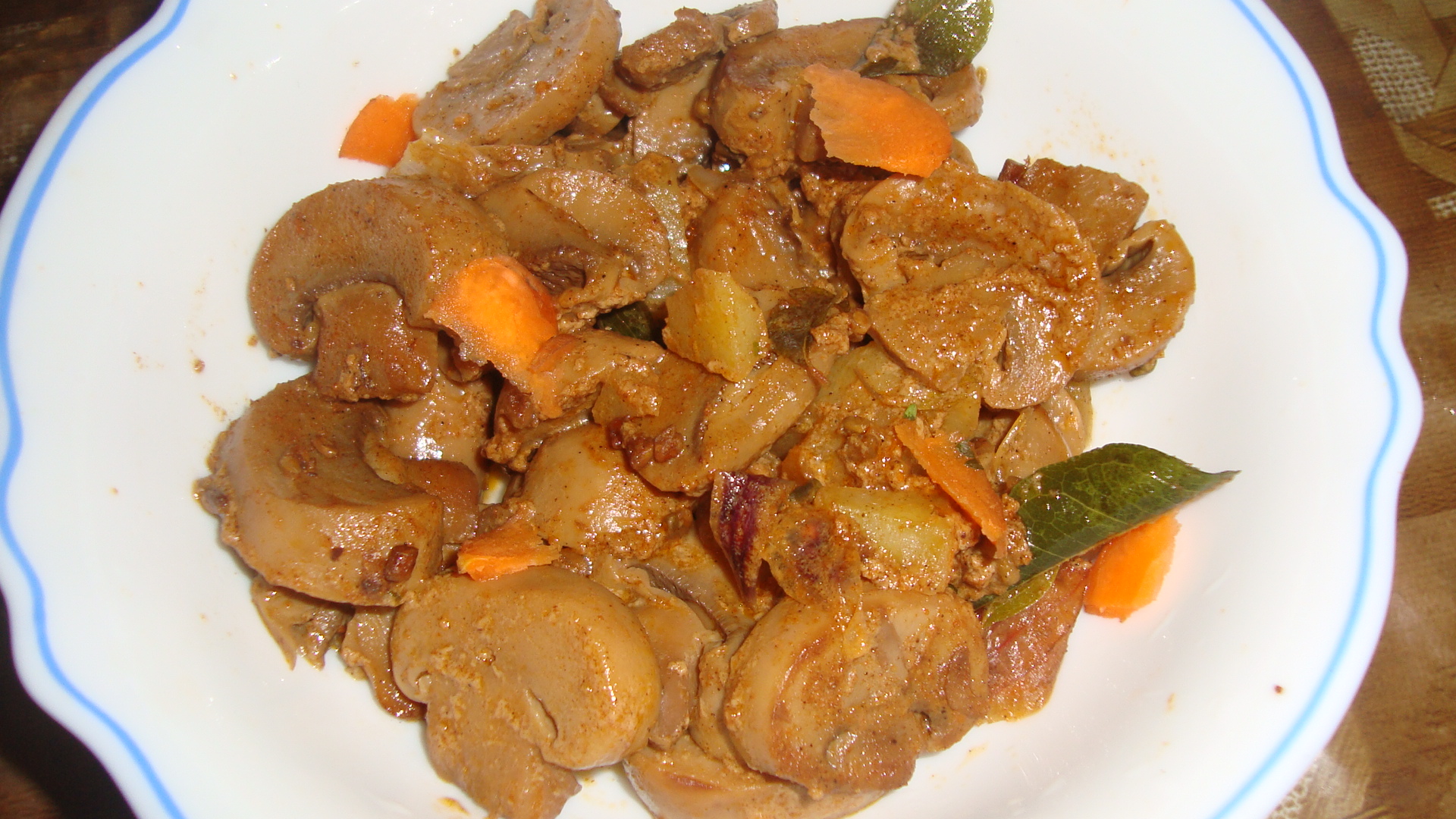
Mushroom curry

My mother tells me that my grandmother was very fond of wild mushrooms and she liked picking them fresh. It seems that mushrooms sprout overnight after a heavy rainfall with a lot of thunder but they turn poisonous once the sun rises and they bloom. My grandmother used to go to her field just before dawn and pick the mushrooms, with its stalks, which grew under a particular huge tree. There were also snake holes around that tree where snakes did live but my grandmother was quite a fearless woman.

While her children and grandchildren no longer neither live near fields nor would we know how to identify good mushrooms and when we should pick them, my grandmother’s fondness for mushrooms has been transferred to everyone at home.

So, here’s my grandmother’s mushroom recipe as remembered and very often replicated at home by my mother.

Mushroom curry

Cooking time: 15 mins

Serves 4

Mushroom curry

Ingredients

  • Mushrooms (Button/Agaricus or Crimini) – 1 cup, sliced
  • Garlic – 3 or 4 cloves
  • Ginger – 1” piece
  • Curry leaves – 2 sprigs
  • Coconut milk – 1 cup (thin or ½ cup coconut milk mixed with ½ cup water) + ¼ cup thick (optional)
  • Curry powder – 1 tbsp
  • Mixed dry roasted spice powder – fennel, cardamom, cinnamon and clove (3C + fennel) – 1 tsp
  • Salt, to taste

Method

  1. Heat 1 tsp oil in a pan and sauté the garlic, ginger and curry leaves.
  2. When the aroma begins to waft about, add the sliced mushrooms and mix well.
  3. Add 1 cup of thin coconut milk and add curry powder and salt. Cook for around 10 to 12 mins.
  4. Add the mixed dry roasted spice powder together with ¼ cup milk, if the curry has dried up or if you prefer it with gravy, and let the curry simmer for a few minutes before removing from heat.
  5. Serve hot with rice or rotis.

Recipe source: Raji Thillainathan.

Mulai keerai aviyal

This is my grandmother’s recipe, as often cooked at home by my mother. Since I was on an Indian culinary journey last month, I realize that this recipe resembles a simpler variant of the Kerala avial, sans the curd.

Mulai keerai aviyal

Cooking time: 10 – 12 mins

Serves 4

Mulai keerai

Ingredients:

  • Amaranth greens/ mulai keerai/ thampala – 2½ cup, washed thoroughly and finely chopped
  • Carrot – ½ cup, sliced
  • Chilli – 1, chopped
  • Onion – 1 small, chopped
  • Garlic – 1 or 2 cloves, chopped
  • Salt to taste
  • Water
  • Scraped coconut – 1 tbsp

Method:

  1. Put the washed and chopped vegetables in a pot with ½ cup of water and salt. Cook till the veggies are tender and the water dries up.
  2. Add the scraped coconut, mix well and cook for another 2 mins.
  3. Serve hot with rice.

Recipe source: Raji Thillainathan.

Fish cutlets

Today’s guest blogger is Krishanti Weerakoon, a staff of UN and wife of the Sri Lankan High Commissioner to Canada.

FISH CUTLETS

This is a fool-proof  Sri Lankan recipe and on all of our postings overseas, this was an absolute favourite.  A versatile and excellent snack for coffee mornings, afternoon teas, lunches , cocktail parties,with pre dinner drinks or even  with dinner!! Make sure you have enough to go around as these small morsels have an explosion on your taste buds with the spices and aromatics and they are very popular. Reduce the intensity of the chillies depending on your guests’  tolerance for spice!!

Ingredients:
1 tin tuna ( 450 gram)
2 small green chillies cut finely
1 small onion diced
1/2  tsp black pepper
1/2 tsp chillie powder

I large potato peeled and boiled and mashed
I clove garlic crushed
1 tsp chopped ginger
I tsp each ground coriander and cummin

I tsp lime juice
I lb bread crumbs ( 450 gms)
2 eggs

3 tbsp flour
salt

1 pint oil for deep frying.

Method:
Mix all the ingredients except one egg and flour , breadcrumbs and oil in a bowl. Make small balls about the size of a  walnut.

Break the other egg into a bowl and beat lightly with a fork. Then  put the flour and breadcrumbs into two seperate bowls. Follow this order; first roll the cutlet in flour, then egg and lastly breadcrumbs. Treat it like an assembly line!! Use up all the fish mixture this way!

Heat oil to smoking point in a wok or fryer. Fry the cutlets until golden brown . Do not add too many at a time as it will lower the temperature of the oil and will not fry evenly. Ensure that oil stays hot when frying to ensure crispy cutlets. Serve with a nice dip either sweet chilli sauce or tomato/barbecue sauce.

Recipe source: Krishanti Weerakoon.

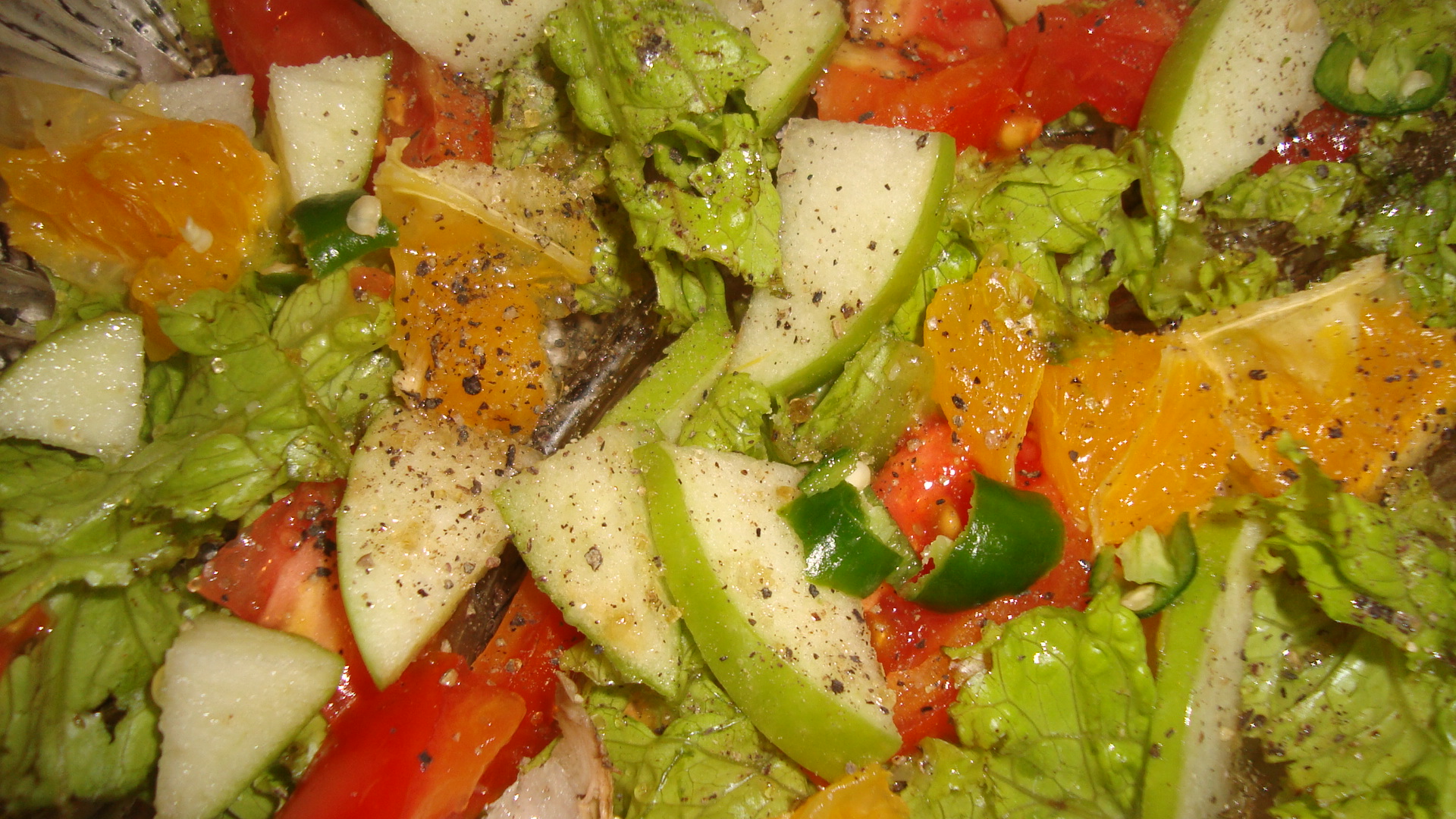
Salad

As part of the Eid Special series,

(d) Salad

Preparation time: 5 – 10mins

Serves 4

Salad

Ingredients:

  • Orange – ½, peel removed
  • Apple – ½
  • Tomato -1 small
  • Onion – 1 small
  • Chillies – 2 or capsicum – 1
  • Salad leaves – 1
  • Salt and pepper, to taste
  • Sugar – 1 tsp, can be adjusted to taste
  • Lime juice – 1tbsp (Optional: can use yoghurt instead of lime juice)

Method:

  1. Chop up the vegetables and fruits.
  2. Make the salad dressing by mixing salt, pepper, sugar and lime juice.
  3. Toss the salad with the dressing.

Recipe source: Raji Thillainathan.

Potato curry

(c) Potato curry

Cooking time – 20 mins

Serves 4 – 5 persons

Potato curry

Ingredients:

  • Potatoes – 2 large
  • Onion -1 medium sized
  • Fenugreek seeds – 1 tsp
  • Rampe leaf/ pandan
  • Curry leaves – 2 sprigs
  • Water – 2 cups
  • Non-fat milk – ½ cup + ¼ cup (optional) – Can substitute with coconut milk, if vegan
  • Curry powder – 2 tsp
  • Salt, to taste
  • Low fat oil (Canola or sunflower) – 1 tbsp

Method:

  1. Cut the potatoes into small chunks.
  2. Heat a little oil in a pan. Saute the fenugreek, onion, rampe and curry leaves for a few seconds.
  3. Add the potatoes to the pan, mix well and fry for about two minutes till there is a nice aroma of fried potatoes.
  4.  Add 2 cup of water and ½ cup of milk. Add the curry powder and salt to taste.
  5. Cook the curry for around 10 to 15 mins. When the liquid dries up, it can be removed from heat.
  6. If you like the curry in gravy, add the optional ¼ cup milk and cook a few minutes more before removing from heat.

Recipe source: Raji Thillainathan.