Breuder

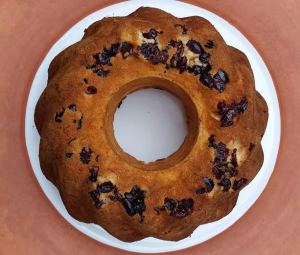
During Christmas season, the popular cake/ bread that is ordered from bakeries in Sri Lanka is the breuder. This is a speciality of the Burgher cuisine of Sri Lanka. I had been trying for some time to find someone to contribute a home-made recipe of this delicious bread. I was delighted to finally come across another blogger and invited him to share his family recipe on this blog as well. Here is the guest post of Paul van Reyk, from My Buth Kuddeh food site, with his introduction to his family tradition of baking breuder and his recipe. Wishing you all a merry Christmas!

No Christmas at our house in Sri Lanka was complete without my grandmother’s breuder. It’s basically a cakey bread, based on a yeasted dough but with the sweetness of a sponge cake, related to Italian pannetone. It’s a direct entry into Sri Lanka cuisine via the Dutch Broodtulband named for the fluted ‘turban’ shaped mould used to make it. Further embedding the Dutch connection, brueder is traditionally eaten in Sri Lankan Burgher households in slices covered in butter and topped with a thick slice of Edam cheese. There is something very festive about that red waxy ball which sliced open reveals a pale European sun yellow cheese. Making the breuder, I am transported back to the kitchen of my childhood, watching my grandmother knead the dough, having the thrill of buttering the mould and pressing sultanas against the sides anxious that they stay in place, full of expectation as it was taken to my uncles house across the road as we didn’t have an oven, and then the excitement of un-moulding this magical transformation of so few ingredients hoping desperately that it comes away cleanly. The smile on grannie’s face when it does was more rewarding almost than the first bite into its soft, crumby heart.
breuder

Breuder

  • Difficulty: difficult
  • Print

Ingredients:

  • 500gms plain flour
  • 50 gms butter
  • baker’s yeast
  • 1 tsp sugar
  • water
  • 6 egg yolks
  • 250 gms caster sugar
  • 125 gms currants or sultanas or raisins or a mixture of them

Method:

  1. Make the dough the night before. Take as much yeast as is recommended for your particular yeast for making bread with 500 gms of flour (it can vary so read the packet or ask when you buy it), add the yeast and the sugar to a little hot water to get the yeast started. It will froth slightly. When it’s bubbling happily, add this to the flour and mix in well. Now slowly add water and keep mixing until you have a lump of dough that lifts easily out of the bowl or off the board. Knead it for 10 minutes or so. Put it in a bowl, cover the bowl with a damp tea-towel and leave it in a warm place to rise overnight.
  1. The next day, take the dough and add to it the butter, egg yolks and sugar. Add the first three yolks separately and mix in well each time. Then add the others also one at a time alternating with dollops of the caster sugar till it is all used up. What you will have now is a very thick wet doughy batter.
  1. Butter a turban mould. Put a good sprinkle of whatever dried fruit you are using on the bottom. Squish some dried fruit against the sides of the mould, too. Pour in the batter. Sprinkle more of the dried fruit on top of the batter. If you like, and I do, you can mix some dried fruits into the batter, too.
  1. Leave this in a warm place, the mould covered with a damp cloth, for 1 or 2 hours until it rises again (it won’t rise as much as the dough did overnight).
  1. Meanwhile, pre-heat your oven to very hot – around 220C.
  1. When the dough has risen the second time, put the mould in the oven and bake for 30 minutes. Check at that stage that the breuder is cooked by poking a bamboo skewer or similar into the dough. If it comes out clean, your breuder is ready. If it doesn’t, give the breuder 10 – 15 minutes more.

Tip: Putting some baking/greaseproof/brown paper on the top will reduce the likelihood of the dried fruit burning.

  1. When it’s cooked, take it out of the oven and leave it to cool in the mould. You should then be able to give the mould a good thump and have the brooder come cleanly out of it.

Resist all temptation to ice or otherwise muck around with the breuder! Just slice it up and have some butter and Edam or cheddar cheese to have it with. But you are allowed to make summer pudding with the left over breuder if you like, or indeed any of those bread pudding dishes.

Recipe source: Paul van Reyk
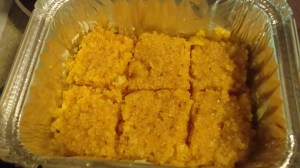
Semolina and Coconut Sweets

I wanted to make some Sri Lankan sweets this month. As I was browsing through some Sri Lankan food sites, I came across one that I wanted to try out. Coconut rocks are quite popular in Sri Lanka and are sold in most shops as well as occasionally made in homes. I decided to slightly adapt this recipe of Dhanish @My Sri Lankan Recipe, which merges semolina with the traditional sweet. I am bringing these scrumptious sweets to Angie’s Fiesta Friday.

DSC01346Today’s music features some Grammy award-winning musicians from Mali. I have a couple of friends who are huge fans of music from Mali, which is how I was introduced to some of the music I am sharing here.
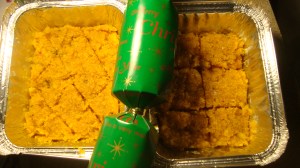

The first music clip features Toumani Diabate and Ali Farka Toure.

The second clip is a music video by the group Tinariwen. They performed at the recent London jazz festival.

The last clip for today is a music video from Amadou and Mariam.

Enjoy the music while trying out a piece of the semolina and coconut sweet!

DSC01347

Semolina and Coconut Sweet

  • Servings: 12
  • Difficulty: easy
  • Print

Ingredients:

  • Semolina – 150g
  • Coconut – 50g, grated
  • Coconut water – 4 tbsp
  • Sugar – 4 tbsp
  • Cardamom – 1 tsp
  • Kesari powder – pinch
  • Almonds – 1 tsp, chopped
  • Vanilla essence – 1 tsp
  • Cream or condensed milk (vegans can substitute with non-dairy cream) – 4 tbsp

Method:

  1. Heat the coconut water and sugar together over low heat until it thickens.
  2. Then add the semolina, while continuously stirring.
  3. Once all the semolina has been added and the mixture starts to thicken, add the fresh, grated coconut.
  4. Mix well and add the cardamom, kesari, chopped almonds and vanilla essence to the mix.
  5. Finally stir in the cream or condensed milk before removing the pan from the heat.
  6. Transfer mixture to well-greased tray and let the sweet cool before slicing and serving.

Recipe adapted from My Sri Lankan Recipe

Potato Layered Pie

This week’s recipe is the last of the five recipes sent in by Trevor Martil. I am bringing this recipe, together with some lovely music from Senegal, to Fiesta Friday.

Today’s featured musician is Youssou N’Dour. The first clip is from an 80s concert of Le Super Etoile de Dakar.

The next clip is a music video (1994) composed by Youssou N’Dour, Neneh Cherry, Cameron McVey and Jonathan Sharp.

Hope you enjoyed the songs and do send me your feedback if you try out the recipe given below! 🙂

Potato Layered Pie

  • Servings: 4
  • Difficulty: average
  • Print

Ingredients:

  • 250g flaky pastry
  • 250g potatoes
  • 150g boiled minced meat (vegetarians can substitute this with mushroom or vegetarian sausage)
  • 30g butter or vegetable oil margarine
  • 1 egg
  • salt and pepper, to taste
  • MD ginger paste and garlic paste
  • 1 tablespoon MD tomato sauce and chilli sauce
  • onions
  • curry leaves
  • 30g cheese
  • parsley and chopped tomatoes, for garnish

Method:

  1. Make flaky pastry and keep aside.
  2. Stir-fry onions, curry leaves, ginger and garlic paste, boiled minced meat or vegetarian substitute and boiled mashed potatoes.
  3. Mix the tempered ingredients well.
  4. Add a beaten egg, sauces and seasoning.
  5. Roll the pastry cut into squares.
  6. Sprinkle cheese and parsley and the potato mixture. Roll it to a cone shape.
  7. Bake for 30 minutes.
  8. Garnish with parsley and tomatoes.

Recipe source: Trevor Martil.

Surprise Delight

This week’s recipe is from Trevor Martil, who shares another of his mother’s favourite recipes – a dessert she named ‘surprise delight.’ I am bringing this recipe together with some lovely songs, from a country I visited three years ago, to Fiesta Friday.

While there were several highlights of my trip, the most inspiring was the visit to Robben Island. And yes, I was also introduced to some south African music while there. Today’s music features some of the South African music that I enjoyed starting with Mama Afrika – Miriam Makeba.

The other clip for today is from the Soweto Gospel Choir.

Hope you enjoyed the music and do send me your feedback if you try out the recipe given below! 🙂

Surprise Delight

  • Servings: 8
  • Difficulty: average
  • Print

Ingredients:

  • 2 tablespoons low sugar mixed fruit jam
  • 1 1/2 cups mixed fruit cordial
  • 1 can cocktail fruits
  • 1 tablespoon condensed milk
  • 2 cups cake crumbs
  • 60g cashew nuts
  • 60g sugar
  • 3 dessertspoons corn flour
  • 1 1/2 cups water
  • 2 egg whites
  • 2 teaspoons gelatin or agar-agar
  • 1 packet strawberry jelly (jelly, 2 cups water, 15g china moss)

Method:

  1. Mix cake crumbs with mixed fruit jam, cashew nuts and press into shallow dish. Leave to set.
  2. Add cordial, water, corn flour, gelatin to a pan and cook till it thickens.
  3. Take off heat, add condensed milk and stiffly beat in egg whites.
  4. Mash mixed fruits, spread over cake crumbs.
  5. Pour the cordial custard over it.
  6. Make the jelly.
  7. Once set, chop the jelly and spread it over the custard.
  8. Sprinkle nuts.
  9. Chill and serve.

Recipe source: Trevor Martil.

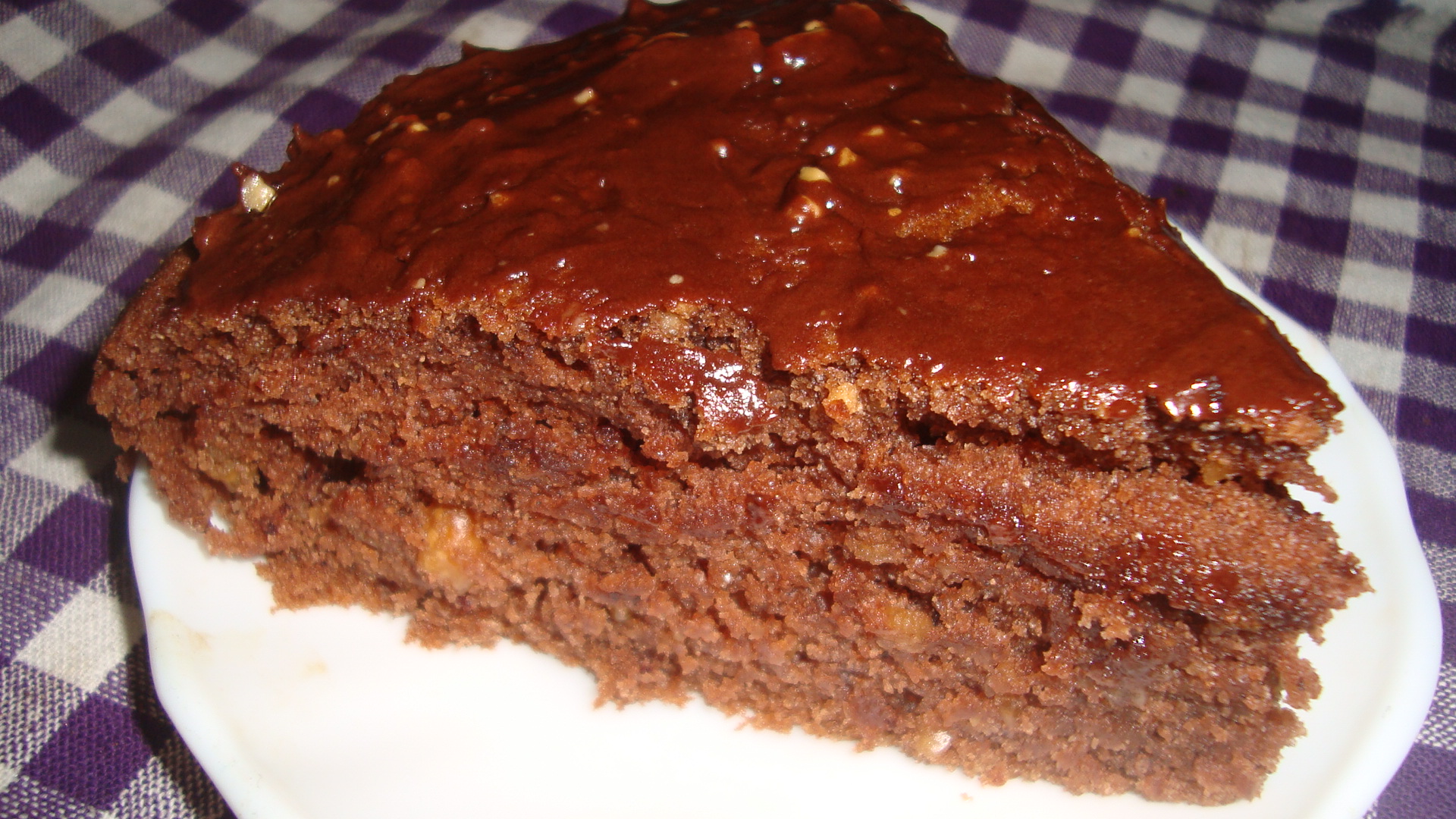
Peanut Chocolate Cake

Today, I wish to re-post a delicious chocolate cake recipe of my mother that I had posted last year.

Today’s music features Arabic pop. The first clip is a song, by Samira Said and Cheb Mami, that has special meaning to me. Sometimes when I am stuck in my writing process, I turn to music to clear my head and focus. The type of music that helps me at one time does not necessarily help at another time so I usually experiment with a few before I come across the right one for the particular writing. One of the times I faced a writing block was during the writing of my master’s thesis. After several non-productive days and many music listening hours later, I found myself listening to an online Arabic pop radio stream. From the moment, this song came on, I felt very much energized and focused and soon started working on my writing. This was the song that pulled me through the subsequent weeks of thesis writing and as such, I retain a fondness for it.

The next clip is a recent release of Diana Haddad, another Arabic pop singer that I used to listen to.

Have a wonderful day and enjoy this cake!
Peanut chocolate cake

Peanut Chocolate Cake

  • Servings: 8-10
  • Difficulty: average
  • Print

Peanut Chocolate Cake
Ingredients:

  • Vegetable oil margarine – ¾ cup + 1 tbsp (for frosting)
  • Sugar – 1 cup
  • Banana – ½ , as an egg substitute
  • Wheat flour – 1 ½ cup
  • Soya milk – 1 cup
  • Peanut – ½ cup, coarsely ground + 2 tbsp (for frosting)
  • Vanilla – 2 tsp
  • Cocoa powder – 2 tbsp + 1 tsp (for frosting)
  • Baking powder – 1 tsp
  • Baking soda – ½ tsp
  • Icing sugar – 2 tbsp, for frosting

Method:

  1. Sift the dry ingredients – the wheat flour together with the cocoa powder, baking powder and baking soda – and keep aside.
  2. Mash the banana in a bowl. Add the margarine and sugar to the bowl and whisk them together.
  3. Gradually add the soya milk and continue whisking.
  4. Stir in the coarsely ground peanuts and vanilla essence.
  5. Slowly fold in the dry ingredients.
  6. Pour the cake batter into a greased tray and bake at 190⁰C/374⁰F for 40 mins.
  7. Whisk 1 tbsp margarine together with 1 tsp cocoa powder, 2 tbsp icing sugar and 2 tsp ground nuts to make the frosting.
  8. Spread evenly on surface of the peanut chocolate cake, after the cake has sufficiently cooled.

Recipe source: Raji Thillainathan.

Pineapple Clove Bread

Today’s recipe is another of my baking experiments. My favourite aspect of cooking is baking. Ever since I tried out Kitchen Cici’s delicious rosemary cheese bread, I have started experimenting with breads. I had originally intended to make pineapple muffins but I guess people at home were kind of tired of my weekly experimental muffins so I decided to switch to bread which I also enjoy making. I adapted Jamie Oliver’s basic bread recipe to include pineapple and cloves. It turned out great so I am sharing it here at the Fiesta Friday. I will not be posting as much over the next twelve months as I did the previous year mainly because I will be away from home. However, I do have some recipes that I am yet to transcribe and post so will try to share at least one each month.
Pineapple bread
The music feature today is on raï. The first clip is an excerpt of a concert (1990) by Chaba Fadela and Cheb Sahraoui.

The next clip is a recent release of Cheb Khaled, whose song Didi was my introduction to raï music.

Hope you enjoy the music and this delicious bread!
DSC01248

Pineapple Clove Bread

  • Servings: 8
  • Difficulty: average
  • Print

Ingredients:

  • All-purpose flour – 2 ½ to 3 cups
  • Water – ¾ to 1 cup, warm but not hot
  • Instant yeast – 7g
  • Sugar – 1 tbsp + 6 tbsp
  • Salt – ¼ tbsp
  • Ground cloves – ½ tsp + pinch (optional)
  • Pineapple – 1, medium or small (depending on how much pineapple you want in your bread)

Method:

  1. Take a ¼ cup of the water and add the yeast, 1 tablespoon of sugar and pinch of salt. Let the yeast mix rest for about 5 – 10 mins and turn frothy.
  2. Sift the flour into a mixing bowl and stir in ½ tsp of ground cloves.
  3. Add the yeast mix to the flour and mix. Gradually add the remaining water little at a time till the flour-yeast mix becomes a soft dough that is not sticky. Knead the dough for at least 5 mins.
  4. Transfer the dough to a lightly greased bowl and cover. Let the dough rest for about 30 mins or till it has doubled.
  5. In the meantime, roughly puree the chopped pineapple. (I used it chopped as I rather like to taste fruit chunks in my baked stuff but my mother’s feedback was that it would have been much better as a spread)
  6. Add the pineapple puree and the remaining sugar to a saucepan and warm it over low heat for couple of mins (At this point, I also added a pinch of cloves but my mother feels that it is better not to add the cloves to the pineapple puree but rather directly to the dough). Do not over-heat or cook the pineapple as it will take away its taste. Remove from heat and let it cool.
  7. When the dough has risen, transfer it to a floured surface and punch it down (I like this part).
  8. Roll out the dough and spread the sweetened pineapple puree over the surface. Roll in the dough starting from one end.
  9. Transfer the rolled dough with filling into the lightly greased baking tray and form the shape you want it to be (I like circular loaves). Brush the surface with warm sugar syrup.
  10. Bake the bread at 170⁰C for around 30 mins. The time will vary according to your oven.
  11. Let it cool for at least 15 mins before slicing and serving with some margarine.

Mothaha Muffin Crumble

I have been trying out different muffins over the last few months and I was in the mood of trying out some experimental muffins. I wanted to create some muffins which had a strong leaning towards a Sri Lankan dish. While thinking about using different local non-wheat flours, inspiration struck. I do very much like the delicacy – mothaham or kolukkattai, that my mother makes during special festivals like the ongoing Navarathri festival. I decided to try out the muffin version of this steamed dish and it turned out a cross between a muffin and a crumble. I am sharing it at both my brother’s birthday today as well as bringing some over to Fiesta Friday tomorrow.
20140906_155916
The music selection for today focuses on some lovely Persian music. The first group featured here is the Chemirani Zarb Trio, a classical percussion group. I first heard their music when they visited Sri Lanka to perform at the WOMAD concert 2005. The clip I share here is one of their performances at another WOMAD concert.

While searching for Chemirani Trio clips on youTube, I came across a few other Persian groups that I liked. The second clip is a music video by the folk group Zâr Ensemble, formerly known as the Ensemble Shanbehzadeh.

The last clip is a beautiful one by classical singer Homayoun Shajarian and instrumentalist and composer, Tahmoures Pournazeri.

Hope you enjoyed the lovely music as much as I did! As usual, please do share which clip you liked more.
20140906_155933

Mothaha Muffin Crumble

  • Servings: 9
  • Difficulty: easy
  • Print

 Ingredients:

  • Roasted red rice flour – 1/2 cup
  • All-purpose flour – 1/2 cup
  • Baking powder – 1 tsp
  • Salt, pinch
  • Green gram, de-skinned – 1/2 cup, boiled
  • Jaggery – 1/4 cup, chopped
  • Coconut – 1/4 cup, freshly scraped
  • Cardamom – 1/4 tsp
  • Margarine – 120g, melted
  • Oil, as required

Method:

  1. Melt the margarine and let it cool slightly.
  2. Mix the freshly scraped coconut, green gram, jaggery and cardamom in a bowl.
  3. Add the coconut and gram mix to the melted margarine. Stir to mix the contents a little.
  4. Sift the rice flour and all purpose flour together. Add the baking powder and salt and mix.
  5. Add the flour mix to the wet ingredient mix. If the resulting mix is too dry, just add a little oil until it is sufficiently moist.
  6. Bake the muffins for about 25 – 30 mins at 180C.
  7. Serve warm with a hot beverage.

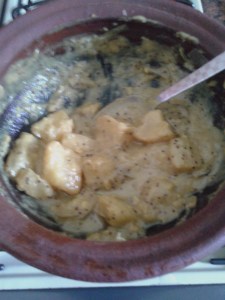
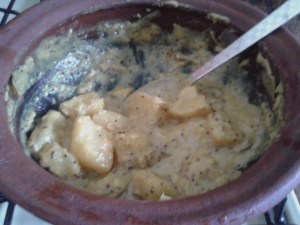
Manioca Curry

I am bringing another of my eldest sister’s curry to Fiesta Friday #33 – this time, a manioca curry.
20140827_134249
Today’s featured music group is Junoon. This band was formed in 1990 by Salman Ahmad, the lead guitarist and songwriter of the group. This group were the pioneers of the rock sub-genre, Sufi rock. I first came across this group on MTV through their chart topping song, Sayonee from their fourth album, Azadi (1997). While I could not find the music video of this ground-breaking song on Junoon’s youTube channel, I did find this clip where the group played this song at a concert.

Two of the original band members, lead vocalist Azmat Ali and bassist Brian O’Connell, left the group in 2005 to pursue solo music careers. The next clip that I share here is from Coke Studio Pakistan’s youTube channel which featured this collaborative work of Azmat Ali and Rahat Fateh Ali Khan, the nephew of Ustad Nusrat Fateh Ali Khan.

Salman Ahmad, the Junoon founder, has continued the group with different musicians sporadically over the years and has collaborated with other international musicians for several fund-raising efforts. The last clip here is from the Nobel Peace Prize Ceremony concert of 2007.

Hope you enjoyed the music of Junoon and do share which clip you enjoyed the most!
20140827_134302

Manioca Curry

  • Servings: 8
  • Difficulty: easy
  • Print

Ingredients:

  • Manioca – 1
  • Turmeric – ¼ tsp + ¼ tsp
  • Salt – ¼ tsp + 2 tsp or adjust to taste
  • Garlic cloves – 3, grated
  • Curry leaves – 1 sprig
  • Mustard – 1 tsp
  • Onion – 1, chopped
  • Coconut milk – 1 cup
  • Oil – 1 tbsp

Method:

  1. Boil the manioca with ¼ tsp turmeric and ¼ tsp salt. Cut the cooked manioc into smaller pieces and keep aside.
  2. Heat 1 tbsp oil in a pan. Add the chopped onion and curry leaves, grated cloves, mustard, 2 tsp salt and fry for a min or two. Add the cooked manioc and turmeric. Mix well.
  3. Add the coconut milk and cook till the curry thickens.
  4. Remove from heat and serve warm with rice.

Chickpea Curry

During my recent visit to my eldest sister’s house, I remembered to take photos of a couple of tasty curries she had made for lunch with my phone camera. I am bringing one of her curries, chickpea curry, to the Virtual Vegan Linky Potluck #10.

20140827_134314

Over the last few months, I have enjoyed sharing some Sri Lankan and Indian music together with the recipes. I have decided to continue with a musical journey around the globe with the food recipes. Therefore, as today’s music selection, I am sharing a couple of clips from the two I consider the best Sufi singers of this half-century : Ustad Nusrat Fateh Ali Khan (1948 – 1997), also referred to as the Shahenshah (meaning King of Kings) of Qawwali and Abida Parveen, who is also known as the Queen of Sufi music.

During my teen years in the U.A.E, I once accompanied my parents to a concert. When the guest singer, who was introduced as Pakistan’s finest musicians starting singing, I immediately recognized the song as the favourite of my Pakistani friends at my new school and which they kept playing repeatedly during lunch breaks.  The song was Dam Mast Qalandar Mast Mast and it was Ustad Nusrat Fateh Ali Khan’s concert. I admit back then I was not fond of qawwali music and it took a while to grow on me. I think I learnt to appreciate it after hearing them sung at Sufi shrines. The atmosphere creates an enhanced listening experience. It is only fitting that I share here the first qawwali song that I was introduced to.

A few years ago, during a brief trip to Delhi, I took a Sufi heritage tour with India Offtrack. Nirad Grover, part of the company’s core team, travel writer and my guide during the tour, recommended that I listen to Abida Parveen. I did that soon after and I have been impressed with her powerful voice since. This clip has been uploaded on youTube by Epic flo films and includes a summary translation of the lyrics at intervals.

Do share your memory of your first introduction to qawwali, if you enjoy listening to Sufi music. And, do let me know if you try out this chickpea curry!

20140827_134331

Kadalai Curry

  • Servings: 8
  • Difficulty: average
  • Print

Ingredients:

  • Chickpeas – 2 cups, boiled
  • Cashew nuts – 4 or 5
  • Cinnamon – 1” piece
  • Garlic – 3 or 4 cloves
  • Onion – 1
  • Curry leaves – 1 sprig
  • Salt – 2 tsp or adjust to taste
  • Turmeric – ¼ tsp
  • Curry powder – 3 tsp or adjust to taste
  • Tamarind juice – ½ cup
  • Potato – 1, boiled and mashed
  • Tomato – 1, chopped
  • Coconut milk – 1 cup
  • Oil

Method:

  1. Lightly fry the cashew nuts with crumbled cinnamon and transfer to grinder.
  2. Add the garlic cloves to the grinder and blend the mix to a coarse paste.
  3. Chop the onion and lightly fry the onion together with curry leaves.
  4. Add the coarse cashew nut paste, salt and turmeric to the pan and mix well.
  5. Add the boiled chickpeas and curry powder to the pan. Mix well.
  6. Then, add the tamarind juice and let the curry cook for a couple of minutes.
  7. Next, add the boiled and mashed potato to the pan and mix.
  8. Add the chopped tomato together with ½ cup of water and cook for a min or two.
  9.  Then, add the coconut milk and cook till the curry consistency is right.
  10. Serve warm with rice or roti.