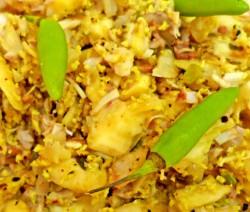
Kadalaiparuppu Vadai

Today’s Navarathri recipe for the third day of the Lakshmi ‘poosai’ is kadalaiparuppu vadai.

Vadai

Time taken: 15 mins + 3 hours (soaking time)

Makes 6

K vadaiIngredients:

  • Chickpea/ kadalaiparuppu – ½ cup, split
  • Crushed chillies – 1 tsp
  • Onion – 1, medium, ground or grated
  • Curry leaves – sprig, finely chopped
  • Fennel seeds – 1 tsp
  • Turmeric powder – ¼ tsp
  • Salt – ½ tsp
  • Low fat oil, for deep frying

Method:

  1. Soak the de-skinned and split chickpea for about three hours. Drain.
  2. Keep aside 3 tbsp and then coarsely grind the remaining chickpea.
  3. Mix the coarsely ground chickpea and the 3 tbsp chickpea that had been kept aside.
  4. Add the remaining ingredients to the chickpea mixture and mix well.
  5. Divide the seasoned chickpea mixture into 6 balls.
  6. Heat the oil in a round-bottomed frying pan or wok.
  7. When the oil is ready, drop the chickpea balls into the sizzling oil.
  8. Fry for about two minutes each side, ensuring that each ‘vadai’ is lightly browned on all sides.
  9. Remove the ‘vadai’ from the pan and transfer to a plate lined with grease absorbing paper.
  10. Serve hot.

Recipe source: Raji Thillainathan.

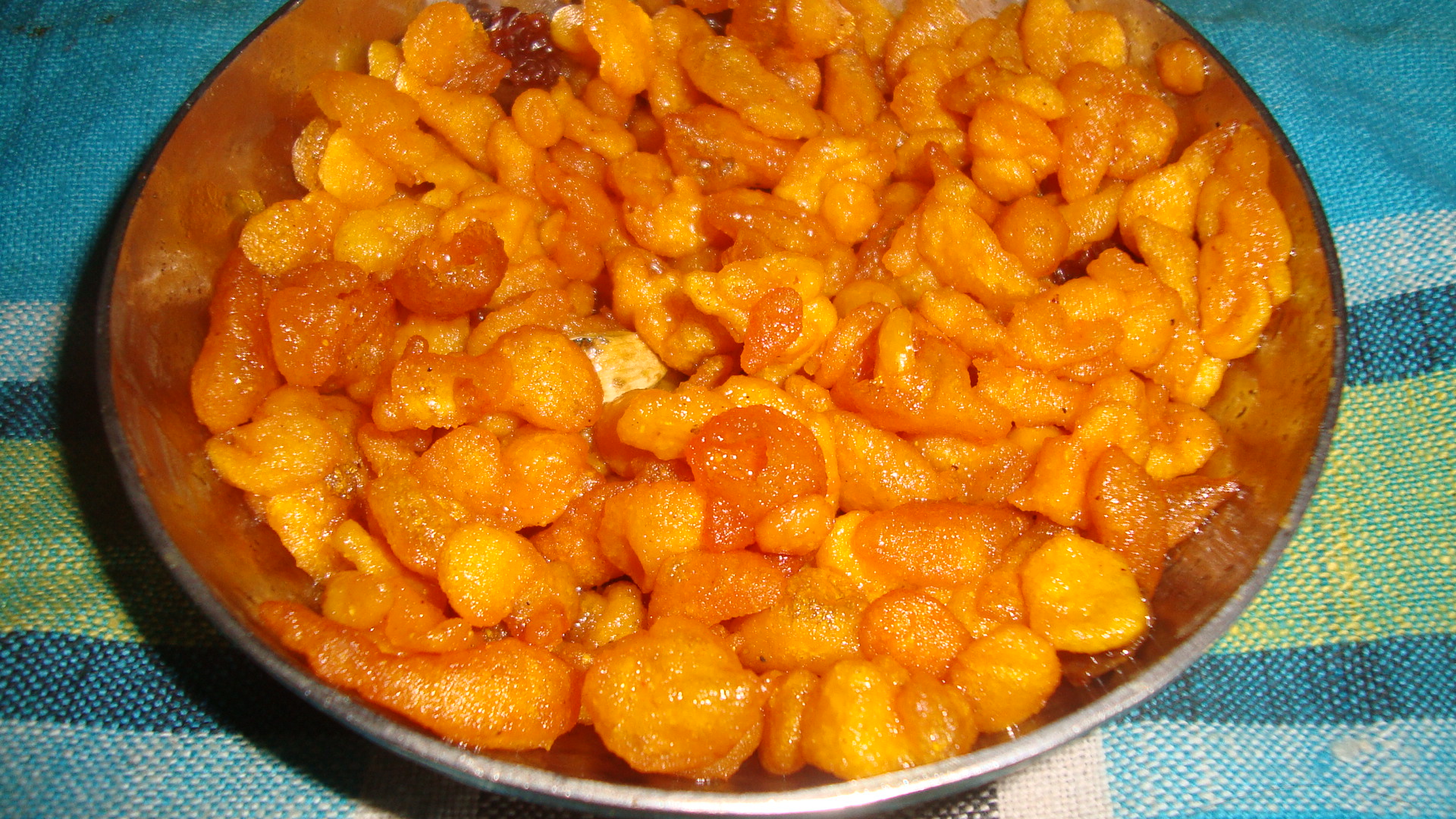
Boondi

Today’s Navarathri recipe is Boondi, a fried chickpea flour sweet that is quite popular in Sri Lanka and available in Indian sweet shops. As I like it and I do not like the too sugary consistency of shop-bought boondi, my mother occasionally makes it at home. This is my mother’s recipe for boondi.

Boondi

Time taken: 25 mins

Serves 2

BoondiIngredients:

  • Chickpea flour – 2 tbsp
  • Wheat flour – 2 tbsp
  • Salt, to taste
  • Vanilla essence – few drops
  • Kesari powder – pinch
  • Sugar – 4 tbsp
  • Cardamom – 2 or 3, crushed
  • Rose essence – few drops
  • Cashewnuts – 2 or 3, chopped
  • Raisins – 1 tsp
  • Chickpea – 1 tsp, fried and split
  • Low fat vegetable oil, for deep frying

Method

  1. Mix the chickpea flour, wheat flour, salt, few drops of vanilla essence, pinch of kesari powder with a little water in bowl to make a batter. The consistency of the batter should not be watery nor too thick but fluid enough to be scooped easily with a spoon.
  2. Heat the oil in a pan.
  3. When the oil is heated and ready for frying, scoop the batter with a spoon and push it through a slotted spoon over the pan so that the batter falls through in little pieces into the oil.
  4. Ensure that the boondi pieces are golden brown all over before transferring them out of a pan onto a plate lined with grease absorbing paper. Repeat until all the batter is transformed to fried boondi.
  5. Make the syrup for the boondi by stirring the sugar with ¼ cup of water in a saucepan on medium heat. Add the crushed cardamom, kesari powder.
  6. When the syrup starts thickening slightly, add a few drops of rose essence and remove from heat.
  7. Add the chopped cashewnuts, fried and split chickpeas and raisins to the syrup.
  8. Transfer the fried boondi to the syrup. Let it soak for some time before serving.

Recipe source: Raji Thillainathan.

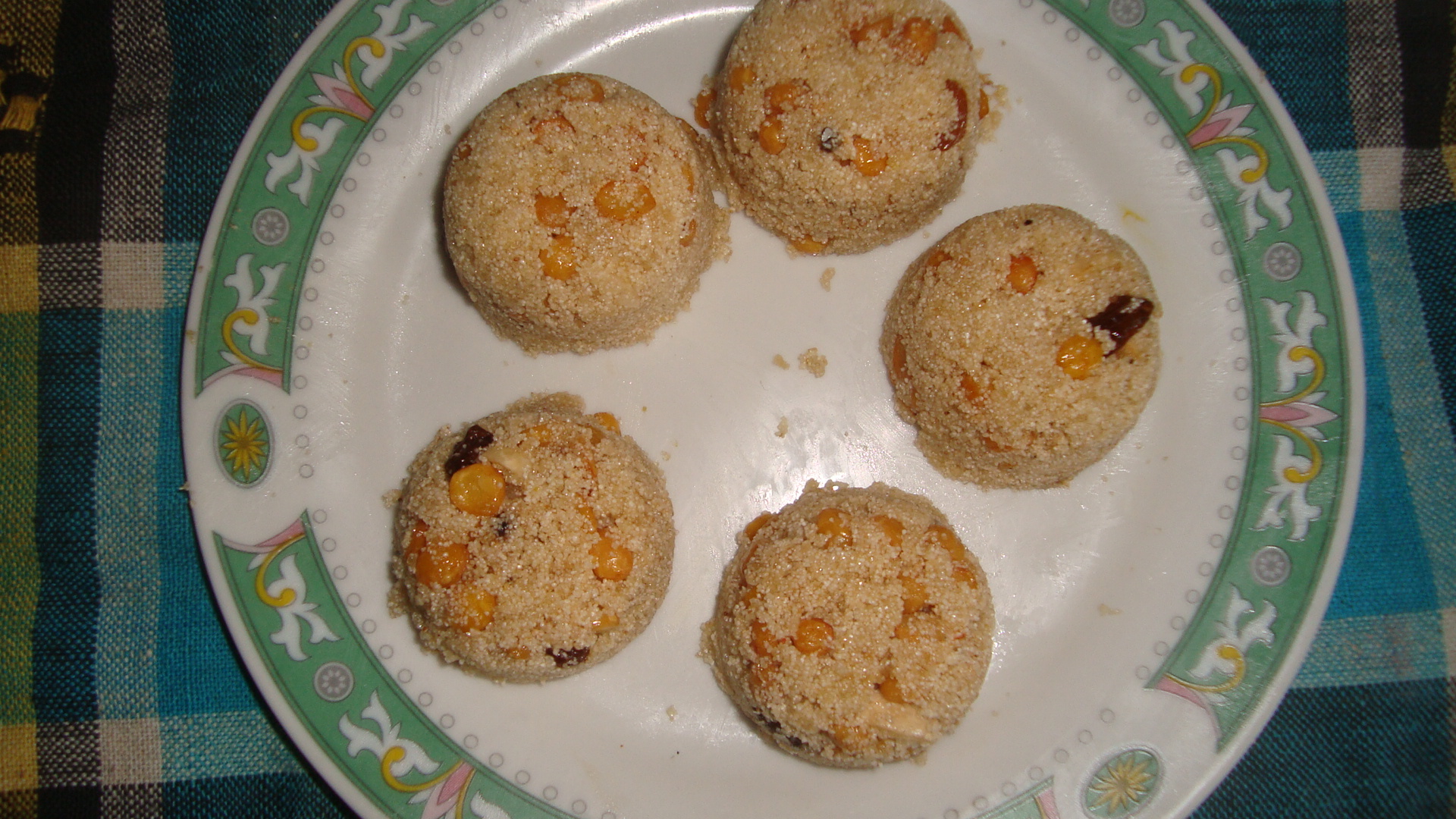
Ravai laddu

Today’s recipe for Navarathri is ravai laddu (semolina laddu).  The semolina laddu is the type of laddu that is commonly made in homes in northern Sri Lanka. The boondi or chickpea gram flour laddu is rarely made in homes and is usually available only in Indian sweet shops.

Ravai laddu

Time taken: 25 mins

Makes 5

Ravai ladduIngredients

  • Semolina/ ravai – ½ cup, slightly roasted
  • Sugar – ¼ cup
  • Vegetable oil margarine (preferably sunflower or canola) – 3 tbsp
  • Chickpea – 2 tbsp, fried and split (store-bought or overnight soaked and fried at home)
  • Cashew nuts – 2
  • Cardamom – 3, crushed
  • Raisin – 1 tbsp
  • Hot water – 2 tbsp

Method

  1. Heat the sugar and margarine in a pan for 2 mins on low heat.
  2. Add the fried, split chickpea to the pan as well as the chopped cashew nuts, raisins and crushed cardamom.
  3. Stir and cook for another 2 – 3 minutes until they have combined well.
  4. Add the semolina and stir for around 3 minutes.
  5. Increase the heat to medium and add 2 tbsp of hot water to the pan and mix well. Remove pan from stove.
  6. Scoop the mixture into a little mold and overturn to a plate. Let the laddu cool before serving.

Recipe source: Raji Thillainathan.

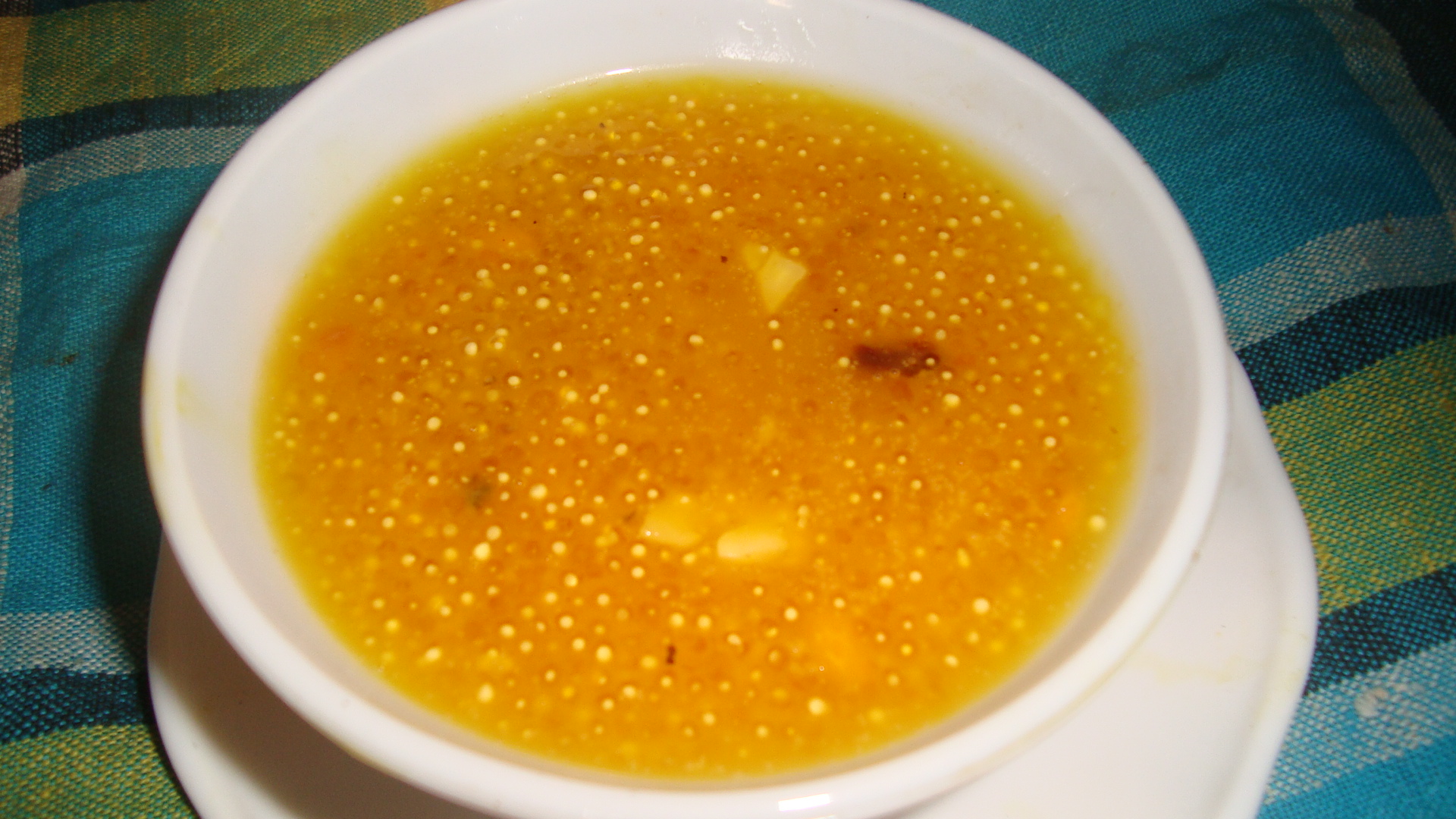
Coconut paayaasam

Today’s Navarathri recipe is my grandmother’s recipe for coconut paayaasam, as remembered and replicated by my mother. Many people generally use dairy milk for the ‘paal paayasam’ but my grandmother preferred using coconut milk for sago pudding and now, that’s the way it is made in our family.

Paayaasam

Time taken: 15 mins

Serves 2

PaayasamIngredients:

  • Pearl sago/ Savvarasi – ¼ cup
  • Cardamom – 2, crushed
  • Chickpea – 1 tbsp, fried and split
  • Cashewnuts – 2 or 3, chopped
  • Coconut milk – ½ cup
  • Sugar – 1 tbsp or adjust per taste
  • Raisins – 1 tbsp
  • Kesari powder – pinch

Method:

  1. Heat 1 cup of water in a pan, adding 2 crushed cardamoms, for about 5 mins.
  2. Add the pearl sago and let the boiling continue for a couple of minutes.
  3. When the sago is half-cooked, add the split, fried chickpea and cashewnuts and continue cooking for another couple of minutes.
  4. Once the sago is well cooked and the mixture thickens, add the coconut milk and the kesari powder.
  5. In a few minutes, add the sugar and mix well and let the ‘paayaasam’ simmer for another couple of minutes.
  6. Add the raisins just before removing the pan from the stove.
  7. Stir and serve either hot or chilled.

Recipe source: Raji Thillainathan.

Murukku

Today’s Navarathri food festival recipe is my mother’s recipe for crispy and crunchy murukku. This is a delicious snack and it is usually difficult to stop eating the entire bowl, after tasting one or two pieces.

Murukku

Time taken: 30 – 40 mins

Serves 10

MurukkuIngredients:

  • Chickpea flour – ¼ cup
  • Steamed wheat flour – ¾ cup
  • Coconut – 2 tbsp, freshly scraped
  • Pepper – ¼ tsp
  • Salt – ¼ tsp
  • Turmeric powder – ¼ tsp
  • Sesame seeds – 1 tsp
  • Water – 1 cup
  • Low fat oil, for deep-frying

Method:

  1. Blend 2 tbsp freshly scraped coconut with 1 cup water and extract a cup of coconut milk.
  2. In a saucepan, heat the coconut milk, adding the salt, pepper and turmeric powder to the pan.
  3. When the milk boils, remove from heat and briefly cool the milk for a few seconds.
  4. In a bowl, mix the chickpea flour and the steamed wheat flour.
  5. Stir in the boiled, spiced coconut milk into the bowl of flour mix and make the ‘murukku’ dough.
  6. Fold in the sesame seeds into the dough mix.
  7. Heat some low-fat oil in a pan.
  8. Scoop some of the dough into the murukku mold and squeeze out the dough through the mold over the pan with the oil. Once the noodle-like ‘murukku’ is cooked and golden brown on all sides, remove from pan and transfer to a tray lined with grease absorbing paper.
  9. Repeat the process until all the dough is squeezed out of the mold and fried.
  10. Serve immediately or store in air-tight container to prevent the ‘murukku’ from becoming mushy and to retain its crispiness.

Recipe source: Raji Thillainathan.

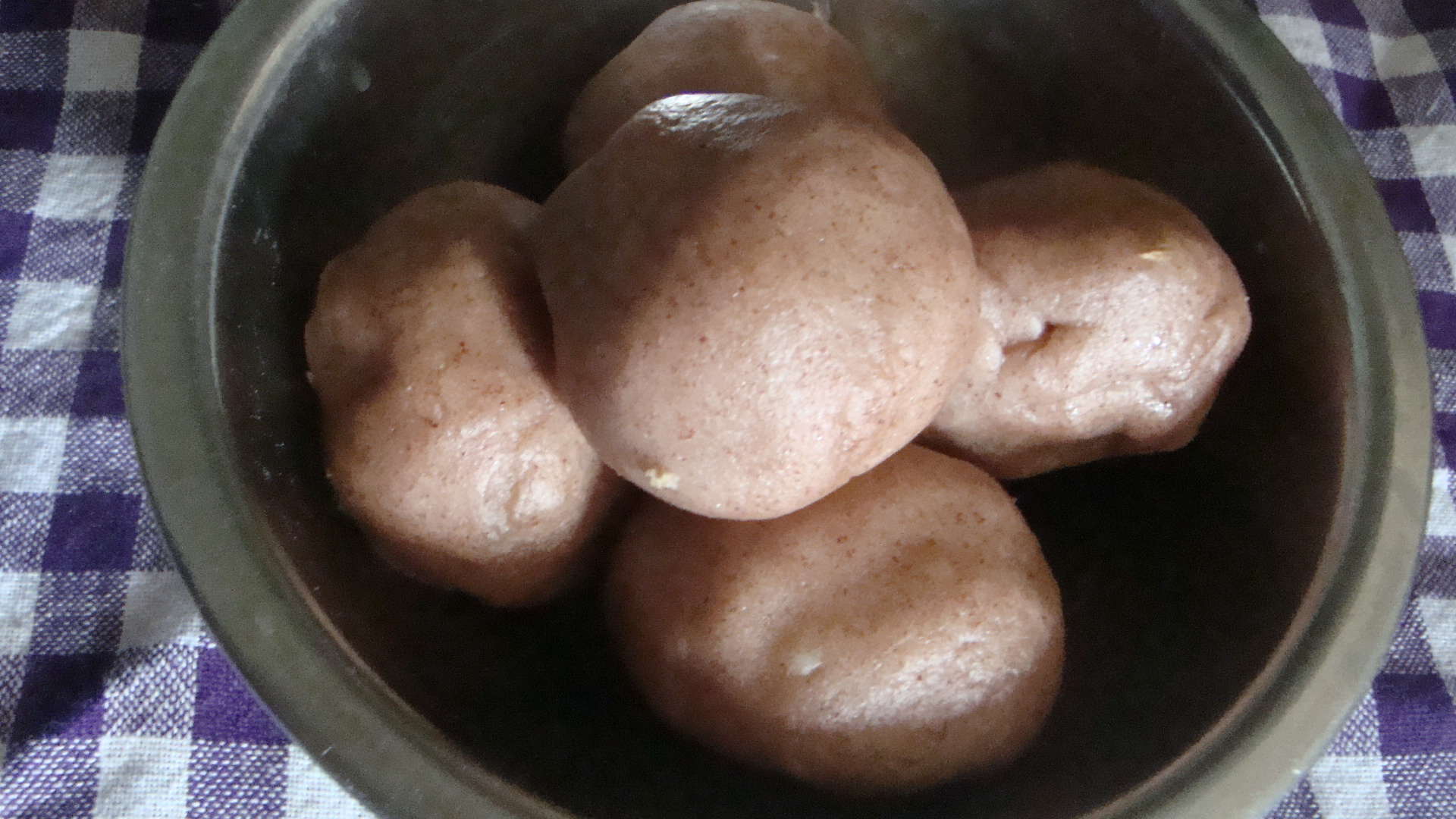
Kolukkattai

With the start of Navarathri today, I thought of posting nine of my mother’s recipes of some food that she typically makes during this nine-day festival. I have always been fond of Navarathri, since my childhood, and I think of all the religious festivals that my family has observed, this has been the favourite and better observed.

The nine days of the festival are dedicated to Goddesses starting with the first three days for Goddess Durga, symbolizing courage and strength, the next three days for Goddess Lakshmi, symbolizing wealth and beauty, the last three days for Goddess Saraswathi, symbolizing knowledge and wisdom. The last three days are the most special of the nine days.

To start off the Navarathri food fest, I will first share one of my favourites – Kolukkattai. This is a steamed half-moon shaped dumpling made especially during the Aadi pirappu (July 15th, which is the first of the month of Aadi in the Tamil calendar) and during the ceremony that marks the arrival of a baby’s first teeth. It is actually ‘Mothaham’, a round shaped version of the kolukkattai, that is made during Navarathri but at my home, my mother prefers to make kolukkattai generally.
Mothaham

Mothaham

Kolukkattai

Time taken: 40 – 45 mins

Makes 10

Kolukkattai

Kolukkattai

Ingredients:

  • Green gram – ½ cup, roasted and split
  • Water
  • Wheat flour – ¾ cup
  • Rice flour – ¼ cup
  • Salt – pinch
  • Low fat oil, as required
  • Coconut –½ cup, freshly scraped
  • Jaggery – ¼ cup
  • Cardamom – 4, crushed

Method

  1. Boil the green gram in about 1 ½ cups of water, for about 20 mins, until it is well-cooked. Add water if the liquid dries up before the gram is cooked. Drain and keep aside.
  2. Meanwhile, mix the wheat flour, rice flour and a pinch of salt. Add hot water slowly while stirring the flour mix with a spoon.
  3. Add a little oil and bring together the mixture into a ball of dough.
  4. Divide the dough into 10 small balls, adding a little oil, to have a smooth dough mix.
  5. In a pan, cook the jaggery on low heat and stir as it melts.
  6. Add the scraped coconut and quickly stir for a couple of minutes, not allowing the coconut-jaggery mixture to burn.
  7. Add the boiled and drained green gram and the crushed cardamom to the coconut-jaggery mixture. Mix and remove from heat. Let the mixture cool.
  8. Roll out each of the ten small balls of dough and spoon 1 tbsp filling in the center of the rolled out dough. Close the dough wrap over the filling in a half-moon shape, by hand or using a pre-fabricated mold shell, or into a round dumpling shape. For the ceremony that marks the arrival of the baby’s first teeth, tiny coconut chips are embedded into the dents pressed by the mold or finger along one half of the half-moon shaped dumpling.
  9. Steam the ‘kolukattai’ (the half-moon shaped) or ‘mothaham’ (the round shaped dumpling) for about 10 mins.

Recipe source: Raji Thillainathan.

Lime pickle

Today, I would like to share my mother’s recipe for the delicious lime pickles that she sometimes makes.

Lime pickle

Time taken: around 15 days

Makes a jar

Lime pickleIngredients:

  • Limes – 16
  • Powdered salt
  • Turmeric powder – 2 tsp
  • Crushed chillies – 2 tsp (optional)
  • Fenugreek – 1 tbsp

Method:

  1. Clean and quarter 5 or 6 limes or the number that can fill the pickle jar you are using.
  2. Fill or cover them with as much salt as you can and then put them in a clean jar or jam bottle. Cover the bottle and set aside for a day.
  3. Uncover the bottle the next morning and place under the sunlight during the day-time. Cover the bottle in the night. Repeat this process for around 7 to 10 days.
  4. After 7 or 10 days, squeeze the juice of about 10 limes. Add the turmeric powder, crushed fenugreek seeds and optional crushed chillies to the juice.
  5. Pour the juice mixed with the spices into the jar of sun-dried limes. The juice needs to cover the limes in the bottle so if you need to, squeeze some more lime juice into the bottle.
  6. Repeat the covering and uncovering process under sunlight for another 5 days.
  7. At the end of around 15 days, the lime pickle is ready to be eaten.

Recipe source: Raji Thillainathan.

Polos Embulla and Kos Melluma

Today’s guest blogger is Maheesa Dayananda, UNDP project staff from Polonnaruwa district. He will be sharing his mother’s recipes for a couple of his favourite dishes.

These are two of my favorite curries and around once in two weeks we cook one of these at home. These two curries should be served with rice and are very popular (especially Polos Embulla) among Sinhalese not only in Polonnaruwa but also in other areas too. Also, these curries come from few generations back. I can remember my grand mother also cooked these curries.

Polos embulla 2(a) Polos Embulla

Time taken    – 75 minutes

Serves             – 05

Polos Embulla

INGREDIENTS

  • Baby jack                         15 pieces (250 gm)
  • Goraka/Garcinia Cambogia 04 pieces
  • Garlic                                 04 cloves
  • Pepper                              01 teaspoon
  • Cardamom/ enasal        ½ teaspoon
  • Curry Powder                  02 teaspoon, roasted
  • Chilli Powder                   02 teaspoon
  • Turmeric Powder           ½ teaspoon
  • Coconut                           01 nut
  • Curry leaves/ Rampe      as per required
  • Salt                                     to taste
  • Cinnamon                         a bit
  • Water                                 as per required

METHOD

  1. Removing the outer peel of the baby jack, cut it into fairly big pieces, wash well and put them in an earthen vessel.
  2. Mix the pieces of baby jack with chilli powder, curry powder, turmeric powder and salt.
  3. Add some goraka.
  4. Mix crushed pepper, cinnamon and cardamom with the pieces of baby jack.
  5. Pour coconut milk in to the earthen vessel until the baby jack pieces are just covered and cook them till most of the liquid dries up. As the curry should have a little gravy, remove from heat before the gravy completely dries up.
  6. Note: Avoid dipping spoons which have been used for other curries, in polos embulla curry, to keep the stuff fresh for many days.

(b) Kos Melluma

Time taken    45 minutes

Serves             05

Kos INGREDIENTS

  • Pieces of jack                        250 gm
  • Coriander                              02 teaspoon
  • Cumin Seeds                        01 teaspoon
  • Sweet Cumin/ star anise  01 teaspoon
  • Green chillies                        03 – 04
  • Coconut                                ½ nut, scraped
  • Coconut oil                          04 teaspoon
  • Mustard                               01 teaspoon
  • Turmeric powder              as per required
  • Curry leaves                        as per required

METHOD

  1. Remove the core/ seeds from the jack-fruit pieces nut and cut them in to small pieces.
  2. Crush about 10 seeds and remove the peel covering the seed.
  3. Place the chopped jack-fruit and crushed seeds in a pan and add turmeric & water as required.
  4. Cover the pan and cook the jack-fruit.
  5. After the jack-fruit is cooked, add curry powder, curry leaves, scraped coconut and kochchi or green chilies and let it simmer together.
  6. Heat some coconut oil in another pan and fry some mustard seeds.
  7. Transfer the cooked jack-fruit with all its seasonings to the pan with the mustard seeds and temper it for a few minutes.
  8. Serve hot with rice.

Recipe source: Maheesa Dayananda.

Savoury vegan pie

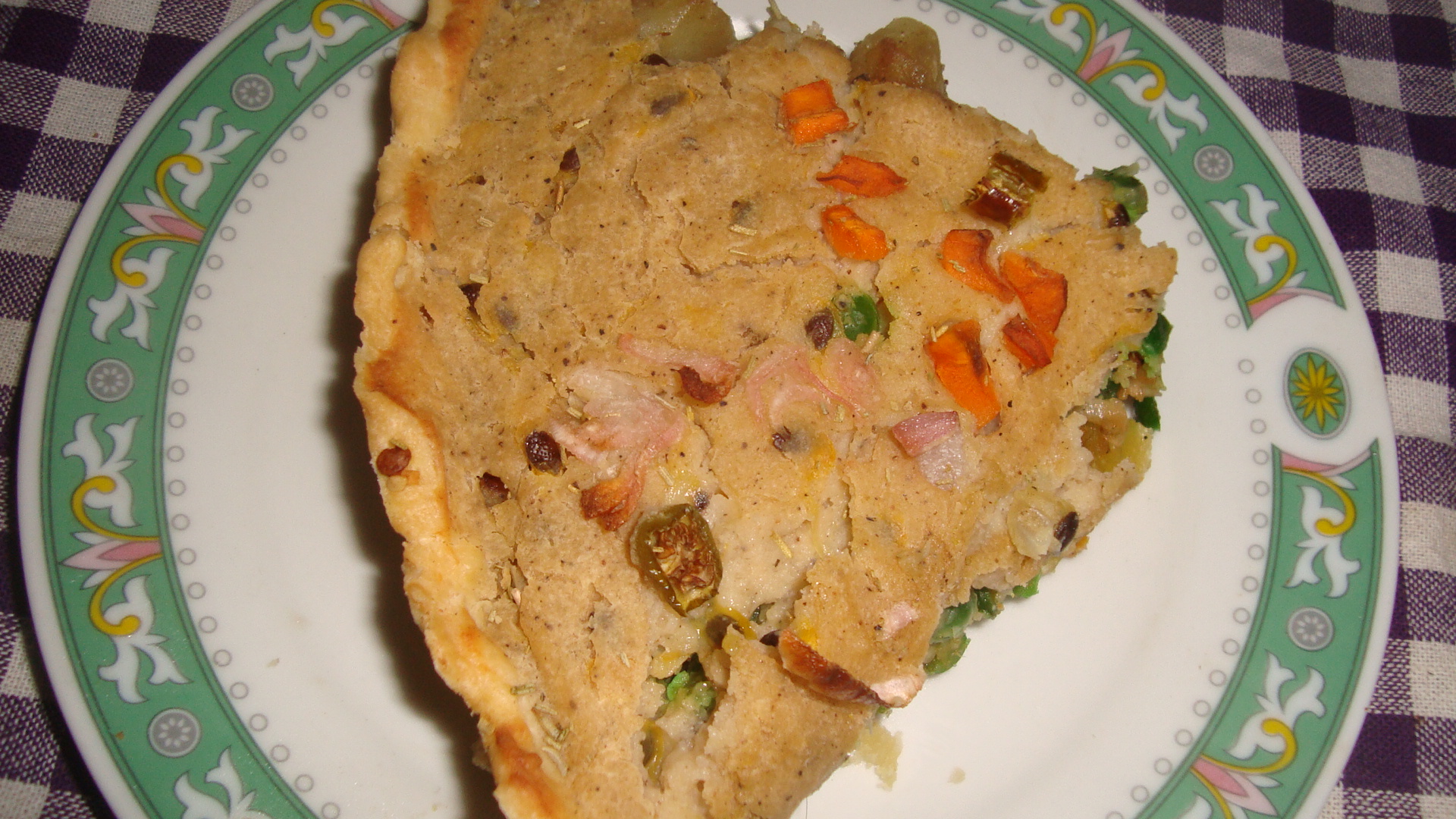
The recipe I would like to share today is the recipe for a pie that my mother made recently. It was delicious and very filling and included lots of vegetables and even passion fruit and peanuts.

A slice of pieSavoury vegan pie

Time taken:  1 ½ hours

Serves 6 or 8

Ingredients:

Base:

  • Wheat flour – 1 cup
  • Vegetable oil margarine – ¼ cup
  • Salt, to taste

Filling:

  • Green peas – ¾ cup
  • Carrot – ½ cup, chopped and grated
  • Tomatoes – ¾ cup
  • Cabbage – 2 tbsp, shredded
  • Potatoes – 1 or 2
  • Onion – ½
  • Chilli – 1
  • Crushed peanuts – 1 tbsp
  • Ginger – ½ or 1″, as per taste
  • Garlic – 3 or 4 cloves
  • Pepper and salt, to taste
  • Low fat oil (sunflower or canola) – 2 tbsp

Top layer:

  • Soya milk – 1 cup
  • Urad dhal/ Ulunthu flour – 2 tbsp
  • Wheat flour – 1 tbsp
  • Passion fruit – 1
  • Rosemary – 1 tsp
  • Sesame seeds – 1 tsp
  • Chilli or capsicum – 1
  • Onion – ¼
  • Salt and pepper, to taste

Method:

  1. Make the dough for the pie base by mixing the wheat flour, margarine and salt, to taste and kneading it. Let the dough rest while making the filling for the pie.
  2. Boil the tomatoes and mash them slightly. Boil the potatoes and cabbage.
  3. Heat 2 tbsp oil in a pan and fry the ginger and garlic. Then add the onion and crushed peanuts and fry for a few minutes.
  4. Add the slightly mashed, boiled tomatoes to the pan and then add the carrots followed by the green peas and finally the potatoes and cabbage.
  5. Add pepper and salt, to taste. Keep aside the vegetable filling.
  6. In a saucepan, heat the soya milk with 2 tbsp urad dhal and 1 tbsp wheat flour. Bring to a boil, adding salt and pepper, to taste.
  7. When the sauce begins to thicken, add the pulp of passion fruit to give the mix a tangy and fruity flavour.
  8. Take the pie pan and roll out the pie base, covering the pan.
  9. Spoon the vegetable filling on top of the pie base and level it smoothly across the pan.
  10. Pour the tangy batter-like sauce over the vegetable filling.
  11. Sprinkle chopped onion, capsicum or green chilli and the rosemary and sesame seeds over the sauce covering the pie.
  12. Bake for 30 – 40 mins at 220⁰C/ 428⁰F.
  13. Serve hot with some spicy chutney or sauce.

Recipe source: Raji Thillainathan.

Vaalakkai Varuval

Back home after an amazing two weeks of travelling around Yunnan province, it was comforting to be greeted by the familiar. So, my first post for this month will be to share my mother’s recipe for her regular fried ash plantain which I really enjoy.

Vaalakkai varuval/ Ash plantain fry

Time taken: 40 mins

Serves 3

Ash plantain fryIngredients:

  • Ash plantain/ Vaalakkai – 2
  • Malu miris or red capsicum – 1
  • Turmeric – ½ tsp
  • Salt – ½ tsp
  • Onion – 1
  • Garlic – 4 or 5 cloves
  • Curry leaves – 1 sprig
  • Fennel seeds – 1 tsp
  • Crushed chillies – 1 tsp or pepper – 1 tsp
  • Gingelly oil – 2 tbsp

Method:

  1. Boil the ash plantain with skin for 15 minutes.
  2. Set aside the ash plantain to cool. After it has sufficiently cooled, remove skin and chop the boiled fruit into small pieces.
  3. Chop up the malu miris, onion and garlic.
  4. Mix the chopped ash plantain, malu miris and ½ tsp turmeric and ½ tsp salt and let the flavours soak in.
  5. Heat 2 tbsp oil of sesame oil in a pan and add the fennel seeds and the chopped onion and garlic.
  6. When the aroma of the onion and garlic wafts about, add the turmeric and salt coated chopped ash plantain and malu miris and the curry leaves. Cook until they are sufficiently fried which will take around 10 mins.
  7. Just before removing the pan, add 1 tsp crushed chillies and mix well for a minute.
  8. Serve hot with rice.

Recipe source: Raji Thillainathan.