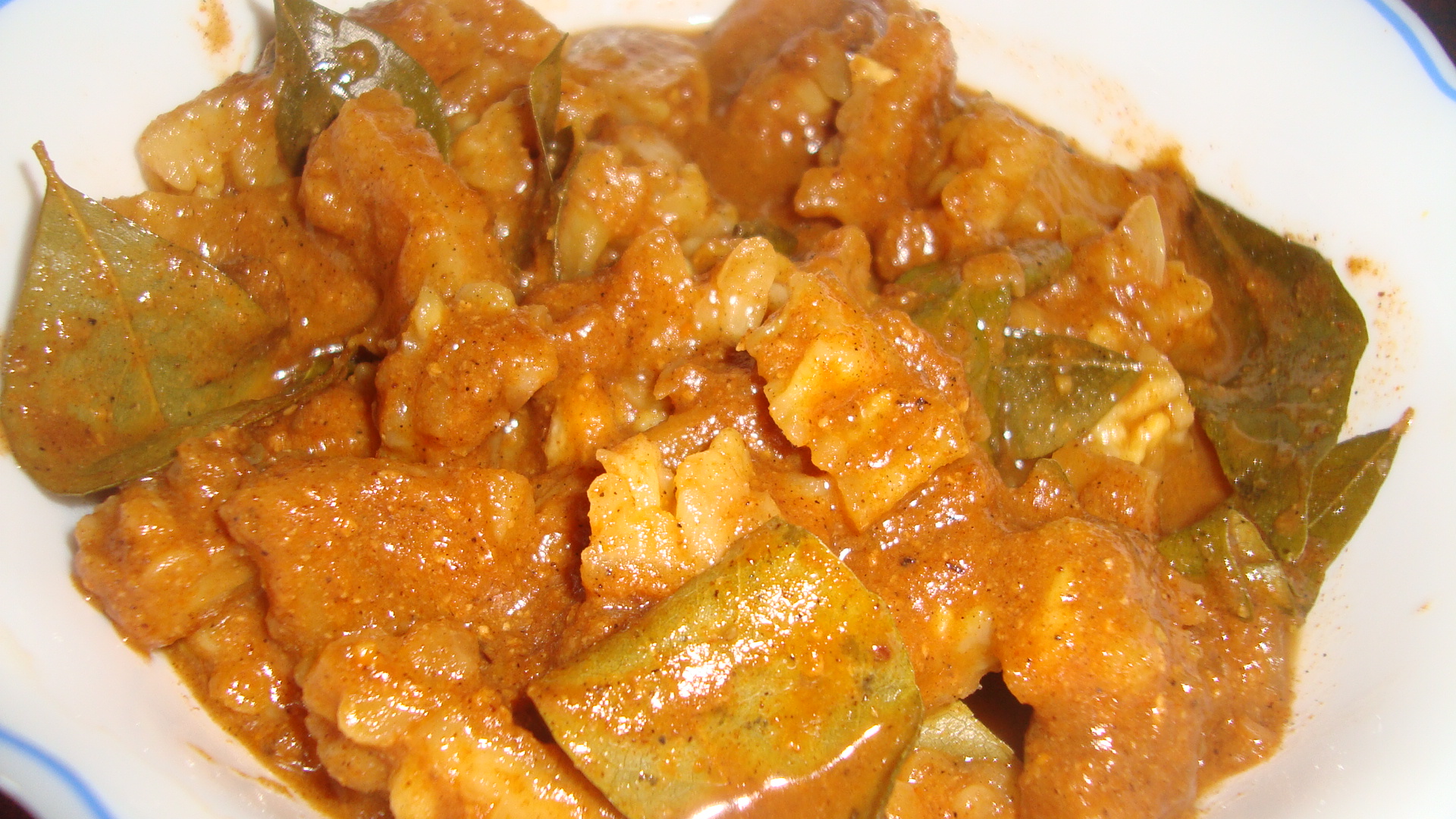
Pavatkai Kulambu

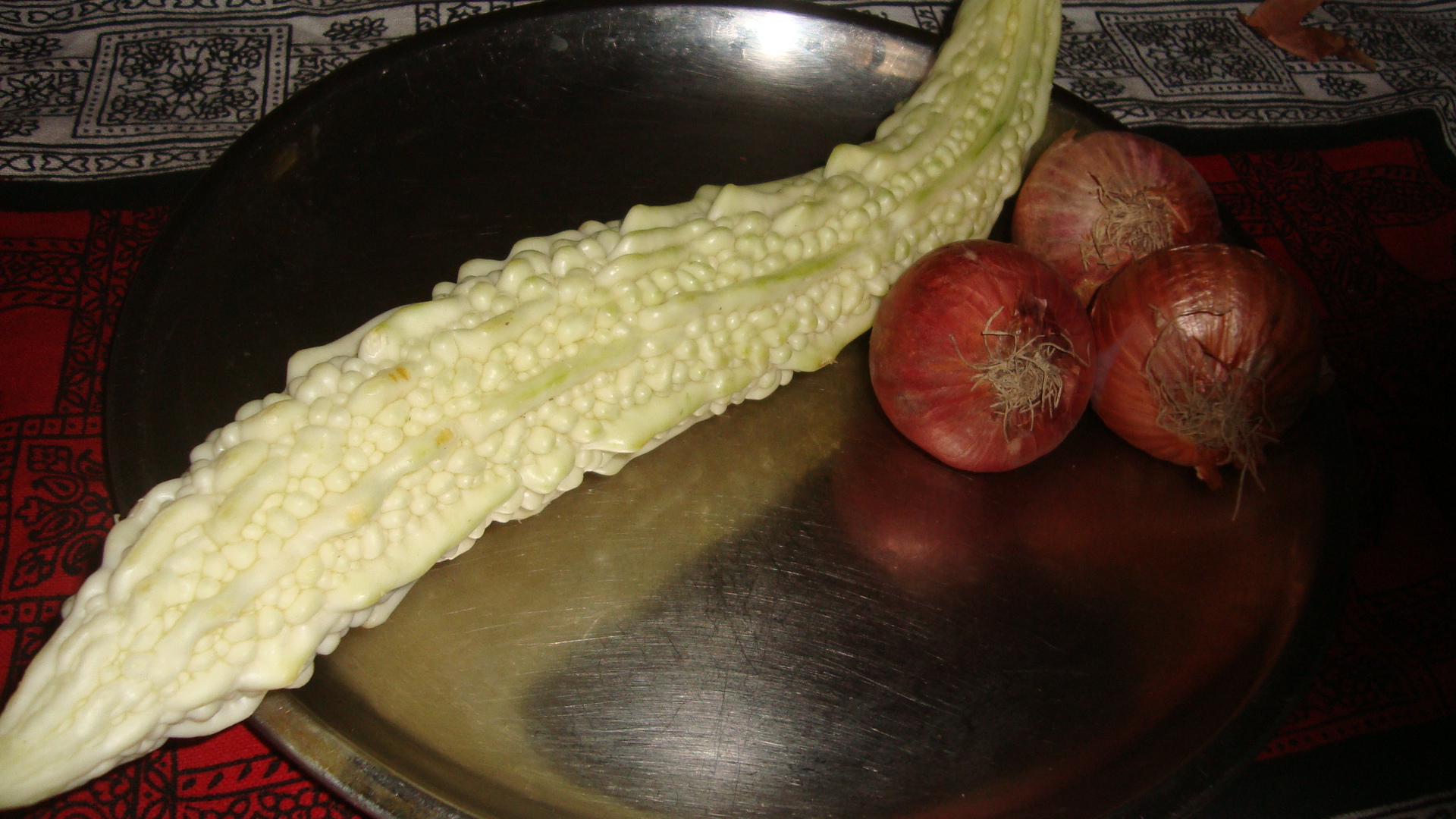
Today’s recipe is my mother’s delicious ‘pavatkai’ (bitter gourd) recipe. My grandmother used to first soak the chopped bitter gourd in fresh coconut water before cooking it to remove its bitterness. My mother prefers retaining a certain amount of the bitterness so she doesn’t use coconut water. Bitter gourd Pavatkai Kulambu Time taken: 30 – 40 mins Serves 4 Pavatkai curry Ingredients:

  • Bitter gourd/ pavatkai – 1 cup, chopped
  • Tamarind extract – 1 cup, thin consistency
  • Onion – ½ chopped
  • Curry leaves – 1 sprig
  • Coconut milk or non-fat milk – ¼ cup
  • Curry powder – 1 tsp
  • Sugar – 1 tsp
  • Salt, to taste

Method:

  1. Cook the chopped bitter gourd in water, in a pan, for about 5 to 10 mins on medium heat.
  2. Add the tamarind extract, curry powder, curry leaves, chopped onion and salt to taste to the pan.
  3. Let the ingredients combine and simmer on low heat for about 15 to 20 mins. If the bitter gourd is not tender enough as the liquid starts drying up, add ½ cup of water.
  4. Add ¼ cup of coconut milk or non-fat milk and a tsp of sugar. Mix well and let the curry simmer for another 5 to 10 mins on low heat.
  5. Remove from heat and serve with rice.

Recipe source: Raji Thillainathan.

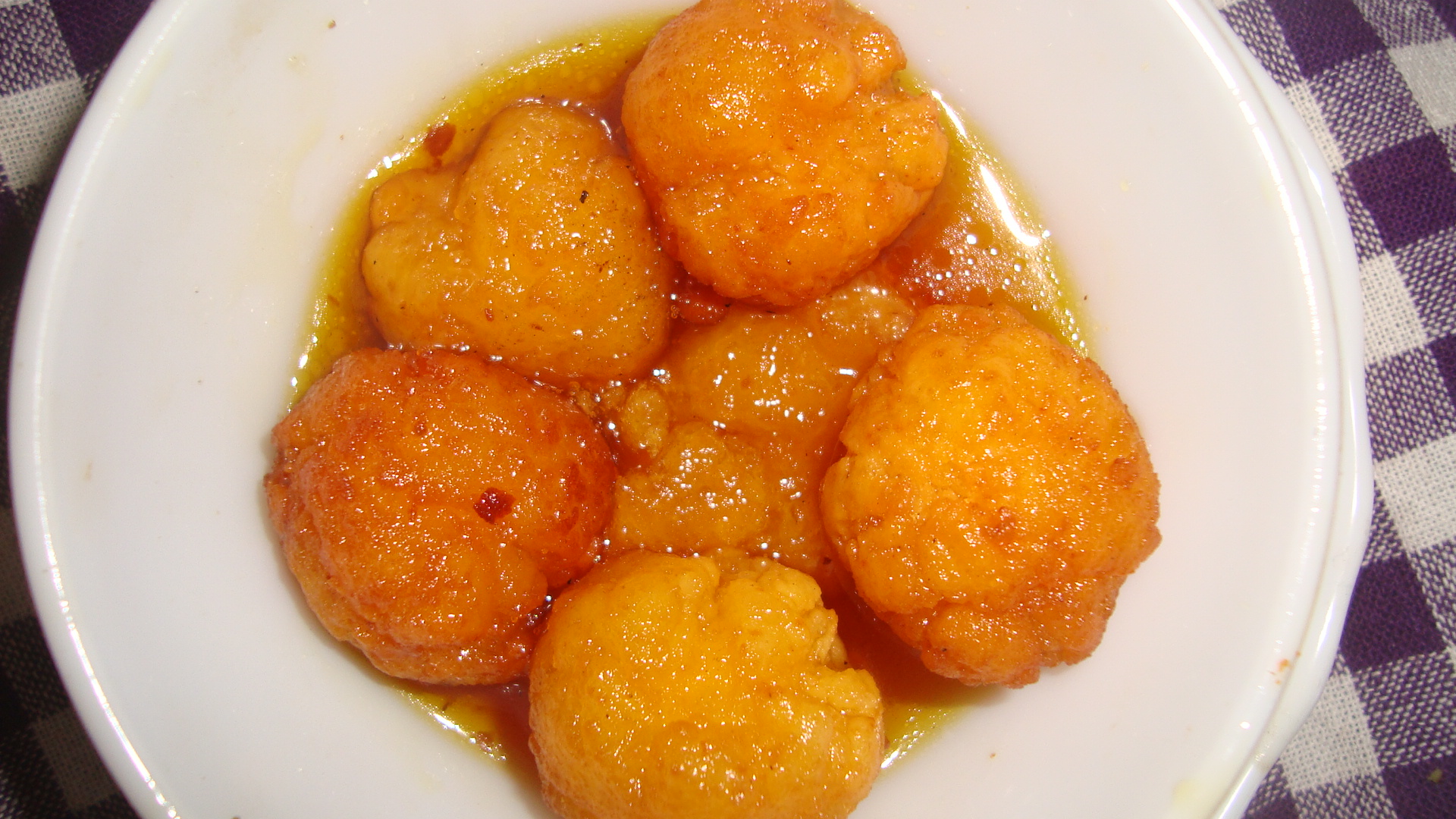
Gulab Jamun

My favourite accompanying dessert for a puri and kadalai curry meal is gulab jamun. While I think this sweet originated from Punjab, it is very popular around Asia. Having a sweet tooth, I simply love this dessert though we hardly make it in our house anymore. Today, I will share my mother’s version of gulab jamun.

Gulab Jamun

Time taken: 30 mins

Makes 12 or 15 gulab jamun

Gulab jamun

Ingredients:

  • Milk powder – 6 tbsp
  • Wheat flour – 2 tbsp
  • Baking powder – ¾ tsp
  • Oil, for deep-frying
  • Water – ¾ cup
  • Sugar – ¼ cup
  • Kesari powder – pinch
  • Rose essence – few drops

Method:

  1. Mix the milk powder, wheat flour, baking powder and stir in a little water to knead the dough.
  2. Make small balls from the dough and place them on a plate. Let them rest for about 5 mins.
  3. Heat some oil in a pan on low heat.
  4. Once the oil is ready for deep-frying, drop a few of the balls at a time and deep-fry them. Ensure that they turn golden brown on all sides by turning them around.
  5. Remove from pan and place them on a plate with grease absorbing paper.
  6. In a sauce pan, boil ¾ cup of water with ¼ cup of sugar, a pinch of kesari powder and a few drops of rose essence.
  7. Once the syrup comes together, remove sauce pan from stove and transfer syrup to a bowl.
  8. Transfer the gulab jamun from the plate to the syrup bowl.
  9. Cover the bowl and let the gulab jamun absorb the syrup for some time.
  10. Serve warm

Recipe source: Raji Thillainathan.

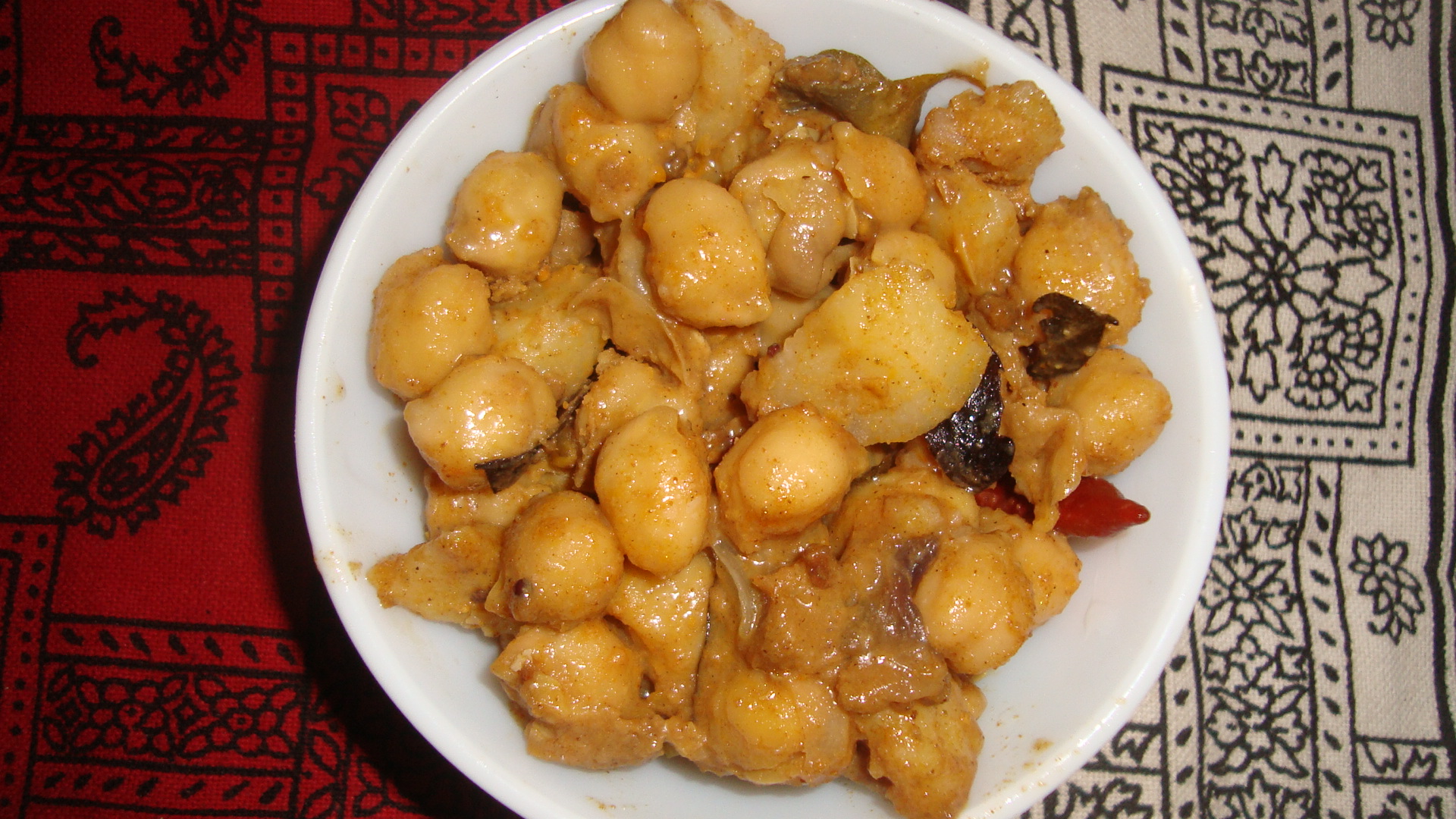
Puri and Kadalai Curry

Today’s recipes are my childhood favourites and I guess, they still continue to be one of my favourites. Originating from North India, the dishes have become very much part of the cuisine of the sub-continent. In this post, I will focus on the main meal and in my next, the accompanying dessert.
Puri with Kadalai curry

(a) Puri

Time taken: 40 – 45 mins

Makes 6
Puri

Ingredients

  • Wheat flour – 1 cup
  • Salt – ½ tsp
  • Low fat oil – 2 tbsp + for deep-frying
  • Water, as required

Method

  1. Add ½ tsp salt and 2 tbsp oil to the wheat flour. Slowly stir in a little water and knead the flour mix into a ball of dough.
  2. Divide the dough into 6 smaller balls. Let it rest for about 15 to 20 mins.
  3. Heat some oil in a pan on low to medium heat.
  4. Roll out one of the small balls of dough.
  5. Keep a little container with water by your side and brush one side of the rolled out dough with water.
  6. Drop the rolled out dough into the hot oil, with the water side down. This helps the puri to puff up more. Yes, there will be a lot of crackling noise as water and oil react at first.
  7. Once the puri has risen to the surface, flip it to the other side so that the other side can be cooked and can also become puffy. It takes about 2 mins approximately to brown each side.
  8. Remove the puri from the pan and place on a dish covered with a grease absorbing paper.
  9. Serve with kadalai curry.

(b) Kadalai (chickpea) curry

Time taken: 40 mins + overnight soaking

Serves: 3

Kadalai curry

Ingredients:

  • Kadalai/ Chickpea – ½ cup
  • Onion – ½ , chopped
  • Mixed 3C (Cinnamon, cardamom and cloves) powder – 1 tsp
  • Fennel seeds – ½ tsp
  • Fenugreek seeds – ½ tsp
  • Curry leaves – 1 sprig
  • Rampe/ pandan leaf – small piece
  • Coconut milk or non-fat milk – 1 cup
  • Curry powder – 1 tbsp, or as required
  • Low fat oil, as required

Method:

  1. Soak the kadalai in water for a minimum of 3 hours and better, if soaked overnight.
  2. Rinse the soaked kadalai and boil it for 15 minutes in some fresh water.
  3. Drain and keep aside the kadalai.
  4. In a pan, heat a little oil and fry the chopped onion, fenugreek, mixed 3C powder, curry leaves and rampe for two minutes.
  5. Add the boiled kadalai to the pan and mix well.
  6. Stir in the coconut milk or non-fat milk and 1 tbsp curry powder. Let the kadalai curry simmer on low heat for 10 to 15 mins.
  7. If the curry dries up, add a little more milk and let it simmer a little more. The curry should have a rich consistency and not be watery when you remove from the heat.
  8. Serve hot with the puri.

Recipe source: Raji Thillainathan.
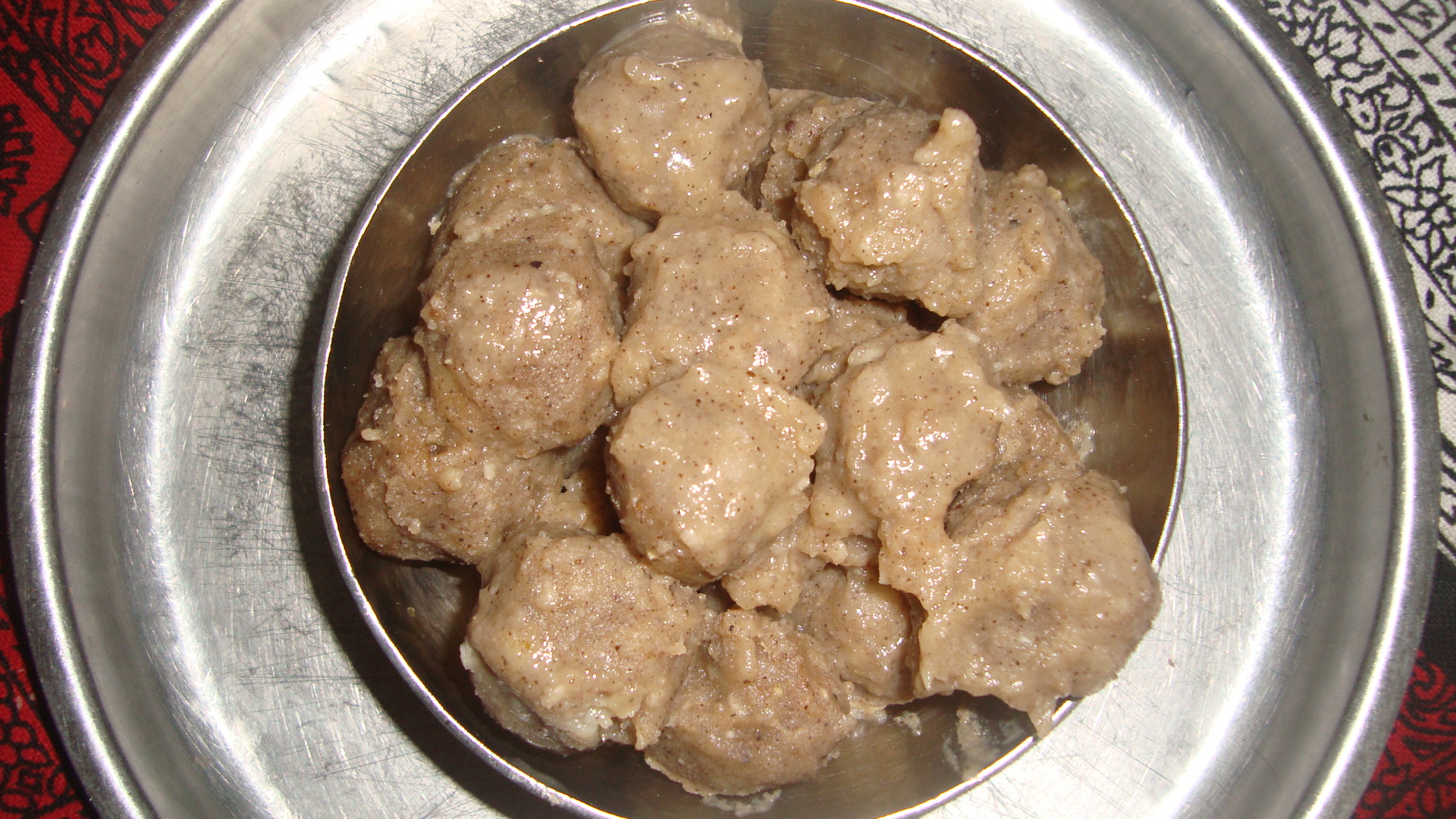
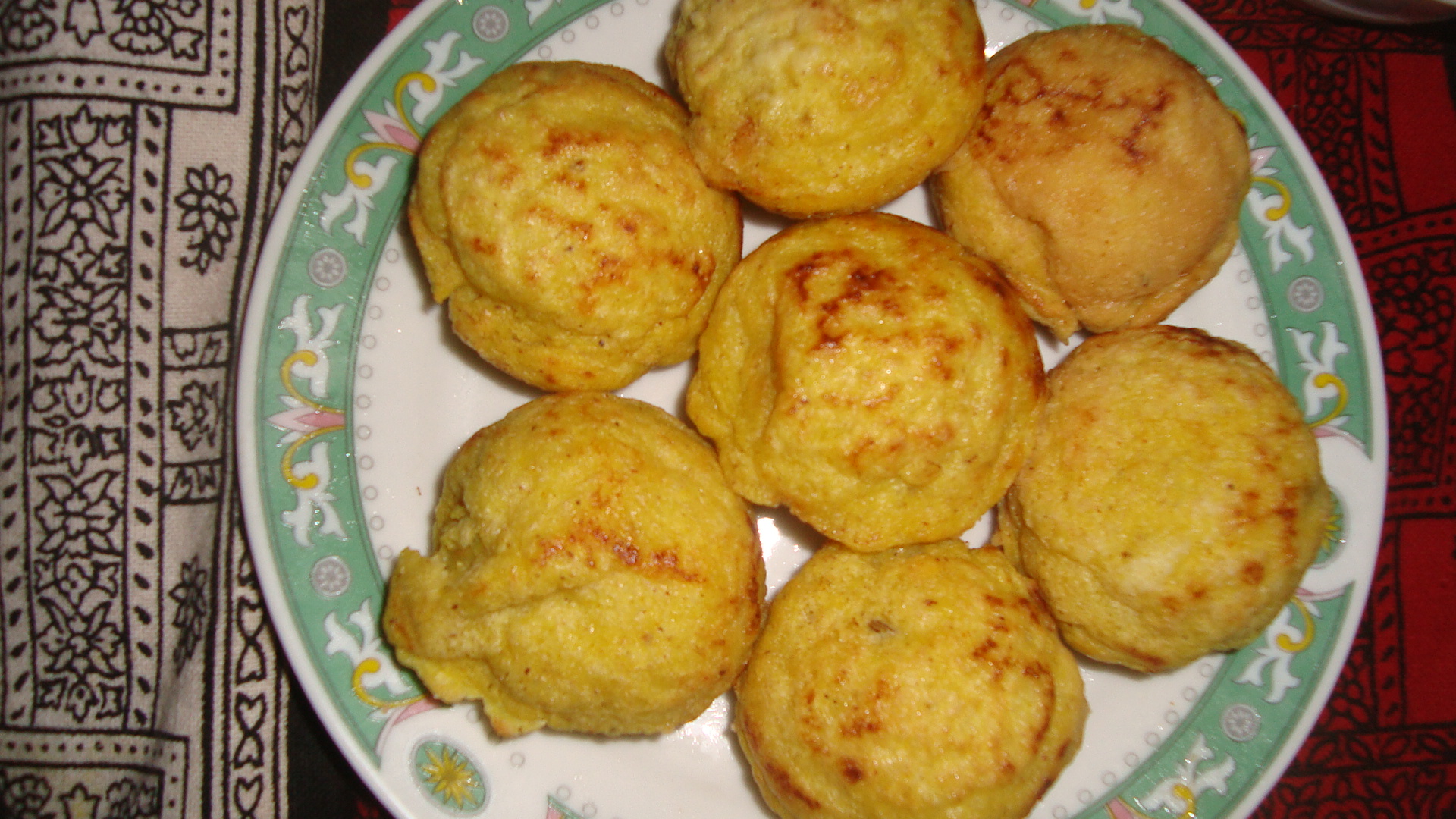
Paal Puttu

The other breakfast treat that my mother’s friend had brought this morning was paal puttu. I have actually had a few different versions of this over the past decade. Surprisingly, this is the first dish from the northern region of Sri Lanka that I have had which my mother hadn’t either heard of or tried until I described it to her.

Paal puttu

Time taken: 30 mins

Serves 2 or 3

Paal puttu

Ingredients:

  • Urad dal/ ulunthu flour – ¼ cup + 2 tbsp
  • Rice flour – ¼ cup
  • Coconut milk – ¾ cup
  • Sugar – 1 tbsp
  • Salt, to taste

Method:

  1. Mix ¼ cup urad dal flour and ¼ cup rice flour with salt and hot water and make them into tiny balls.
  2. Steam the balls and keep aside.
  3. Heat the coconut milk, with the sugar and salt seasoning, in a pan.
  4. Add  2 tbsp urad dal flour to the coconut milk as it starts to boil. Stir well.
  5. As the sauce thickens, add the steamed balls and mix well. Remove pan from stove after a minute or two.
  6. Serve warm.

Recipe source: Ithayarani Jeyabalasingham.

Kundu Thosai with Coconut Tamarind Sambal

A friend of my mother dropped by this morning with some breakfast treats that she had made so I decided to post the recipes for those two dishes. The first is kundu thosai with a coconut-tamarind sambal.

Kundu thosai with sambal

(a) Kundu thosai

Cooking time: 15 mins + preparation time: nearly 8 hours

Makes 24

Gundu thosai

Ingredients:

  • Black gram/ Urad dal/ Ulunthu – ½ cup
  • Raw rice – 1 cup
  • Fenugreek seeds – ¼ tsp
  • Pepper – ¼ tsp
  • Cumin seeds – ¼ tsp
  • Turmeric powder – ¼ tsp
  • Wheat flour – 2 tbsp
  • Oil, as required

Method:

  1. Soak ulunthu and rice for about 3 to 4 hours.
  2. Grind the soaked ulunthu and rice together with the fenugreek seeds, pepper, cumin seeds and turmeric powder.
  3. Mix the wheat flour in the blended mixture. The batter should be thick.
  4. Let the batter rest for about 3 to 4 hours.
  5. Place the special ‘kundu thosai’ pan on the stove on low heat.
  6. Pour a little oil in each of the 8 holes of the pan. Then, pour a tablespoon of batter in each.
  7. Cook the thosai for about 1 ½ to 2 mins each side. Flip to the other side so that both sides are browned.
  8. Serve hot with the coconut-tamarind sambal.

(b) Coconut-Tamarind Sambal

Time taken: 10 mins

Serves 4

Ingredients:

  • Freshly scraped coconut – ½ cup
  • Dried red chillies – 4 + 1
  • Onion – ¼ + ¼ , chopped
  • Curry leaves – 1 sprig
  • Fennel seeds – ½ tsp
  • Tamarind extract – ¼ cup
  • Salt, to taste
  • Oil, as required

Method:

  1. Soak four of the dried red chillies for a few minutes and then chop them up.
  2. Grind the soaked dried red chillies with the coconut and 1/4 onion and keep aside.
  3. Heat a tbsp or two of oil in a pan and fry the fennel seeds.
  4. When the seeds start spluttering, add the chopped ¼ onion and chopped dried red chilli and curry leaves.
  5. Add ¼ cup of tamarind extract to the pan and let it simmer.
  6. When the tamarind juice starts bubbling, add the ground chilli-onion-coconut mix and salt, to taste.
  7. Mix well and remove from heat.
  8. Serve with ‘Kundu’ thosai.

Recipe source: Ithayarani Jeyabalasingham.

Aluwa

Today’s guest blogger is Nilusha Doranegama, a clinical traumatologist. The recipe she is sharing with us today is one of her favourite recipes of her grandmother’s. Nilusha mentioned a time in her childhood when she was so fond of aluwa that she had advocated for having aluwa instead of cake for birthdays.

Aluwa

Time taken: 30 mins

Makes 25 – 30 pieces

Ingredients:

  • 10 cups of rice flour (from 4-5 cups of soaked white raw rice)
  • 2 cups of sugar
  • 3 cups of water
  • 3-4 cardamoms
  • 1 cup roasted cashew nuts

Method:

  1. Roast the rice flour under medium heat.
  2. Boil the sugar and water in a non-stick pan.
  3. While continuously stirring, add ground cardamom seeds and chopped cashew nuts.
  4. Allow the syrup to cool a little and add the roasted flour and mix in well.
  5. Quickly spread the aluwa on a tray lined with waxed paper and cut it in to pieces immediately.
  6. Coat the aluwa with remaining flour.
  7. Makes 25-30 aluwa pieces.

Recipe source: Nilusha Dishni Doranegama.

Mutton fry

The second recipe I will share today is also a non-vegetarian recipe that my mother recalls a relative in Vavuniya had cooked decades ago. As I am yet to receive recipes from the district of Vavuniya, I am happy to share this recipe based on my mother’s recollection of watching the dish being prepared.

Mutton fry

Time taken: 30 – 45 mins

Serves 4 – 6 persons

Ingredients:

  • Mutton – 2 cups, chopped
  • Onion – 1, chopped
  • Crushed ginger and garlic – 2 tbsp
  • Curry powder – 2 tbsp
  • Mixed 3C (Cinnamon, cardamom, clove) spice powder – 1 tsp
  • Lime juice – 1 tbsp
  • Pepper – ½ tsp
  • Salt, to taste
  • Oil – 3 tbsp

Method:

  1. Clean and chop the mutton into pieces.
  2. In a mixing bowl, add the chopped onion, crushed ginger-garlic, mixed 3C spice powder, curry powder, lime juice, salt and pepper. Add the mutton pieces to the bowl and ensure that they are well coated in the marinating mixture.
  3. Heat 3 tbsp oil in a pan and transfer the contents of the bowl, the mutton pieces together with the chopped onion and spices, to the pan.
  4. Cover the pan and let the mutton cook on low heat. Every 5 to 10 mins, uncover the pan and flip the pieces to the other side.
  5. Continue to cook until the mutton is well cooked and lightly browned throughout. The roasting takes about 30 to 40 mins.
  6. Serve with rice.

Recipe source: Raji Thillainathan.

Butter chicken

Today’s guest blogger is Mohamed Muzain. A staff of UNDP, one of his hidden talents became known to colleagues after he cooked a delicious dish for a potluck. I requested Muzain to share one of his famous recipes and he shared his recipe for butter chicken.

Butter chicken

Time taken: 45 mins

Serves 8

Ingredients:

  • Chicken – 1 Kg
  • Turmeric powder – 1 tsp
  • Onion – 4, medium-sized, for puree + ½ , for frying
  • Tomato – 4
  • Ginger-garlic paste – 2 tbsp
  • Yoghurt – 1 cup
  • Chilli powder – 2 tsp, for marinating sauce + small tsp, at the end
  • Chillies – 5
  • Curry leaves – 1 or 2 sprigs
  • Rampe leaf
  • Cumin seeds/ Nacheeraham – ½ tsp
  • Cinnamon – 1 ½ “
  • Cardamom – 8 or 10
  • Butter – 125 g

Method:

  1. First, wash and clean the chicken and chop it up into smaller pieces. Rub some turmeric powder over the chicken pieces and keep aside.
  2. Next, prepare the marinating sauce.
  3. Peel the onions and tomatoes. Chop them up and blend them together. Transfer the puree to a mixing bowl.
  4. Add the yoghurt, 1 tbsp of the ginger-garlic paste and 2 tsp chilli powder to the puree. Mix the marinating sauce well.
  5. Transfer the turmeric powder coated chicken pieces to the marinating sauce bowl.
  6. Ensure that the chicken pieces are well coated. Let the chicken pieces soak in the marinating sauce for at least 30 minutes.
  7. Chop up ½ the onion and slit the green chillies in the middle.
  8. Heat some butter in a pan and fry the chopped onion, curry leaves, rampe and the slit chillies.
  9. When the onions turn golden, add the remaining ginger-garlic paste.
  10. Add the cumin seeds, cinnamon and cardamom to the pan. Mix the spices well.
  11. Transfer the contents of the mixing bowl, the chicken pieces together with the marinating sauce, to the pan and let the chicken cook on low to medium heat for about 30 mins.
  12. When the chicken is well cooked, add a small tsp of chilli powder and the remaining butter.
  13. Mix well before removing the pan from heat.
  14. Serve hot with rice or rotis.

Recipe source: Mohamed Muzain.

Kesari

When I asked my mother to teach me a simple and quick to prepare Sri Lankan dish for an informal international pot-luck with friends a year ago, she taught me to make Kesari. I took a few photos of the outcome of that lesson. So, today, I thought I would share the recipe for the first Sri Lankan (and Indian) recipe that I officially learnt along with the photos from that day.

Kesari

Kesari is delicious both as a dessert and a special snack and takes very little time to prepare.

Kesari

Cooking time: 10 – 15 mins

Makes 10 pieces

Kesari slices

Ingredients:

  • Semolina – ½ cup, lightly roasted
  • Water – 1 cup
  • Sugar – ¼ cup
  • Kesari powder – pinch
  • Rose essence – drop or Vanilla essence – 1 tsp and pinch of crushed cardamom
  • Vegetable margarine – 1 ½ tbsp

Method:

  1. In a saucepan, boil a cup of water and the sugar.
  2. When the water starts boiling, add the kesari powder and either the vanilla essence and pinch of crushed cardamom or drop of rose essence.
  3. Stir continuously, while adding the semolina.
  4. When the mixture starts to thicken, add the margarine while continuing to stir.
  5. Remove the pan from the stove and transfer the kesari to a plate.
  6. Level the kesari on the plate and allow it to cool for at least 10 mins before slicing and serving.

Recipe source: Raji Thillainathan.

Veggie Uppuma

I will be sharing two delicious vegan recipes, of my mother today, that are semolina (ravai) based. The first recipe is uppuma, a typical simple and nutritious breakfast dish.

Veggie uppuma

Time taken: 10 mins

Serves 3

Veggie uppuma

Ingredients:

  • Semolina – 1/3 cup, slightly roasted
  • Water – 1 cup
  • Carrot – ¼ cup, chopped
  • Potato – ¼ cup, chopped
  • Beans – 2, chopped
  • Green chilli, chopped
  • Onion – ½ , chopped
  • Fennel seeds – 1 tsp
  • Curry leaves – 1 sprig
  • Freshly scraped coconut – 1 tbsp (optional)
  • Sesame oil (Gingelly oil) – 3 tbsp

Method:

  1. Heat the sesame oil in a pan and sauté the fennel seeds, curry leaves for a minute or two.
  2. Add the rest of the chopped vegetables to the pan and continue to sauté for about 5 mins.
  3. Add a cup of water and salt to taste to the pan.
  4. When the water starts boiling, add the semolina and stir until it starts coming together.
  5. Before removing from heat, the freshly scraped coconut can be optionally added.
  6. Mix well and serve hot.

Recipe source: Raji Thillainathan.